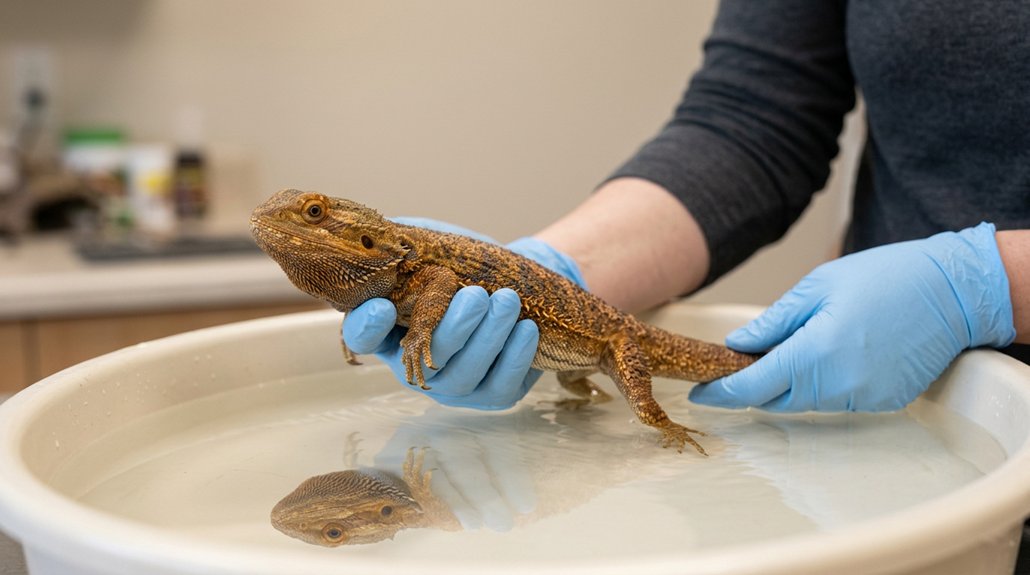
To bathe and handle a bearded dragon safely, use lukewarm water (85–92°F) in a shallow container, filling up to its shoulders. Apply reptile-safe conditioner, and have a soft towel for drying. Bathe young dragons 3-5 times a week and adults 1-2 times weekly, adjusting more when shedding. Handle gently with both hands, limiting sessions to 10-15 minutes, and watch for stress signs like rapid breathing. Learn how to enhance their care further.
Key Takeaways
- Use lukewarm water at 85–92°F and fill it to shoulder level for a safe bearded dragon bath.
- Utilize reptile-safe water conditioner to ensure the bath water is safe for your bearded dragon.
- Handle your bearded dragon gently, using both hands to support and avoid sudden movements.
- Limit bath and handling sessions to 10-15 minutes to prevent stress in your bearded dragon.
- Monitor for signs of stress like rapid breathing or thrashing, removing the dragon if observed.
Why Bath Time Matters for Your Bearded Dragon
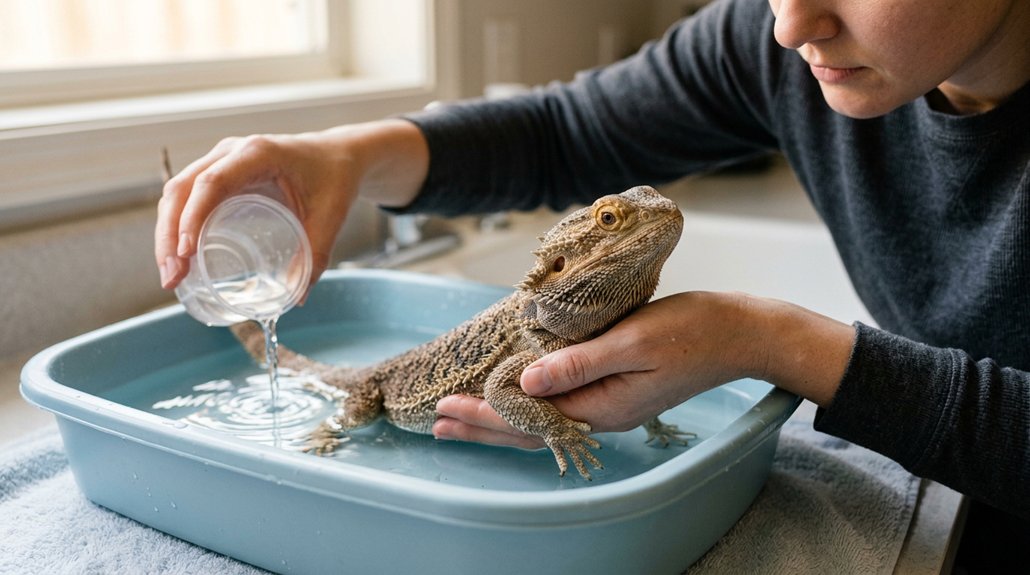
Although it might seem unnecessary, bath time is essential for your bearded dragon’s well-being. Regular baths offer hydration benefits, ensuring your dragon absorbs moisture through their vent, a vital factor in preventing dehydration. Proper hydration supports not just internal health but also keeps their skin supple and vibrant. Bathing also plays an important role in shedding assistance. By soaking in warm water, your dragon softens their skin, making it easier to shed, preventing the discomfort and potential health issues of retained or stuck shed. As they bathe, they naturally expel dirt and debris, maintaining peak cleanliness. The tranquil bath time also fosters a unique chance to bond, providing comfort and security for your beloved pet in your gentle presence.
What Do You Need for a Bearded Dragon Bath?
One of the first steps in preparing for your bearded dragon’s bath is gathering the right supplies to guarantee a safe and comfortable experience for your pet. Start by selecting a suitable bath setup; a shallow plastic tub, storage container, or a clean sink will work well. Fill it with lukewarm water, ensuring the water temperature remains between 85–92°F, reaching only up to your dragon’s shoulders. It’s essential to use a reptile-safe water conditioner like Zoo Med ReptiSafe when using tap water. For optional gentle cleaning, a soft toothbrush or cloth can be used. After the bath, have a clean, soft towel ready for drying to prevent chilling. Always supervise your dragon closely to prevent accidents or stress.
How Often Should You Bathe Your Bearded Dragon?
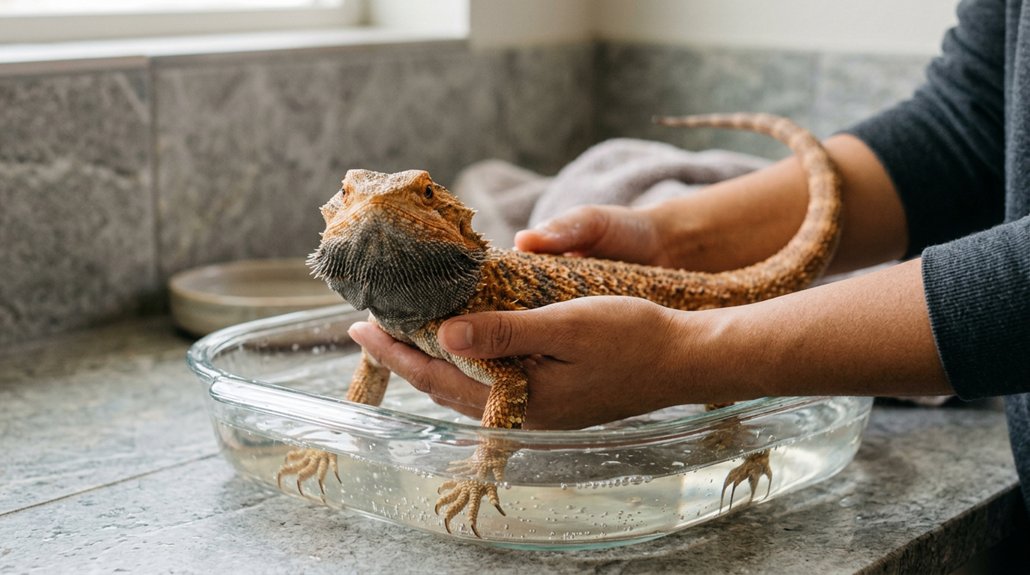
Typically, understanding the appropriate bathing frequency for your bearded dragon is vital to maintaining their overall health and well-being. Bathing techniques and age considerations play critical roles in determining how often you should bathe them. For dragons under 1 year, baths 3-5 times a week support hydration and shedding. Those over 1 year benefit from 1-2 weekly baths for hygiene and hydration. During shedding, consider increasing bath frequency to help with skin health and facilitation of the shedding process.
Be mindful of:
- Age considerations: Younger dragons need more frequent baths.
- Shedding periods: Increase baths to aid the process.
- Observation: Adjust water depth and duration for comfort if stress occurs.
Consistency and tailored care guarantee your dragon thrives.
Handle Your Bearded Dragon With Care
Handling your bearded dragon with care is essential to ensuring its comfort and wellbeing. Use a proper grip by scooping it up with both hands, supporting its body and legs. This minimizes stress and helps prevent potential injuries. Employ calming techniques by moving gently and slowly, as sudden actions can startle your dragon. Limit handling sessions to 10-15 minutes to avoid overwhelming your pet outside its vivarium. When outdoors, supervise closely, ensuring access to shade and avoiding hot surfaces to prevent overheating. Regular, mindful handling not only strengthens the bond between you and your dragon but also allows you to monitor its health and behavior effectively. Providing a calm, secure experience ultimately enhances the dragon’s comfort and trust in you.
Spotting Stress and Health Concerns During Bath Time
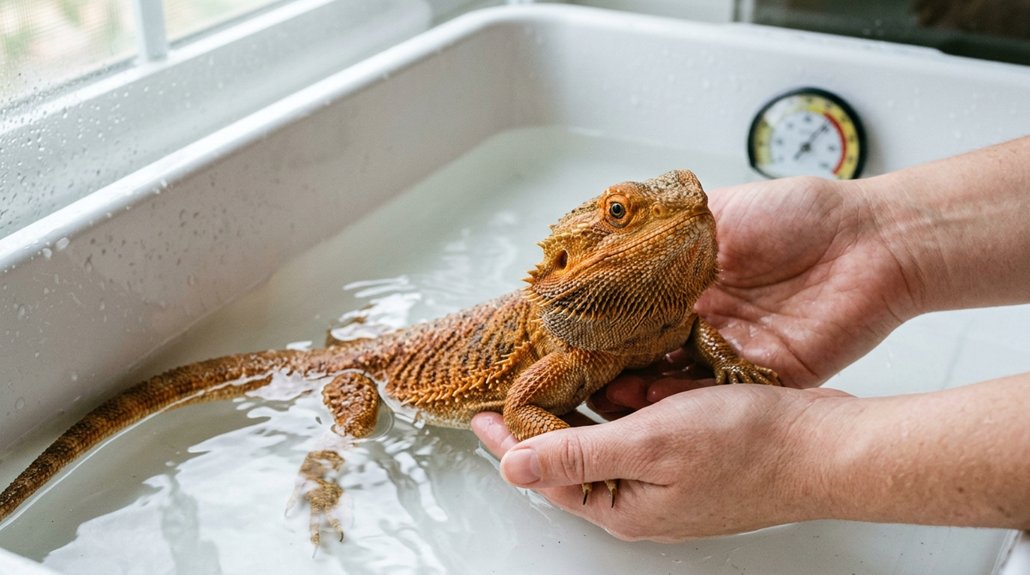
During bath time, recognizing signs of stress in your bearded dragon is critical for maintaining its health and comfort. Watch for behaviors such as rapid breathing, puffing up, or attempts to escape, as these can indicate stress. It’s important to monitor the water temperature, confirming it remains within the ideal range of 85–92°F. If the water is too hot or cold, it can cause discomfort and anxiety.
Monitor your bearded dragon’s stress signs during bath time to ensure comfort, avoiding discomfort from improper water temperature.
- Lethargy or lack of movement: This might mean the dragon is feeling overwhelmed.
- Rapid movements or sudden jumps: These are strong signs stress is present, signaling potential fear.
- Excessive thrashing or vocalizations: Immediate removal from the bath is necessary.
Stay alert for these cues to guarantee a safe bath time.
Frequently Asked Questions
How Are You Supposed to Bathe a Bearded Dragon?
You’re supposed to fill a shallow container with lukewarm water, add reptile-safe conditioner, supervise your dragon during 10–20 minutes of bath time, and handle it gently. Use a toothbrush for cleaning scales, ensuring safe handling throughout.
Can a Bearded Dragon Go 2 Days Without Eating?
No need to lose sleep over two days without eating; a fasting bearded dragon typically isn’t troubled. Stick to your feeding schedule, and monitor for changes, ensuring its habitat supports peak health and hydration.
Do You Dry off a Bearded Dragon After a Bath?
Yes, you should dry off a bearded dragon after bathing. Gentle towel drying is essential in bearded dragon grooming, ensuring comfort and preventing fungal issues. Monitor bathing frequency for ideal health and a stress-free experience.
What Stresses a Bearded Dragon Out?
Environmental changes unsettle them, sudden noises alarm them, improper handling frightens them. It’s critical to maintain gentle handling techniques, appropriate housing conditions, and minimize stressful environmental factors, ensuring a harmonious atmosphere where your bearded dragon feels secure and comfortable.
Conclusion
Remember, an ounce of prevention is worth a pound of cure. Bathing and handling your bearded dragon with care guarantees their health and happiness. Regular baths not only help keep them clean but also offer a chance to observe any signs of stress or health concerns. Equip yourself with the right supplies and keep a gentle hand, and you’ll foster trust with your scaly friend. By making bath time routine, you’re investing in a content and healthy bearded dragon.