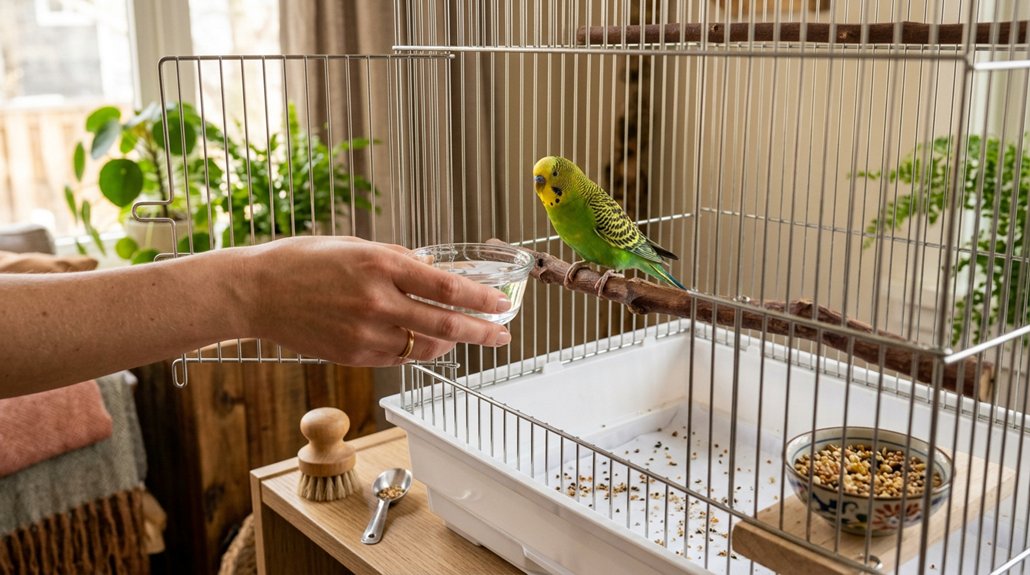
Start by choosing a bird that fits your time, noise tolerance, and space: budgies and cockatiels suit beginners, while finches need less noise and parrots need far more interaction. Set up the largest safe cage you can, with natural perches, clean water, pellets as the core diet, and fresh vegetables. Give daily supervised out-of-cage time, monitor weight and droppings, and watch for fluffed feathers or breathing changes. There’s much more to refine each step.
Key Takeaways
- Choose a beginner-friendly bird, like a budgie or cockatiel, based on your time, noise tolerance, and space.
- Set up the largest safe cage possible with proper perches, toys, sunlight, and a stable, draft-free location.
- Feed mostly species-appropriate pellets, plus fresh vegetables, limited fruit, and fresh water changed daily.
- Provide daily supervised out-of-cage exercise, toy rotation, and foraging enrichment to prevent boredom.
- Watch for illness signs, weigh your bird regularly, and establish an avian vet before bringing your bird home.
Choose the Right Pet Bird
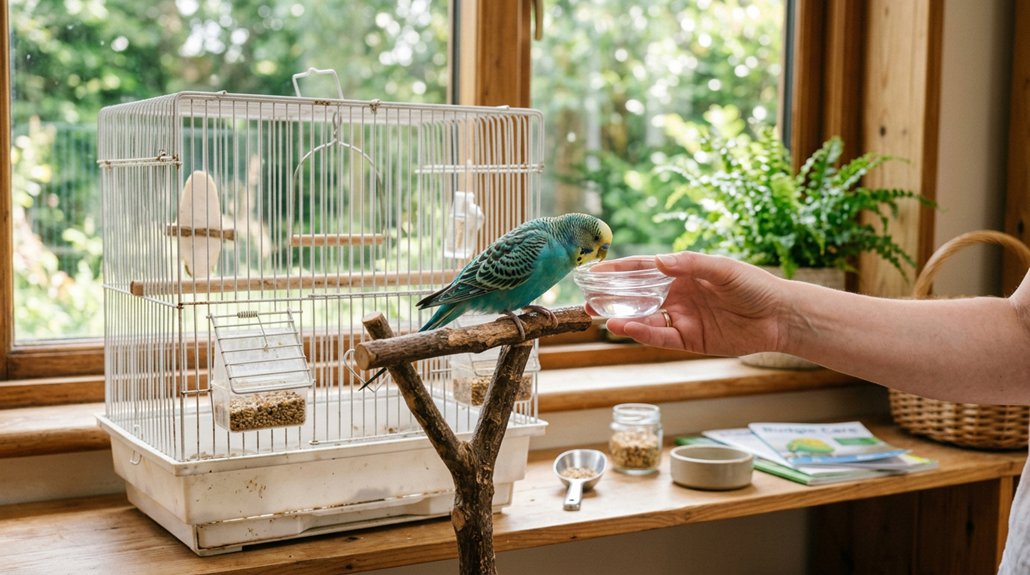
Choosing the right bird starts with matching the species to your household’s time, noise tolerance, and space. You’ll usually do well with budgies or cockatiels: budgies’re small, vocal, inexpensive, and may learn speech with frequent handling; cockatiels’re gentle, social, and often live 15–20 years. If you want minimal noise, finches fit best in pairs or groups. Parrots demand more daily interaction, higher noise tolerance, and a long-term commitment. Check color preferences only after you’ve confirmed species-specific needs, because appearance shouldn’t override welfare. Evaluate breeder reputation before purchase, and consult an avian veterinarian for diet, enrichment, and common health risks. Make sure the bird can fully extend and flap its wings, and that its activity level matches the cage volume and flight demands.
Set Up a Safe Bird Cage
You’ll need a cage that lets your bird fully extend and flap its wings, with size, bar spacing, and lockable access matched to the species’ biomechanics and safety requirements. Place the cage in a stable, well-ventilated family area away from drafts, direct sun, kitchens, and HVAC output, and maintain an ambient temperature near 70–80°F. Install multiple natural-wood perches of varied diameters and textures at different heights, with food and water dishes positioned to minimize contamination.
Cage Size And Placement
Start with the largest cage your budget allows, because a bird should be able to fully extend and flap its wings and move between at least 2–3 perches for short flights. Choose a rectangular stainless-steel or powder-coated cage with horizontal bars and species-appropriate spacing to reduce entrapment risk. Place it in a main family room at eye level or higher, where you can monitor behavior and the bird feels elevated. Avoid drafts, HVAC vents, kitchens, and windows that block UV. Provide daily unfiltered natural sunlight or full-spectrum UVA/UVB lighting, and let the bird retreat from direct sun to prevent overheating. For security, use corner placement or position the cage against a wall, and line the tray with newspaper for easy sanitation.
Safe Perches And Accessories
Once the cage is placed correctly, outfit it with perches and accessories that support normal foot mechanics and reduce injury risk. Provide natural perches of varying diameters and textures, such as dogwood or willow, plus at least one softer perch, so your bird can recruit different flexor muscles and avoid pressure sores. Use grooming perches sparingly; avoid sandpaper or abrasive surfaces, and replace concrete with softer options unless you’re limiting it to occasional nail wear. Position perches so your bird can fully extend wings and move between 2–3 perches without striking cage walls. Keep stainless-steel bowls away from perches. Choose durable, non-toxic toys with secure, lockable attachments, and no loose strings. Line the cage with newspaper, and use a grate and pull-out tray for cleaning.
Feed a Healthy Bird Diet
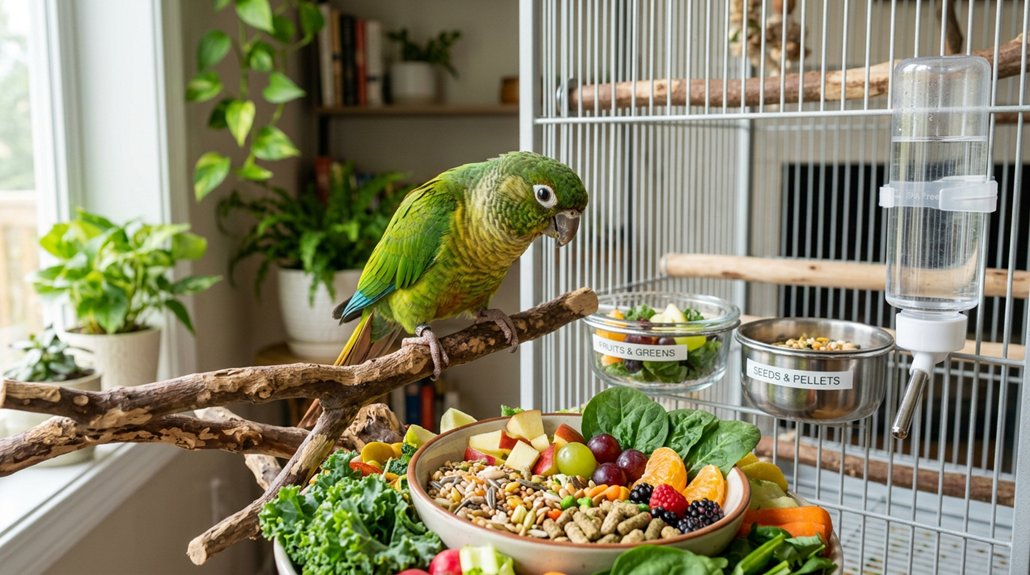
A healthy bird diet should be built around species-appropriate pellets, which should make up about 75–80% of daily intake, with the remaining 15–25% coming from fresh vegetables, leafy greens, and only a small amount of fruit. Choose balanced pellets as the nutritional base; they help stabilize protein, fat, and micronutrient intake. Use vitamin supplementation only when a veterinarian prescribes it, because excess fat-soluble vitamins can be harmful. Limit seeds and nuts to rare treats: high-seed diets’re associated with obesity, hepatic lipidosis, and cardiovascular disease.
- You’ll protect long-term organ health.
- You’ll support stronger immune function.
- You’ll reduce preventable, diet-related suffering.
Provide fresh water daily, clean dishes weekly, and guarantee UV exposure for vitamin D and calcium metabolism. Shift slowly from seeds, tracking weight closely.
Create a Daily Bird Care Routine
Each day, provide fresh food and water, replacing water every 24 hours and keeping the diet anchored by about 75–80% high-quality pellets plus 15–20% fresh fruits and vegetables. Build your morning checklist around hygiene and health: remove droppings and food debris, inspect the cage, and note appetite and droppings. Once weekly, wash the enclosure with hot, soapy water. Schedule 20–60 minutes of supervised out-of-cage social time for species like budgies and cockatiels, with training, foraging, or gentle handling. In the evening, use evening bonding to reinforce trust and observe behavior. Rotate 2–3 toys weekly, maintain 2–3 perches of varied diameters and textures, and provide bathing opportunities at least twice weekly. Weigh your bird during routine changes and seek avian veterinary care for lethargy, fluffed feathers, or abnormal droppings.
Provide Enrichment and Exercise
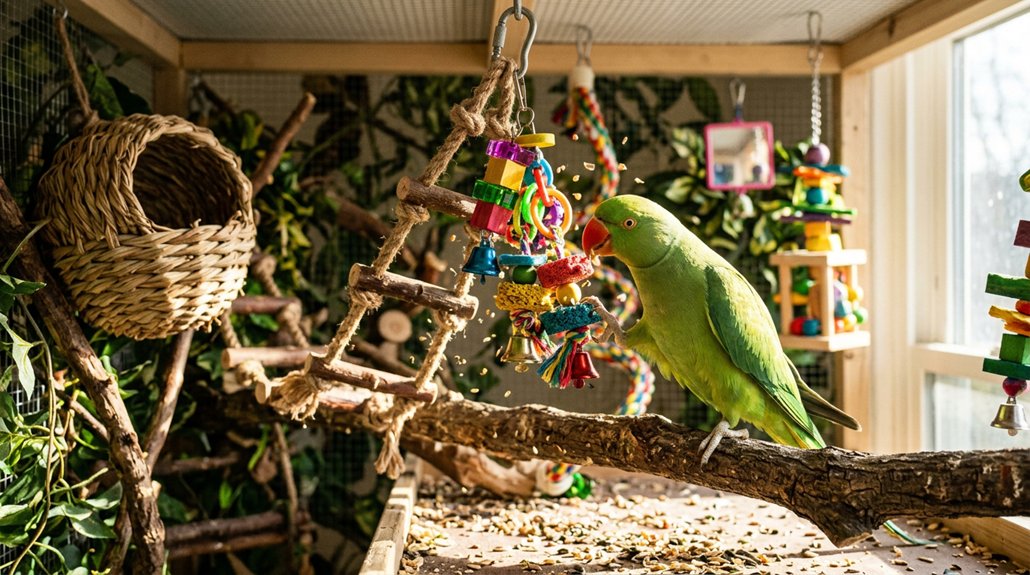
You should provide your bird with 30–60 minutes of supervised out-of-cage time each day in a secure, enclosed room so it can fly, climb, and interact safely. Rotate 4–6 interactive toys, including chewables, foraging devices, bells, and puzzle feeders, every 2–3 weeks to maintain novelty and support problem-solving. Add varied perches, ladders, ropes, and a play gym to promote safe flight, climbing, and foot-muscle conditioning.
Interactive Toys
Interactive toys are essential for avian enrichment because they stimulate foraging behavior, reduce boredom, and support physical activity. You should provide 3-5 varied toys—chewable, foraging, and shreddable—and rotate 2-3 each week to maintain novelty and problem-solving. Use foraging puzzles that hide small pieces of fresh vegetables or a few seed treats; this mimics natural feeding and lengthens intake. Offer chew toys made from bird-safe materials, such as untreated willow, fruit tree branches, leather, or natural fiber ropes, to support beak wear. Include ladders, swings, and ropes sized for your species to promote coordination.
- Curiosity
- Engagement
- Confidence
Inspect toys weekly for loose parts or frayed fibers, and replace damaged items promptly to prevent ingestion or entanglement hazards.
Safe Flight Time
Safe flight time builds on toy-based enrichment by adding whole-body exercise and species-appropriate aerial movement. You should provide supervised flightspaces in a bird-safe room for 20–30 minutes daily, longer for active species, to support cardiopulmonary conditioning and muscle tone. Prepare the area by closing windows and doors, covering reflective surfaces, switching off ceiling fans, and removing hazards. Use a play gym or perch network that permits short flights and full wing extension.
| Parameter | Recommendation | Rationale |
|---|---|---|
| Duration | 20–30 min | Exercise |
| Supervision | Constant | Injury prevention |
| Toys | Lightweight | Safe retrieval |
| Heights | Varying | Flight practice |
| Training | Flight recall training | Control |
Never fly after recent wing clipping until cleared by a vet or trainer. Stop if you notice fluffed feathers or heavy breathing.
Spot Common Bird Health Problems
Birds often conceal illness until disease is advanced, so subtle changes in behavior or appearance deserve immediate attention. You should watch for subtle signs such as fluffed feathers, reduced activity, or sitting on the cage floor; these can signal systemic disease.
- Respiratory clues: tail bobbing, wheezing, open-mouth breathing, or discharge around the nares and eyes.
- Digestive clues: watery droppings, abrupt color shifts, or undigested food in the feces.
- Feather issues: plucking, frayed feathers, or bald patches, which may reflect stress, parasites, nutritional deficits, or skin disease.
Weigh your bird regularly with a gram scale; a loss of 5–10% in a short interval, or a steady 1–2% weekly decline, is clinically significant. Precise observation helps you detect disease early.
When to See an Avian Vet
If you notice the kinds of subtle changes described above, don’t wait to see whether they resolve on their own. Birds mask disease, so you should schedule annual exams with an avian veterinarian; high-risk or breeding birds need visits every 6–12 months. Seek immediate care for a sudden fluffed appearance, decreased appetite, labored breathing, ocular or nasal discharge, limping, or abnormal droppings. Call urgently for reproductive emergencies, especially egg binding, which may present as straining, abdominal distension, or lethargy, and for any suspected toxin exposure, including household fumes, avocado, or heavy metals. Before the visit, bring a fresh fecal sample, recent weight records, and notes on diet or behavior changes. Daily gram-scale weighing helps detect early deterioration. Choose an avian-experienced clinic before bringing your bird home.
Frequently Asked Questions
What Is the 3 3 3 Rule for Birds?
It’s a 3-phase acclimation guideline: 3 days for stress recovery, 3 weeks for routine adjustment and social bonding, 3 months for stable behavior training, feather health, and environmental enrichment; monitor appetite, droppings, and activity.
What Is the Easiest Bird to Take Care of for Beginners?
You’ll usually find a budgie easiest; it’s small, inexpensive, social, and usually tolerant of handling. Your budgie behavior may improve with daily out-of-cage time. Cockatiels need more cockatiel training and interaction overall.
How to Take Care of a Bird for Beginners at Home?
You’ll provide a spacious cage, balanced diet, and clean water; you’ll clean daily, offer daily enrichment, and monitor weight. Keep proper nutrition, UV light, quiet sleep, and vet checks so your bird stays healthy.
How Do You Say “Hi” in Bird Language?
You’d say “hi” through bird vocalizations—usually soft chirps or contact calls—plus gentle beak tapping or an open, relaxed posture. Mimic your bird’s species-specific greeting, then reward any responsive chirp, hop, or approach.
Conclusion
In caring for your bird, you’re combining husbandry, nutrition, and behavioral enrichment into a coherent welfare protocol. If you select an appropriate species, maintain a secure cage, provide a balanced diet, and monitor daily activity, you reduce risk and support long-term health. Watch for subtle changes in droppings, appetite, or feather condition, because early intervention matters. When you’re unsure, consult an avian vet promptly; your bird isn’t a Renaissance relic, but it still needs expert care.