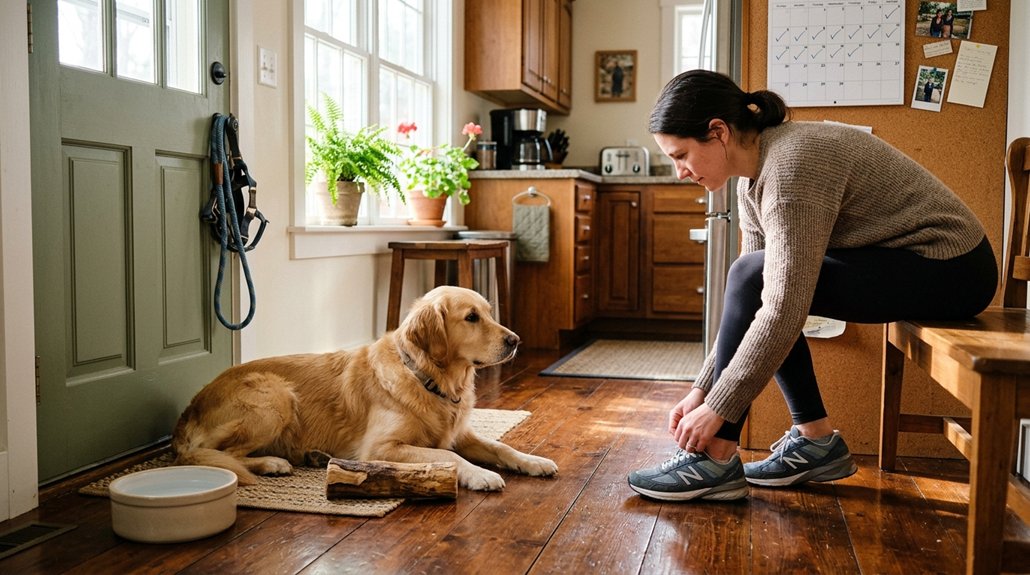
To stay consistent living with a dog, establish a stable daily routine with regular meal times, walks, and potty breaks. Reward good behaviors with treats or praise right away, and encourage social interaction to build your dog’s confidence. Keep training sessions short and engaging, using varied commands to prevent boredom. Focus on quality interactions to nurture your bond. By maintaining this consistency, you’ll create a harmonious home with a well-adjusted pet. Discover more effective ways to enhance your relationship.
Key Takeaways
- Establish a daily routine for feeding, walks, play, and potty breaks to create stability.
- Use consistent positive reinforcement to reward good behaviors and strengthen your bond with the dog.
- Engage in regular social interactions to build your dog’s confidence and social skills.
- Conduct short, varied training sessions regularly to keep your dog engaged and focused.
- Prioritize quality interactions through play and grooming to foster a strong emotional connection.
Establish a Stable Daily Routine
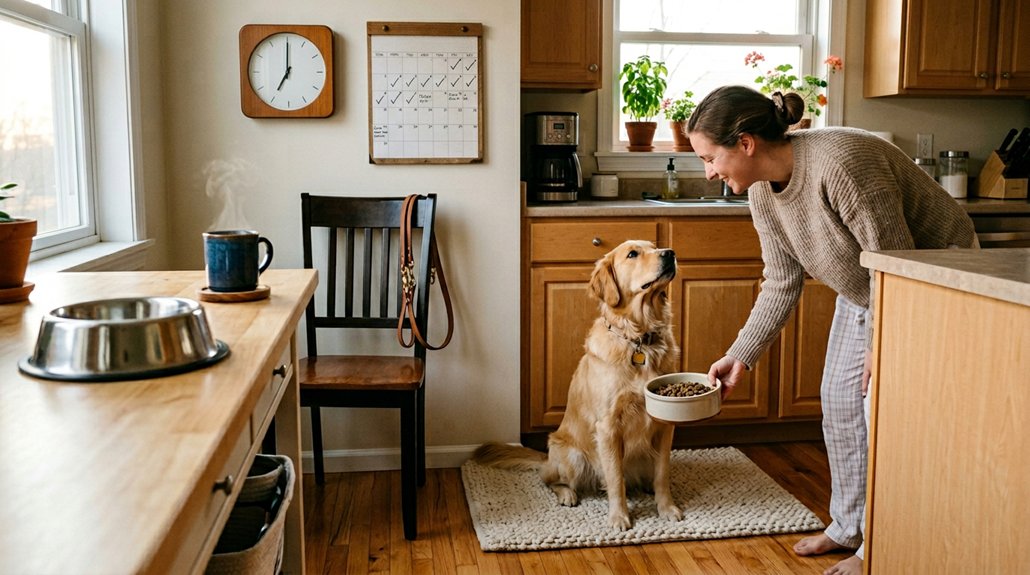
Establishing a stable daily routine for your dog isn’t just beneficial—it’s essential for their well-being and happiness. By sticking to consistent meal timing, you create a sense of security that helps reduce anxiety, particularly in new situations. Dogs thrive on knowing when their next meal is coming, so make sure feeding times are regular. Similarly, activity scheduling, including walks and play sessions, provides the structure they crave. It keeps them mentally stimulated and physically fit, preventing undesirable behaviors like excessive barking or jumping. Including scheduled potty breaks enhances their understanding of when and where to relieve themselves, streamlining potty training success. Through consistent daily routines, especially during changes, you foster a normalcy that helps them feel secure and comfortable.
Consistently Reward Good Behaviors
With a stable daily routine in place, another key element to ensuring your dog’s happiness is consistently rewarding good behaviors. By selecting a variety of high-value treats, you’ll keep your dog’s interest and motivation high. Remember, behavior timing is essential; reward your dog immediately after they display the desired action to help them associate the reward with their behavior.
Consider incorporating rewards like treats, praise, or playtime not only in training sessions but also in everyday situations, such as walks or when guests arrive. This helps your dog understand that good behavior is expected in all scenarios. As your pup masters specific behaviors, maintain consistency in the type and delivery of rewards to firmly establish lasting habits and strengthen your bond.
Encourage Social Interaction
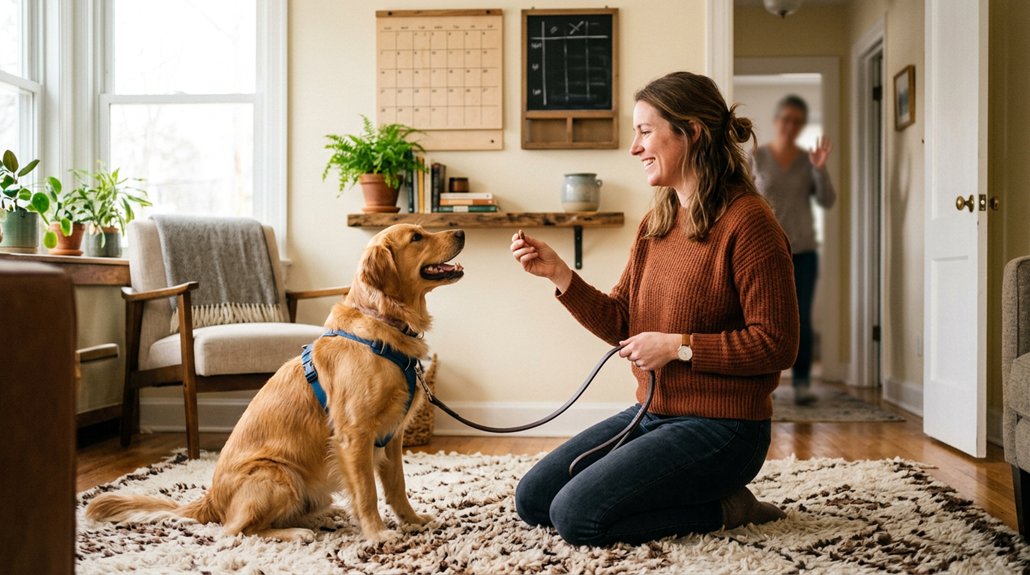
A crucial aspect of your dog’s overall development is social interaction. Regular socialization, whether at dog parks or through playdate planning, is essential for emotional and behavioral growth. Introduce your dog to various environments, people, and animals to boost confidence and reduce anxiety. Always practice dog park etiquette by ensuring your pet is comfortable and respectful with others.
| Activity | Benefit | Tip |
|---|---|---|
| Dog Park Visit | Builds confidence | Monitor interactions |
| Playdate Plan | Reduces anxiety | Choose calm dogs |
| Pack Walk | Promotes social skills | Lead with consistency |
Consistent positive reinforcement during these interactions helps teach your dog appropriate behaviors. Structured activities like pack walks offer both mental stimulation and exercise, enhancing their social skills and overall well-being.
Keep Training Regular and Engaging
As your dog’s social skills grow, maintaining regular and engaging training sessions becomes essential to reinforcing those connections. Aim for short sessions of 5 to 15 minutes, multiple times a week, to keep your dog’s interest and focus sharp. A training rotation including different commands and activities guarantees your dog doesn’t get bored and helps improve skill retention.
When practicing, incorporate real-life situations, like working around other dogs or people, so your dog learns to respond appropriately in diverse environments. Use positive reinforcement—reward with treats or praise immediately after a successful command—to strengthen desired behaviors. Consistency is vital, so make certain all family members use the same cues and commands to avoid confusion and promote steady progress in training.
Foster a Strong Bond Through Quality Interaction
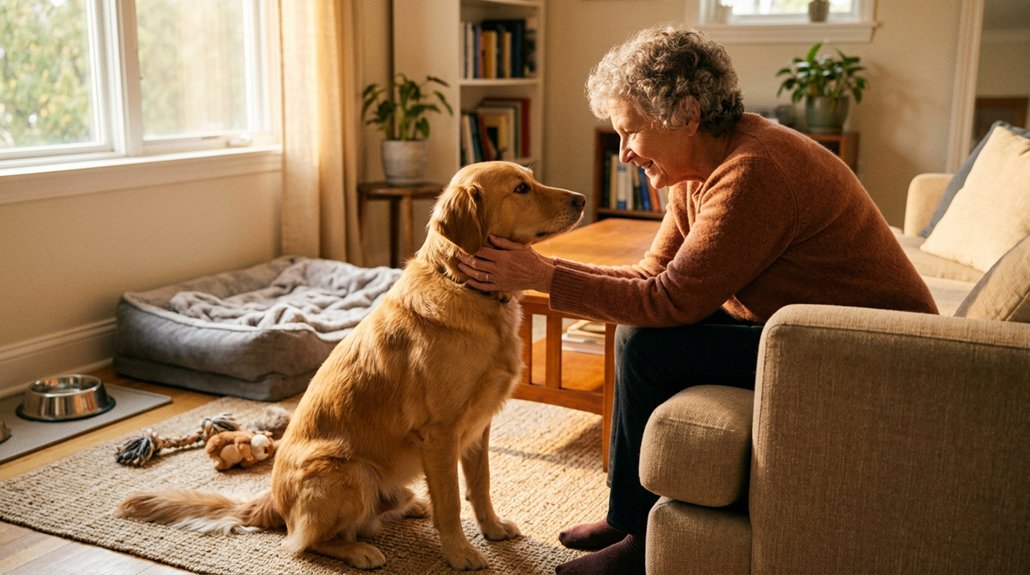
Even when life gets hectic, prioritizing quality interaction with your dog nurtures a robust emotional connection. Engaging in regular playtime not only enhances emotional trust but also provides essential physical and mental stimulation for both of you. Incorporate games and activities into your routine for manifold playtime benefits. Just being together, relaxing at home, helps your dog feel secure and valued, deepening your bond.
During daily routines like feeding or grooming, make certain these moments are positive interactions. This builds familiarity and strengthens your relationship. Allow your dog time to adjust to new experiences, reinforcing comfort in your partnership. By consistently sharing enjoyable experiences like walks or training, you can enhance trust and communication, fostering a healthy, lasting bond.
Frequently Asked Questions
What Is the 7 7 7 Rule With Dogs?
The 7-7-7 rule guides you on dog training and pet routines. It suggests dogs need seven days to settle, seven weeks to learn routines, and seven months to acclimate to you and their environment fully.
What Is the 3-3-3 Rule With Dogs?
The 3-3-3 rule is like peeling layers of uncertainty, revealing your dog’s true self. Initially, they’re adjusting behavior. Gradually, they relax, and finally, they fully embrace established routines, developing trust and comfort.
What Do I Do if I Can’t Cope With My Dog?
If you can’t cope with your dog, seek dog training tips and emotional support. Consider professional guidance, build a support network, and make certain your pet gets enough exercise and mental stimulation to ease stress. You’re not alone.
What Are Signs of an Animal Being Unhealthy?
When it comes to spotting unhealthy signs, you’ll notice symptoms to watch: sudden behavioral changes, refusal of food, or uncharacteristic lethargy. Don’t ignore changes; they’re whispers of your dog’s wellbeing and might need a vet’s attention.
Conclusion
Living with a dog is like starting a journey that echoes the wisdom of ancient philosophers who preached consistency and dedication. By weaving routines as solid as Penelope’s web, rewarding as Midas’s touch, and as engaging as an Odyssey, you’ll nurture a bond akin to a knight and their loyal steed. Remember, in this adventure, you’re not just caring for your dog; you’re crafting an epic tale of companionship and trust that stands the test of time.