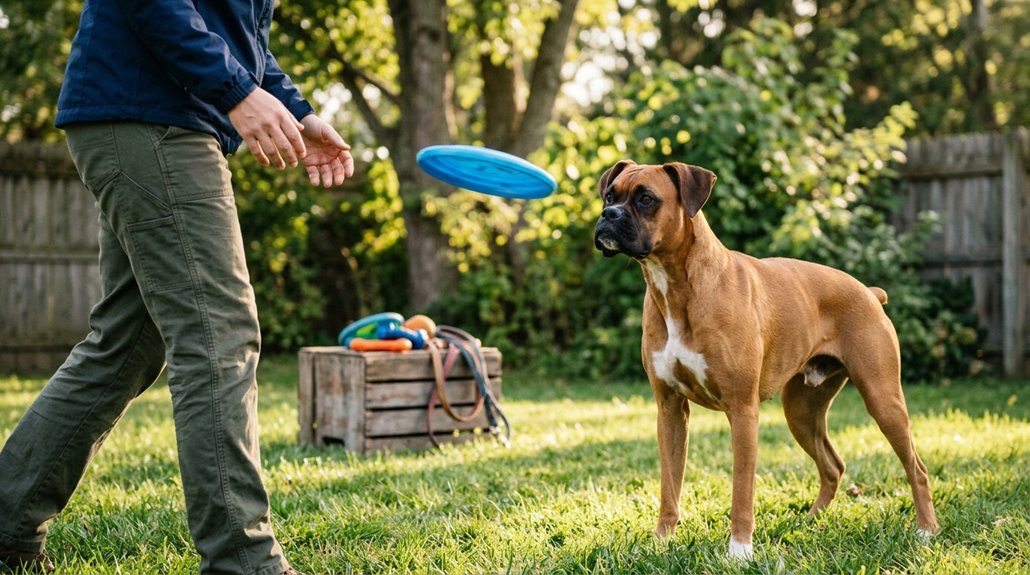
As a Boxer owner, you’ll quickly notice their blend of loyalty and playfulness, forming deep family bonds. Their temperament thrives with structured activities and positive reinforcement, essential for channeling energy and understanding your moods. Boxers require daily physical and mental enrichment, alongside grooming and nutritional diligence to prevent health issues. Early socialization and gradual exposure shape a confident, adaptable puppy. Equip yourself with the right gear, and you’ll discover the keys to a harmonious partnership.
Key Takeaways
- Boxers are loyal, playful, and form deep family bonds requiring both exercise and mental stimulation.
- Positive reinforcement training and early socialization from 8-16 weeks are crucial for Boxers.
- Adult Boxers need two hours of exercise daily to manage energy and promote health.
- Puppies benefit from structured feeding routines, transitioning to two meals per day by six months.
- Essential gear includes a well-fitted harness, durable chew toys, and cooling products for heat sensitivity.
Decoding Boxer Traits: Loyal Yet Playful
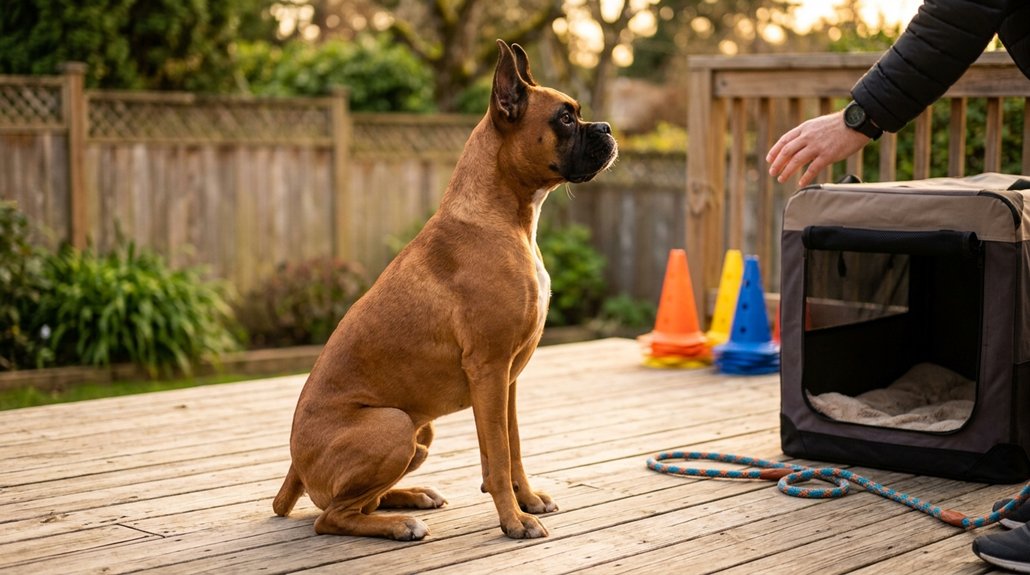
Boxers, often described as the embodiment of loyalty and playfulness, require an owner’s understanding of their unique traits to thrive. Their affectionate demeanor and energetic spirit come with the expectation of forming profound bonds with their families. Their playfulness might make you think of oversized puppies, yet it’s important to acknowledge their need for frequent exercise and mental enrichment to maintain their enthusiastic nature. To guarantee these intelligent dogs remain exuberant without becoming unruly, engage them in structured activities that channel their energy positively. Boxers’ emotional sensitivity means they’re attuned to your moods, which makes positive reinforcement training crucial. When adequately socialized and understood, Boxers transform into exceptional companions, providing both fierce loyalty and joyful companionship.
Caring for Your Boxer: Essentials Guide
Though it may seem straightforward, ensuring ideal care for your boxer requires a nuanced understanding of their specific needs. Your boxer’s grooming tips include maintaining their sleek coat and regularly cleaning facial wrinkles to avoid irritation. Understanding their exercise needs is essential—adults need about 2 hours daily, while puppies should follow a safer guideline of five minutes per month of age.
| Aspect | Details |
|---|---|
| Grooming Tips | Regularly clean facial wrinkles, minimal grooming for short coat. |
| Exercise Needs | Adults: 2 hours/day; puppies: 5 min/month of age. |
| Dietary Schedule | Start with four meals/day for puppies; shift to two by six months. |
Regular vet visits are critical, as boxers can develop hip dysplasia and skin allergies. A high-quality diet supports healthy growth and prevents obesity, ensuring lifelong health.
Training Success: From Commands to Confidence for Boxers
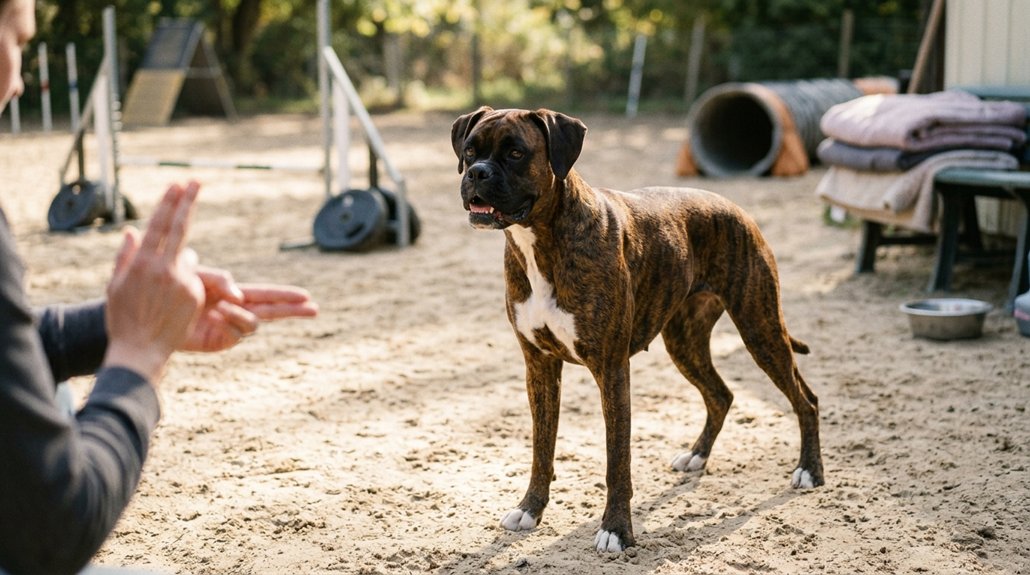
Engaging in advanced training elevates their focus and energy management, deepening your bonding process. Recognizing Boxers’ sensitive nature, a structured routine abundant with positive interactions is essential, helping them thrive emotionally while preventing stubborn tendencies. Early socialization from 8-16 weeks promotes adaptability, ultimately turning potential behavioral challenges into training success. Your efforts now yield lifelong benefits for both you and your Boxer.
Raising a Well-Adjusted Boxer Puppy
When you start on raising a Boxer puppy, a well-structured socialization plan is key in transforming a boisterous, energetic pup into a well-adjusted companion. Early socialization with diverse people, environments, and dogs is essential. Effective socialization strategies include gradually introducing new experiences to minimize anxiety and foster adaptability. Pairing these with consistent positive reinforcement promotes the development of good habits. Reward desirable actions with treats or praise to manage behaviors like jumping and over-excitement. Basic obedience commands, including “Sit,” “Stay,” and “Come,” should be instilled by six months to guarantee your Boxer’s reliability and safety. Additionally, adapting exercise to their age guarantees their physical and mental well-being, thereby fostering thoughtfully adjusted and contented Boxers with strong bonds to their owners.
Boxer Puppy Gear: Essentials to Get Started
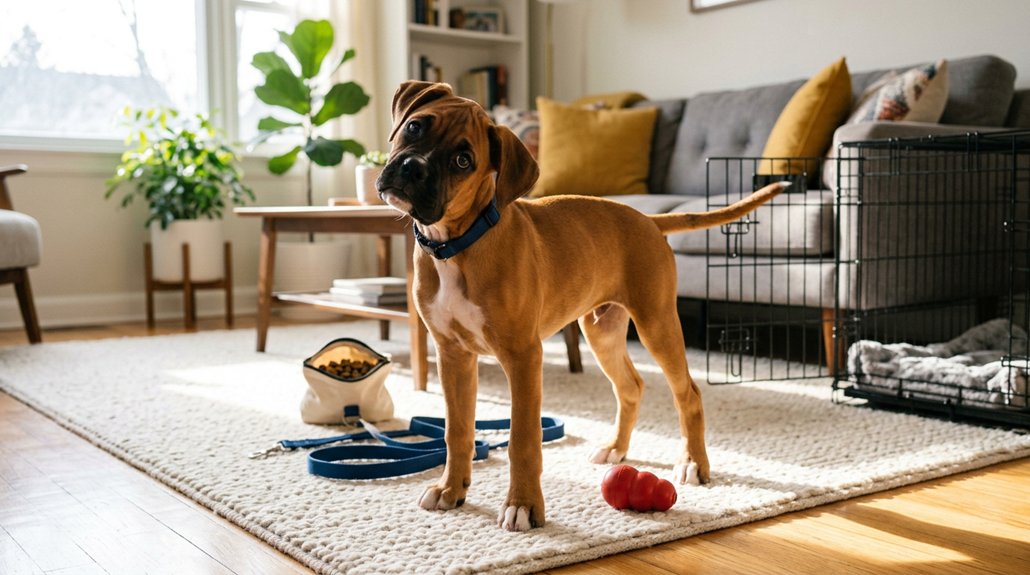
As you initiate welcoming a Boxer puppy into your home, outfitting them with the right gear is crucial for their development and comfort. Prioritize harness selection; a well-fitted harness guarantees pressure is distributed evenly, reducing pulling risks during walks. Your Boxer’s diet also needs attention; utilize slow feeders or puzzle toys to curb fast eating, minimizing the risk of gastric torsion, a condition Boxers often face. Explore durable chew toy options like KONG Extreme or Jolly Ball to channel their teething phase and natural chewing instincts effectively. An orthopedic bed is imperative for supporting joint development, while cooling products, such as mats and vests, help manage their heat sensitivity during outdoor activities, enhancing overall well-being and contentment.
Frequently Asked Questions
How Do Boxers Typically Behave Around Strangers?
Boxers exhibit a confident social behavior around strangers, characterized by curiosity and protectiveness. Their stranger interaction often involves cautious investigation. With proper socialization, you’ll find them friendly and composed, balancing alertness with a naturally amiable demeanor.
What Are Common Health Issues for Boxers?
About 25% of boxers, including those with a brindle coat, face heart issues like aortic stenosis. You should regularly consult a vet for early detection, ensuring their active lifestyle isn’t hindered by undiagnosed conditions.
How Do Boxers Handle Being Left Alone?
Boxers struggle with being left alone, often experiencing separation anxiety. You can mitigate this by implementing crate training, offering comfort and a safe space, helping them gradually adjust to solitude, promoting independence and alleviating anxiety.
What Is the Lifespan of a Boxer?
Picture the ticking clock of life; a boxer’s lifespan typically ranges from 10 to 12 years. You’ll notice the aging process can resemble a sunset, gradually slowing down with grace, reflecting their energetic youth shifting into mellow maturity.
Are Boxers Good With Other Pets?
Boxers can be good with other pets, but it’s essential to implement early socialization strategies. In multi-pet households, introducing them gradually and fostering positive interactions are vital to ensuring harmony and reducing potential behavioral issues.
Conclusion
Embracing a Boxer might seem intimidating due to their lively nature, but you’ll find their loyalty and playfulness truly rewarding. By understanding their temperament, investing in essential care, and implementing effective training, you’ll transform potential challenges into opportunities for growth. Don’t worry about the high energy; structured activities and proper guidance will channel it positively. Equip your boxer puppy with the right gear and a nurturing environment, and you’ll raise a well-adjusted, confident companion.