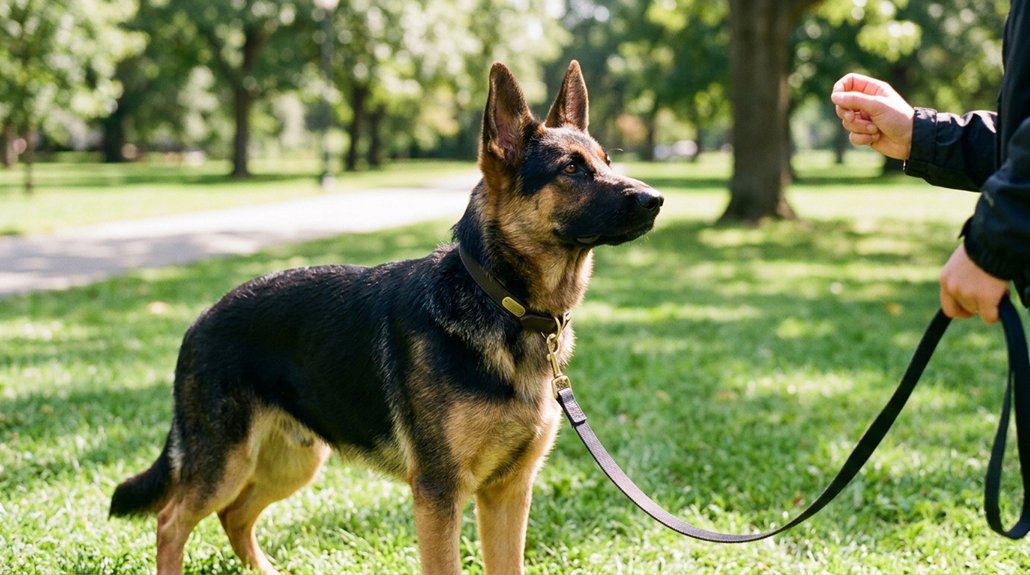
German Shepherds are intelligent, loyal, and protective, requiring early socialization to develop balanced behavior. Regular grooming helps manage their shedding, while a high-quality diet split into two meals guarantees ideal health. Exercise, both physical and mental, is crucial; aim for 1 to 2 hours daily with varied activities like agility courses and scent work. Training should start early, focusing on positive reinforcement. Pay attention to common health concerns. Discover more about nurturing your German Shepherd to thrive.
Key Takeaways
- German Shepherds rank among the top three smartest dog breeds, excelling in quick command learning and problem-solving with mental stimulation.
- Early, consistent socialization between 8 to 16 weeks is crucial for balanced temperament and confidence building in German Shepherds.
- Daily grooming handles heavy shedding; exercise of 1-2 hours daily is vital for a German Shepherd’s physical and mental health.
- Positive reinforcement and consistent training are essential, particularly between 3 to 12 months, for effective command mastery in German Shepherds.
- Routine vet check-ups help monitor genetic health concerns like hip dysplasia; a high-quality, age-appropriate diet supports longevity.
What Makes German Shepherds Stand Out?
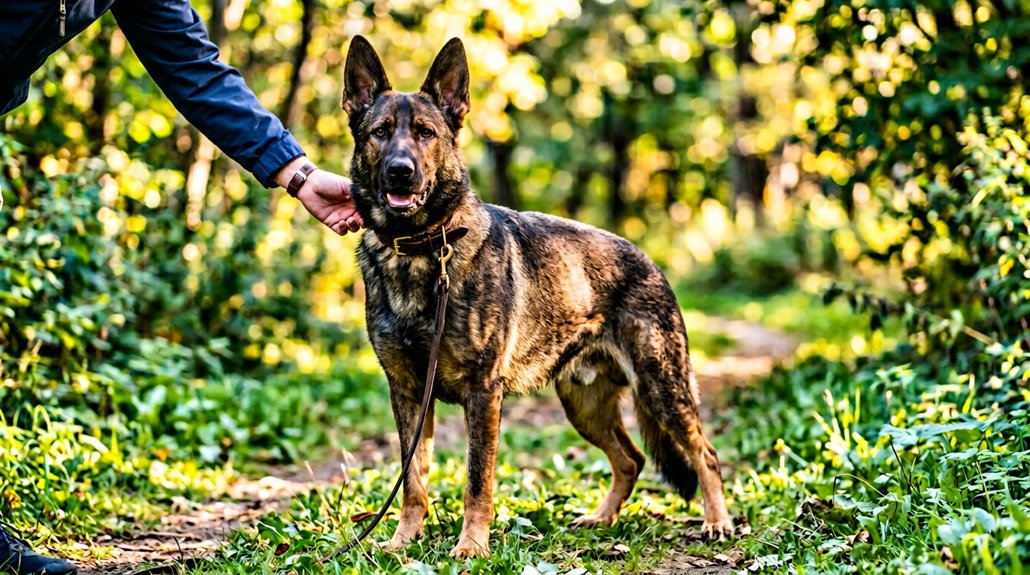
Among the qualities that make German Shepherds stand out is their remarkable intelligence, often ranking in the top three smartest dog breeds. You’re looking at a breed that excels in problem-solving and learns commands quickly, frequently mastering them within just five attempts. Their intelligence traits don’t stop at quick learning; they thrive on mental stimulation, enthusiastically engaging in tasks like scent work.
In addition to their impressive intellect, their protective nature makes them exceptional guardians. They form deep bonds with their families, showing unwavering loyalty. This protective instinct guarantees they make effective companions, always alert and ready to defend their loved ones. To harness these traits productively, regular exercise and positive reinforcement in training are essential, preventing potential behavioral issues.
Understanding Your Shepherd’s Temperament
To truly understand your German Shepherd’s temperament, it’s essential to recognize the breed’s natural loyalty, intelligence, and protective instincts. Building a strong bond with your Shepherd hinges on early, consistent socialization and exposure to diverse situations, which can shape a confident and balanced companion. Remember, engaging them in varied environments not only reduces aggressive tendencies but also reinforces their capacity to learn quickly and deeply connect with you.
Key Temperament Traits
Understanding the temperament of a German Shepherd is essential for nurturing a well-balanced and happy companion. One of their most notable behavioral traits is unwavering loyalty. They’re naturally protective, forming strong emotional bonds that are central to the loyalty factors of this loyal breed. Their intelligence and confidence rank them among the most capable dogs, but they need early socialization to prevent aggressive tendencies. Additionally, a structured environment supports their need for mental and physical challenges, reducing the risk of unwanted behaviors. Keep these points in mind to understand their key traits:
- Protective instincts demand early socialization.
- High intelligence requires mental stimulation for happiness.
- Structured environments enhance their well-being.
- Positive reinforcement is effective for training.
- Consistent exercise prevents destructive tendencies.
Building Strong Bonds
With a sound understanding of their core temperament traits, the next step is forging a robust bond with your German Shepherd. Recognize their inherent loyalty and protective instincts to develop a nurturing relationship. Engage in bonding activities such as daily obedience training and scent work, which stimulate their curious minds and reinforce positive behaviors. Integrating loyalty exercises that include consistent routines and positive reinforcement, like treats and praise, considerably strengthens your connection. Regular exercise and mental challenges aren’t just crucial; they’re essential for building trust and affection. By committing to their well-being and maintaining an active lifestyle, you’ll guarantee your German Shepherd thrives. This mutual dedication cultivates not only trust but an unbreakable bond through shared joy and understanding.
Socialization Importance
When raising a German Shepherd, the importance of socialization cannot be overstated, particularly during their formative weeks from 8 to 16. This critical period lays the foundation for puppy exposure to various environments, effectively building their confidence. Socialization helps reduce aggressive tendencies, promoting a balanced temperament and minimizing territorial behaviors. Regular, positive interactions are essential, cultivating adaptability and ensuring your Shepherd thrives in diverse settings. Consistent exposure to different people, sounds, and experiences nurtures a well-adjusted companion.
Consider these steps to enhance socialization:
- Introduce your puppy to new environments regularly.
- Arrange frequent meet-ups with varied individuals and pets.
- Enroll in group classes to develop social skills.
- Expose them to diverse sounds and activities.
- Encourage gentle interaction to boost confidence building.
Daily Care Routines for a Healthy German Shepherd
To maintain the health and happiness of a German Shepherd, it’s crucial to establish a thorough daily care routine. Begin with grooming routines as this breed sheds heavily. Daily brushing helps control indoor shedding and guarantees a healthy coat. Next, set feeding schedules with a high-quality, age-appropriate diet. Split their meals into two, typically around 8 to 10 ounces each, until they reach one year of age. Prioritize vigorous exercise; aim for 1 to 2 hours daily, including walks and interactive play to combat boredom and destructive behavior. Implement brief but regular training sessions; 5-10 minutes daily focuses on basic commands and mental stimulation such as scent work. Regular vet check-ups are essential for preventative care and monitoring health.
Common Health Concerns in German Shepherds
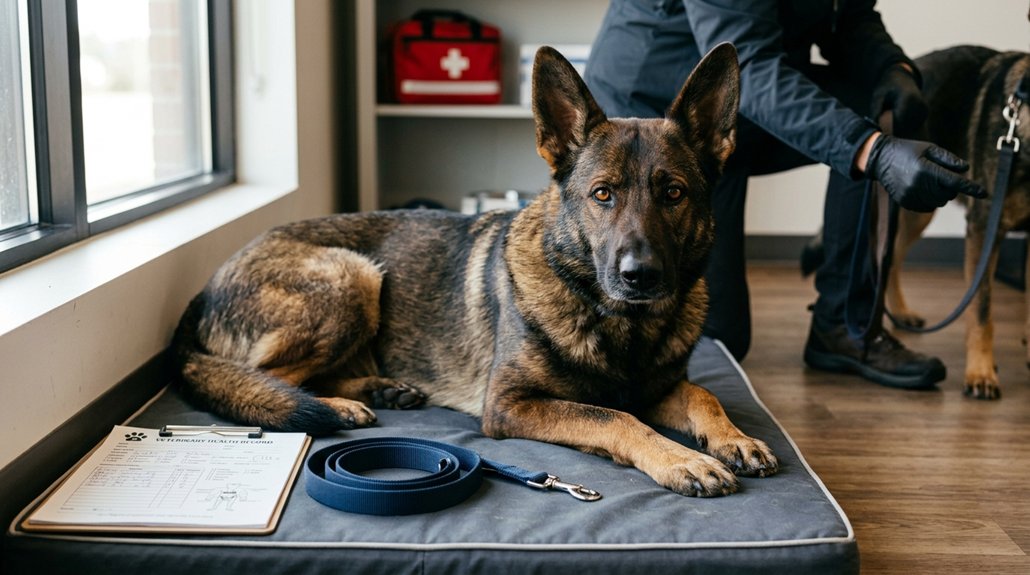
German Shepherds, beloved for their intelligence and loyalty, unfortunately, face a variety of genetic health concerns that owners must proactively manage to guarantee their well-being. Recognizing these genetic predispositions is vital for effective health management. Here’s what to watch for:
Owners should manage genetic health concerns in German Shepherds to ensure their well-being.
- Hip and Elbow Dysplasia: Often causes pain and reduced mobility if not managed early.
- Degenerative Myelopathy: A progressive ailment with no cure, leading to hind leg paralysis.
- Gastric Dilation-Volvulus (GDV): Bloat is a life-threatening condition requiring immediate attention.
- Cancer Risks: Be vigilant for signs of hemangiosarcoma or other cancers.
- Lifespan Awareness: Regular check-ups are important as they live about 9-13 years, emphasizing early detection.
Nutritional Guidelines for Feeding German Shepherds
Although feeding your German Shepherd might seem straightforward, it’s important to follow specific nutritional guidelines to secure their growth and health. For proper puppy feeding, start with age-appropriate food during their first year. This period demands special attention to their nutritional needs as rapid growth occurs.
| Feeding Frequency | Amount per Feeding | Special Notes |
|---|---|---|
| Twice a Day | 8 – 10 ounces | Maintain portion control |
| After 1 Year | Shift to Adult Food | Align with AAFCO standards |
| Regular Monitoring | Weight and Health | Prevent obesity, enhance mobility |
High-quality diets compliant with AAFCO standards prevent digestive issues and keep your German Shepherd thriving. After their first year, shift to adult food as nutritional needs change notably. Monitor their weight vigilantly to avoid obesity, securing sustained health and mobility.
Exercise Strategies for Energetic German Shepherds
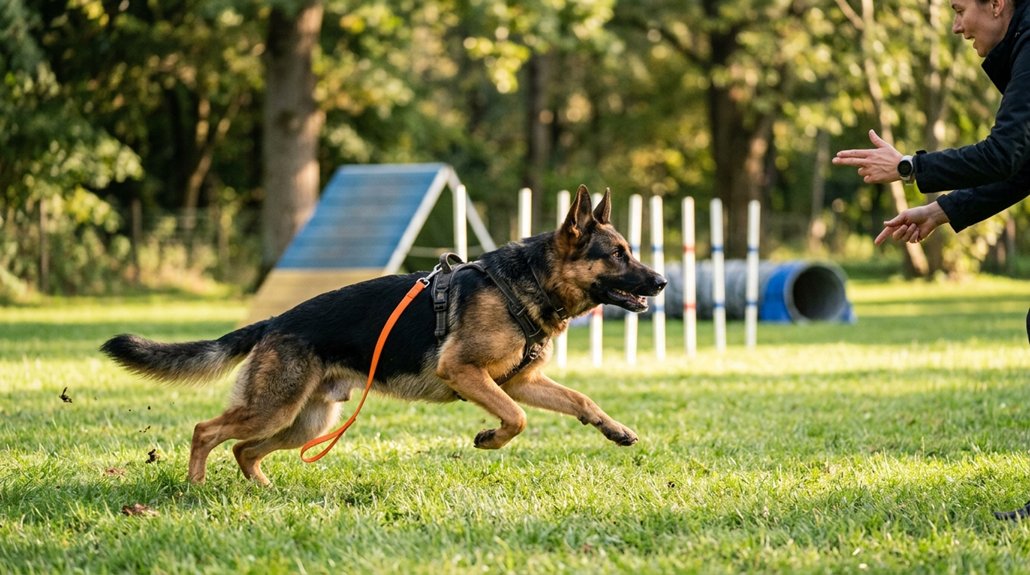
To keep your German Shepherd happy and healthy, it’s important to incorporate vigorous daily physical activities like running or playing fetch, alongside mental enrichment ideas such as puzzles or obedience exercises. Interactive play sessions can serve dual purposes, offering both the necessary physical exercise and the mental stimulation that prevents boredom. By consistently engaging in these activities, you’ll foster a deep bond and guarantee your energetic companion remains well-adjusted and content.
Daily Physical Activities
One of the fundamental elements for maintaining a healthy and happy German Shepherd is ensuring they get 1 to 2 hours of vigorous exercise daily. This breed thrives on exercise variety and vigorous activities, which are essential for their physical and mental well-being. Incorporating mental stimulation with engaging routines creates a balanced exercise plan. Consider interactive games such as tug-of-war, which not only provides physical exertion but also strengthens the bond between you and your dog. Outdoor adventures are also significant; exploring new environments can refresh and stimulate your Shepherd’s mind. To keep your dog engaged, try the following activities:
- Fetch in wide-open spaces
- Agility courses
- Scent tracking games
- Long walks in varied terrains
- Herding exercises
Mental Enrichment Ideas
Beyond ensuring your German Shepherd gets plenty of physical exercise, mental enrichment plays an equally significant role in their overall well-being. Engage their minds with scent work by hiding treats in various locations, enhancing their tracking instincts. Puzzle toys offer a thinking challenge that keeps their intelligence sharp. Set up an agility course in your backyard with tunnels and jumps to combine physical and mental exercise seamlessly. Remember to rotate toys frequently to maintain their interest and prevent boredom. Playdates are excellent for social interaction, reinforcing good behavior in dynamic environments.
| Activity | Benefit |
|---|---|
| Scent Work | Boosts tracking instincts |
| Puzzle Toys | Enhances problem-solving skills |
| Agility Course | Combines mental and physical |
| Rotate Toys | Prevents boredom |
| Playdates | Promotes social skills |
Interactive Play Sessions
Interactive play sessions can be a lifesaver when managing the boundless energy of German Shepherds. These interactive exercises provide both physical and mental stimulation, essential for channeling their drive and preventing destructive behavior. To guarantee they get at least 1 to 2 hours of daily exercise, mix activities like fetch, tug-of-war, and agility courses to harness their strengths. Incorporate scent work or hide-and-seek to tap into their instincts, enhancing playtime benefits by keeping their minds sharp. Additionally, use puzzle toys and interactive feeders to foster problem-solving abilities while challenging them intellectually. Don’t overlook regular social playdates—these are vital for bolstering their sociability and guaranteeing a well-adjusted temperament.
- Fetch and tug-of-war
- Agility courses
- Scent work/hide-and-seek
- Puzzle toys/interactive feeders
- Social playdates
The German Shepherd Puppy Development Timeline
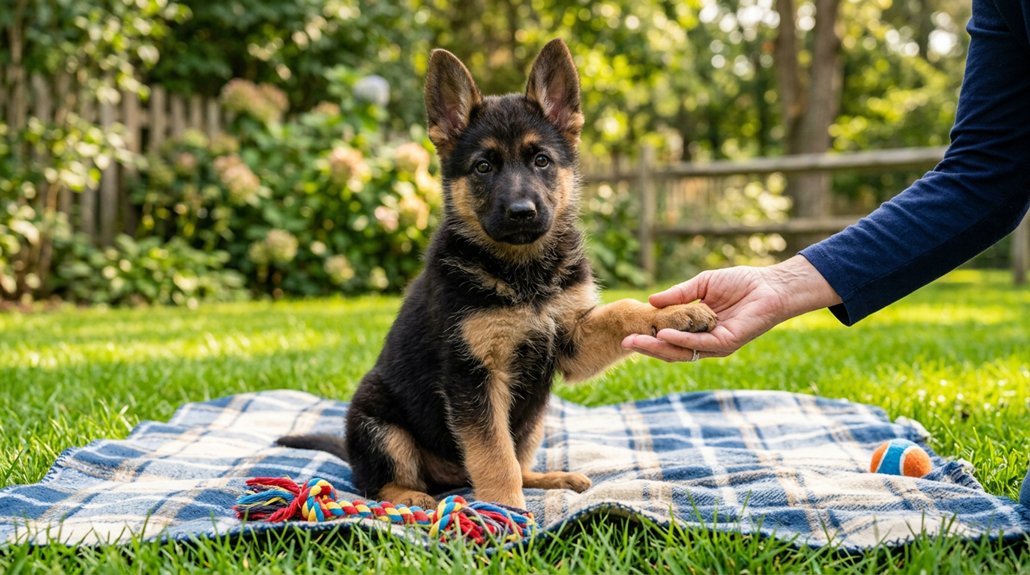
When raising a German Shepherd puppy, understanding their development timeline is crucial to ensuring they grow into well-adjusted adults. During the early growth stages, from 8 to 16 weeks, focus on achieving puppy milestones through critical socialization. Introduce them to various sights, sounds, and environments to build confidence before the socialization window closes. Between 3 to 9 months, commence obedience training with basic commands and enroll in puppy classes for enhanced socialization. As your pup approaches the adolescent stage, from 6 months to 1 year, you’ll notice increased boundary testing. Consistent training and structure are essential during these growth stages to prevent behavioral issues. By 1 to 2 years, your German Shepherd will reach young adulthood, solidifying their skills.
Training Techniques for German Shepherds
Training a German Shepherd effectively requires a blend of consistency, patience, and the right methods tailored to their intelligent and energetic nature. Start with positive reinforcement, including clicker training, to solidify basic and advanced commands. Address training challenges by being consistent in your approach and using distraction techniques when necessary. For leash techniques, teach loose-leash walking to prevent pulling. Crate training is essential, providing structure and a safe space for your pup.
- Short, daily sessions: Limit to 5-10 minutes to maintain focus.
- Reward progression: Use treats and praise to reinforce correct behavior.
- Scent work: Engage their senses for mental stimulation.
- Group training: Enhance learning with social interaction.
- Behavior modification: Tackle undesirable traits promptly.
Utilize these strategies for effective puppy training.
Socialization Tips for a Well-Behaved GSD
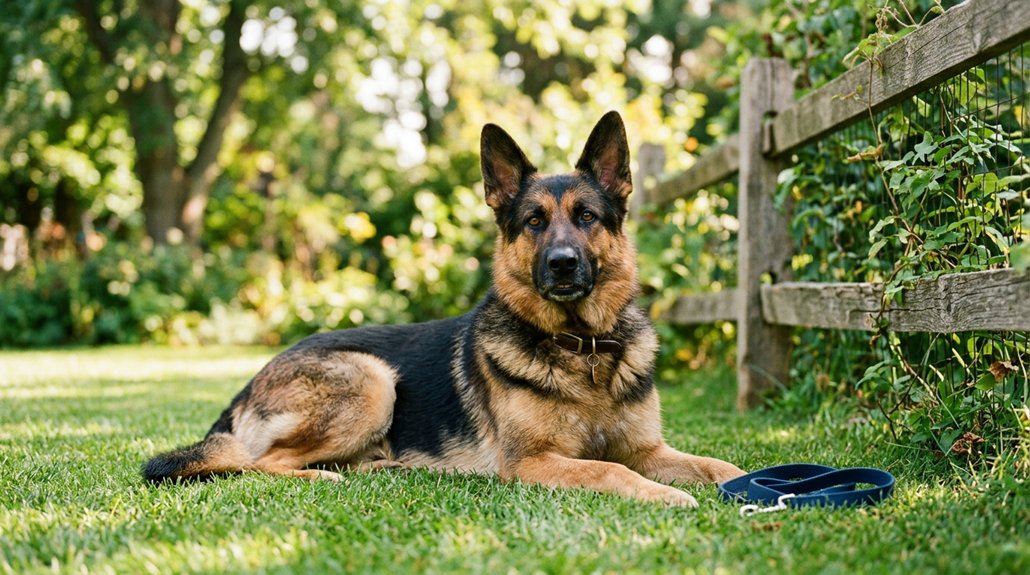
Successful socialization is essential for fostering a well-behaved German Shepherd. Begin during the early weeks, before the vital socialization window closes at 12 to 16 weeks, introducing puppy friendships and environmental exposure. By enrolling in puppy obedience classes, you provide a structured setting to nurture positive behavior.
| Socialization Component | Description |
|---|---|
| Puppy Friendships | Introduce to other puppies for social skills |
| Environmental Exposure | Parks, pet-friendly stores for adaptability |
| Positive Reinforcement | Reward calmness to associate positively |
| Continued Socialization | Lifelong exposure prevents unwanted behaviors |
| Variety of Situations | Diverse stimuli to build confidence |
Maintain socialization throughout their life, ensuring they’re well-rounded. Daily outings offer variety, helping your GSD adjust seamlessly to new situations. This foundation reduces fear or aggression, creating confident, well-mannered companions.
Frequently Asked Questions
How Can I Help My German Shepherd Overcome Anxiety Issues?
Identify your dog’s anxiety triggers and introduce gradual exposure. Use relaxation techniques, like calming music or massage, to soothe them. Consistency is key in helping your shepherd feel more secure and reducing anxiety over time.
What Are the Best Toys for Mentally Stimulating German Shepherds?
To mentally stimulate your German Shepherd, focus on interactive puzzles and durable chew toys. These toys challenge their intelligence, keep them engaged, and reduce boredom, ultimately promoting a happier, healthier dog with better overall behavior.
How Do German Shepherds Communicate When They’re in Distress?
How can you tell a German Shepherd’s in distress? They may use vocalizations like whining or barking, along with body language signals such as pacing, hiding, or showing their tail between their legs. Pay attention and act promptly.
Are German Shepherds Prone to Separation Anxiety?
Yes, German Shepherds are prone to separation anxiety. Common signs include excessive barking, pacing, and destructive behavior. You’ll notice them displaying stress when you’re leaving, often needing consistent interaction and reassurance to feel secure.
Can German Shepherds Live Harmoniously With Other Pets?
Yes, with proper socialization strategies, they can live harmoniously. German Shepherds need early exposure to different pets to enhance pet compatibility. Ensuring consistent positive interactions will help them develop friendly relationships with other animals.
Conclusion
You’ve now got a solid foundation for raising a well-rounded German Shepherd. Did you know that German Shepherds are the third most popular dog breed in the United States? Their intelligence and versatility make them exceptional companions or working dogs. By understanding their unique temperament and needs, you’re ensuring a joyful partnership. Remember, consistent training, proper nutrition, and regular exercise aren’t just recommendations—they’re essentials for keeping your energetic GSD happy and healthy.