
Golden Retrievers are known for their sociable, friendly nature, making them ideal companions. To guarantee their well-being, create a structured environment with ample activity space and maintain a family-oriented routine. Prioritize early obedience training using positive reinforcement and expose them to various social situations to enhance social skills. Proper nutrition, regular grooming, and health monitoring are essential to manage their predisposition to obesity. Explore further to master the art of nurturing your Golden Retriever from puppyhood to adulthood.
Key Takeaways
- Golden Retrievers are sociable and trainable due to their friendly nature and high intelligence.
- Establish a well-structured home environment with space and interactive toys to reduce boredom.
- Use positive reinforcement and consistent commands for effective early training and cooperation.
- Early socialization with diverse environments and playdates improves social skills and reduces anxiety.
- Prioritize nutrition, grooming, and weight management to maintain health and well-being.
Understanding the Golden Retriever’s Friendly Temperament
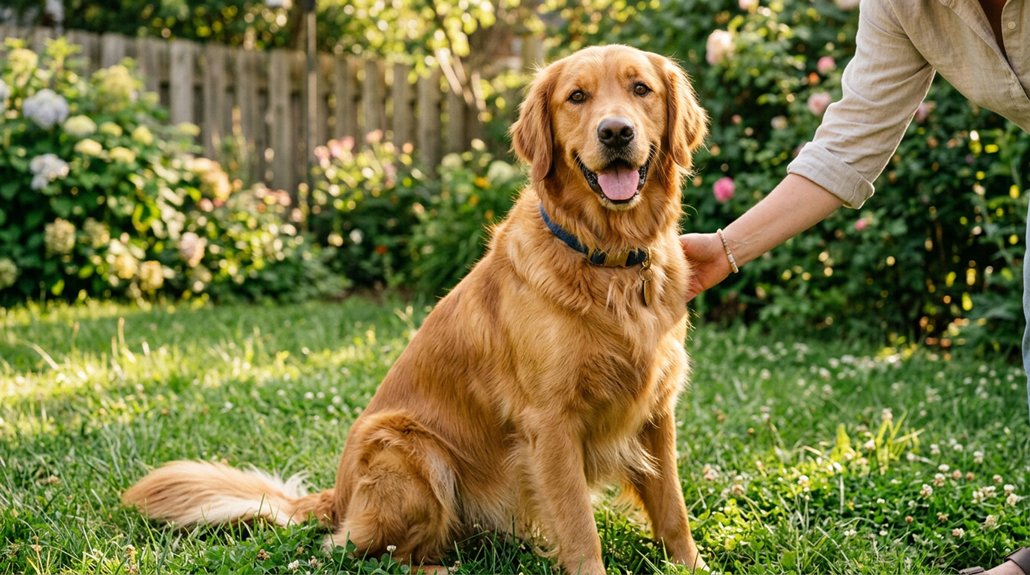
When you consider the temperament of a Golden Retriever, it’s evident how their sociable nature influences their behavior and trainability. Golden Retrievers are inherently outgoing, marked by friendly interactions that extend to both familiar faces and strangers. This characteristic underlines their preference for social bonding over aggression, making them a less likely candidate for guard duties. Their high intelligence and willingness to please enhance their trainability, allowing these dogs to excel in various tasks. Proper socialization guarantees that they’re gentle with children and coexist harmoniously with other pets. Additionally, their emotional sensitivity means they thrive best in environments with frequent social interaction, as isolation can lead to distress. As a result, consistent engagement is essential for maintaining their emotional well-being and promoting positive behaviors.
Setting Up the Perfect Home for Your Golden Retriever
A well-structured environment is essential for maintaining a Golden Retriever’s well-being and behavior. Adequate space for activity is vital, making a home environment with access to a fenced yard or nearby parks for outdoor activities indispensable. Golden Retrievers are social creatures that require companionship; a family-oriented setting mitigates stress from loneliness. Establish routines, boundaries, and rules early on, providing consistency that aids positive behavior and strengthens bonds. Interactive toys and mental challenges within the home environment offer significant stimulation, reducing the risk of destructive behavior due to boredom. Regular grooming, involving weekly brushing, addresses heavy shedding and supports coat health. By implementing these strategies, you’re providing an ideal environment for your Golden Retriever’s long-term happiness and well-being.
Effective Training Tips for Golden Retriever Success
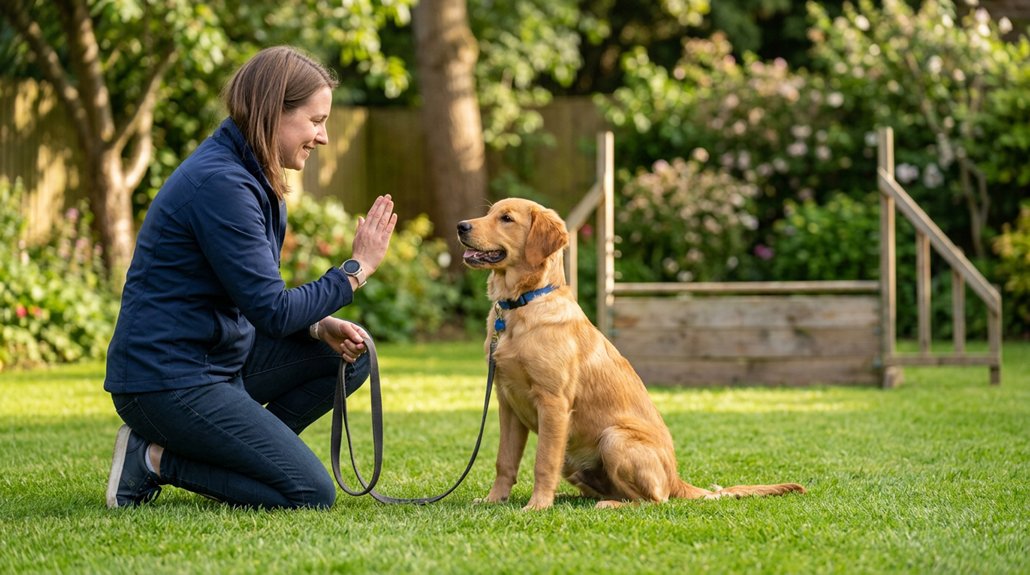
Golden Retrievers excel in environments where training is prioritized early in their development. Initiate with fundamental commands to build a robust basis for obedience and cooperation. Positive behavior reinforcement—using treats and praise—minimizes stress and encourages desired behaviors during sessions. Training consistency is crucial; guarantee all family members apply identical commands and responses to prevent confusion. Incorporate mental challenges such as teaching tricks and engaging in scent work to keep your Golden Retriever’s mind stimulated. Regular, engaging exercises reinforce training concepts effectively, fostering growth and adaptability. Early training underpins a well-adjusted adult dog, aiding in the prevention of anxiety and behavioral issues. Focusing on these scientific strategies, you’ll enable your Golden Retriever to thrive with a balanced and enriched life.
How to Socialize Your Golden Retriever for a Happy Life
While effective training lays the groundwork for a well-behaved Golden Retriever, guaranteeing a happy and confident dog involves another key facet: socialization. During the pivotal puppy stage (3-14 weeks), exposing your Golden Retriever to diverse environments is essential. Experiences such as puppy playdates with friendly dogs or visits to various settings can greatly boost their social skills. Early exposure fosters confidence and adaptability, integral for positive interactions with different people and animals. Use positive reinforcement to teach proper greeting behaviors, avoiding jumping or lunging. Gradually introduce new stimuli—sounds, sights, and smells—to help minimize future anxiety. Continuous socialization throughout their life guarantees Golden Retrievers remain well-adjusted, thriving companions comfortable in various situations.
Key Health and Nutrition Tips for Your Golden Retriever
Though each Golden Retriever is unique, paying close attention to their health and nutrition is essential for their well-being. Effective weight management is important due to their predisposition to obesity. Feed them high-quality, AAFCO-compliant commercial dog food, adjusting portions as needed.
| Age Group | Dietary Focus |
|---|---|
| Puppies | Large breed puppy formulas for growth |
| Adults | Maintenance nutrition for energy levels |
| Seniors (8+yrs) | Joint-supporting diets |
Monitoring dietary requirements helps address the specific needs of each life stage, enhancing overall well-being. Regular veterinary check-ups are crucial to catch prevalent health issues, like heart conditions and cancer. Consistency in feeding schedules—typically twice daily—supports digestion and curbs overeating. By managing dietary needs attentively, you’ll optimize your Golden Retriever’s health.
Grooming Essentials to Keep Your Golden Retriever Looking Great
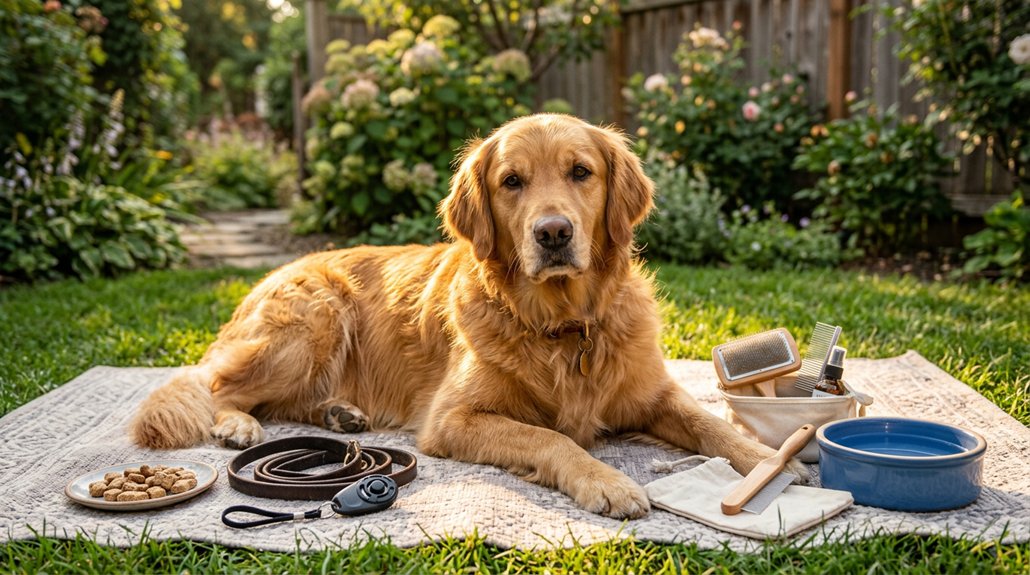
Proper grooming is a crucial aspect of caring for Golden Retrievers, as their distinctive double coat requires meticulous upkeep. Regular brushing techniques are necessary to maintain coat care, prevent matting, and minimize shedding. Here’s a concise guide to grooming essentials:
Caring for Golden Retrievers involves meticulous grooming to maintain their double coat and minimize shedding.
- Brushing: Use a slicker brush at least two to three times weekly. During shedding seasons, increase the frequency to daily to manage loose hair effectively.
- Bathing: Bathe every 6-8 weeks to maintain a vibrant coat and optimal skin health. Adjust frequency based on dirt accumulation.
- Ear Cleaning and Nail Trimming: Clean ears weekly and trim nails monthly to prevent infections and guarantee comfort.
- Familiarization: Introduce grooming from a young age to build trust, ensuring a stress-free experience for both you and your dog.
Nurturing Your Golden Retriever From 8 Weeks to 2 Years

As you commence nurturing your Golden Retriever from 8 weeks to 2 years, understanding the significant developmental phase they undergo is key to shaping their future behavior and well-being. At this stage, puppies are impressionable; early and varied socialization is important for mitigating puppy anxiety and fostering confidence. Gradual exposure to new environments guarantees they grow into well-adjusted adults. Implement consistent training routines, focusing on positive reinforcement, to instill obedience and proper behavior management.
During the 2-6 month period, they may experience fear stages, necessitating a stable environment. Confidence building is essential, alongside maintaining regular exercise and mental stimulation. Grooming shouldn’t be overlooked—routine brushing and nail trimming are crucial for their overall health and comfort, preventing issues like matting.
Frequently Asked Questions
How Do Golden Retrievers Interact With Other Pets?
Golden Retrievers exhibit strong inter pet communication and are known for their amicable demeanor, facilitating Golden Retriever friendships. They usually introduce themselves gently, displaying patience and sociability that fosters positive interactions with other pets in a household.
What Are Common Behavioral Problems in Golden Retrievers?
In Golden Retrievers, common behavioral problems include separation anxiety and destructive chewing. They may occur due to insufficient mental stimulation or exercise, highlighting the importance of routine training, enrichment activities, and social interaction for managing these behaviors.
Are Golden Retrievers Good Service or Therapy Dogs?
Golden Retrievers excel as service and therapy dogs, with over 60% of these roles filled by such breeds. Their intelligence, adaptability, and empathy make them ideal, providing unparalleled benefits like emotional support, enhanced interaction, and improved socialization.
How to Handle a Golden Retriever’s Shedding Season?
To handle a Golden Retriever’s shedding season, you’ll need effective grooming tools. Regularly brushing using deshedding brushes reduces fur loss. Scientific studies suggest routine baths with shedding shampoos can minimize shedding. Maintain a consistent grooming schedule for best results.
Can Golden Retrievers Adapt to Apartment Living?
Golden Retrievers can thrive even in apartments as if chasing the stars when handled right. With proper exercise routines, understanding their space considerations, and managing noise tolerance, these adaptable dogs can fit an apartment lifestyle superbly.
Conclusion
Caring for your golden retriever isn’t just a walk in the park—it’s a rewarding scientific journey into ideal canine companionship. By understanding their sunny disposition, establishing a nurturing habitat, and using insightful training techniques, you’re setting the stage for a well-rounded life. Socializing guarantees balanced emotions, while nutritional vigilance fuels overall well-being. Grooming isn’t mere maintenance; it’s essential care for their golden allure. Embrace this responsibility and foster a wagging tale of joy and harmony.