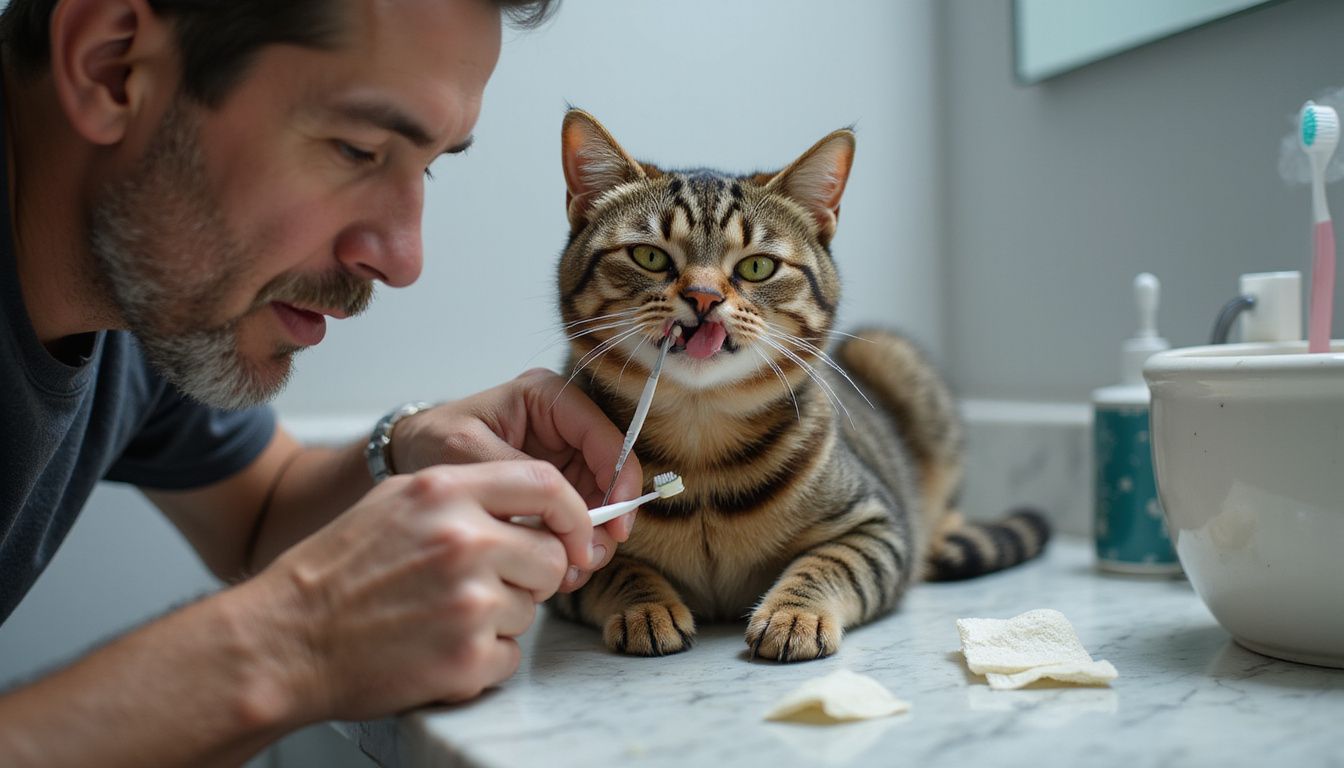
Ever lean in for a cuddle, then pull back fast because your cat’s breath just about knocked you over?
You’re not imagining it.
That smell is often the first sign your cat needs better dental care, and here’s a number that might surprise you: up to 85% of cats show signs of periodontal disease by age two.
This guide covers everything you need for solid cat dental care, from picking the right tools to mastering a brushing technique that actually works.
I’ll walk you through the exact steps, one small stage at a time. Grab a treat for your cat, and let’s get started.
Key Takeaways
- Up to 85% of cats show periodontal disease by age two, so dental care matters from the start.
- Brush your cat’s teeth daily using a soft-bristled cat toothbrush and cat-safe toothpaste to clear plaque before it hardens.
- Dental treats, oral gels, and prescription diets support oral health, but none of them replace regular brushing or professional cleanings.
- Watch for warning signs like bad breath, red gums, reluctance to eat, and visible tartar buildup.
- Annual professional dental cleanings and exams catch hidden problems early and help you avoid costly extractions or serious illness.
Why should I brush my cat’s teeth?
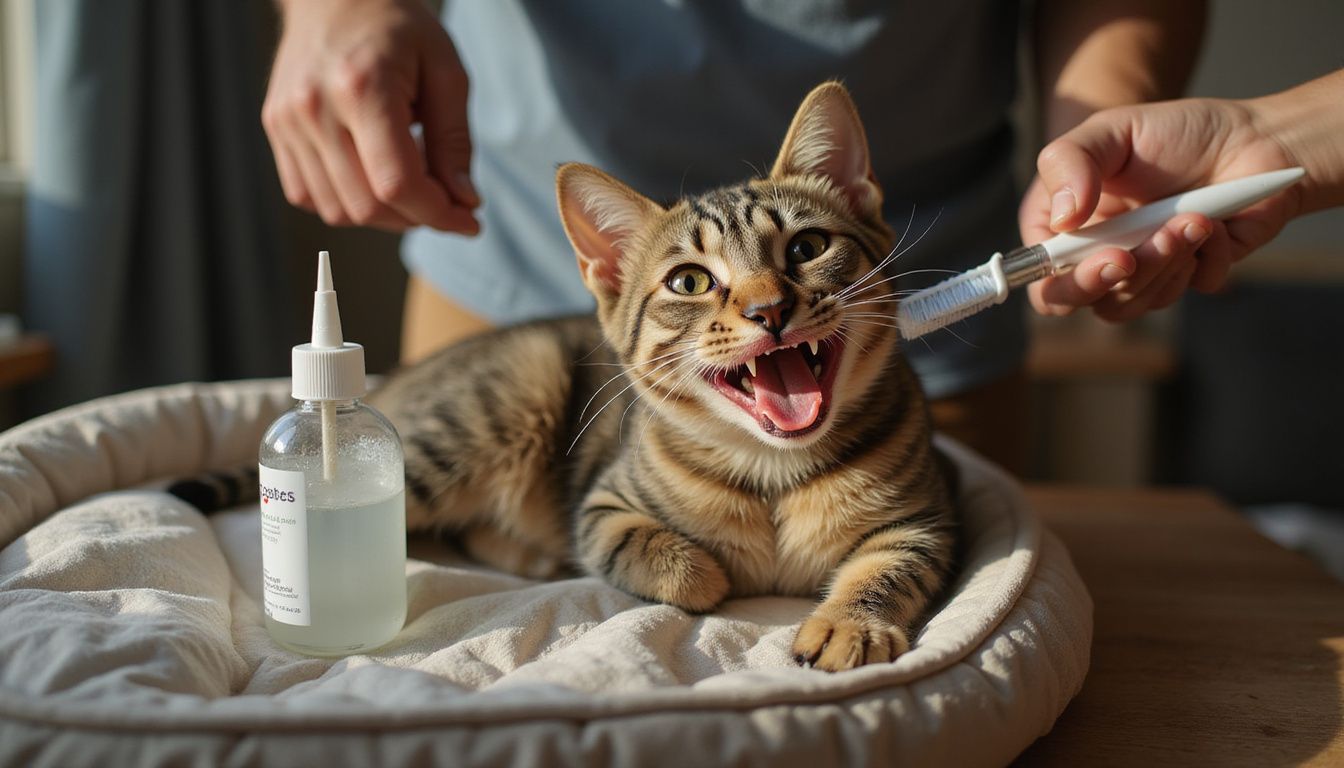
Your cat’s teeth face the same threats human teeth do. Plaque starts forming within hours of every meal.
According to VCA Animal Hospitals, that plaque can harden into stubborn tartar in as little as 24 hours. Skip brushing for even a day or two, and you give plaque time to turn into something a toothbrush can’t remove anymore.
Here’s how the damage builds if it goes unchecked:
- Plaque forms within hours of eating, coating each tooth in a thin, sticky film.
- Tartar hardens within a day or two, cementing itself onto the tooth where only a vet can remove it.
- Gingivitis sets in, causing red, swollen gums that bleed easily when touched.
- Periodontal disease develops, destroying the bone and tissue that hold your cat’s teeth in place.
Brushing breaks this cycle early. The mechanical action of a toothbrush physically knocks plaque loose before it ever gets a chance to harden.
The bacteria living in your cat’s mouth don’t stay put, either. These germs can slip into the bloodstream and travel through the body, attacking organs like the heart and kidneys along the way.
Starting oral care early gives you the best odds of avoiding all this. If you’re bringing home a kitten, now is the perfect time to build the habit before problems ever start.
A cat with healthy teeth is a cat with a healthy future.
Tooth loss is just one outcome of neglected dental disease. Many cat owners don’t realize how directly oral hygiene ties to their pet’s overall health and lifespan.
Professional cleanings at the vet help a lot, but they require anesthesia, which carries its own risks. Daily brushing at home gives you control over your cat’s dental health without waiting for a problem to show up.
Dental treats, water additives, and prescription diets offer good backup support. Still, nothing replaces the direct cleaning action of a toothbrush against the tooth. Start this routine now, even before you adopt, and you’ll be ready to protect your future cat’s smile from day one.
Tools You Need for Cat Dental Care

You’ll need a few specific supplies to make cat dental care work. Getting the right toothbrush, cat-specific toothpaste, and oral rinses sets you up for success with your feline friend.
What kind of toothbrush is best for cats?
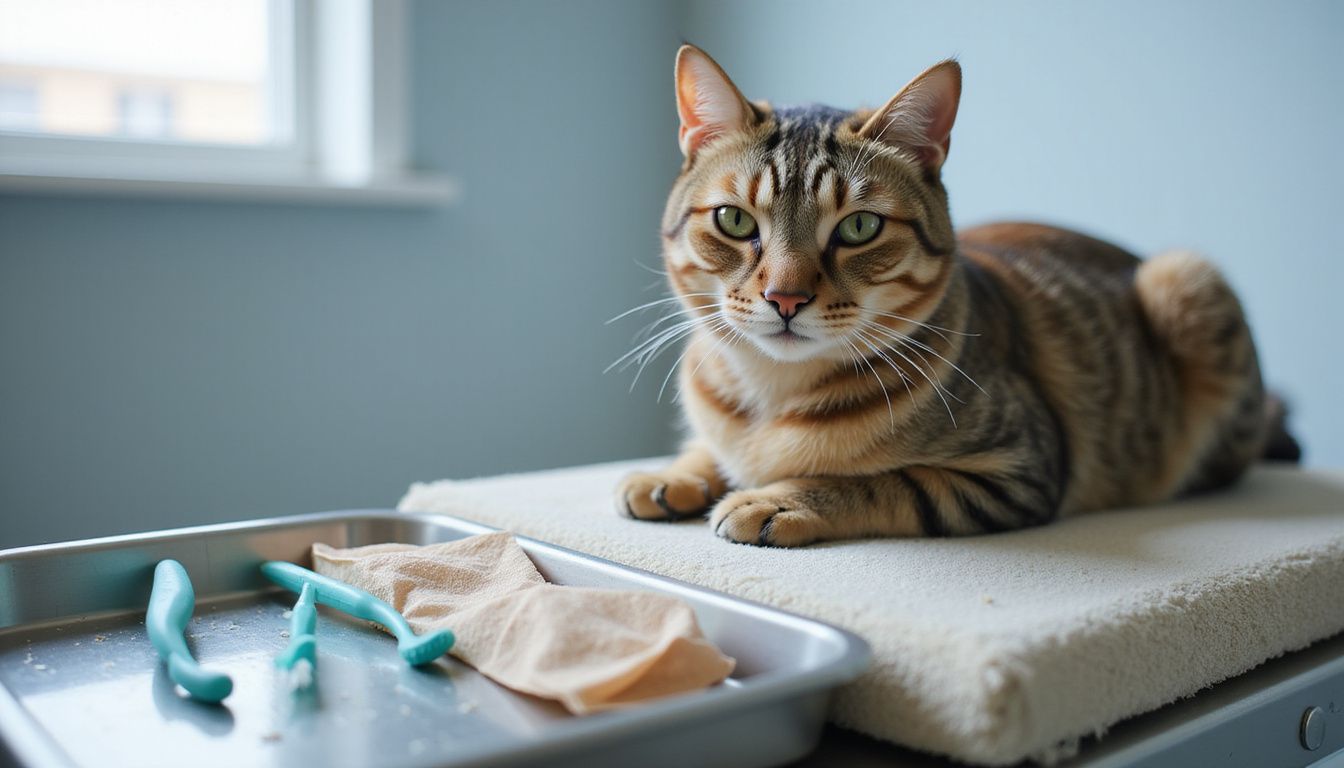
Your cat’s mouth is small and sensitive, so picking the right toothbrush matters. Pet supply stores stock brushes made just for cats, and these are your best bet. Cat toothbrushes are smaller and softer than human ones, built to fit a cat’s mouth comfortably.
Soft bristles protect delicate feline gums from damage during brushing. Some brushes fit right over your finger, giving you better control and making your cat feel less threatened by the tool.
Finger brushes or gauze work well for cats who resist a traditional toothbrush, so don’t worry if your new pet pushes back at first. Replacing your brush regularly also keeps it clean and effective.
Your options give you flexibility based on your cat’s personality. A standard soft-bristled brush works great for cats who tolerate handling well. Finger brushes let you use your natural touch, which many cats prefer since they can feel your warmth.
Gauze wrapped around your finger works as a gentle alternative if your cat dislikes bristles entirely. Start with whatever feels manageable for both of you, then adjust as your cat gets used to home dental care.
A veterinary oral health council can point you toward specific products if your cat has sensitive gums or other dental concerns.
Which toothpaste is safe for cats?
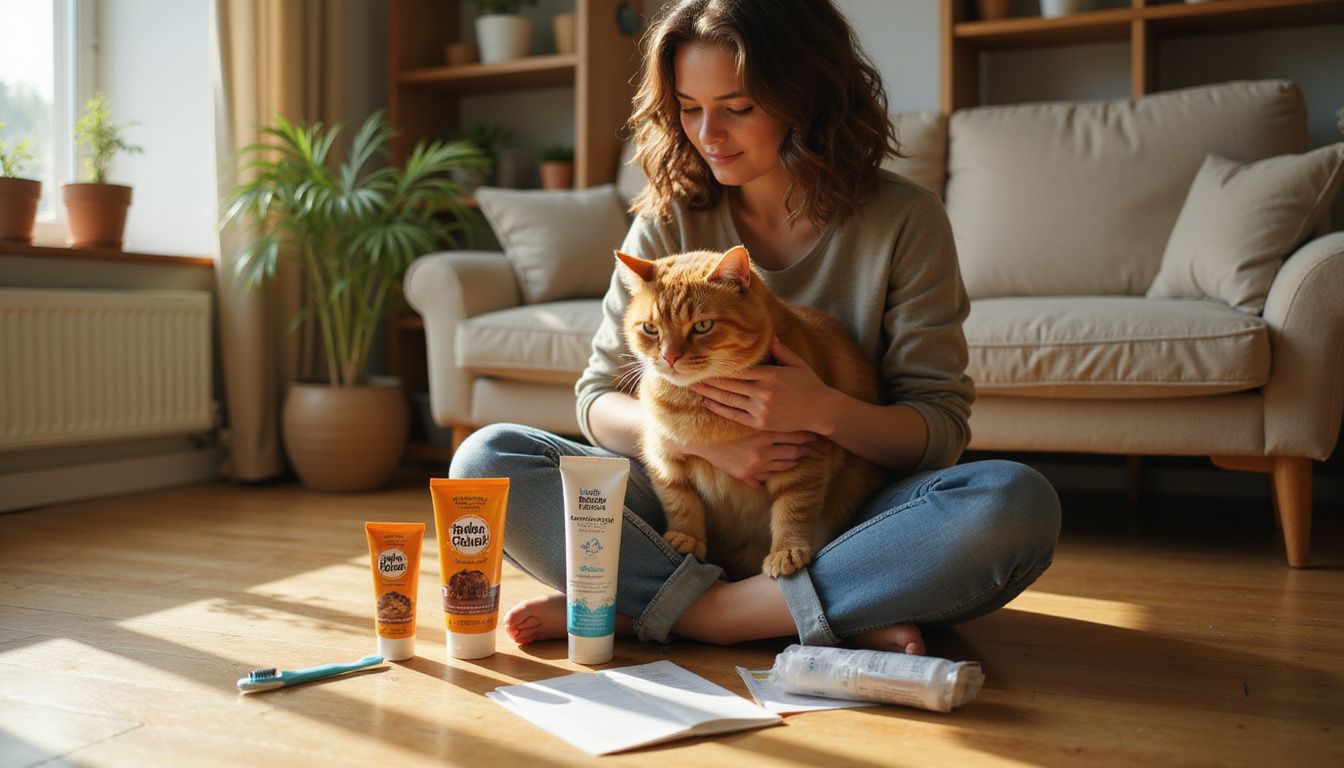
Now that you’ve picked out the perfect toothbrush, the toothpaste you choose matters just as much. Skip the human toothpaste in your bathroom cabinet, no matter how tempting it seems.
Human toothpaste contains fluoride, and that can be toxic to cats. Here’s why: cats can’t rinse and spit like you do. According to the Pet Poison Helpline, any fluoride your cat swallows gets absorbed straight into the stomach, which can trigger serious vomiting, diarrhea, or even a dangerous spike in heart rate.
Cat-safe toothpaste solves this problem. It’s made specifically for feline mouths, and it comes in flavors your cat will actually enjoy.
A few trusted options worth looking for:
- Flavored cat toothpaste in chicken or beef, which makes brushing time far less of a fight.
- HealthyMouth gel, a solid alternative if your cat resists traditional paste.
- Clenz-a-dent, which offers antiseptic action against mouth bacteria.
- Maxi/Guard oral gel, another antiseptic option for extra protection.
Start by letting your cat taste the toothpaste before a brush ever touches their teeth. This small step builds a positive connection and makes the whole routine smoother down the road.
The best time to plant a tree was 20 years ago. The second best time is now. The same goes for cat dental care, so start brushing your cat’s teeth today.
How do I brush my cat’s teeth step-by-step?
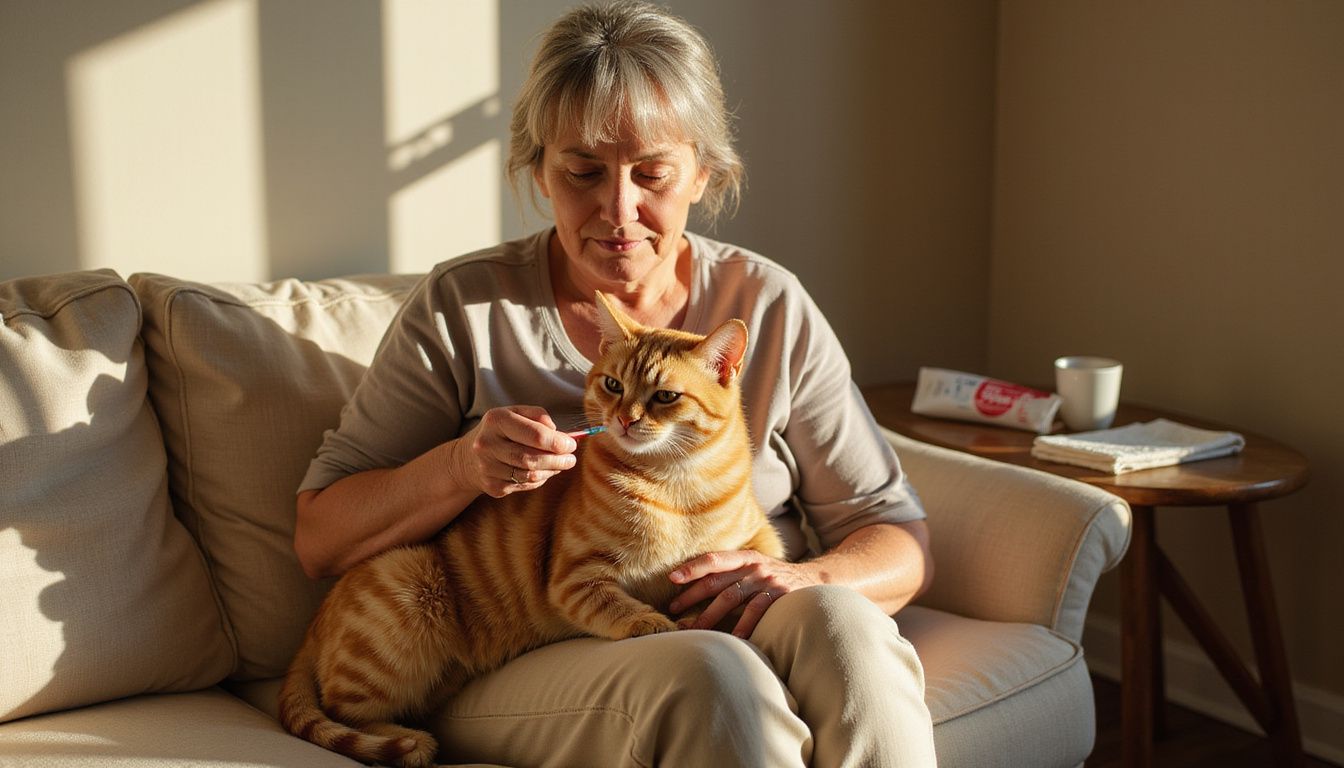
Getting your cat to accept a toothbrush takes patience, but you can make it happen with the right approach. Start small, stay calm, and watch your cat’s body language as you bring this new routine into their life.
How can I help my cat get comfortable with brushing?
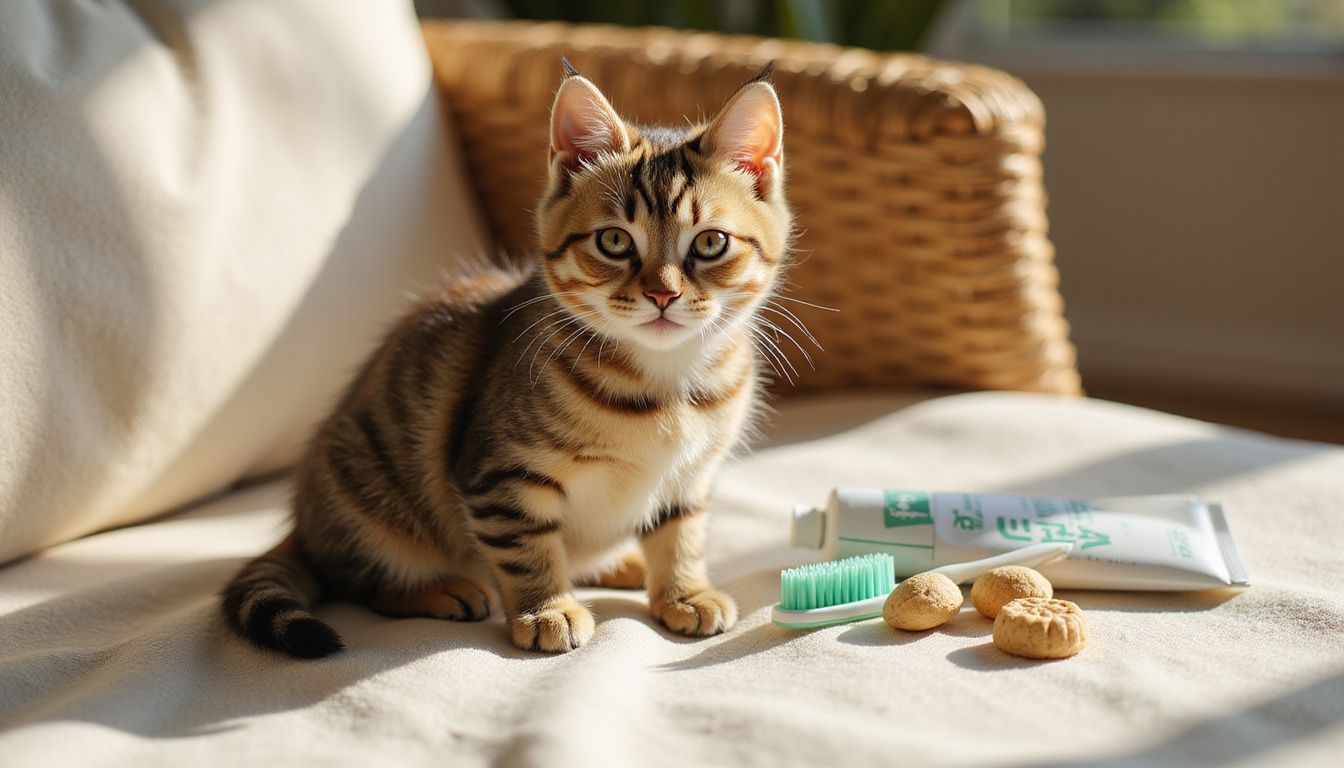
Give your cat time to adjust to dental care. If you’re adopting a kitten, start now, since young cats settle into new routines much faster than older cats do.
Focus on building trust first. Don’t worry about a deep clean during those early sessions.
Let your cat taste the toothpaste before anything else touches their mouth. Offer a treat and some praise right after, so brushing gets linked with something good.
A slow, steady approach really does work. Here’s proof from an actual trial with newly adopted kittens:
- Sessions started at just 5 seconds and grew by 5 seconds every two days.
- After four weeks, 9 of 12 kittens accepted a finger brush for at least 15 seconds.
- Of those, 7 kittens went on to accept a soft-bristled toothbrush for 30 seconds on the outer teeth.
The lesson here is simple: tiny, reward-filled sessions beat rushing every time.
Flexibility matters more than perfection. Some cats tolerate 30 seconds of brushing on day one, while others need weeks of slow introduction.
Don’t rush, even when you feel tempted to speed things up. If your cat shows stress signs like hissing, pulling away, or a flicking tail, switch to dental treats, chew toys, or a topical gel instead.
Products like Greenies Feline Dental Treats or Whiskas Dentabites Cat Treats can support your efforts without a daily struggle. Your vet can tell you which approach fits your cat’s temperament best.
How do I properly brush the outer surfaces of my cat’s teeth?
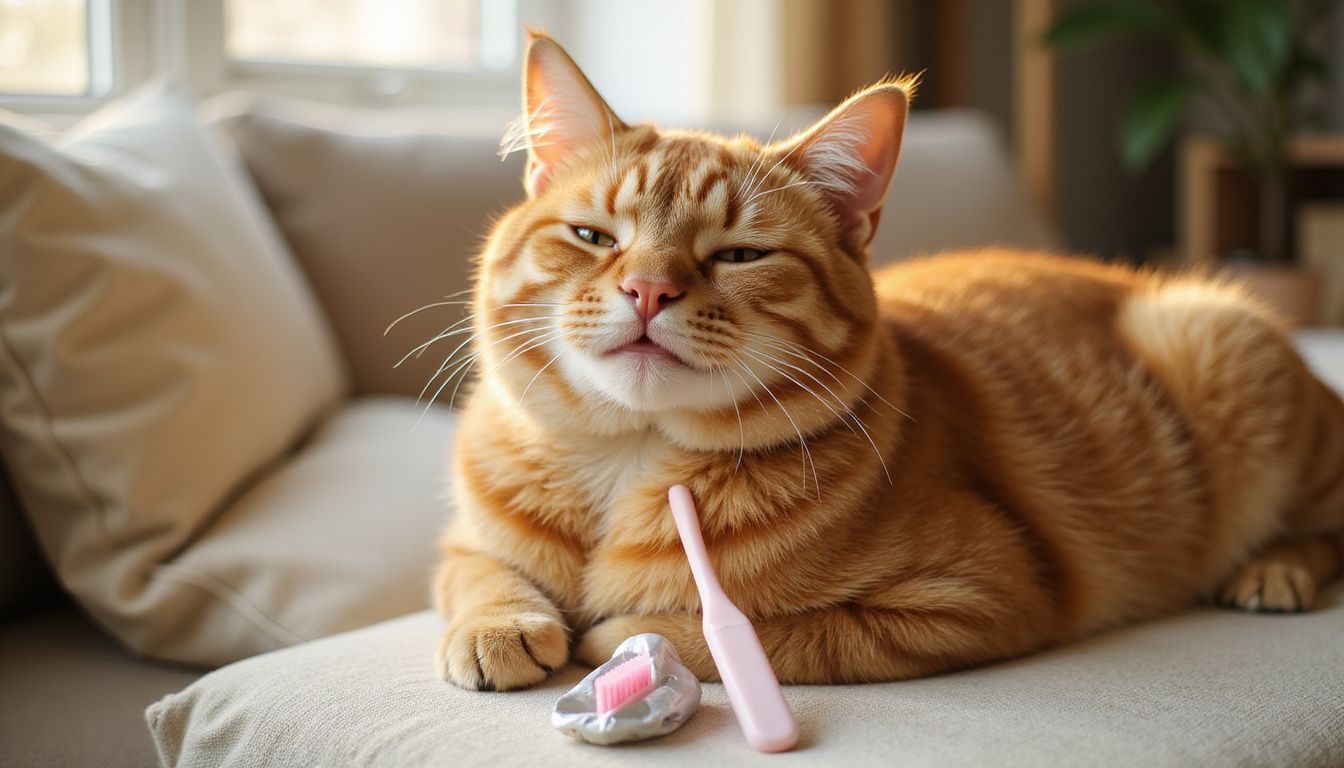
Once your cat feels calm with the brushing routine, you can focus on the technique that actually keeps those teeth clean. Proper brushing on the outer surfaces stops the tartar and plaque buildup that leads to decay and gum disease.
- Lift your cat’s upper lip gently and hold the brush at a 45-degree angle toward the gumline, since plaque collects right along that edge.
- Use short, gentle strokes moving from the gum toward the tip of each tooth. Avoid hard scrubbing, which irritates sensitive gum tissue.
- Add cat-safe toothpaste as you brush to boost plaque control and make the process more pleasant for your cat.
- Start with the cheek teeth first, since these grinding surfaces collect the most plaque, and most cats tolerate work here far better than on the front teeth.
- Spend about 30 seconds per side, gradually adding more time as your cat gets used to the process.
- Finish with praise or a treat, so your cat links brushing with something good.
How do I increase the brushing time safely?

Your cat needs time to adjust to tooth brushing, so patience pays off in the long run. Gradual progress keeps your cat calm and cooperative throughout the process.
- Start with just a few seconds on one tooth, then praise your cat right away to build a positive link with the toothbrush.
- Add more teeth over several weeks, moving slowly as your cat shows comfort.
- Watch your cat’s body language. Stop right away if your cat pulls away, hisses, or tenses up.
- Grow your sessions from a few seconds to a few minutes over several weeks, letting your cat set the pace.
- Spread brushing across several short sessions rather than one long one, so your cat builds confidence without feeling overwhelmed.
- Reward your cat after every session, so brushing always leads to something good, like a treat or some playtime.
For newly adopted adult cats that resist handling at first, a structured seven-week plan builds tolerance safely:
| Week | What You Do |
|---|---|
| Week 1 | Let your cat taste toothpaste for 3 days, then try 5-second lip lifts for 4 days. |
| Week 2 | Introduce 5 seconds of finger brushing every other day. |
| Weeks 3-4 | Increase to 15 to 30 seconds of daily finger brushing. |
| Weeks 5-6 | Switch to a soft-bristled toothbrush for 30 to 60 seconds on one side. |
| Week 7 | Aim for two short sessions a day, 30 seconds per side. |
Pause any time you spot stress signs. Most cats finish this whole plan in about five and a half weeks, and celebrating the small wins keeps both of you relaxed along the way.
Alternatives to brushing your cat’s teeth
If brushing your cat’s teeth feels like wrestling a furry tornado, you still have good options to keep your cat’s mouth healthy and fresh.
Can dental treats and toys help my cat’s dental health?

Dental treats work through mechanical chewing action that helps clean your cat’s tooth surfaces. A few popular options come in chicken and salmon flavors that most cats enjoy:
- Purina DentalLife Cat Treats
- Greenies Feline Dental Treats
- Whiskas Dentabites Cat Treats
These treats often contain ingredients that slow down plaque formation and stop mineralization before it starts. Here’s a tip worth remembering: look for the VOHC Seal of Acceptance on the package. According to the Veterinary Oral Health Council, a treat only earns that seal after clinical trials prove it cuts plaque or tartar by at least 20%. That seal is your quickest way to skip the marketing hype and pick something that actually works.
Dental treats serve as a helpful supplement to your main dental care routine, not a replacement for brushing or professional cleanings. Think of them as one extra tool in your kit, not the whole toolbox.
A household comparison over six weeks tested this out. One group got daily dental treats plus weekly sixty-second brushing. The other group only got weekly brushing.
| Approach | Median Tartar Score Change (0-5 scale) |
|---|---|
| Weekly brushing alone | No change |
| Daily dental treats + weekly brushing | Improved by 1 point |
The takeaway is simple: treats help when they supplement brushing, but the results are modest, not dramatic. They keep your cat chewing between sessions, which adds up over time.
Chew toys offer some mechanical cleaning too, though they typically fall short of dental treats or regular brushing. Your cat may enjoy batting one around, and the light friction gives a bit of surface cleaning.
Treats tend to deliver more consistent results, since cats actively chew them, while toys often get abandoned once playtime ends. Talk with your vet about which products fit your cat’s needs, especially if tooth resorption or other conditions make certain kibble sizes risky.
What are oral rinses and water additives for cats?
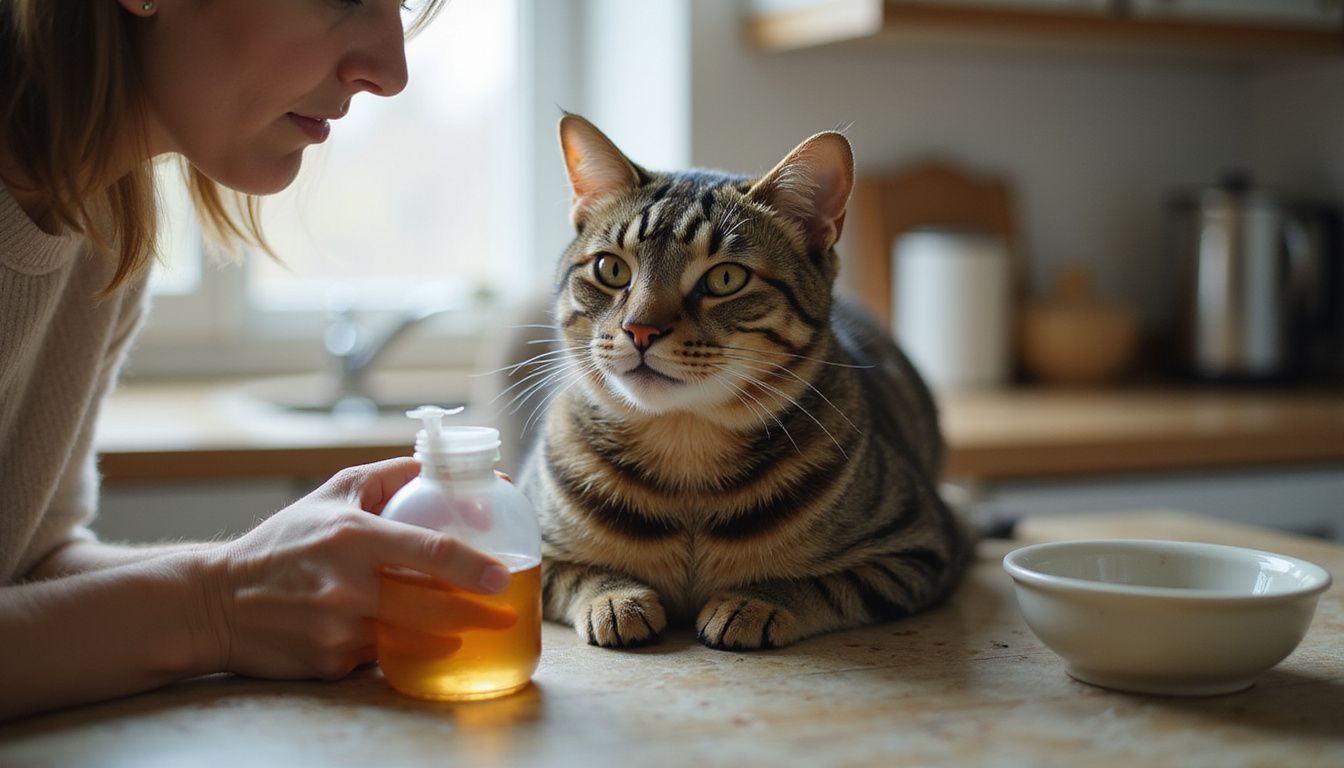
Oral rinses and water additives give you convenient ways to support your cat’s oral health without wrestling your pet into a brushing routine every single day.
| Product Type | How It Works | Recommended Options | What You Should Know |
|---|---|---|---|
| Oral Rinses and Gels | These liquids and pastes reduce bad breath and kill bacteria in your cat’s mouth through antiseptic action. | HealthyMouth Topical Gel for cats; Maxi/Guard oral gel; Clenz-a-dent 0.12% chlorhexidine rinse; Hexadent 0.12% chlorhexidine rinse | Gels like HealthyMouth work as toothpaste substitutes. Rinses deliver strong antiseptic effects. Products with chlorhexidine fight bacteria well. These options also help your cat get used to mouth handling, making brushing easier later. |
| Water Additives | Formulas mix into your cat’s drinking water to provide ongoing oral care throughout the day. | Various commercial water additive brands | Many water additives prove ineffective for cats. Your cat may refuse water with additives in it. Reduced water intake puts your cat at risk for kidney disease, and cats need steady hydration. Consider this option carefully before you use it. |
| Best Practice for You | Oral rinses and gels are your safer bet. They deliver real benefits without discouraging water intake. Apply gels directly to your cat’s gums or teeth, and use rinses as directed on the packaging. Start with small amounts to let your cat adjust. These products work alongside brushing, not instead of it. | ||
How do dental diets support cat dental care?
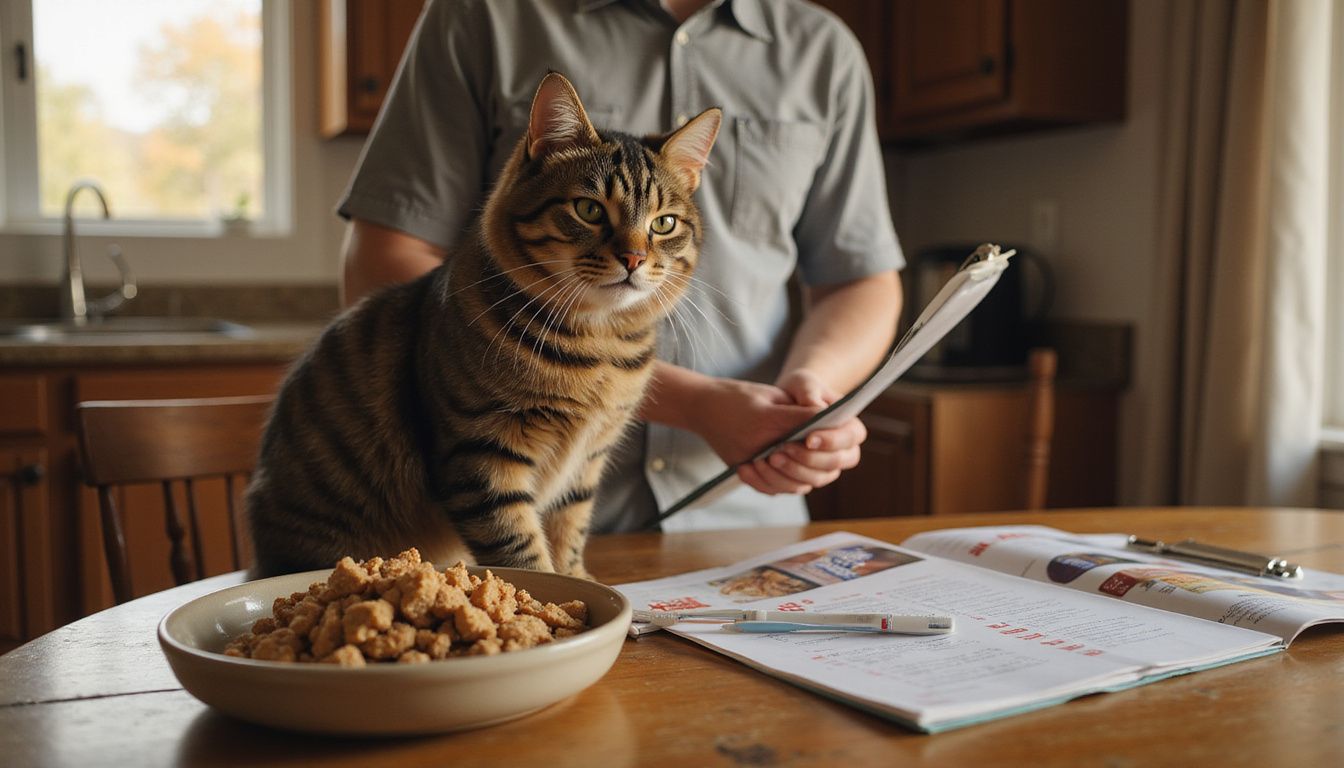
Dental diets keep your cat’s teeth clean through smart kibble design that fights plaque buildup with every bite.
Several specialized options are worth knowing:
- Hill’s Prescription Diet T/D
- Science Diet Oral Care
- Healthy Advantage Oral +
- Purina ProPlan DH Feline Formula
- Royal Canin Feline Dental Diet
These diets use larger kibble pieces that create an abrasive scrubbing action as your cat chews. That grinding motion targets the cheek teeth, right where plaque builds up most. Some formulas also include ingredients that stop plaque and calculus from forming in the first place.
That said, dental diets have real limits. They barely touch the front teeth, like the incisors and canines, so they only solve part of the problem.
Cats with tooth resorption, a painful condition affecting the tooth structure, should skip these diets. They might swallow the large kibble whole and end up vomiting instead of chewing it properly.
Think of dental diets as one tool in your cat’s dental care toolkit, not the whole toolbox. They work best alongside brushing and regular vet cleanings, not as a replacement for either one.
What are the signs of dental problems in cats?
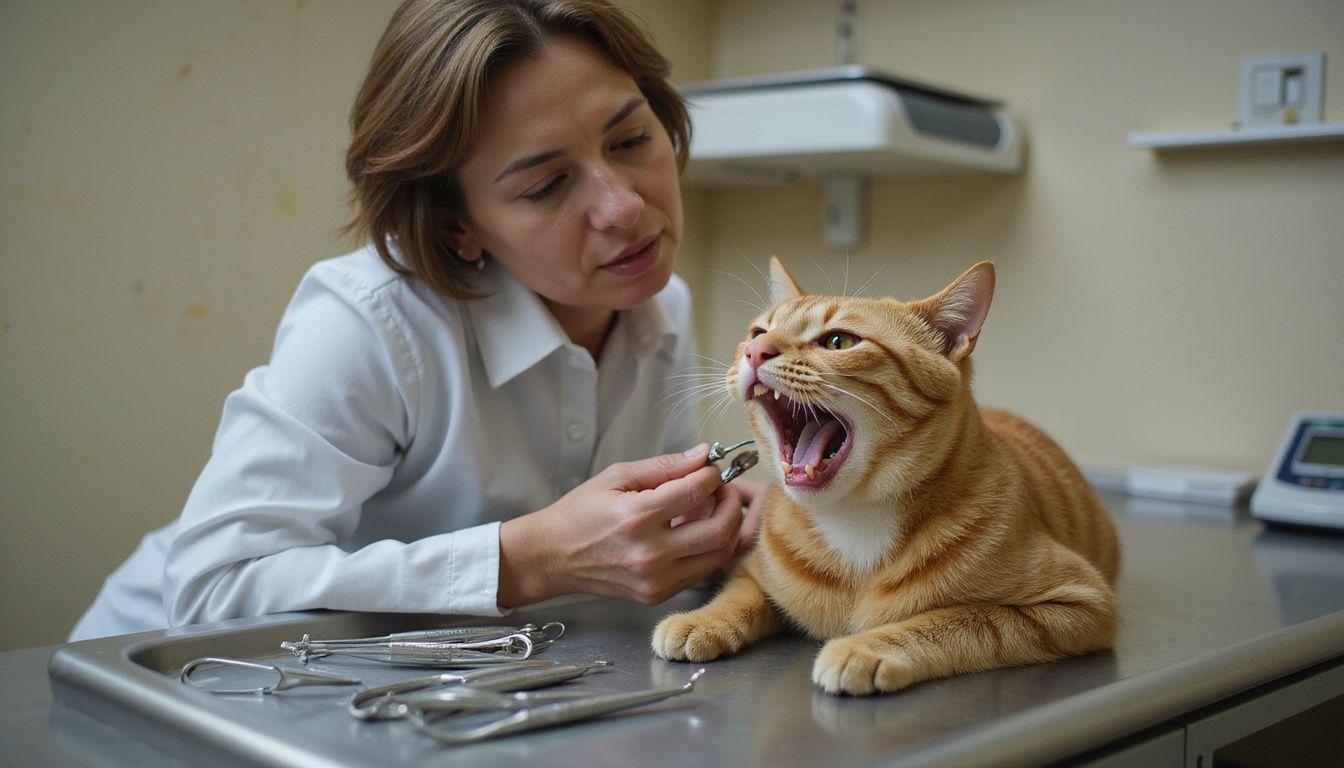
Your cat’s teeth need attention before problems turn serious. Most cats over age three already show some sign of dental disease, so staying alert matters now.
Here’s something worth knowing: as noted by the American Association of Feline Practitioners, cats carry a deep survival instinct to hide weakness from predators. That means your cat can keep eating and acting perfectly normal even while dealing with real dental pain. Don’t wait for a loss of appetite to sound the alarm. Watch for these subtler clues instead.
- Bad breath that points to plaque buildup or infection taking hold.
- Inflamed gums that look red, swollen, or bleed when touched.
- Reluctance to eat, dropped food, or chewing only on one side of the mouth.
- Excessive drooling or trouble finishing hard kibble or dry food.
- Visible tartar, showing up as brown or yellow crusty buildup on the teeth.
- Pawing at the face or rubbing the mouth against furniture.
Weight loss can creep in slowly, too, since eating less over several weeks adds up. Tooth resorption is another hidden threat, affecting up to 70% of cats during their lifetime as it destroys teeth from the inside out.
Many dental issues stay hidden until they turn severe. If you spot any of these signs, call your vet for a closer look before the problem grows.
Why is regular veterinary dental care important for cats?
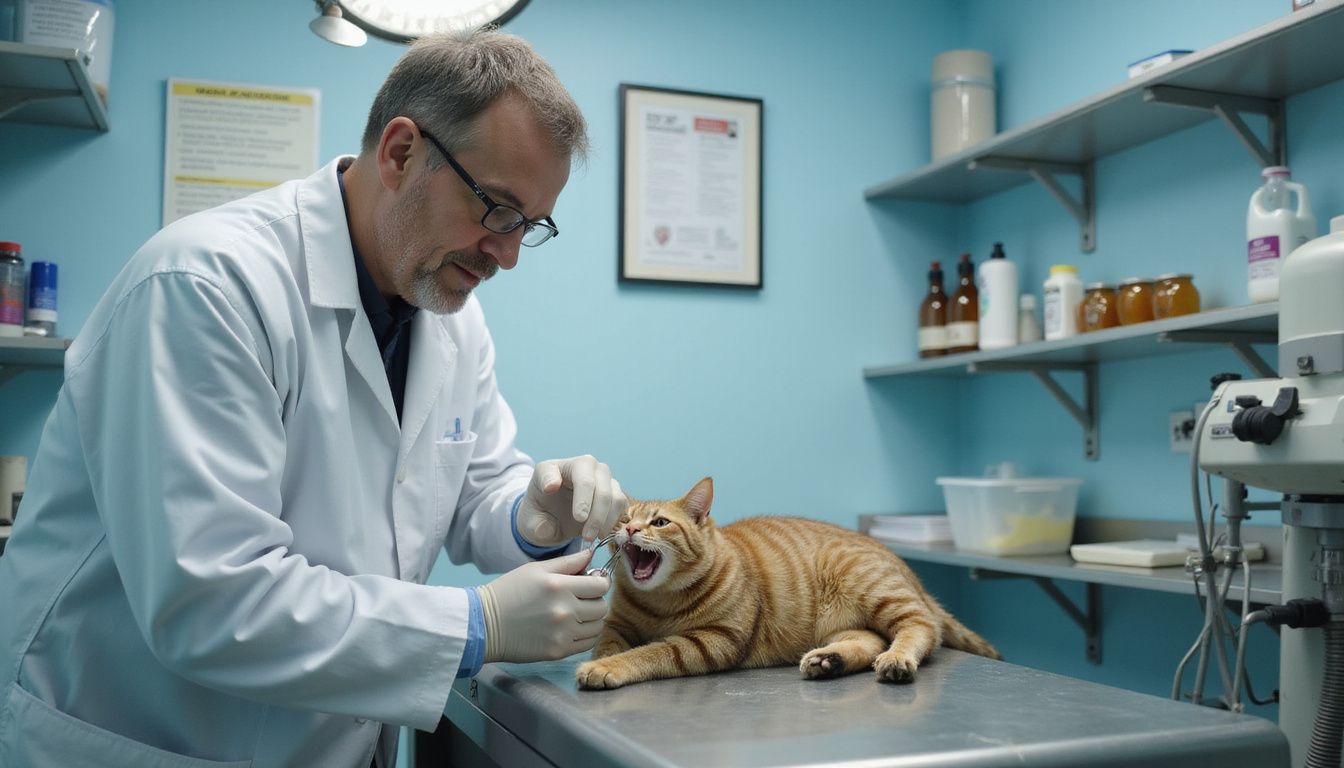
Spotting dental problems early matters, but catching them really takes a professional. A vet can see issues hiding beneath your cat’s gums, in places you simply can’t check at home.
Here’s why that matters so much: according to veterinary dentistry standards published in DVM360, about 60% of a cat’s tooth sits hidden below the gumline. Even a careful visual exam only tells half the story, which is exactly why dental X-rays under anesthesia aren’t optional. They’re the only way to see what’s really happening beneath the surface.
Professional dental care, often called a COHAT (Comprehensive Oral Health Assessment and Treatment), covers a few key steps:
- A full oral exam checking every tooth and the surrounding tissue.
- Dental X-rays to see the tooth structure hidden below the gumline.
- Scaling and polishing to remove tartar brushing alone can’t reach.
- Treatment for any problems found, from a simple cleanup to an extraction.
Animal Dental Care & Oral Surgery of Colorado Springs, located at 5520 N. Nevada Ave., Suite 150, Colorado Springs, CO 80918, focuses on catching painful dental conditions before they turn serious. Their team works to protect your cat’s teeth and gums through this kind of expert care.
Annual dental cleanings and exams form the foundation of good pet health resources for cats. Your vet can spot mouth injuries, severe decay, and other problems needing treatment right away, often before you’d ever notice anything wrong yourself.
Regular veterinary dental care also saves you money down the road. Tooth extractions and dental surgeries cost far more than a preventive visit ever would.
Cats hide discomfort well, so problems can grow quietly with no obvious sign. Oral home care works best alongside these routine professional cleanings, not instead of them.
Hill’s Prescription Diet T/D and dental toys can support your efforts between vet visits. The American Veterinary Dental College recommends folding dental care into your cat’s regular health routine, combining home brushing, dental treats, and professional cleanings to keep your cat’s mouth healthy for years to come.
Conclusion
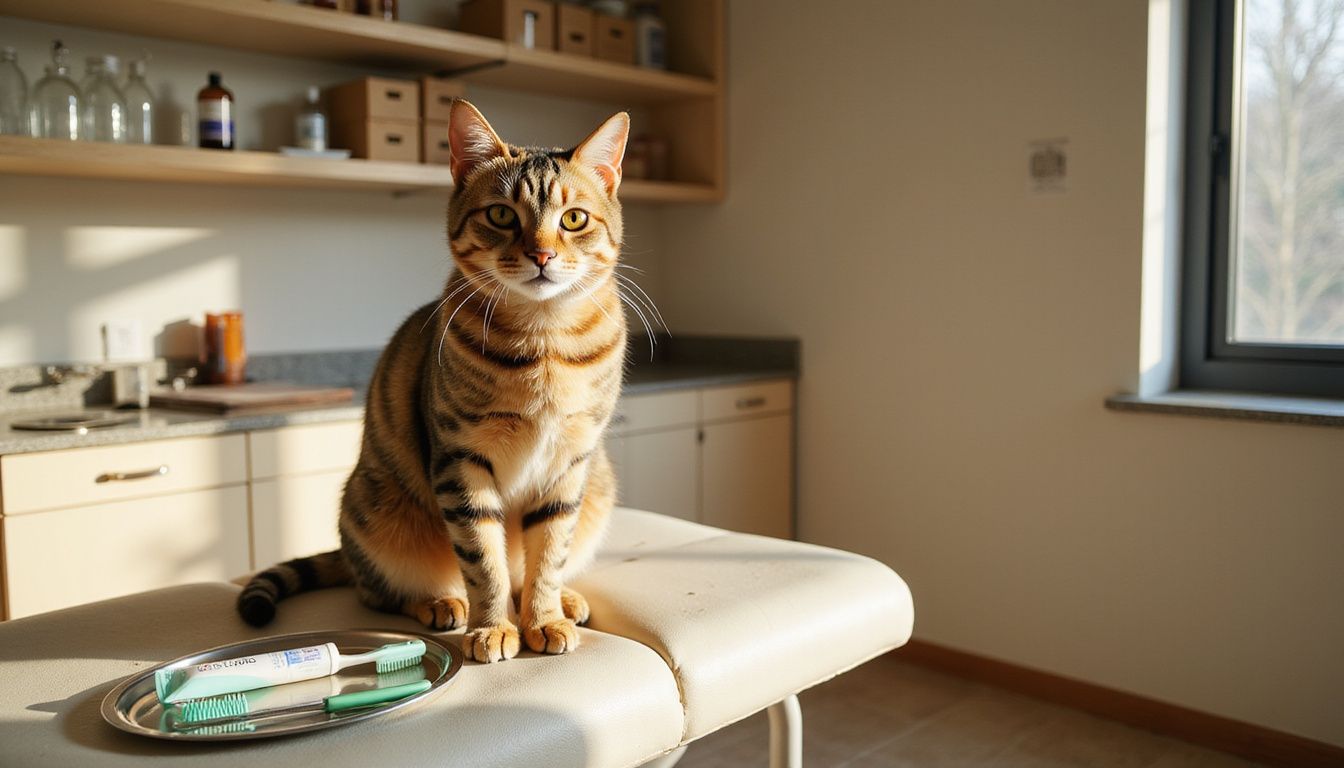
Great cat dental care really does start with something this simple: brush those teeth, and watch for the warning signs of decay along the way.
Professional cleanings at veterinary hospitals like Hartsdale Veterinary Hospital or River’s Edge Animal Hospital catch problems early, before they ever reach your cat’s heart or kidneys.
Dental treats, water additives, and prescription diets like Hill’s Prescription Diet T/D work best as backup, not a replacement for brushing.
Start young with kittens, stay consistent with your routine, and call your vet at the first sign of trouble. Up to 85% of cats show periodontal disease by age two, so this isn’t a problem worth ignoring.
Your cat depends on you to keep all 30 of those teeth healthy and strong. Grab that cat-safe toothbrush today, and give your future companion a pain-free smile for years to come.
FAQs
1. How often should I brush my cat’s teeth?
Aim for 2-3 times per week at minimum, though daily brushing is even better for keeping plaque away. Start slow when you first bring your cat home and build up the habit gradually.
2. Can wet food help with my cat’s dental health?
Wet food alone won’t clean your cat’s teeth the way brushing does. Some dental-specific foods like Hill’s Prescription Diet t/d are designed to scrub teeth as your cat chews, reducing plaque and tartar buildup. Your vet can recommend if this type of diet is right for your cat.
3. Are plaque remover additives safe for cats?
Most plaque remover additives are safe when used as directed, and they simply go into your cat’s water bowl. Always check with your vet first to make sure any product is appropriate for your future cat.
4. Do dogs and cats need different dental care?
Yes, cats have smaller mouths and more delicate tooth structures than dogs, so they need smaller brushes and gentler handling. Cat-specific toothpaste is also essential since dogs and cats have different tolerances for ingredients.
5. Where can I take my cat for a professional dental checkup?
Most local veterinary clinics offer dental exams and cleanings. You can find experienced care at places like Hartsdale Veterinary Hospital in Hartsdale, NY, River’s Edge Animal Hospital, Heart of Brooklyn Veterinary Hospital, Animal Dental Care & Oral Surgery of Colorado Springs, or search MyVCA to locate a clinic near you.