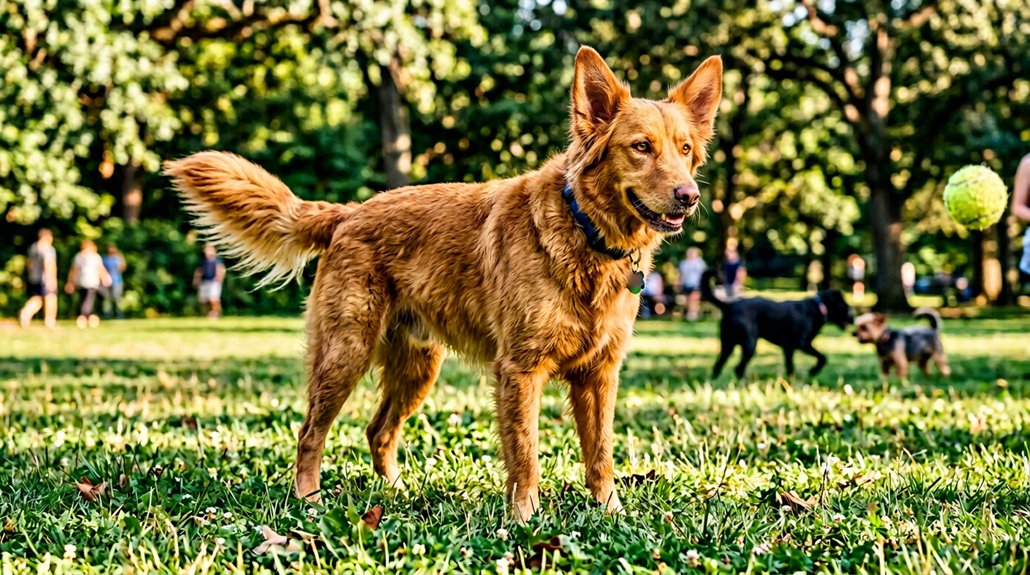
Dog breed traits are influenced by genetic predispositions and historical roles. While less than 10% of behavioral variance is linked to breed, ancestral traits, such as strong herding instincts in Border Collies, persist. Factors like age, sex, and environment can offer more accurate behavioral predictions than breed alone. Your dog’s unique personality is shaped by individual experiences, and effective training strategies depend on understanding these traits. An exploration into environmental and genetic influences reveals deeper insights into canine behavior.
Key Takeaways
- Dog breed traits often originate from ancestral roles, influencing modern behaviors related to historical functional purposes.
- Breed-specific tendencies like herding, guarding, or retrieving are deeply rooted in genetic predispositions shaped by past selection pressures.
- Behavioral traits linked to breeds can be overshadowed by environmental factors, with socialization playing a crucial role.
- Positive reinforcement in training can leverage breed-specific motivations, like a Golden Retriever’s eagerness to please, to improve behavior.
- Exercise and mental stimulation tailored to breed needs prevent issues related to boredom and align with innate energy levels.
Understanding the Science of Dog Breed Traits
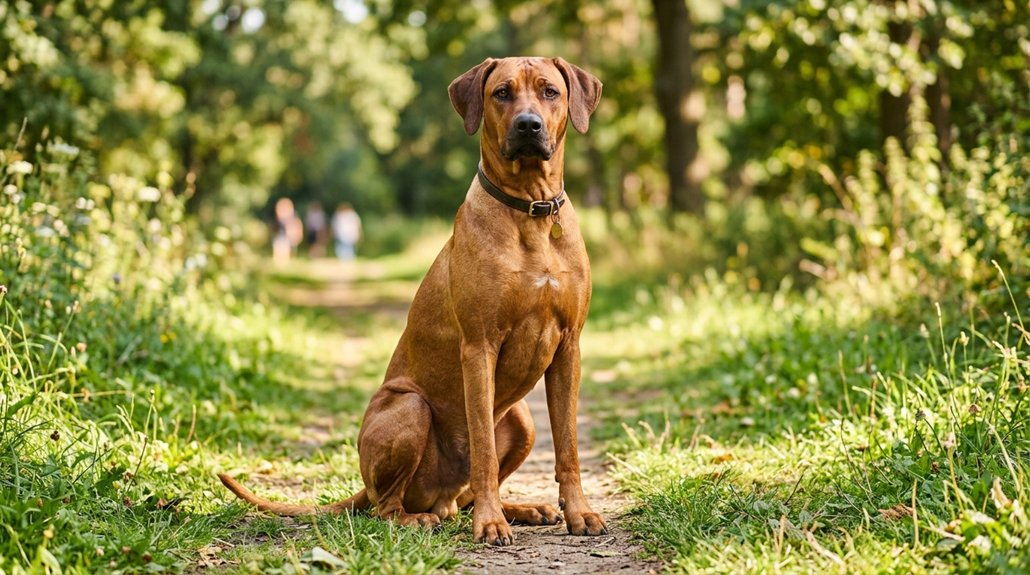
Curiously, what truly shapes a dog’s behavior? From a scientific standpoint, genetic influence emerges as a vital factor. Studies identify 11 genetic loci linked to behavioral traits, suggesting genetics play a significant role beyond breed distinctions. Remarkably, less than 10% of behavioral variance is breed-related, revealing a significant interplay between genes and environment. An evolutionary perspective shows that many behaviors trace back to ancestral gray wolves, highlighting how human selection honed these traits over millennia. Notably, characteristics like age and sex provide better behavioral predictions than breed alone, suggesting that understanding a dog’s unique personality is essential. Consequently, the assumption that specific breeds possess inherent behaviors fades, emphasizing the nuanced science behind dog behavior.
How Dog Breeds Developed Their Unique Roles
While dog breeds today are often recognized for their physical and aesthetic traits, their origins are deeply rooted in the functional roles they once played. The role evolution of dog breeds highlights their historical significance and working origins. Selection pressures led to purpose-driven breeding for breed functionality, with ancestral traits shaping behavioral roots. Dogs such as Border Collies and German Shepherds exhibit functional adaptations and job-specific characteristics like intelligence and agility, essential for herding and guarding. Although modern breeding has created stereotypes based on appearance, these don’t always reflect the complex behaviors inherited from their ancestors. Research reveals that only a small fraction of behavioral variation is breed-specific, underlining the impact of early human reliance on dogs’ tasks.
How Environment Shapes Dog Behavior
You might notice how a dog’s early environment markedly informs their behavioral development; positive socialization during critical periods can create a well-rounded temperament. When you employ training methods centered on positive reinforcement, you effectively harness the dog’s ability to adapt to their environment with confidence. However, keep in mind that inconsistencies or stressors within their environment can trigger behavioral setbacks, highlighting the need for a stable and supportive setting.
Impact of Socialization
Understanding the impact of socialization on dog behavior requires considering how early experiences and environmental factors intertwine to mold a dog’s disposition. Your dog’s early social exposure plays an essential role in building trust and adaptability. Positive interactions during this critical period help reduce anxiety and equip your dog to manage diverse situations with confidence. Notably, breeds demonstrate varying sensitivity levels; for example, gun and toy breeds may exhibit more anxiety if not properly socialized. While the breed holds some sway, studies highlight that age and sex are often more indicative of behavior, underscoring environmental influences. By establishing predictable routines and facilitating gradual acclimatization to new settings, you greatly enhance your dog’s security and overall confidence, fostering a more stable personality.
Influence of Training
Examining how training influences dog behavior reveals the profound impact of environmental conditions. Training generally shapes a dog’s behavior by enhancing coping abilities and building confidence. Utilizing obedience techniques and consistent training schedules, you’re facilitating behavior modification that encourages trust and reduces reservedness. Positive reinforcement is central in puppy training, as it fosters long-term desirable behaviors. Early socialization experiences are essential, as they impact skills like interaction and adaptability across different breeds. Training isn’t a one-time effort but a commitment to lifelong learning. Participating in AKC classes and incorporating rigorous exercise routines help maintain obedience and address behavioral challenges. Skill development through structured environments allows dogs to thrive, underscoring the necessity of nurturing alongside their genetic predispositions.
Comparing Behavioral Tendencies Across Popular Breeds
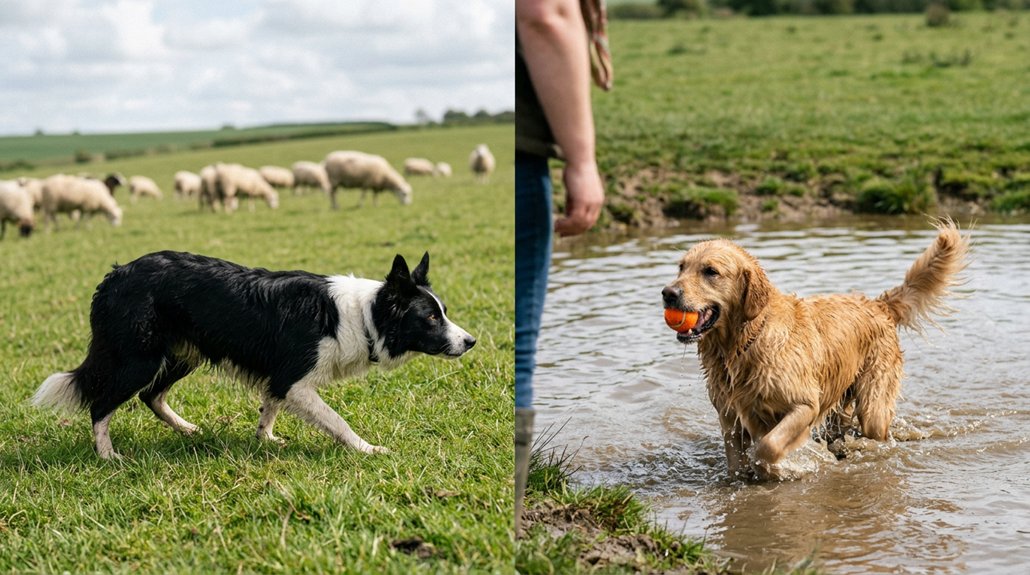
While delving into the behavioral tendencies of various dog breeds, it’s imperative to recognize distinct patterns that stem from their genetic predispositions and historical roles. Herding breeds like Border Collies manifest strong herding instincts, channeling high energy towards any moving object. Conversely, working breeds such as German Shepherds exhibit protective behaviors and a resilient family bond. Sporting breeds, including Labrador Retrievers, are esteemed for their retrieval skills, marked by a friendly, trainable nature. Terriers, with a high prey drive, demand significant exercise to temper their intense focus. Finally, toy breeds like Chihuahuas are known for their affectionate tendencies but may develop territorial inclinations. Recognizing these traits informs how you should approach their training and socialization.
Debunking Myths: Breeds vs. Individual Behaviors

When considering canine behavior, you’ll find that the complexity extends far beyond simple breed categorizations. Less than 10% of behavioral variation is attributable to breed, making individual personality, environmental factors, and ongoing socialization critical components in understanding a dog’s actions. Research suggests that focusing on training and exposure, rather than relying solely on breed expectations, offers a more accurate perspective on canine behavior.
Understanding Behavioral Complexity
Though many people might assume that a dog’s breed dictates its behavior, scientific inquiry reveals a more intricate picture. The concept of a behavioral spectrum highlights how behaviors span a wide range, not confined within rigid breed boundaries. Genetic studies suggest that less than 10% of behavioral variation is dictated by breed, underscoring the rich genetic diversity present in dogs. This diversity showcases how traits linked to ancestral functions don’t neatly translate into modern breed stereotypes.
Moreover, no specific behavior is exclusive to a single breed, further complicating these assumptions. For instance, “biddability” showcases significant variance among individual dogs, challenging the narrative that breed alone defines behavior. Understanding this complexity means recognizing that both genetic and environmental factors shape a dog’s unique traits.
Factors Beyond Breed
Despite the common belief that a dog’s breed alone determines behavior, scientific research indicates a more nuanced reality. Less than 10% of behavioral variations in dogs are attributable to breed, pointing towards genetic variability as a minor factor. Individual temperaments are more accurately predicted through age and sex, challenging the overemphasis on breed-related assumptions. Within any breed, you’ll find a broad spectrum of personality traits that aren’t solely dictated by genetic background. This suggests that even genetically similar dogs can exhibit differing behaviors. Misconceptions often lead to oversimplified breed stereotypes, urging a closer examination of each dog’s unique characteristics. Consequently, evaluating individual dogs instead of relying solely on breed indicators is essential in understanding their behavior thoroughly.
Importance of Socialization
While genetic factors play a minor role in determining a dog’s behavior, socialization emerges as a pivotal element shaping a dog’s personality. Early social play and positive reinforcement are essential for developing adaptable, confident dogs. Age appropriate exposure to diverse interactions can dramatically mold their demeanor, overshadowing mere breed characteristics. Research reveals that breed accounts for less than 10% of behavioral variation in dogs. This underscores how vital ongoing socialization is in refuting breed misconceptions. By integrating varied enrichment activities and nurturing social experiences, you enable your dog to handle social situations regardless of breed stereotypes. Individual personalities within breeds can differ markedly, with socialization playing a key role in fostering flexible, resilient behaviors and enhancing overall well-being.
Tailoring Training to Your Dog’s Unique Traits
To effectively tailor your dog’s training, it’s crucial to analyze both breed traits and individual personality quirks. Understanding specific breed characteristics, like the herding instinct in Border Collies or the stubbornness in terriers, allows for effective behavioral modifications. Training consistency is paramount; aligning training routines with breed predispositions guarantees engagement and success. For instance, integrating high-energy tasks for sporting breeds, such as Retrievers, channels natural behaviors efficiently. However, remember that breed traits contribute to less than 10% of behavioral variation, which highlights the need for individual-focused training. Employing positive reinforcement, especially for breeds enthusiastic to please like Golden Retrievers, can expedite learning. Finally, consider mental stimulation and exercise based on energy levels to enhance responsiveness and overall training outcomes.
Frequently Asked Questions
What Role Does Genetics Play in Shaping a Dog’s Behavior?
Genetic inheritance considerably impacts a dog’s behavior. You’ll observe certain behavioral predispositions shaped by their lineage. While training adjusts these traits, genetics provide a foundation influencing adaptability, temperament, and instinctive actions across various breeds.
How Do Breed Traits Affect a Dog’s Suitability for a Family Environment?
You’ll find breed traits influencing family compatibility through energy levels and training ease. Dogs with adaptable temperaments and positive social interaction enhance family dynamics. However, temperament variability requires monitoring to guarantee a harmonious environment.
Can Mixed Breed Dogs Inherit Traits From Both Parent Breeds Equally?
Yes, mixed breed dogs can inherit traits from both parent breeds, but it isn’t always equal. Mixed genetics mean breed characteristics may blend unpredictably, resulting in variations that can’t be precisely determined until observed over time.
Are Certain Breeds More Prone to Developing Behavioral Problems?
Yes, certain breeds are prone to behavioral problems, influenced by breed stereotypes and behavioral expectations. You’re likely to face training challenges due to temperament variations, but understanding these can help address any potential issues effectively.
How Do Breed Traits Influence a Dog’s Dietary Needs and Preferences?
You’re looking at breed characteristics to understand a dog’s nutritional needs. Some breeds have unique dietary preferences and feeding habits tied to size or metabolism, requiring specific nutrients to thrive effectively and support their well-being.
Conclusion
Ultimately, understanding your dog’s distinct breed traits leads to better behavior and bonding. By blending scientific scrutiny and observational analysis, you see how genetic predispositions and environmental influences interplay. Comprehending these canine characteristics allows you to craft thorough, customized training regimens that resonate with their instincts. While it’s tempting to generalize about breeds, acknowledging individual idiosyncrasies fosters a more flexible, effective approach. So, celebrate your dog’s distinctive demeanor by designing a dynamic, deliberate training strategy.