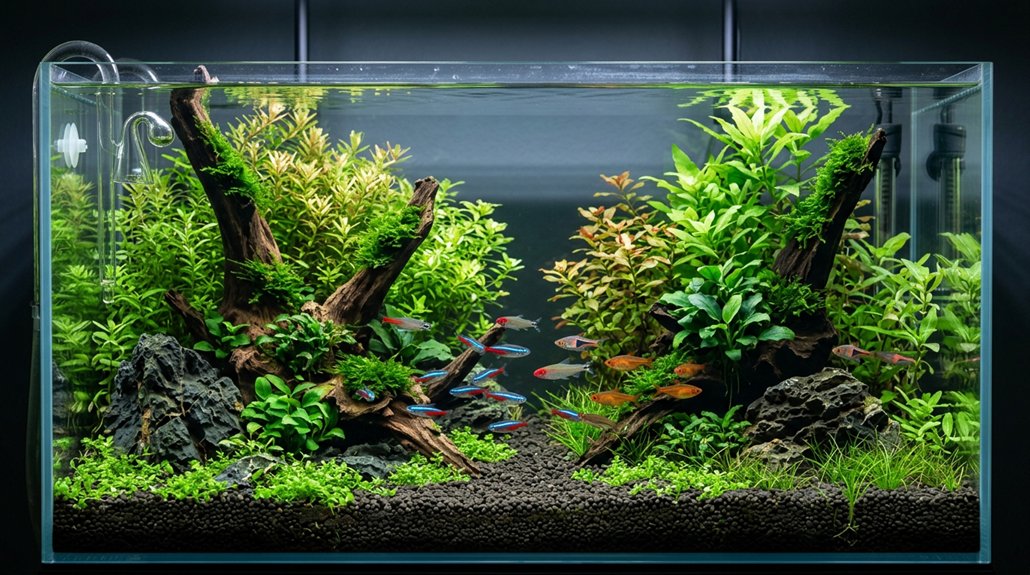
Stock your freshwater aquarium by planning for adult fish size, behavior, and bioload, not inch-per-gallon guesses. Cycle the tank first until ammonia and nitrite stay at zero, then add only a few fish at a time and test water after each step. Match species to tank size, temperature, and water chemistry, and keep filtration oversized for the load. If you avoid overstocking and aggression, your tank stays stable, and the next steps get much easier.
Key Takeaways
- Cycle the tank fully first, waiting until ammonia and nitrite read zero before adding any fish.
- Add fish slowly in small groups, testing ammonia, nitrite, nitrate, and water clarity after each step.
- Stock based on adult bioload and filtration capacity, not inch-per-gallon rules.
- Choose compatible fish for tank size, water conditions, temperature, and behavior needs.
- Use strong filtration, regular water changes, and quarantine to keep chemistry stable and prevent disease.
How to Stock a Freshwater Aquarium
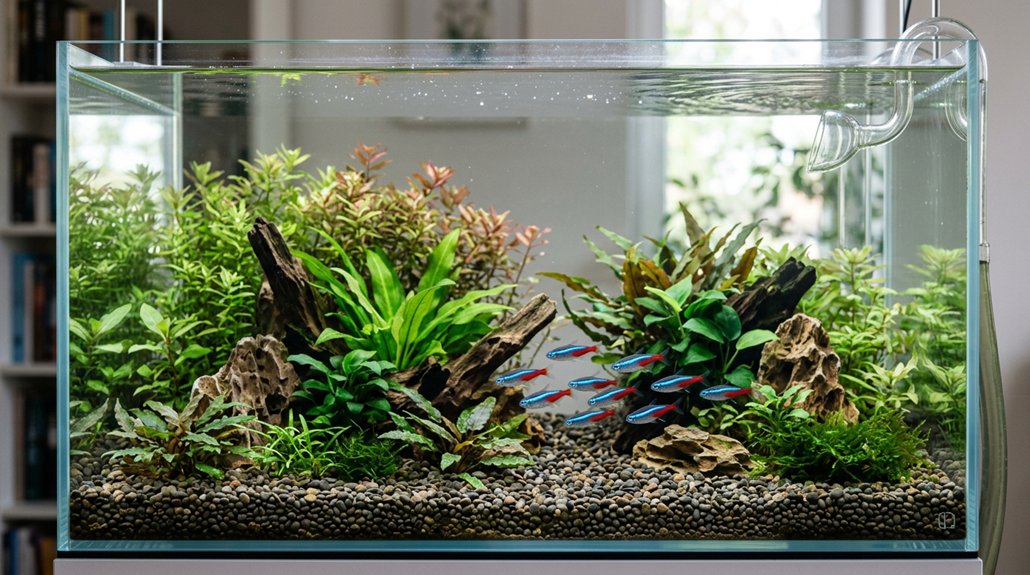
Begin stocking your freshwater aquarium slowly, after the tank has cycled for 1–2 weeks or until ammonia and nitrite read zero. Add only a few fish at a time, then test water and watch clarity before you add more. You should size your stocking around bioload and filtration, not inch-per-gallon rules; a mature moving-bed, sump, or strong turnover supports more fish than a small sponge filter. Match adults by size, temperature, pH, and flow needs. Keep schooling species in groups of six or more, and give territorial cichlids extra room. Plan maintenance for your chosen stock, with more water changes and regular ammonia, nitrite, nitrate checks. Planted tanks with hides suit rasboras, tetras, Corydoras, and Otocinclus. Note breeding behavior and nighttime activity.
How Much Fish Your Tank Can Handle?
Rather than relying on the outdated “inch-per-gallon” rule, you should size your aquarium by metabolic bioload: estimate the adult biomass of the fish you want, then confirm that your filtration and media can process that waste load. Use water chemistry as your checkpoint. Add fish slowly, then test ammonia, nitrite, and nitrate after each step. If ammonia, nitrite, or cloudiness shows up, pause stocking until the system stabilizes.
- Oversize filtration for heavy loads; big systems may need sumps or moving-bed K1 media.
- Count school size, not individuals, because many species need six or more.
- Reduce capacity for high-waste fish like goldfish, plecos, and livebearers.
- Stock only what you can maintain with regular water changes, upkeep, quarantine, and behavioral enrichment.
Choose Fish That Fit Your Tank
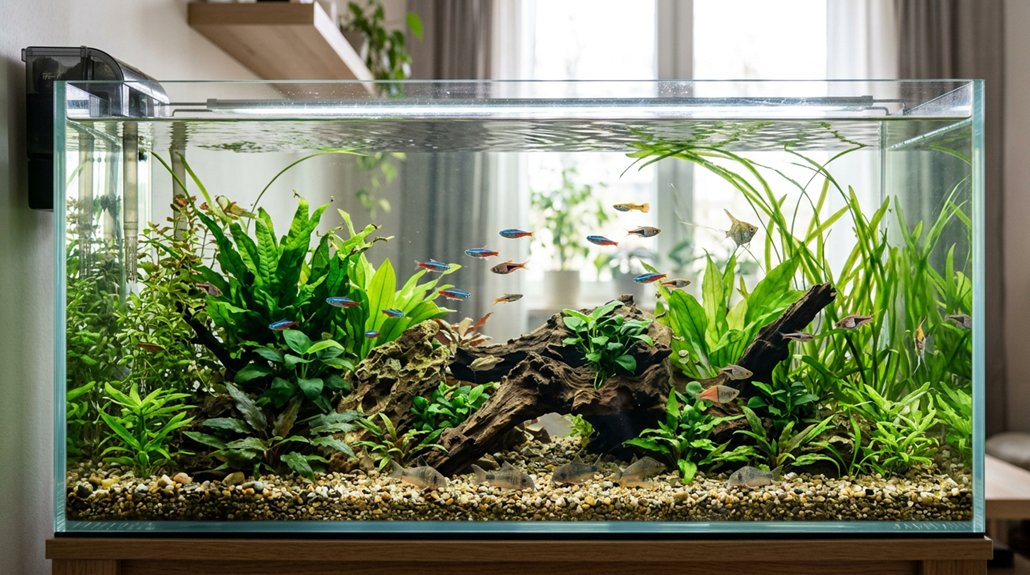
Choose fish that fit your tank’s size, shape, and water profile, not just your personal favorites. Use adult size classes, not juveniles, to gauge space: a 50-gallon tank can suit several 3–4 inch community fish, while larger species like angelfish or ram cichlids need more footprint and volume. Nano tanks work best with species under about 1–1.5 inches. Check behavior needs too: schoolers need 6+ mates, territorial cichlids need room or separation, and shy fish need plants or caves. Match pH, hardness, and temperature so you aren’t mixing tropical 78–80°F fish with cold-water species. Start with compatible, low-stress additions, quarantine each new fish, and watch for clear water and stable ammonia and nitrite at zero before adding more.
Match Filtration to Your Bioload
Once you’ve matched fish to your tank’s size and water profile, make sure the filtration can handle the waste they produce. For filter sizing, aim for at least 500 cu in (about 8.2 L) of effective media per pound of fish, or choose a unit rated for the bioload.
Match fish to your tank, then size filtration for the waste they produce.
- Use large-media, high-surface-area systems for dense stocking.
- Favor canisters, sumps, or moving-bed K1 over small cartridges.
- Target several tank turnovers per hour, plus extra aeration.
- Add fish slowly, watching ammonia, nitrite, nitrate, and clarity.
If readings rise or water clouds, stop additions and boost capacity first. Clean biological media gently in tank water, not chlorinated tap, so nitrifying bacteria stay active. Match media types to waste load, and scale water changes with stocking level.
Avoid Overstocking and Aggressive Fish
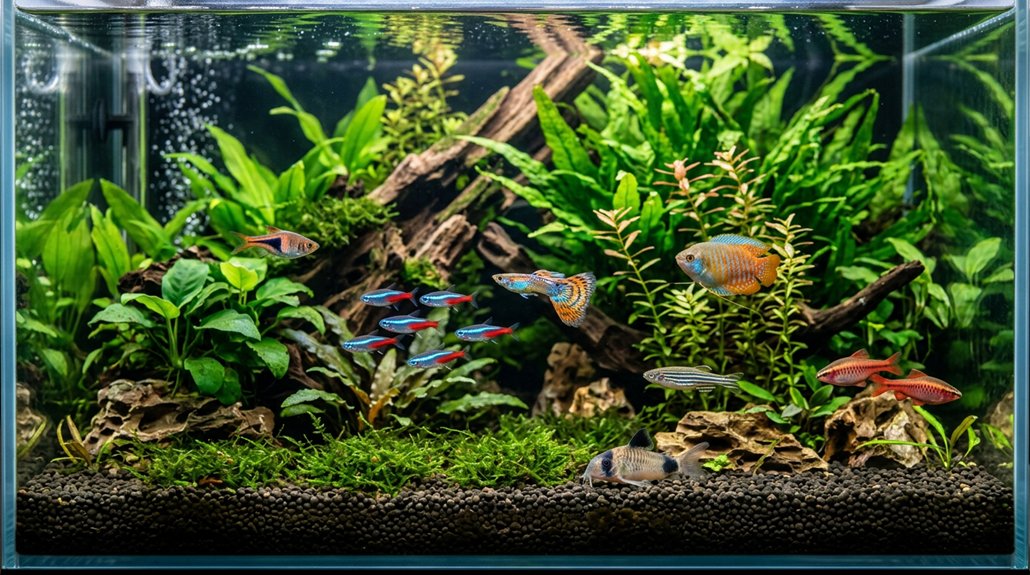
Even with adequate filtration, you can still overwhelm an aquarium by adding too many fish or the wrong mix of species. Stock lightly enough that you can keep ammonia, nitrite, and nitrate in check with your schedule, not just your filter.
| Fish type | Bioload | Stocking note |
|---|---|---|
| Goldfish | High | Lower numbers sharply |
| Tetras | Low | Small schools work |
| Plecos | High | Plan extra waste |
Territorial species like male bettas and many cichlids need compatibility to matter more than counts. Use gradual acclimation: add a few fish, test water, and watch behavior. If aggression rises or clarity slips, stop stocking. Dense setups demand larger media capacity and more cleaning, while planted aquariums often do better with fewer fish and less stress.
Frequently Asked Questions
How to Properly Stock an Aquarium?
Stock your aquarium slowly: complete aquarium cycling first, then add compatible species in small groups, matching adult size, temperament, and filtration capacity. Test ammonia and nitrite weekly, wait 1–2 weeks between additions, and avoid overcrowding.
How Do I Know if My Tank Is Overstocked?
You’ll know it’s overstocked when ammonia or nitrite stays above 0 ppm, or nitrate tops 40–80 ppm. Nearly 1 in 3 tanks fail from bioload overload; check fish compatibility, filtration capacity, and behavior daily.
How Long Should a New Fish Tank Sit Before Adding Fish?
You should let it sit at least 1–2 weeks, and longer until your cycled aquarium shows 0 ppm ammonia and nitrite with rising nitrate. After that, use a quarantine period before adding fish.
What Order to Stock an Aquarium?
You’ll build your tank like a rising tide: add compatible species first, then gradual introductions of hardy schoolers, then bottom-dwellers, and finally territorial fish. Quarantine each newcomer, and monitor ammonia, nitrite, nitrate closely.
Conclusion
Stocking your freshwater aquarium the right way means balancing tank size, filtration, and fish behavior from the start. Don’t overcrowd the tank or mix species that can’t coexist peacefully. Match each fish’s adult size and waste output to your system’s capacity, and remember: slow and steady wins the race. When you plan carefully, you’ll reduce stress, improve water quality, and give your fish a stable, healthy environment that lasts.