
You’ll find poodles are intelligent, sociable, and energetic dogs needing structured care and training. Prioritize daily exercise, regular grooming, and dental care to maintain their health. Early socialization and training at eight weeks facilitate adaptability and balanced behavior. Fun activities like fetch, agility, and puzzle toys keep them entertained and mentally stimulated. Understanding their growth stages aids proper care and development. Explore further to reveal more insights into nurturing your poodle excellently.
Key Takeaways
- Poodles are intelligent, sociable, and playful, requiring early socialization to adapt well to strangers and new environments.
- Standard poodles need 1-2 hours of daily exercise and regular grooming every 4-6 weeks for optimal health.
- Start training poodles as early as eight weeks using positive reinforcement to boost adaptability and learning.
- Introduce engaging games and puzzle toys for mental stimulation and to prevent boredom in poodles.
- Gradually transition puppies through different growth stages with appropriate weaning, feeding, and early grooming practices.
Understanding Poodle Behavior: What to Expect

When understanding Poodle behavior, expect a blend of intelligence, sociability, and energetic playfulness. Poodles are among the most trainable breeds, quickly grasping commands thanks to their exceptional cognitive capabilities. This intelligence complements their sociable nature, thriving in environments rich with human and animal interactions. You’ll notice their poodle playfulness, which requires regular mental and physical stimulation to keep boredom at bay. However, Poodles might exhibit stranger wariness initially, a behavior rooted in their sensitive and loyal disposition. With proper early socialization, they’ll adapt to different situations, managing their initial caution towards unfamiliar people. This combination of traits makes Poodles excellent companions, but it’s essential to channel their energy and curiosity positively through structured training.
Caring for Your Standard Poodle: Essential Tips
Caring for your Standard Poodle involves a consistent commitment to their physical, mental, and overall health needs. To guarantee your poodle thrives, consider the following essential tips:
- Exercise Needs: Dedicate 1 to 2 hours daily for activities such as brisk walks, fetch, or dog sports to maintain their physical health and mental stimulation.
- Grooming Schedule: Implement a routine with daily brushing and professional grooming every 4 to 6 weeks to prevent matting and keep their curly coat in top condition.
- Dental Care: Brush their teeth regularly using vet-approved toothpaste to prevent gingivitis and periodontal disease.
- Socialization: Early exposure to various environments and interactions with other animals and people helps them grow into well-behaved, friendly companions.
Navigating Poodle Growth Stages: Feeding and Socializing
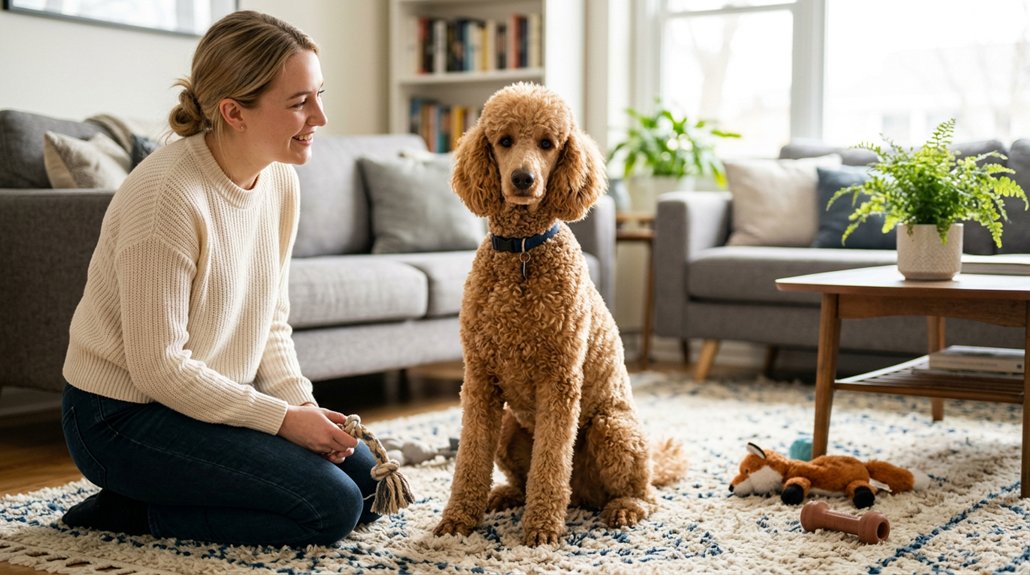
Understanding your poodle’s growth stages is essential for ensuring balanced development. Start puppy weaning at four weeks by supplementing nursing with goat’s milk and puppy food. Introduce new textures at six weeks to align with their baby teeth emergence. By eight weeks, shift to puppy kibble is vital, maintaining proper calorie intake to avoid digestive issues. At twelve weeks, your poodle’s early socialization milestones continue as they prepare for new homes, benefiting from early grooming. By sixteen to eighteen weeks, well-vaccinated puppies flourish with interactions and professional grooming.
Here’s a quick guide to evoke emotions about these stages:
| Age (Weeks) | Key Activity | Emotional Note |
|---|---|---|
| 4 | Start Puppy Weaning | Tiny, tentative first steps |
| 6 | Introduce Textures | Little explorers at heart |
| 8 | Shift to Kibble | Growing independent |
| 12 | Early Grooming | Ready for life’s adventures |
| 16-18 | Socialize and Grooming | Confident little companions |
Training Your Poodle: Strategies for Success
Initiating training for your Poodle as early as eight weeks can greatly enhance their development and adaptability. Poodles are inherently intelligent, making them highly responsive to structured training. Using positive reinforcement fosters desired behaviors and deepens your bond with your Poodle. Here are key strategies:
- Consistency: Regular, short sessions, ideally around 5-10 minutes, help maintain their focus and prevent frustration.
- Positive Reinforcement: Use treats and verbal praise to encourage the behaviors you wish to see repeatedly.
- Mental Stimulation: Introduce interactive games and puzzle toys that challenge their intelligence and keep them engaged.
- Socialization: Expose them to varied environments, people, and dogs. It guarantees they’re well-rounded and diminishes future behavioral issues.
Consistency and patience are your allies.
Fun Activities to Keep Your Poodle Entertained

Keeping Poodles entertained is crucial not only for their happiness but also for their mental acuity and physical health. Interactive games, such as fetch or hide-and-seek, stimulate their minds and bodies, keeping boredom at bay. Puzzle toys tap into their sharp intelligence, offering mental challenges that curb unwanted behaviors. Agility training presents thrilling opportunities for exercise, bolstering coordination, agility, and confidence. Meanwhile, regular training sessions can become fun by integrating obedience challenges and tricks, strengthening your bond with your Poodle while improving skills. Socializing through playdates outings or visits to dog parks allows them important interaction with fellow canines, promoting healthy social skills and diverse physical activity. Investing in these activities guarantees your Poodle remains content, active, and mentally stimulated.
Frequently Asked Questions
How Can I Determine if a Poodle Is the Right Breed for My Lifestyle?
Evaluate if you can meet a Poodle’s exercise needs, as they require regular activity. Consider the time you have for grooming requirements, since their coats demand frequent care. If both fit your lifestyle, a Poodle could suit you.
What Specific Health Issues Are Common in Poodles?
Imagine their joints as a creaky door; poodles can suffer from hip dysplasia. Their vision might fade like a setting sun due to progressive retinal atrophy. Regular vet visits and genetic screenings can help manage these common issues.
Are There Any Special Dietary Needs Unique to Poodles?
You’ll find that poodles require a balanced diet rich in protein, healthy fats, and essential vitamins. Their nutritional requirements support their energy levels. Adhering to specific feeding guidelines can prevent obesity and maintain ideal health.
How Do Poodles Typically Interact With Other Household Pets?
Poodles generally exhibit excellent social behavior, often displaying high pet compatibility. They’re intelligent and friendly, making them adaptable to varied households. You’ll find their interactions with other pets, especially dogs, are typically positive, integrating seamlessly.
What Travel Tips Can Help Ensure My Poodle’s Comfort and Safety?
Precise planning promotes poodle perfection. Secure suitable travel accommodations; guarantee your poodle’s cozy kennel is adequately aerated. Car safety is vital; always use certified canine containment carriers to keep them secure and serene during trips.
Conclusion
Caring for and training a poodle is like sculpting a masterpiece; each step requires precision, patience, and love. By understanding their unique behavior and growth stages, and employing strategic training, you’re setting the foundation for both of you to thrive. Nourish them with proper care and engaging activities, ensuring they’re not just healthy, but happy. With commitment and expertise, your poodle will flourish, bringing boundless joy, much like the light of a completed work of art.