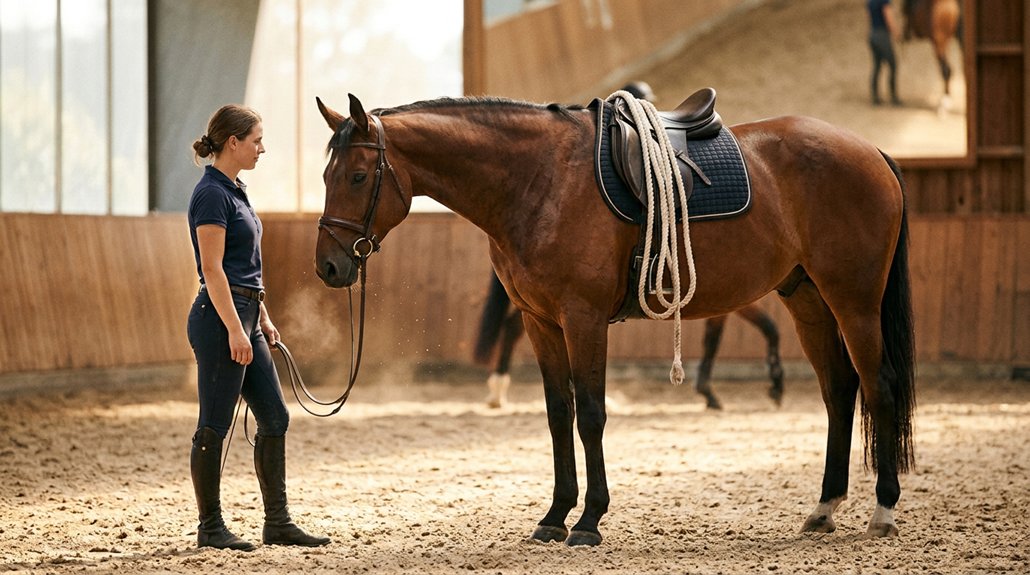
To improve your horse’s ground manners, establish clear personal space boundaries using body language and consistent reminders. Practice leading with precision, ensuring your horse stays slightly behind your lead hand. Work on lateral flexion for better responsiveness and use desensitization tactics to build confidence with new stimuli. Incorporate daily groundwork routines, emphasizing pressure-and-release techniques to foster trust and respect. Continue exploring to access further tips and techniques for lasting success in training.
Key Takeaways
- Establish clear personal space boundaries using body language to improve safety and ground manners.
- Practice daily groundwork exercises like Standstill and Body Awareness to foster familiarity and respect.
- Use lateral flexion exercises to enhance the horse’s responsiveness to cues.
- Employ the pressure-and-release method consistently to reinforce desired behaviors and build trust.
- Gradually expose the horse to desensitization exercises with safe stimuli for confidence building.
Set Personal Space Boundaries
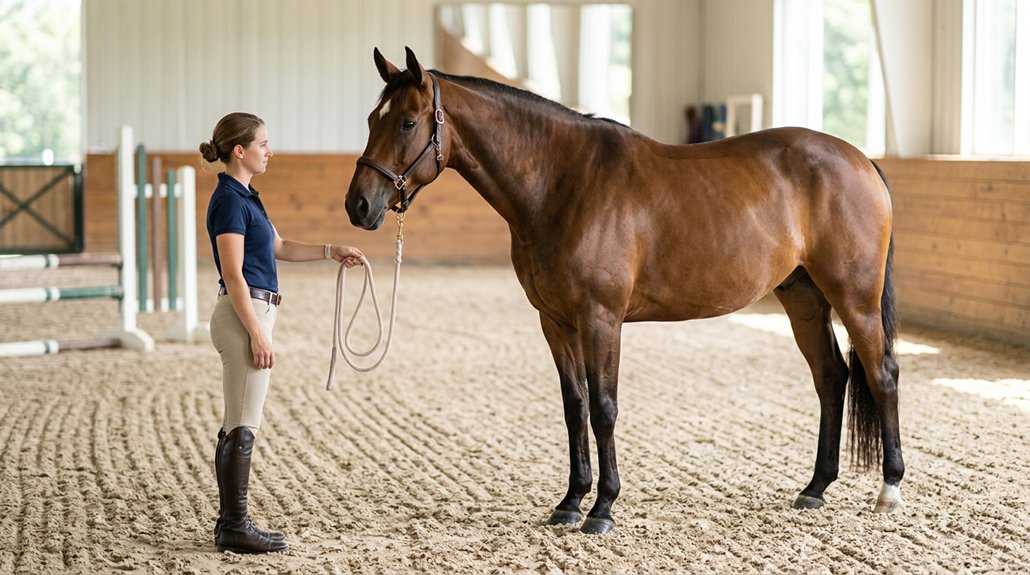
Establishing personal space boundaries is a fundamental step in improving your horse’s ground manners. Cultivating space awareness is vital for safe interactions, preventing biting or crowding. Use your body language and posture to communicate boundaries confidently. Stand tall and assertive to guarantee the horse perceives your space limits. When the horse oversteps, gently encourage it to back out using soft pressure, reinforcing boundary respect. Regular reminders are key; consistency in space awareness keeps your horse attentive and respectful. Employ techniques like the join-up concept by Monty Roberts to foster understanding of personal space through leadership. This dynamic helps reinforce boundaries while enhancing focus. By maintaining boundary reinforcement, you’ll establish a mutually respectful and safe environment for you and your horse.
Achieve Precision in Leading and Halting
Mastering precision in leading and halting is fundamental for fostering a respectful relationship with your horse. Start by verifying your horse’s nose and shoulder stay behind your lead hand—this nose control is essential for proper guidance and conveys leadership. Utilize pressure cues along with voice commands like “whoa” to signal the halt. It’s critical to release the pressure immediately once your horse stops, reinforcing the command’s meaning. Begin practicing halts over short distances, gradually extending the walk to enhance your horse’s response. Don’t forget to include backing up exercises; they not only refine your horse’s understanding of reverse cues but also strengthen its ability to react promptly. Confirm your halter and lead rope fit well to avoid discomfort, facilitating effective communication.
Develop Lateral Flexion Response
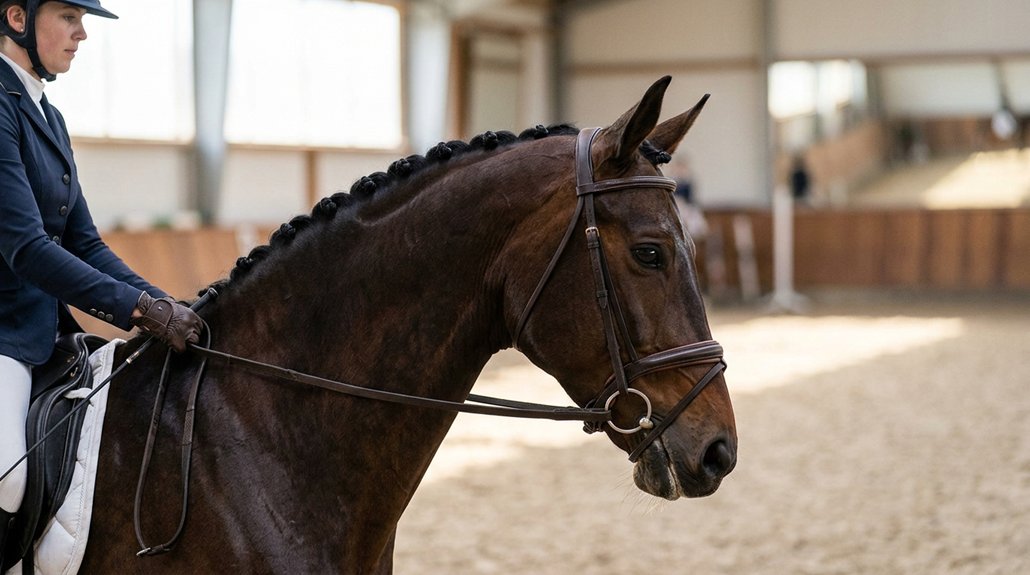
When aiming to develop your horse’s lateral flexion response, focus on the horse’s ability to bend its neck gently in response to halter pressure. This is key for effective communication and control. Practice lateral flexion exercises to help your horse flex to each side, reducing the pressure needed over time. These neck bending techniques will sharpen your horse’s attentiveness and respect for cues, essential for better control.
By consistently engaging in lateral flexion, you’ll see improvements in head control and steering abilities, both on the ground and in the saddle. To enhance your training sessions, remember to:
- Integrate lateral flexion into regular groundwork.
- Be patient and gradual with pressure.
- Emphasize developing trust and connection.
Your horse’s responsiveness and smoother movements await!
Swap Hand Grazing for Better Rewards
Swapping hand grazing for better rewards can greatly enhance your horse’s training progress. When horses become pushy due to constant hand grazing, their respect for your personal space diminishes, undermining training efforts. Instead, opt for treat rewards or grazing alternatives like hand-fed or bucket-fed treats to reinforce positive behavior. This strategy not only keeps your horse focused on you but also guarantees training takes precedence over foraging.
Implement Desensitization Tactics to Bolster Confidence
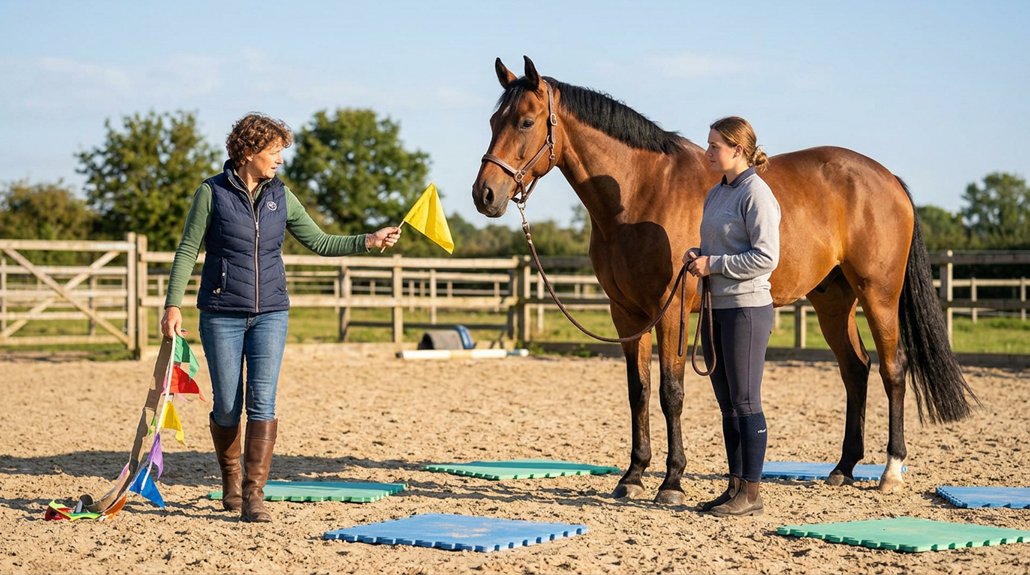
To bolster your horse’s confidence, incorporate desensitization tactics that utilize safe stimuli, like tarps and flags, to introduce gradual environmental challenges. By exposing your horse to these controlled scenarios, you’re helping them build resilience and focus in unpredictable situations. Confirm you have a clutter-free space to amplify their learning experience and stick to small, regular exposures for ideal results.
Confidence-Building Through Exposure
Although building confidence in your horse can seem intimidating, employing desensitization tactics is a structured way to achieve this goal. Desensitization techniques involve exposing your horse to various stimuli like tarps, flags, and cones. Exposure consistency is essential; regular practice helps your horse feel secure. A decluttered training space is important—eliminate distractions, encouraging your horse to concentrate on these new sights and sounds. Start with small, incremental exposures as they allow your horse to adapt gradually without feeling overwhelmed.
Positive reinforcement is your ally. Reward progress to cultivate a cooperative mindset. Here are some desensitization steps you might try:
- Introduce new objects slowly, allowing sniffing and touching.
- Use consistent, calm vocal cues to reassure.
- Create a steady routine, building familiarity and confidence.
Utilizing Safe Stimuli
Even though desensitization might seem intimidating at first, utilizing safe stimuli can considerably bolster your horse’s confidence. Start by introducing simple items like tarps, flags, and cones, offering safe exposure to new sights and sounds. These tools can help your horse develop calm associations with unexpected stimuli.
Begin with small, manageable exposures in a decluttered setting to guarantee there are minimal distractions. Reward your horse’s calm behavior with treats or praise, reinforcing positive associations. Regular practice is essential; integrate these exercises into your groundwork routines to continually reinforce confidence.
Track progress by noting improvements in reactions over time. Celebrate these successes, using them as stepping stones for further training goals. This consistent reinforcement will make your horse more resilient and responsive.
Gradual Environmental Challenges
Harnessing safe stimuli lays a strong groundwork, setting the stage for introducing more gradual environmental challenges. Gradual exposure to new sights, sounds, and textures like tarps and flags helps your horse with environmental adaptation. Start with small, controlled training sessions to present these challenges, ensuring your horse stays focused without feeling overwhelmed.
Here are some tips for effective desensitization:
- Regular Practice: Work in varied, safe conditions to help your horse adapt and reinforce their confidence.
- Minimal Distractions: Keep the training area decluttered to maintain their concentration on your commands.
- Positive Reinforcement: Encourage calm responses with consistent rewards, promoting comfort in new situations.
These strategies will gradually build trust and enhance your horse’s ground manners.
Incorporate Groundwork Routines to Foster Trust and Respect
To foster trust and respect between you and your horse, start by establishing clear personal space boundaries using consistent groundwork routines. Consistency in your actions and cues is key to reinforcing your leadership, enabling your horse to understand what’s expected. By practicing exercises that focus on body awareness and responsiveness, you’ll help your horse develop good ground manners in a respectful environment.
Establish Personal Space Boundaries
While establishing personal space boundaries for your horse, it’s crucial to incorporate groundwork routines that foster trust and respect. Use boundary reinforcement techniques to maintain a safe distance, minimizing risks like biting or charging. Your body language and firm movements clearly define the space you wish to create, guiding the horse to stay within respectful limits.
By regularly practicing personal space exercises, such as pressure and release, you guarantee your horse understands these boundaries. This understanding not only enhances safety but also strengthens the bond between you and your horse.
Here are practical steps to implement:
- Body Awareness Exercise: Improves environmental and boundary awareness.
- Pressure and Release Technique: Conditions boundary recognition.
- Clear Signals: Use confident body language for boundary clarity.
Consistency in these exercises is key.
Reinforce Leadership Through Consistency
Now that you’ve laid the foundation of personal space boundaries, it’s time to focus on reinforcing leadership through consistent groundwork routines. Training consistency is key to solidifying your role as a trusted leader. Daily groundwork exercises like Standstill and Body Awareness instill respect and help your horse understand your expectations. Utilizing a pressure-and-release method enhances these exercises, making cues clear and encouraging effective responsiveness. A brief daily routine fosters trust and is critical for leadership development. Your calm demeanor coupled with clear communication guarantees your horse feels secure and understood during sessions. As reliability grows, so does respect and trust, reinforcing your status as a leader, and building the ground manners essential for your horse’s success and well-being.
Frequently Asked Questions
What Is the 1/2/3 Rule in Horses?
The 1/2/3 rule’s about using groundbreaking techniques for teaching equine etiquette. Apply pressure for 1 second, increase for 2 seconds if ignored, then release after 3 seconds when they respond. Consistent use builds clearer communication and respect.
How to Improve Horse Ground Manners?
To improve your horse’s ground manners, utilize consistent handling exercises focusing on leading techniques and space awareness. Apply positive reinforcement and effective body language to build trust. Practice patience, combining consistency training with varied challenges to enhance compliance.
What Is “I Love You” in Horse Language?
When a horse says “I love you,” you’ll notice relaxed body language, ears flat, and soft eyes. Trust-building nuzzles or nickers show affection. Responding with gentle strokes and respecting personal space strengthens this beautiful bond of mutual trust.
What Does It Mean When a Horse Stomps His Front Foot?
When a horse stomps its front foot, it’s sending a message. Could it be impatience, discomfort, or maybe swatting insects? To decode these behavioral signs, understand their context and body language—your insight makes the difference.
Conclusion
You’ve commenced on a transformative journey with your horse, enhancing ground manners through thoughtful strategies. By setting personal space boundaries and achieving precision, you’re laying a foundation of respect. With lateral flexion and effective rewards, you’re rewriting the language of trust. Desensitization boosts confidence, turning fear into familiarity. As groundwork routines weave trust’s intricate tapestry, remember: a small step for your horse is a giant leap in your partnership’s harmony. You’re not just training—you’re crafting a connection.