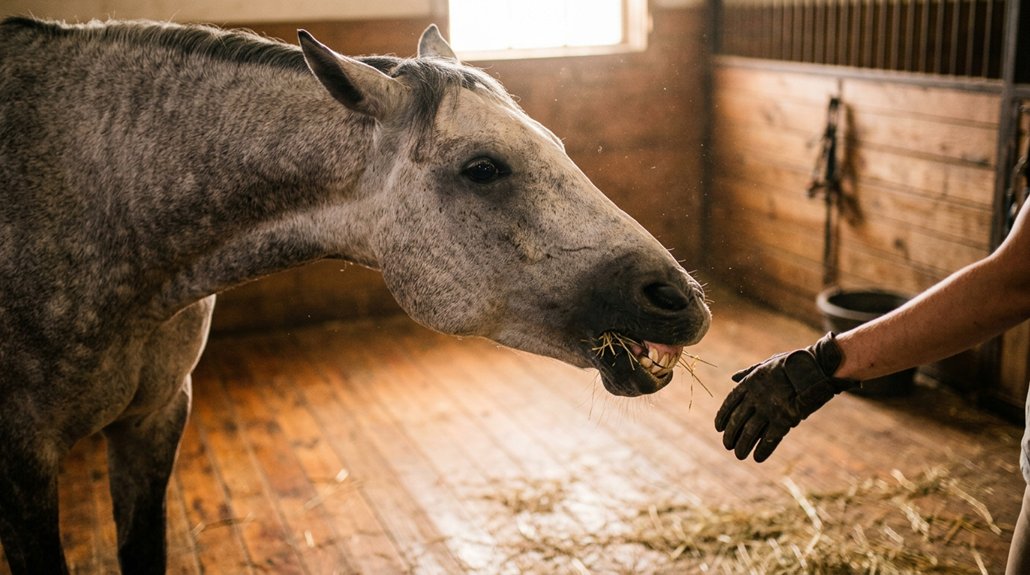
Horses bite for various reasons, including expressing natural instincts, boredom, or discomfort. Understanding these triggers is essential. Address biting by observing context, using positive reinforcement, and ensuring proper mental and physical stimulation. Avoid hand feeding to prevent blurred boundaries. Regular veterinary check-ups can reveal health-related issues. Building trust through consistent handling and boundary training is key. Approaching horse behavior with compassion and patience frees insights into deeper understanding and effective solutions. Continue to explore these aspects for more insights.
Key Takeaways
- Horses bite due to unmet needs like boredom, discomfort, or lack of stimulation.
- Biting reflects natural instincts for communication, social interaction, and exploration within a herd.
- Correct biting behavior using immediate corrections, positive reinforcement, and structured training commands.
- Address underlying causes with regular veterinary check-ups, behavioral assessments, and consistent boundary training.
- Avoid hand feeding; use structured feeding to prevent food associations and reduce nipping behavior.
Quick Strategies to Stop Biting
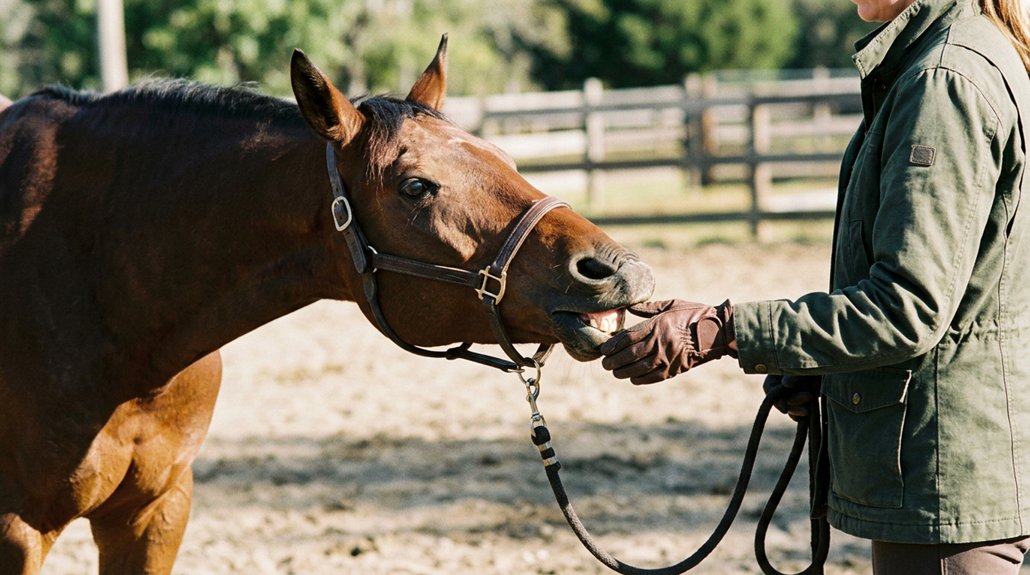
If your horse’s biting tendencies have become a concern, addressing them promptly and effectively is essential for creating a safe environment. Use immediate corrections like a firm “no” to discourage biting instantly. Applying positive reinforcement alongside this helps your horse grasp what’s expected. Distraction techniques such as redirecting the horse to a task or object can break the biting cycle effectively. Utilize training commands, like “back up,” to establish boundaries and reduce biting instances. Your body language should remain calm and assertive, avoiding aggressive reactions that might escalate the problem. Consistent messaging is critical; ensuring that your responses are uniform in every situation reinforces proper behavior over time. This strategic approach fosters understanding and safety for both you and your horse.
Understanding Why Horses Bite
When you’re trying to understand why horses bite, it’s essential to acknowledge their natural instincts and motivations. Biting can often be a response to unmet needs, whether it’s due to a lack of mental stimulation or unresolved health issues causing discomfort. By identifying and addressing these underlying causes, you’ll not only promote a healthier environment for your horse but also foster a more harmonious relationship.
Natural Instincts and Motivations
Although it may seem alarming at first, understanding why horses bite offers crucial insights into their natural instincts and motivations. Horses are inherently social creatures often using playful nipping within their herds to communicate. Young foals, in particular, engage in environmental exploration with their mouths, which can sometimes be misinterpreted as biting. It’s a normal part of their development and curiosity.
Adult horses might bite to express discomfort or establish boundaries, reflecting their need for social order. Boredom or frustration can escalate this behavior, emphasizing the significance of regular mental and physical engagement. Observing when and where biting occurs—such as during feeding or grooming—can help you identify whether it’s mere curiosity or a sign of deeper issues needing attention.
Addressing Underlying Causes
Understanding why horses bite begins with examining the context in which this behavior occurs, as it’s often a manifestation of deeper issues. A thorough behavioral assessment is essential to identify triggers like boredom, pain, or social dynamics. Different motivations require different interventions. Here’s a guide to address the root causes:
- Conduct Behavioral Assessment: Identify if the horse is expressing discomfort or seeking attention.
- Boundary Training: Establish clear rules and use positive reinforcement to teach the horse what’s acceptable.
- Veterinary Check-ups: Regular exams help uncover physical issues, like dental problems, that might cause biting.
- Understand Social Dynamics: Horses may test boundaries or assert control within a herd. Observing these interactions can offer insights.
Compassion and patience are key in guiding your horse away from biting behaviors.
Natural Instincts Behind Biting
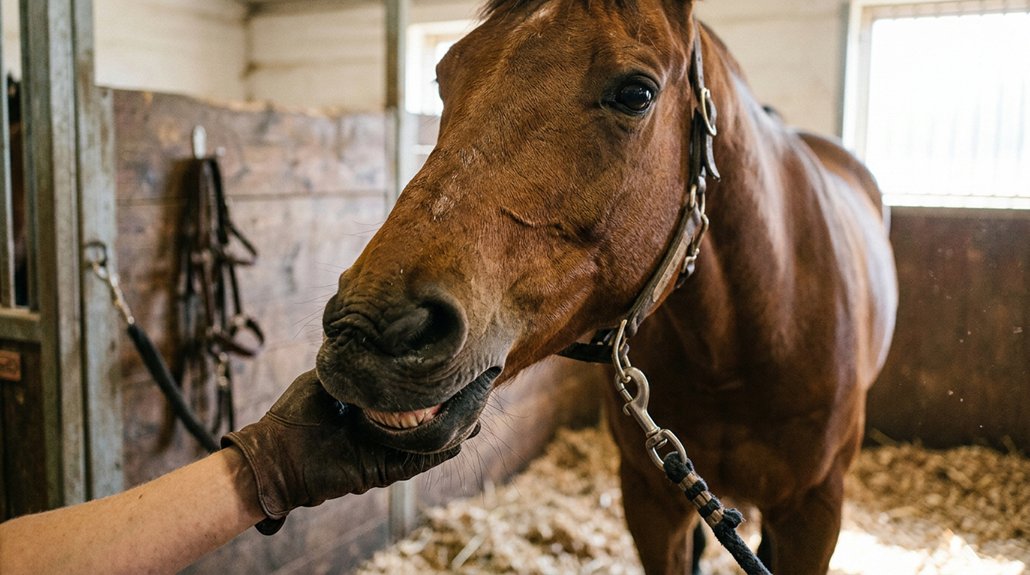
In the intricate social world of horses, biting is often more than just an aggressive gesture; it stems from deep-rooted natural instincts critical for survival and communication. As prey animals, horses instinctively use their mouths for exploration and interacting within their herd, often revealed through playful nipping. This behavior is not inherently aggressive but rather a manifestation of monitoring social dynamics and establishing boundaries. Young horses are particularly prone to this as they learn and adapt. This natural behavior serves as a conduit for communication, boundary setting, and even defending personal space, which becomes more relevant during feeding or confinement. Understanding these instincts allows you to address biting effectively, ensuring it doesn’t become problematic while fostering a compassionate, well-guided interaction.
Consequences of Hand Feeding Horses
As you explore the natural instincts that drive horses to bite, it’s important to recognize how human behaviors can inadvertently contribute to this issue. Hand feeding is a common practice mistaken for affection, but it can have several behavioral implications. Horses may start to associate humans directly with food, leading to a breakdown in feeding boundaries. Consider the consequences:
Hand feeding blurs boundaries, prompting horses to associate humans with food and potentially increasing biting behaviors.
- Increased Biting: Horses expect treats, leading to nipping or demanding behavior.
- Spoiled Behavior: Expectation of treats can lead to spoiled, unruly horses.
- Resource Guarding: Disruption of natural instincts may cause horses to defensively guard food.
- Maintaining Boundaries: Using buckets instead of hands encourages structure and reduces biting incidents.
Identifying Discomfort or Fear in Horses
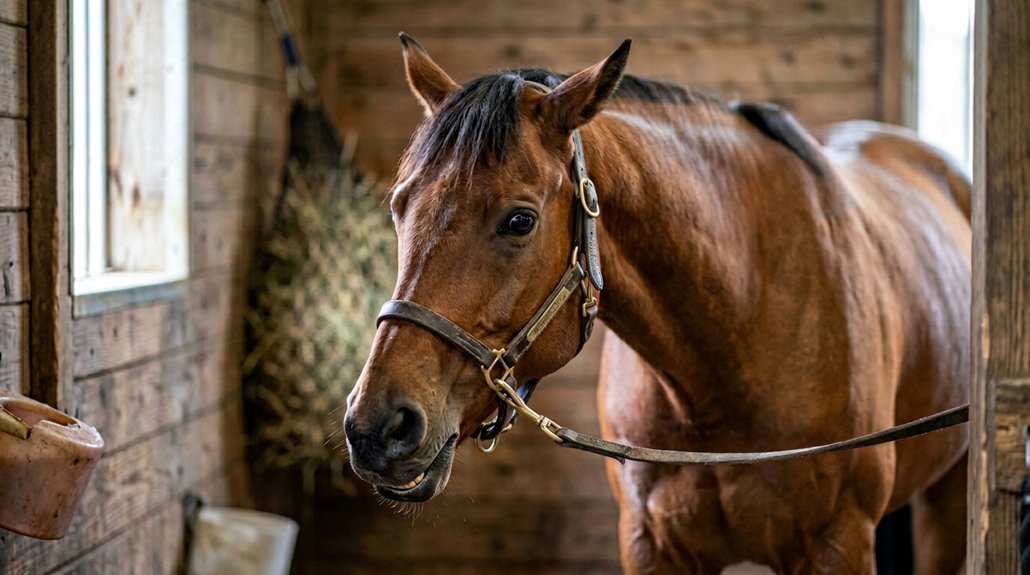
To effectively prevent biting, it’s essential to recognize the subtle signals of fear and discomfort in horses. You’ll need to assess potential causes like ill-fitting tack or past traumatic events and pay close attention to their body language—such as pinned ears or a raised head—which can guide you in managing their stress. By being attentive and compassionate, you can create a more comfortable environment, reducing the likelihood of defensive reactions like biting.
Recognizing Fear Signals
While working with horses, understanding their fear signals is essential for ensuring safety and fostering a trusting relationship. You’ll notice that ear language can be a helpful clue: pinned ears suggest discomfort, while ears flicking back might indicate anxiety. Here are some key fear signals to look out for:
- Body Tension: Observe any stiffness or muscle tightening, as they’re discomfort indicators that suggest stress or unease.
- Behavioral Cues: Sudden shying or heightened alertness often signal anxiety and a potential risk of biting.
- Posture Analysis: A raised head or stiff body posture may indicate that a horse feels threatened.
- Anxiety Signals: Look for wide eyes and a tense jaw, as these are clear signs a horse might be fearful or ready to act defensively.
Assessing Discomfort Causes
Even though horses can’t verbally communicate their discomfort, their behaviors and signals can speak volumes if you know what to look for. Conducting thorough behavioral assessments is key. Watch for discomfort indicators such as muscle tension, shifts in head and neck orientation, or changes in facial expressions like pinned ears. These signs can highlight underlying issues, such as ill-fitting tack, dental problems, or even gastric ulcers. Horses might also anticipate pain during tacking or grooming, sparking a biting response. Regular veterinary check-ups are essential for identifying and addressing potential health concerns promptly. By creating a calm environment and handling horses with care, you can alleviate their discomfort and reduce incidences of biting due to fear or discomfort.
Managing Stress Responses
Spotting stress in horses requires a keen eye and compassionate understanding, as these sensitive creatures often express discomfort or fear through biting. To effectively manage these stress responses, it’s essential to identify and address potential stress triggers.
- Observe Body Language: Look for signs like pinned ears or tail tension, which can indicate anxiety or fear.
- Assess Environmental Factors: Confined spaces or lack of stimulation can lead to frustration-induced biting. Ensuring plenty of mental and physical engagement is significant.
- Check for Health Issues: Pain from dental problems or ill-fitting tack might trigger defensive behavior. Regular health checks can prevent this.
- Practice Calm Handling: Unexpected approaches can provoke a fear response. Gentle and predictable interactions aid in behavior modification to reduce biting incidents.
Effective Techniques to Correct Biting
Correcting a horse’s biting behavior involves a blend of effective techniques that prioritize the animal’s comfort and establish clear boundaries. Groundwork exercises, such as the head-away command, teach them to move their head away, immediately rewarding compliance to discourage biting tendencies. Implementing behavior modification techniques like the back-it-up command helps guarantee your horse stays out of biting range. Mindful grooming allows identification of sensitive spots, rewarding relaxed responses to prevent discomfort-triggered bites. Gradually tighten the saddle cinch, praising calmness to alleviate cinching-related biting, making sure their comfort is respected. Use positive reinforcement consistently, reinforcing desired behaviors while establishing boundaries to curtail impulsive actions. Each thoughtful interaction helps guide toward a safer, more respectful relationship with your horse.
How to Build Trust With Your Horse
While building trust with your horse might seem challenging, it’s achieved through consistent handling and establishing clear boundaries. You’ll create a sense of security as your horse views you as a reliable leader. Here are some tips:
Building trust with your horse involves consistency and clear boundaries to become a reliable leader.
- Use Positive Reinforcement: Reward desired behaviors with treats. This fosters trust and respect.
- Understand Body Language: Calm ears and relaxed posture indicate comfort. Respect these cues and adjust interactions accordingly.
- Engage in Trust Building Exercises: Activities like groundwork and Parelli Seven Games enhance communication and mutual respect.
- Ensure Regular Interaction: Spend time together, practicing patience and gradual desensitization during grooming and tacking. This nurtures trust and reduces biting as your horse becomes familiar with your presence.
Effective communication is key!
When Biting Becomes a Concern
When biting becomes a concern, it’s essential to understand its roots and address them effectively. Biting can escalate into a serious safety issue, especially when your horse lacks proper boundary training. Start by identifying biting triggers—specific scenarios like tacking up, grooming, or feeding times can promote this behavior. Such instances might indicate boredom, pain, or discomfort, warranting thorough veterinary assessments.
Frequently Asked Questions
How to Correct a Horse for Biting?
To correct a horse for biting, focus on bite prevention and behavior modification. Use verbal corrections, commands like “back up,” and the “Head-Away Command.” Consistent, calm handling avoids aggression. Consider professional advice if biting persists.
What Is the Number One Killer of Horses?
Colic, a perilous threat to equine health, holds the grim title of the number one killer of horses. It’s crucial to understand horse behavior patterns to catch early signs, ensuring timely intervention to prevent devastating outcomes.
How Do Horses Say “I Love You”?
Horses say “I love you” through gentle horse communication, like soft nuzzles and calm nickering. Their relaxed body language and mutual grooming reveal a genuine emotional bonding, showing trust and affection towards you, their trusted human companion.
What Is the 1/2/3 Rule for Horses?
Imagine the 1/2/3 Rule as horse owner’s secret weapon! You keep your horse calm, attentive, and perfectly poised, squashing potential biting triggers. Mastering this formula guarantees better horse behavior, minimizing biting and strengthening your bond.
Conclusion
Imagine your horse as a young tree in a storm, swaying and bending with instinctive actions. By understanding its roots—fear, discomfort, and natural behavior—you can nurture it to withstand the gusts. Biting is a branch of communication, revealing deeper needs. Tend carefully, offering trust and guidance as sunlight. Don’t let biting become a tangled thicket; instead, prune with patience, turning an irritation into a garden of mutual respect and connection. Through this, trust blossoms.