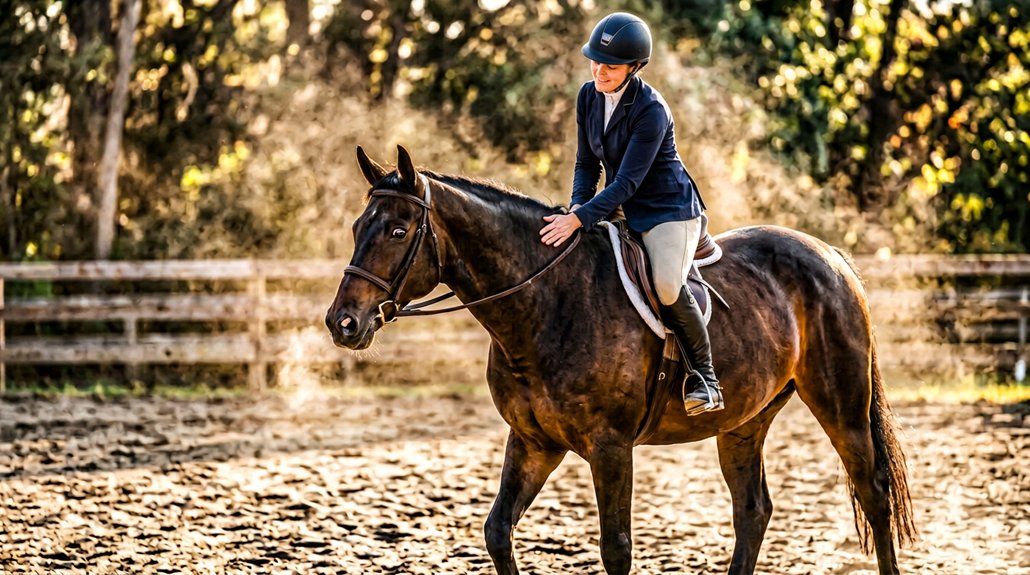
To build confidence in a fearful horse, focus on understanding its instincts and creating a predictable environment. Use groundwork techniques like approach and retreat to foster trust, while desensitizing the horse through gradual exposure. Consistency in training and positive reinforcement will encourage bravery. Pay attention to stress signals and maintain a calm presence to ease anxiety. Surround yourself with supportive resources and communities for guidance. There’s much more to explore in enhancing equine confidence.
Key Takeaways
- Use groundwork games to gently guide horses through fears, encouraging them to explore and gain confidence.
- Gradually introduce new stimuli and environments to lessen anxiety and build resilience.
- Employ consistent rewards and positive reinforcement to associate new experiences with positive outcomes.
- Maintain stable routines and clear cues to create a predictable, secure environment for the horse.
- Observe body language for stress signals to adjust training pace according to the horse’s comfort level.
Groundwork Techniques to Bond With Your Horse
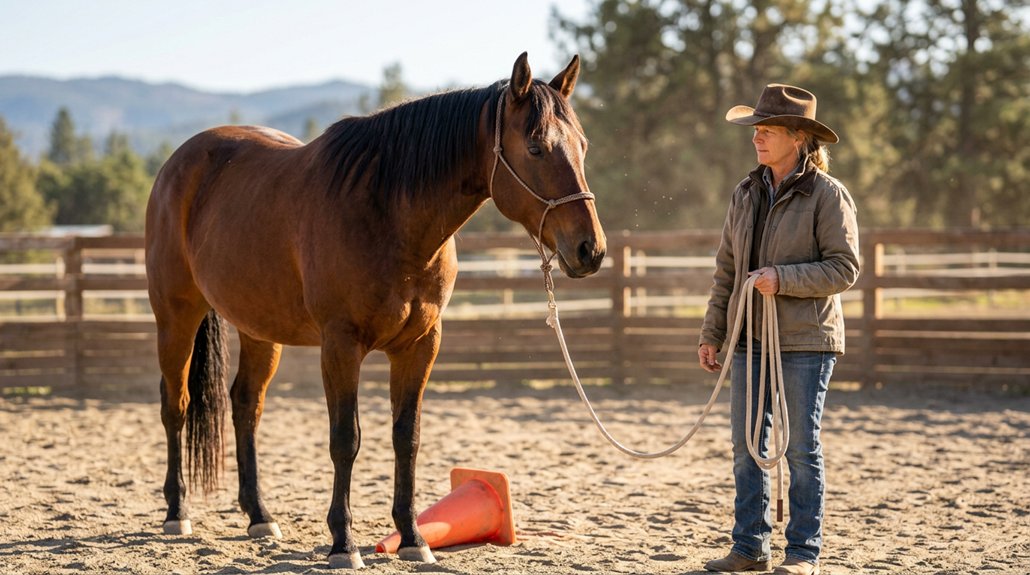
Have you ever wondered how groundwork techniques can transform your relationship with a fearful horse? Engaging in groundwork games and trust building exercises is key. Through approach and retreat methods, you gently guide your horse to face fears, turning apprehension into assurance. As your horse encounters new challenges, they start to see these moments as growth opportunities rather than threats. Desensitization work effectively shifts fear into curiosity, opening up a world of positive interactions. Consistently reward small successes with praise or treats, reinforcing your bond and encouraging bravery. Maneuvering around obstacles and novel objects not only boosts your horse’s confidence but also hones its responsiveness to commands. With patience, these techniques dismantle anxiety and cultivate a trusting, harmonious partnership.
Instincts and Environmental Triggers of Fear
Understanding your horse’s instincts and how environmental triggers can influence fear is just as important as groundwork in strengthening your relationship. Horses, being prey animals, often react with flight-or-fight responses when facing perceived threats, which can lead to fearful behavior. Recognizing these natural fear responses allows you to create an environment that promotes safety and reduces anxiety. Environmental factors like restricted spaces, unexpected stimuli, and loneliness can heighten their fear, so ensuring environmental safety is essential. Remain calm and confident; your emotional state considerably impacts how secure your horse feels. Introduce new experiences gradually and with control, helping your horse process potential fears without reinforcing reactionary instincts. With time, your horse will interpret its environment as less threatening.
Establish Trust Through Consistency
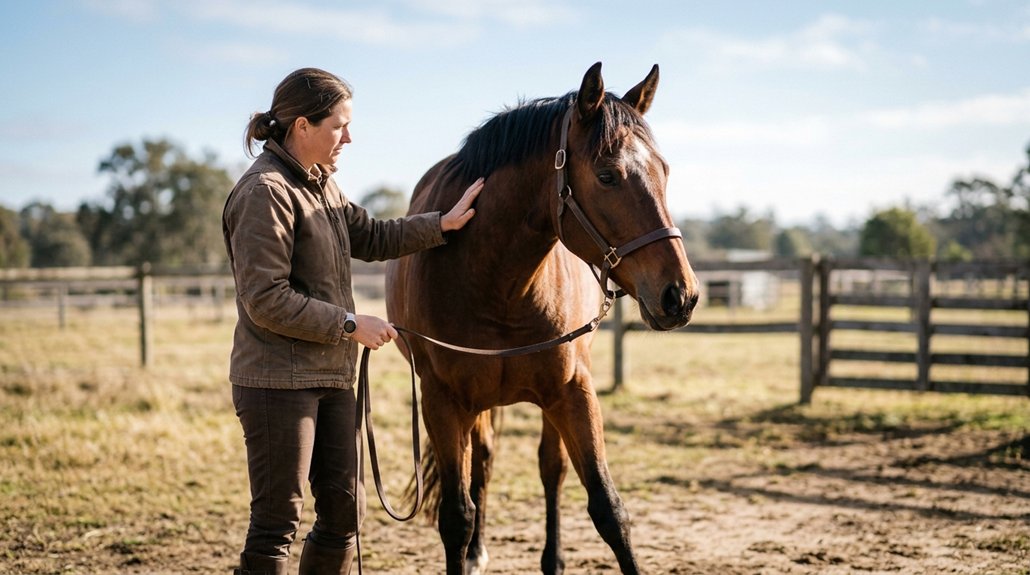
To help your fearful horse find stability, focus on maintaining consistency in your training routines. By offering predictable outcomes, you provide them with a safe platform to build their confidence and reduce anxiety. Your calm presence and reliable cues not only create security but also encourage your horse to engage more openly and trustfully.
Promote Predictable Outcomes
When working with a fearful horse, establishing trust through consistency is crucial to their development. By implementing predictable routines, you’ll provide a comforting structure that helps the horse learn to anticipate positive outcomes. Such routines lessen anxiety as your horse begins to form a reliable bond with you, expecting peaceful interactions and engaging more willingly. Unpredictable training can lead to nerves and avoidance, much like when facing unfamiliar stimuli. But through structured exercises and consistency, you’ll reinforce favorable outcome expectations, building the horse’s sense of security. Regular assessments guarantee that training remains positive, catering to their evolving confidence. Every step taken with intention and predictability empowers your horse to confront challenges with assurance and enthusiasm.
Foster Stable Experiences
Consistency is key in fostering a stable environment for a fearful horse. Establishing routine training techniques and consistent environmental conditions helps your horse feel safe, reducing unpredictable fear responses. This sense of predictability directly contributes to building emotional resilience. Integrate positive reinforcement methods like clicker training to create an encouraging space where desired behaviors are rewarded. This technique not only elevates confidence but also strengthens the bond between you and the horse. Use gradual exposure with the approach and retreat method to prevent overwhelming your horse and facilitate fear management. Keep your interactions calm and clear, reinforcing a trusting relationship. By ensuring manageable challenges, you’ll build your horse’s confidence incrementally, nurturing a relationship grounded in reliability and trust.
How to Read Signs of Stress and Anxiety
To effectively support a fearful horse, you need to accurately recognize their stress signals and understand their body language. Look for subtle cues like muscle tension or heavy breathing, which can indicate anxiety even when the horse seems calm. By identifying these behavioral changes early, you can address their needs more appropriately and prevent stress from escalating.
Recognizing Stress Signals
Although recognizing stress signals in horses requires keen observation, it is essential for ensuring their well-being and building a trusting relationship. Stress detection is vital; horses display subtle signs like heavy breathing, muscle tension, or a frozen stance that you shouldn’t overlook. Anxiety management comes into play when you notice a horse’s conflict between fear and instinct, like freezing or avoidance when scared. Observing changes such as sudden stiffness or reluctance helps spot underlying stress. Also, remember that your calmness can greatly ease a horse’s anxiety. By maintaining a composed demeanor, you not only manage your horse’s stress responses but also nurture a positive emotional environment. Recognizing and interpreting these signals strengthens your bond with your horse, ensuring trust and confidence.
Understanding Body Language
Decoding a horse’s body language is like accessing a secret language that reveals its emotional state. By observing their subtle visual signals, you can gain valuable insight into their stress and anxiety levels. Notice body language cues such as heavy breathing, muscle tension, or a high head position, which are clear stress indicators. Pay close attention to their ears; forward-facing ears suggest curiosity, while pinned back ears can signal discomfort. The tail tells its own story—a tucked tail often means anxiety, while a relaxed tail generally shows contentment. Eye behavior is equally telling; wide eyes may indicate fear, whereas slow blinking hints at trust. By cultivating emotional awareness and understanding their unique world, you can help ease their fears.
Identifying Behavioral Changes
How can you tell when a horse is silently battling stress and anxiety? Observing subtle behavioral changes is essential. Horses might not always show obvious signs, but look for subtle cues. Focus on their body language and actions for insights into their anxiety patterns.
- Behavioral Observations: Notice any head tossing or reluctance to move forward. These can indicate discomfort or anxiety.
- Physical Cues: Watch for heavy breathing or muscle tension, even if they seem calm. Such signs often reveal inner stress.
- Avoidance Behaviors: Frequent pacing, sweating, or changes in eating habits highlight potential anxiety that needs addressing.
Recognize these patterns to help your horse feel supported and understood, paving the way to build their confidence. Empathy and observation are your keys.
Create a Predictable Environment for Stability
When attempting to build a horse’s confidence, establishing a predictable environment is essential as it reduces anxiety and creates stability. By introducing stable routines in feeding, handling, and exercise, you make sure your horse experiences environmental enrichment in a safe and familiar way. This consistency allows them to anticipate daily activities, understand what to expect, and derive positive outcomes from known experiences, fostering their confidence. Make sure that their physical surroundings are comfortable, familiar, and free from unnecessary distractions or stressors, which can otherwise heighten fear and anxiety. Clear communication through predictable cues and responses during training further aids in reducing confusion, allowing your horse to relax. Through these thoughtful practices, you pave the way for a more confident and trusting relationship.
Gradually Introduce New Stimuli to Your Horse
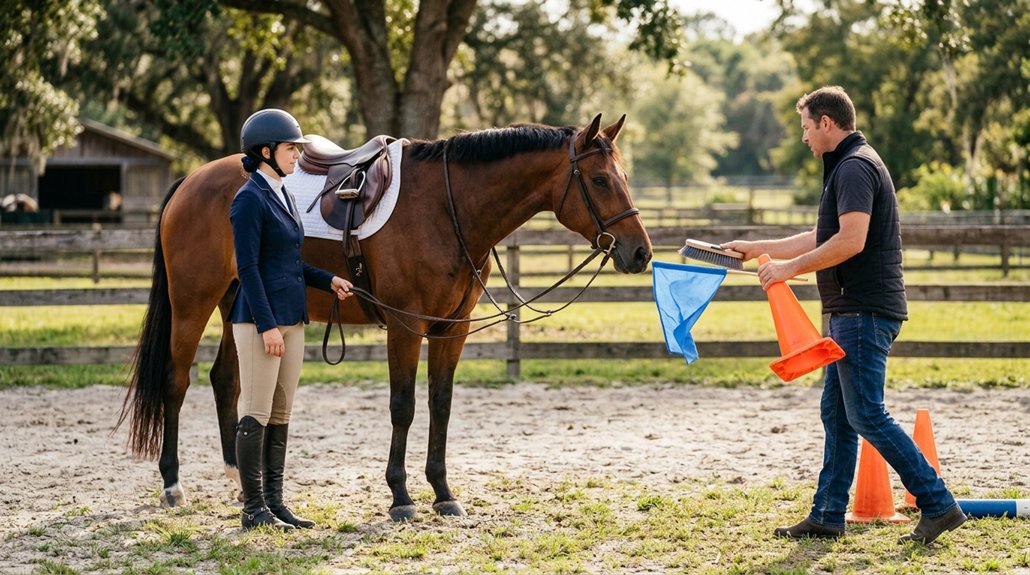
When introducing new stimuli to your horse, it’s essential to use controlled exposure techniques that limit anxiety-inducing situations. Start with softer, less intimidating objects at a distance and gradually decrease that distance as your horse grows more comfortable. By regularly implementing confidence-building exercises, you’ll not only help alleviate fear but also reinforce a trusting bond between you and your horse.
Use Controlled Exposure Techniques
Building confidence in a fearful horse can be a rewarding journey, especially when using controlled exposure techniques to introduce new stimuli. Your exposure timeline should focus on gradual desensitization, guaranteeing that each step is comfortable and encouraging for your horse. Consider these essential strategies:
- Advance and Retreat: Gently approach the stimulus, then allow your horse to step back if needed, reinforcing positive associations.
- Start Low-Stress: Begin in calm environments to prevent overwhelming your horse and nurture trust.
- Positive Reinforcement: Provide treats or praise to link new experiences with positive outcomes.
Consistently assess your horse’s comfort level and adapt your approach accordingly. This observant and empathetic method guarantees a supportive path towards building lasting confidence.
Limit Anxiety-Inducing Situations
To limit anxiety-inducing situations for your horse, gradually introduce new stimuli with patience and care, guaranteeing a pace that respects their emotional threshold. Use desensitizing techniques for effective anxiety management, allowing your horse to explore objects or environments at their own pace. The “approach and retreat” method works well, letting your horse approach a stimulus cautiously, then retreating, reinforcing confidence and reducing fear. Watch your horse’s body language closely; signs like heavy breathing suggest it’s time to slow down. Use positive reinforcement—treats, verbal praise—to reward curiosity and success. Consistency is vital. Create a predictable environment to lessen anxiety, helping your horse feel secure as they encounter new elements. Gradual exposure guarantees they build both confidence and trust.
Implement Confidence-Building Exercises
While it’s crucial to maintain a calm and patient approach, gradually introducing new stimuli to your horse can greatly bolster their confidence. Using the “approach and retreat” method, let your horse explore at their own pace. Incorporate confidence building activities and effective fear response management by utilizing desensitization techniques. Start with low-intensity objects that pique curiosity, then slowly increase complexity.
- Use desensitization techniques: Introduce items like clippers in a calm setting to diminish fear.
- Explore obstacle courses: These encourage positive interactions and exploration with new stimuli.
- Reward curiosity: Reinforce calm behavior with treats or praise, creating positive associations.
Through consistent and controlled exposure, you’re empowering your horse to feel secure, paving the way for greater confidence and trust.
Employ Clicker Training for Positive Reinforcement
When aiming to foster confidence in a timid horse, clicker training serves as an excellent method of positive reinforcement, as it provides clear communication through a distinct sound that marks desired behaviors. Start with simple tasks, enhancing their confidence through immediate rewards. The timing of your click is essential—align it precisely with the action to guarantee your horse associates the behavior with a reward. As you progress, incorporate desensitization techniques to create positive exposures.
| Step | Technique | Benefit |
|---|---|---|
| Initial Tasks | Reward Systems | Builds immediate trust |
| Intermediate | Gradual Challenges | Maintains engagement |
| Advanced | Desensitization Techniques | Fosters curiosity, reduces fear |
This consistent approach enhances their sense of accomplishment, strengthening the bond between you and your horse, while reducing anxiety.
Rider’s Confidence and Its Impact on Equine Trust
Understanding the deep connection between a horse and its rider is essential for building trust. Rider emotions subtly influence your horse, shifting its comfort or anxiety levels. Horses, being naturally empathetic, mirror your demeanor. Here’s how to leverage this bond:
- Maintain Calm Demeanor: Consistency and calmness, paired with effective calming techniques, reassure your horse, signaling a safe environment.
- Practice Awareness: Recognize how your emotions affect your horse. Anxious feelings can unintentionally elevate their fears, so practice mental focus.
- Establish Predictability: Consistent handling with clear body language and commands builds rapport. It reinforces your horse’s trust, promoting security and willingness to explore new settings.
Enhancing your own confidence through training creates a trusting, risk-taking environment for your horse.
Crafting a Personalized Training Journey
The bond between you and your horse provides a solid foundation for commencing a tailored training journey that empowers both of you to face challenges with confidence. Begin by creating a safe, predictable environment, essential for minimizing anxiety. Employ the approach and retreat technique for fear management, letting your horse adjust at their own pace.
| Strategy | Benefit |
|---|---|
| Positive Reinforcement | Boosts confidence, rewards progress |
| Ground Work | Encourages adaptability and exploration |
| Personalized Assessments | Tailors approach to individual needs |
Fear management is more than just gradual exposure; it involves crafting a journey that’s considerate of your horse’s unique needs. Use personalized assessments regularly, adjusting methods to suit their responses. This sensitivity to your horse’s cues guarantees trust and confidence grow steadily.
Find Community Support and Resources
While building confidence in a fearful horse can seem intimidating, tapping into a supportive community can make a world of difference for both you and your equine partner. Engaging in community platforms like BuckarooCrew.com offers a chance to connect with fellow horse owners who share experiences and strategies. By accessing courses like the Absolute Necessities, you’ll find training resources tailored to address equine anxiety, enhancing your techniques and understanding of equine psychology. Participating in group workshops and community events provides invaluable collaboration opportunities, fostering a continuous knowledge exchange. Explore mentoring relationships and open communication channels with experienced trainers to gain insights. Immerse yourself in online forums for shared experiences and community engagement, ensuring your developmental journey is well-supported and informed.
Frequently Asked Questions
How to Build Confidence in a Nervous Horse?
You build confidence in a nervous horse by combining desensitization exercises with positive reinforcement. This approach allows the horse to gradually face fears safely while rewarding desired behaviors, fostering trust and comfort. Stay patient and observant throughout.
What Is the 1/2/3 Rule in Horses?
The 1/2/3 Rule revolves around strategic steps: advance, avoid, approach. It’s about reading your horse’s body language and utilizing training techniques that transform trepidation into trust, ensuring your equine experiences each encounter calmly and confidently.
How to Calm a Fearful Horse?
You’ll calm a fearful horse by maintaining a calm demeanor and using desensitization techniques consistently. Incorporate positive reinforcement to reward their curiosity. Your patience and empathy are key, helping the horse feel secure and gradually building their confidence.
How to Get a Nervous Horse to Trust You?
Gain a nervous horse’s trust by using desensitization techniques, allowing them to gradually face fears. Combine this with positive reinforcement like treats or praise. Watch their body language and emotions carefully, responding empathetically to foster trust.
Conclusion
Building confidence in a fearful horse is like sculpting a masterpiece; it takes patience, skill, and heart. By weaving trust through groundwork and understanding their instincts, you’ll dance together in harmony. Recognize the whispers of anxiety and embrace predictability to help your horse breathe easily. Clicker training serves as the gentle melody that reinforces bravery, mirroring your own confidence. Craft your unique journey with empathy, tapping into the rhythm of community support and shared wisdom. Your bond will illuminate new paths.