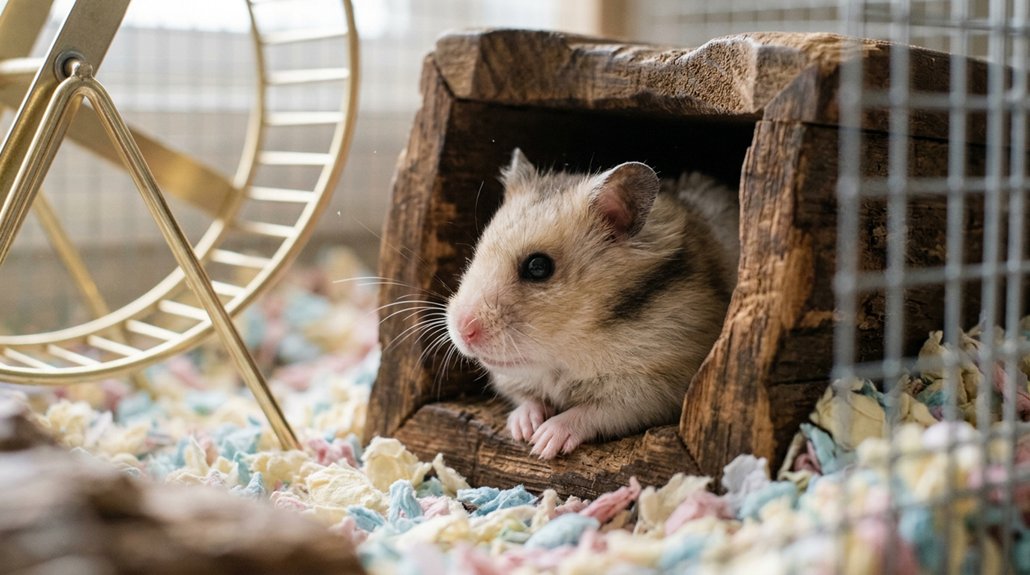
Your hamster’s hiding is instinctual, offering security and comfort. However, excessive hiding might signal stress or health problems. Monitor environmental factors like temperature (ideally 65-75°F), noise, and habitat enrichment. Keep an eye on behavior changes, like reduced interaction or aggression, as these may indicate discomfort. If hiding persists alongside symptoms like lethargy or appetite loss, consider a vet visit. Understanding these nuances helps you guarantee your hamster’s well-being; there’s more to uncover about their behavior.
Key Takeaways
- Hiding is a natural behavior for hamsters and provides them with security and comfort.
- Increased hiding can indicate environmental stress or health issues, warranting closer observation.
- Ensure your hamster’s habitat has ample hiding spots and consistent temperatures between 65-75°F.
- Sudden changes in hiding habits may require a veterinary consultation for underlying health concerns.
- Regular monitoring of behavior and environment is essential to detect early signs of stress or discomfort.
Understanding Natural Hamster Hiding Behavior
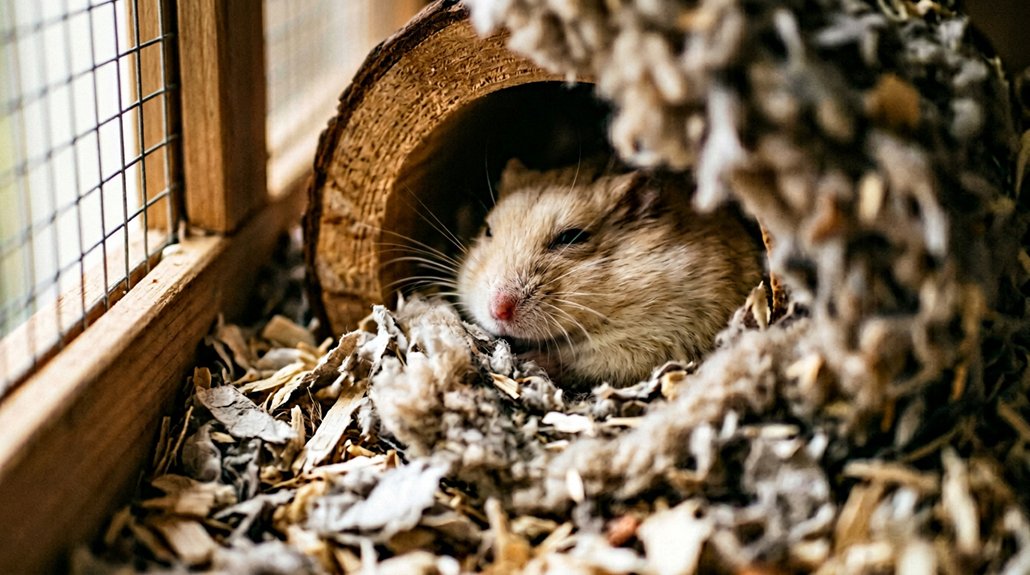
Ever wondered why your hamster disappears into its burrow during the day? It’s not because it’s avoiding you but rather embracing its natural burrowing instincts. Hamsters are nocturnal creatures, so they’re naturally active at night. During the day, they seek the security that burrows provide, fulfilling both the need for protection and comfort.
Understanding this behavior is essential for their well-being. Hamsters require a safe environment with ample hiding spots to thrive. Just like humans value social interaction, hamsters also appreciate the occasional company. However, their instinctual drive to burrow means they often prefer solitude.
Every hamster’s personality is unique; some are more sociable, others more reserved. Recognizing these differences allows you to cater to your hamster’s instincts effectively.
Environmental and Health Factors Leading to Hiding
You’ll notice that temperature plays an essential role in your hamster’s comfort, as cold conditions can prompt them to hide seeking warmth. It’s important to observe any changes in their behavior, such as increased hiding, as this might indicate underlying health issues requiring intervention. Providing a warm, stable environment alongside regular health checks can help you guarantee your hamster’s well-being and reduce stress-induced hiding.
Temperature and Comfort Levels
When temperatures drop below their ideal range of 65-75°F, hamsters may instinctively seek out hiding spots to conserve warmth and find comfort, making environmental conditions crucial to their well-being. These little creatures thrive within specific temperature fluctuations, so maintaining their comfort zones is important. A sudden chill or draft in their environment can cause stress, prompting them to retreat for safety. You should also consider:
- Providing enough hiding spots to prevent anxiety and stress.
- Monitoring temperature regularly to guarantee consistency.
- Introducing new elements gradually to avoid overwhelming changes.
- Observing for stress-related behaviors like lethargy.
- Reducing noise and disruptions to create a tranquil habitat.
Health Observations and Interventions
Although hamsters are naturally inclined to hide, observing this behavior excessively may be a sign of environmental or health issues. You’ll want to take into account their hiding strategies and conduct regular health assessments. Look for changes in eating or drinking, as these may indicate health concerns. Confirm their environment is stable, between 65-75°F, to prevent cold-induced hiding. Monitoring their behavior carefully can guide you in providing the right interventions.
| Environmental Factors | Health Concerns |
|---|---|
| Cold Temperatures | Lethargy |
| Lack of Hiding Spots | Changes in Eating |
| Loud Noises or Stressors | Drop in Activity Level |
| Boring Habitat | Frequent Hiding |
Warning Signs Indicating Stress in Your Hamster
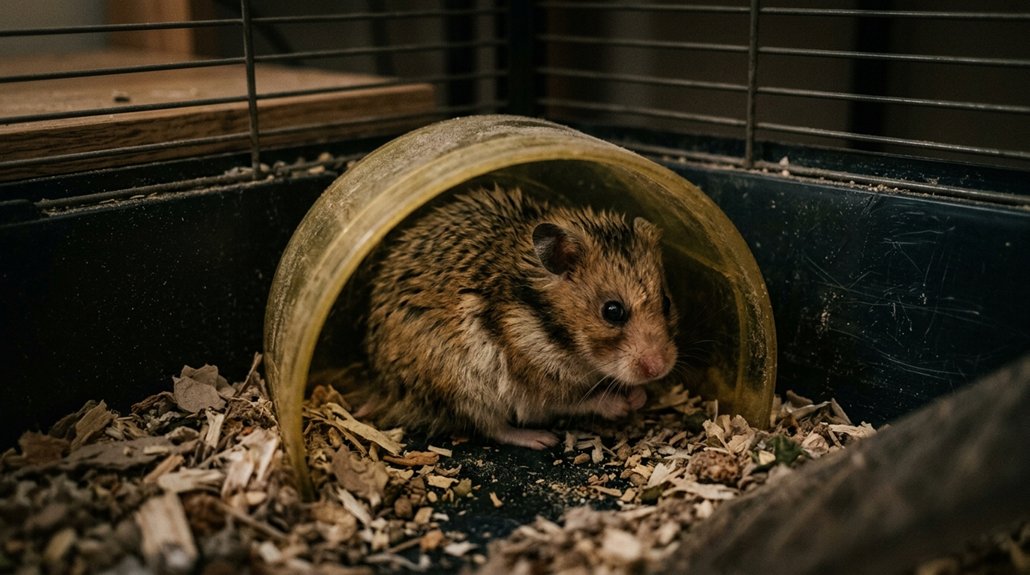
You’ll want to keep a close eye on your hamster’s behavior, as it can tell you a lot about their stress levels. Notice if they’re huddling in the corner with ears flattened or hiding more than usual—these are often signs they’re feeling stressed or anxious. Environmental factors, such as sudden changes in their habitat or loud noises, can also contribute to this stress and should be addressed promptly.
Behavioral Stress Indicators
Noticing certain behaviors can reveal much about your hamster’s well-being, especially when it comes to stress. Hiding triggers are essential to understand—if your hamster huddles in a corner with slicked-back ears, it might be feeling threatened. Stress signals such as excessive hiding during its waking hours hint at anxiety. Aggressive behaviors, like pacing or repetitive movements, indicate they’re possibly overwhelmed. Watch for changes in eating or drinking habits, as these can mean stress or illness. Lethargy or persistently hiding could suggest deeper health issues and demand a vet visit.
- Slicked-back ears while huddling
- Excessive hiding during wake periods
- Pacing or repetitive actions
- Refusal to eat or drink
- Lethargy or prolonged hiding
Environmental Stress Factors
When environmental factors shift, your hamster’s behavior can offer critical insights into its stress levels. Moving to a new home or changing the cage setup might cause your pet to hide more. Insufficient space enrichment or poor habitat design, like lacking hiding spots or having a cold environment (below 65°F), can contribute to their stress. If your hamster huddles, has ears slicked back, narrowed eyes, or isn’t eating or playing, it’s a sign they’re uncomfortable. Aggressive pets or loud noises can also create anxiety, making them retreat frequently. Regularly monitor your hamster, noting any continued hiding. If these stress indicators persist, it’s wise to seek a veterinarian’s advice to guarantee your furry friend’s well-being.
When Should You Worry About Your Hamster’s Hiding?
Ever wondered if your hamster’s hiding behavior is normal or cause for concern? Understanding hiding reasons can help identify potential stress signals in your pet. If your hamster consistently hides during waking hours and refuses food, it could be stressed or uncomfortable—a clue you shouldn’t ignore. If this behavior accompanies lethargy or refusal to eat, consider a vet visit for potential illness. While it’s natural for hamsters to hide after environmental changes, if it persists weeks after adoption, it raises concern. Keep an eye out for:
- Consistent hiding during waking hours
- Refusal to eat or drink
- Lethargy or aggression
- Avoiding interaction
- Physical signs like fur loss
Monitoring these cues can help determine if your hamster needs extra care.
Building a Comforting Habitat for Your Hamster
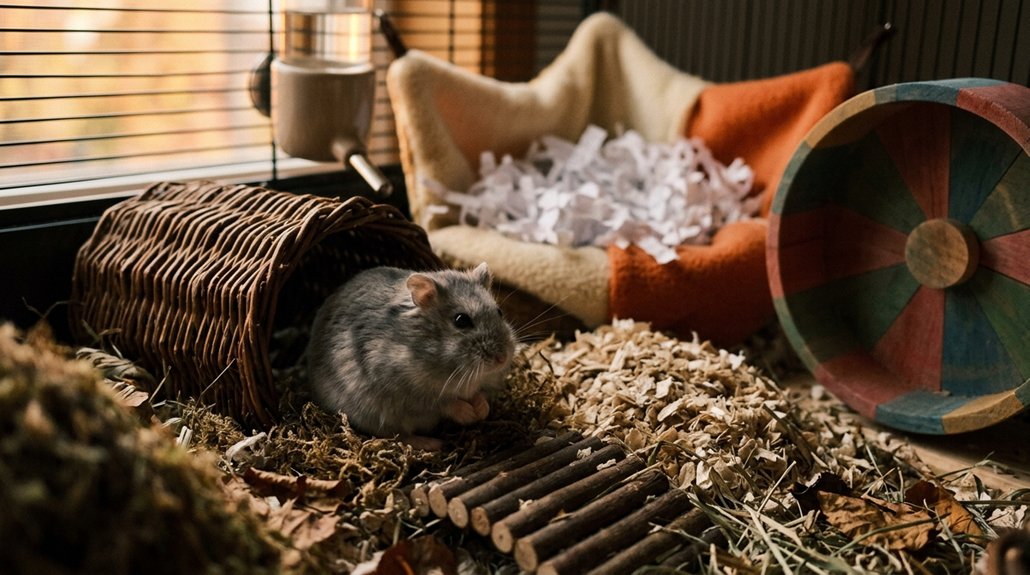
If your hamster’s hiding behavior has you concerned, creating a comfortable and stress-free environment is key. Start by providing a spacious cage filled with enriching cage decorations like tunnels and toys. Encourage natural exploration and reduce stress by including plenty of hiding spots. Adding cozy covered areas or nesting materials offers a secure retreat, easing excessive hiding tendencies. Keep the cage environment clean with regular spot cleaning, maintaining a temperature between 65-75°F to guarantee comfort. These adjustments help foster confidence and security in your pet.
Additionally, using familiar smells, such as items with your scent, can make a huge difference in their comfort level. Remember, consistent social interaction with gentle handling helps your hamster become accustomed to your presence, promoting bonding.
Practical Tips for Reducing Stress
Creating a stress-free environment for your hamster is essential for their well-being and can greatly reduce hiding behavior. By focusing on positive reinforcement and cage enrichment, you’ll create a habitat that keeps your furry friend comfortable and engaged. Consider these practical tips to ease their stress:
- Include a covered box or hideaway to grant them a secure retreat.
- Make sure their cage is clean, spacious, and brimming with toys for stimulation.
- Maintain a consistent room temperature of 65-75°F to avoid discomfort.
- Establish a quiet routine and minimize loud noises around them.
- Offer treats and gentle interactions during their active hours to form positive associations.
These steps promote a nurturing environment, helping reduce your hamster’s tendency to hide.
Monitoring and Responding to Behavioral Changes
While it’s natural for hamsters to hide as part of their instincts, sudden or increased hiding can be a sign of underlying issues that require your attention. Observing your hamster’s usual activity patterns is essential. Hamsters are nocturnal, typically most active in the early mornings and late nights. Monitoring changes in these patterns will help you detect any irregular behaviors, like increased hiding or lethargy, which might indicate stress or discomfort. Make sure your hamster’s environment is clean and enriched, with adequate hiding spots, to promote natural behavior and security. Be alert for signs of stress, such as aggression or reduced interaction, and address any habitat or care adjustments needed to maintain their well-being.
When to Visit the Vet for Your Hamster
Observing your hamster’s hiding behavior can provide valuable insights into their wellness. If they’re hiding more than usual, especially in a new environment, it could signal stress or discomfort. Consider scheduling a vet examination to perform a thorough health assessment. Be vigilant for symptoms that might require urgent attention, such as:
- Lethargy – Reduced activity levels can indicate health issues.
- Loss of appetite – A sudden change in eating habits is concerning.
- Labored breathing – This may suggest respiratory distress.
- Unusual aggression – Changes in temperament might require a veterinarian’s input.
- Excessive hiding – Despite an engaging environment, this calls for professional guidance.
Prioritize regular health checks to confirm your hamster’s well-being and address potential issues early. Your vet can provide tailored insights to keep your pet healthy and happy.
Frequently Asked Questions
Why Is My Hamster Suddenly Hiding?
Your hamster’s sudden hiding behavior may be due to environmental changes, stress, or new stimuli. Understanding hiding reasons can help. Make certain its habitat is stable, provide enrichment, and monitor for any concerning signs that might need attention.
What Are End of Life Signs in Hamsters?
Imagine your hamster’s zest slowly fading like a sunset. You’ll notice lethargy and weight loss as age-related behaviors, indicating health deterioration. Lack of appetite or messy fur means their once vibrant spark is dimming. Observe empathetically.
What Are the Signs of an Unhappy Hamster?
You might notice your hamster’s body language reflects stress triggers: excessive hiding, lethargy, refusal to eat, or aggressive behaviors. Observe any decrease in grooming, yawning, or increased huddling to assess its wellbeing empathetically.
Does a Hamster Recognize Its Owner?
Yes, hamsters can recognize their owners through scent and sound, strengthening owner connection. Understanding hamster behavior, you’ll notice familiar interactions improve their trust and bond, though each hamster’s response varies with some more reserved than others.
Conclusion
You’ve now got a better understanding of your hamster’s hiding habits. Did you know that around 60% of hamster stress issues are related to their environment? It’s important to be both observant and proactive. Create a cozy habitat, minimize stressors, and keep an eye out for concerning behaviors. Your little friend relies on you for a safe space, and by staying attentive, you can guarantee they’re happy and healthy. Don’t hesitate to consult a vet when in doubt.