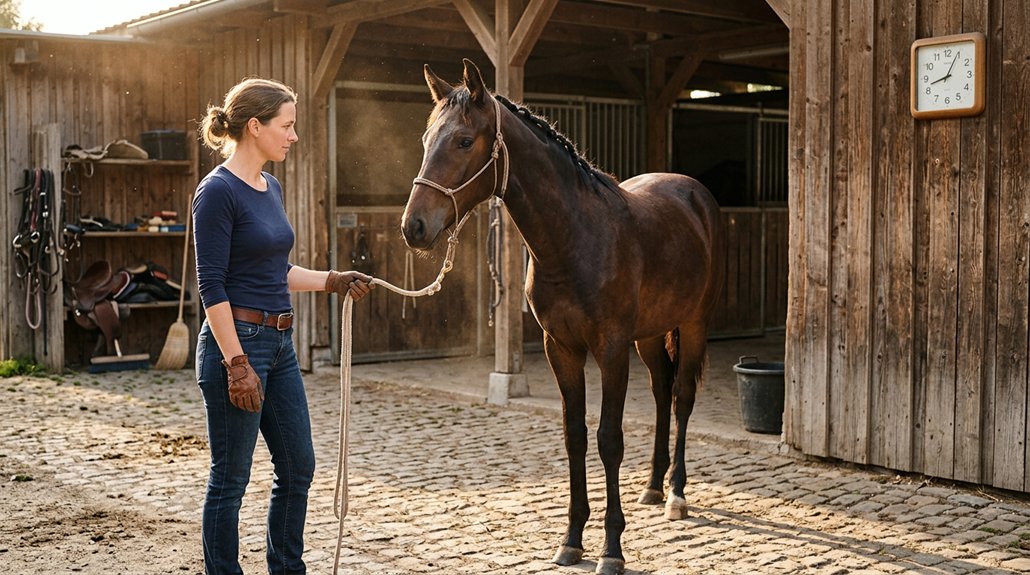
Training a horse properly takes between six months to a year, with groundwork as the essential first step. You’ll want to focus on establishing a strong foundation through consistent groundwork exercises, including lead manners and vet handling, typically lasting 30-60 days. This phase not only builds trust but also prevents future behavioral setbacks. As training progresses, be certain to evaluate milestones at key intervals, adjusting as needed. Understanding these timelines guarantees you’re set for success. Discover more practical insights on enhancing your horse’s training.
Key Takeaways
- Proper horse training often spans from six months to a year for comprehensive skill and behavior development.
- Groundwork is critical, typically taking 30-60 days to establish essential manners and trust.
- Initial evaluation occurs within two weeks, focusing on response to basic commands and calmness.
- Significant milestones such as responsiveness and handling are expected by the three to six-month mark.
- One-year assessments determine readiness for advanced training or the need to address plateaus.
First Steps in Horse Training: Setting a Solid Foundation
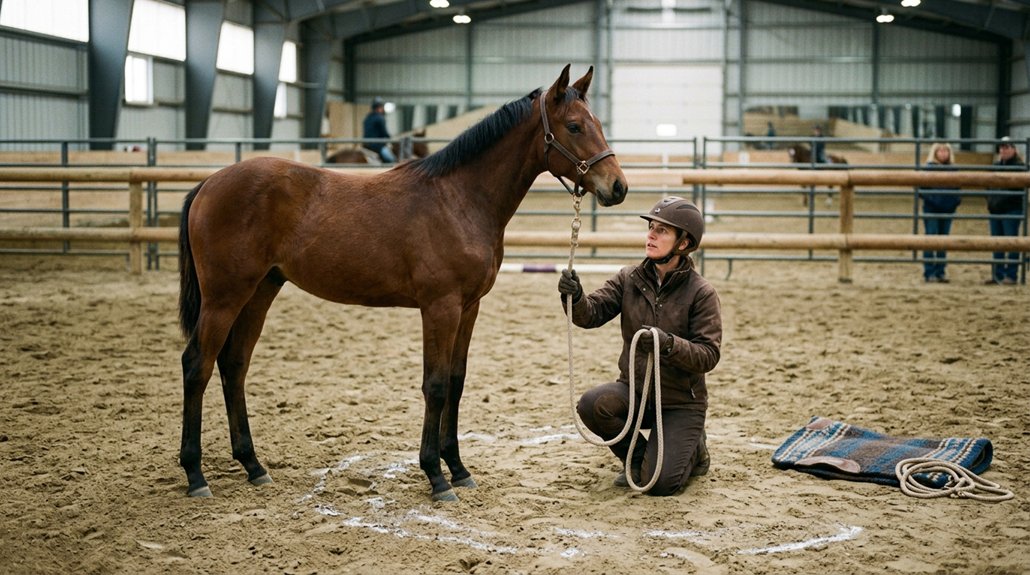
Establishing a solid foundation in horse training is vital and typically starts with 30-60 days of dedicated groundwork. During this phase, guarantee you employ effective safety protocols and utilize precise training tools to forge a trust-driven bond with your horse. An emphasis on lead manners, patience while tied, and accommodating handling by the vet and farrier are key components. Mastering these facets forms the backbone of your training strategy.
Address significant aspects such as teaching the horse to understand and follow rider cues. It’s not only about direction and speed, but establishing clear behavior expectations too. Consistent groundwork mitigates risks of future behavioral issues, optimizing shift into under-saddle work. Laying this groundwork maximizes your horse’s preparedness for advanced training stages.
Foundation Training Basics for Ground Prep
Foundation training begins with consistent groundwork, essential for building trust and communication between you and your horse. Focus on teaching key ground handling skills like lead manners, patience, and responsiveness to commands—these are critical for safety and set the stage for more advanced training. Young horses, especially those under 3 years, require shorter sessions to maintain engagement and foster ideal learning.
Importance of Groundwork Consistency
In order to achieve a successful shift to saddle training, consistent groundwork is indispensable, setting the stage for essential riding skills. Groundwork techniques such as lead manners, tying patience, and desensitization build a solid foundation. Consistency not only reinforces these skills but also fuels training motivation by creating a predictable learning environment for your horse.
Building Trust and Communication
Though sometimes overlooked, building trust and communication is a crucial aspect of groundwork, which serves as the cornerstone for effective training. Successful trust exercises initiate by engaging in consistent groundwork over 30-60 days, allowing your horse to acclimate to basic skills like leading, tying, and responding to communication cues. Initiate trust by incorporating varied groundwork exercises, ensuring familiarity with different situations, and fostering adaptability. As these exercises progress, the communication between you and your horse should become seamless, cementing a foundational rapport. This not only enhances confidence but also minimizes anxiety during subsequent training phases. Remember, effective groundwork shapes how a horse perceives future challenges, bolstering their ability to learn and thrive. Stick to this precise foundation, and your training journey will succeed.
Essential Ground Handling Skills
Having nurtured a strong bond through trust and communication, your next step involves cultivating specific ground handling skills that anchor a horse’s training foundation. Focus on leadership techniques to establish authority while fostering mutual respect. Begin with 30-60 days of groundwork, emphasizing lead manners and patience while tied. Introduce your horse to consistent groundwork games to build confidence and familiarity with diverse environments. These exercises teach obedience to cues for direction and speed, vital for later under-saddle training.
Prepare the horse for common scenarios, such as being handled by a vet and farrier, to enhance cooperation. This structured approach advances your horse’s readiness, reducing overall training time. A well-prepared ground foundation inherently enhances the shift to more sophisticated riding disciplines.
Influencing Training Duration Through Preparation
To efficiently influence training duration, it’s essential to prioritize groundwork preparation, since a horse with a solid foundation shifts more smoothly to advanced training phases. Tailoring your approach to the horse’s temperament and prior experience guarantees you’re not extending timelines unnecessarily, which can happen if foundational skills are overlooked. Strategic planning, including setting realistic goals and continually evaluating progress, helps streamline the training process for best results.
Importance of Groundwork Preparation
Effective groundwork preparation is essential as it greatly influences the overall duration of a horse’s training journey. You’ll find that groundwork benefits both the horse’s behavior and your training efficiency. Typically, spending 30-60 days on groundwork sets a robust foundation, shaping the horse’s understanding and compliance. This phase is more than just preparation; it’s where the horse learns confidence and responsiveness. Solid groundwork substantially shortens overall training timelines by ingraining basic commands and enhancing handling ease, making subsequent saddle training smoother. Skipping or rushing this phase often leads to prolonged training, as deficiencies in groundwork manifest as behavioral issues. Consistent practice fortifies a horse’s learning capacity, laying out pathways for intuitive progression to advanced stages. Focus on groundwork, and watch your training timeline decrease.
Tailoring Training to Temperament
Recognizing and adapting to a horse’s temperament is essential for tailoring an effective training regimen, particularly because temperament directly influences the training duration. Begin with a thorough temperament assessment to identify whether your horse tends toward anxiousness or calm compliance. More reactive horses demand training adjustments emphasizing trust-building and acclimatization, often extending the timeline beyond the typical 90 days. It’s vital to establish a positive learning environment, especially for those with negative past experiences or inconsistent handling. The initial month sets the foundation for comfort and readiness to learn. For horses displaying willing behaviors, progression through milestones happens swiftly, while those anxious may require ongoing reinforcement. Tailoring your approach enhances training efficiency, ultimately fostering a successful outcome.
Strategic Planning for Success
For successful horse training, strategic planning can’t be overlooked. Engaging in 30-60 days of groundwork is critical for establishing training milestones and fostering skill progression. This initial phase strengthens horse responsiveness and lays the foundation for mounted training. Crafting a well-structured program is important, allowing for consistent practice that builds clear communication and skill retention. To guarantee thorough development of green horses, plan for at least 90 days, focusing on fundamental skills and obedience to rider cues.
Understanding your horse’s unique temperament and learning curve is essential. This strategic pacing prevents rushed experiences that could impact confidence negatively. Set realistic, achievable goals based on your horse’s capabilities. Doing so informs training investments and guarantees continued, effective skill development without unnecessary strain.
Two Weeks in Training: Evaluating Basic Skills
Starting the training of a horse involves thorough evaluation of basic skills within the initial two weeks. At this stage, you’re scrutinizing horse behavior and employing specific training methods to achieve foundational responsiveness. Here’s what to focus on:
- Initial Responsiveness: Your horse should exhibit a willingness to engage with training tasks, signifying an understanding of basic commands.
- Rope and Donkey Exercises: Green horses should comfortably tolerate rope swinging and follow a donkey, fostering confidence.
- Calm Demeanor: Blown-up horses need to stand quietly in a box without stress during roping, which is a critical behavioral marker.
- Softening and Interaction: Look for the beginnings of your horse softening in demeanor and showing readiness to interact positively with the rider.
Achievements Expected by the Three-Month Mark
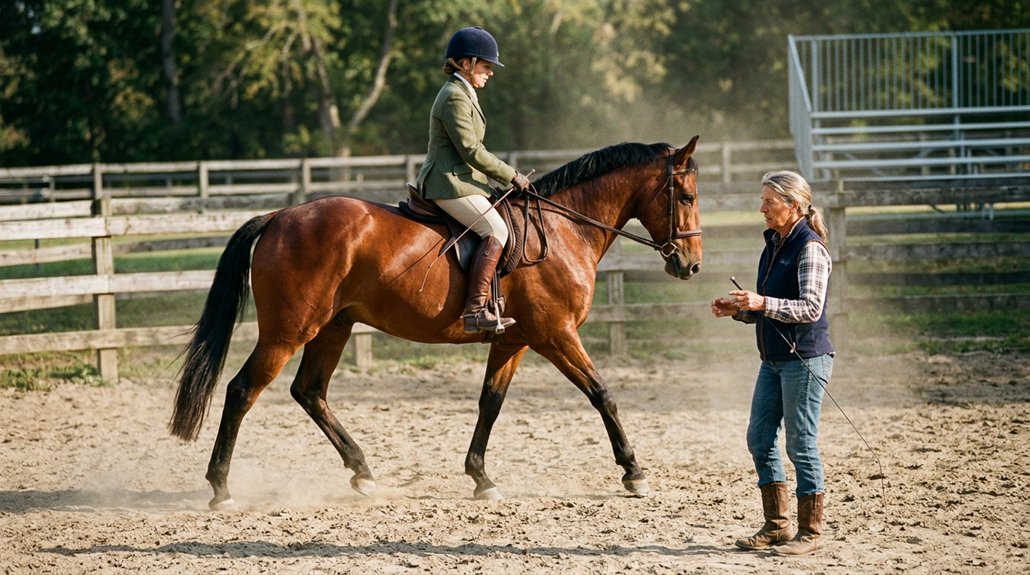
After three months of consistent training, a well-trained horse should exhibit significant progress in handling and responsiveness, marked by proficiency with both slow and medium steers. Your horse should demonstrate advanced handling skills, particularly in maintaining roping control within the box. This stage demands that both green and previously blown-up horses show reliable improvements, reinforcing prior skills and establishing groundwork for further development. It’s essential to assess the horse’s ability to respond effectively under roping scenarios, which is a critical indicator of their training trajectory. Lack of progress may warrant a re-evaluation of your training approach. This checkpoint guarantees that the horse is on the path towards readiness for more advanced competencies or competitive scenarios they may encounter.
What to Expect When You’ve Hit the Six-Month Mark
By the six-month milestone, your horse should display marked progress in both skill development and confidence, positioning it for potential higher performance levels. You’ll likely notice four key training milestones:
- Confidence and Skill: The horse should demonstrate enhanced poise and capabilities, particularly in managing previously problematic behaviors.
- Consistent Performance: Expect green horses to rope consistently, showcasing their growing proficiency.
- Potential Assessment: Evaluate your horse’s performance readiness for further training investments based on observed progress.
- Alternative Considerations: If advancement stalls, reconsider training methods, or reassess your horse’s inherent potential.
At this juncture, evaluating blown-up horse issues becomes imperative to inform strategic decisions about future performance pathways, ensuring maximum return on your training efforts.
Reaching the One-Year Mark: Evaluating Skills and Readiness
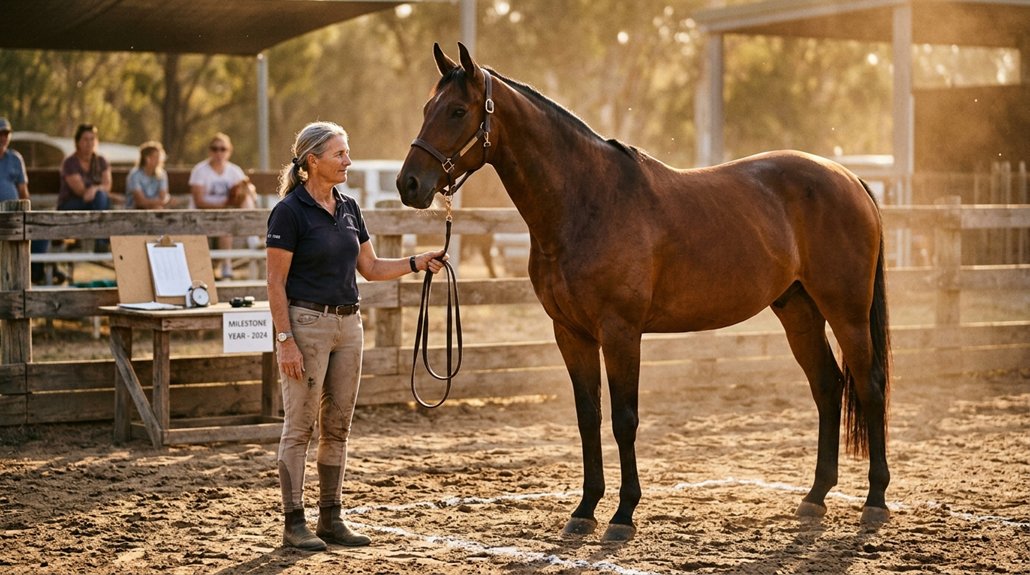
As you reach the one-year mark in your horse’s training journey, it’s essential to assess performance milestones, ensuring responsiveness to rider cues and proficiency in fundamental maneuvers. Evaluating skill acquisition is imperative, particularly in preparing your horse for backup roles in competitive contexts, which highlights their readiness for advanced challenges. If your horse is underperforming, consider the cost-effectiveness of continued training, as holding onto a non-progressing horse can impede both development and financial returns.
Assessing Performance Milestones
Evaluating a horse’s skills and readiness at the one-year mark is essential in determining the effectiveness of its training and future potential. At this juncture, you should gauge whether the horse has reached a solid competency level and remains on track for your long-term goals. Beware of the training plateau that can hinder growth. Critical performance indicators include:
- Proficiency in Desired Skills: Look for evidence of reliable execution in foundational tasks.
- Adaptability for Backup Roles: Determine readiness for participation in competitive circuits.
- Modification of Problematic Behaviors: Fractious horses should exhibit tangible behavioral progress.
- Reevaluation of Training Investment: If significant advances aren’t evident, reconsider the viability of sustaining the horse.
Accurately evaluating these criteria guarantees your thoroughbred’s path is both productive and sustainable.
Evaluating Skill Acquisition
Evaluating performance milestones offers a snapshot of a horse’s development at the one-year mark, laying the groundwork to now analyze skill acquisition. At this stage, your horse should demonstrate substantial skill progression, effectively performing most desired behaviors in various settings. Training milestones you assess include readiness for specific disciplines, where the horse’s ability to execute maneuvers reliably becomes paramount. They should shift smoothly into backup roles for competitive events, underscoring their integration of commands with an emphasis on responsive handling.
Additionally, behavioral improvements in previously fractious horses indicate positive training outcomes. If your horse hasn’t met these expectations by now, it’s prudent to reconsider its training regimen. Continuously evaluate whether ongoing investment aligns with the skill development observed at this pivotal juncture.
Determining Training Continuity
When you reach the one-year mark in a horse’s training, it’s important to assess whether further investment in their development is warranted. This point often defines the horse’s ability to perform expected skills or indicates a need to reassess training methods. Here’s a guide to navigate this significant evaluation:
- Performance Evaluation: Confirm the horse exhibits proficiency in key skills. Check readiness for competitive roles through concrete performance metrics.
- Behavioral Improvements: Noticeable advancements or resolution in fractious behaviors should be apparent; otherwise, revisit training methodologies.
- Role Suitability: Verify if training for backup roles is complete, indicating readiness for diverse competitive scenarios.
- Future Investment: Weigh the pros and cons of continued training against underperformance risks, guaranteeing alignment with your objectives.
Overcoming Training Challenges Early On
Although initial training challenges are inevitable, understanding common hurdles and addressing them with expertise can streamline a horse’s development journey. When you encounter initial resistance, behavior modification through training consistency is essential. Develop trust early with patience techniques, ensuring mindset shifts in both you and the horse. Confidence building relies on equine learning, where constant reinforcement of positive experiences fosters trust development. Utilize effective communication strategies to manage stress and anticipate a horse’s reactions. Maintaining a calm, consistent demeanor is key in overcoming resistance or worry, necessary for stress management and improved learning outcomes. Prioritize lightness and suppleness in your training approach, reinforcing positive experiences that bolster a horse’s confidence, making their journey both effective and rewarding.
Building Success Through Effective Groundwork Practices
To cultivate a strong horse-training foundation, mastering effective groundwork practices is essential. It’s not just about the initial 30 to 60 days—it’s about setting the stage for successful horse behavior and responsiveness in the long run. Consider these groundwork benefits:
Mastering groundwork practices is key; it’s the foundation for long-term successful horse behavior and responsiveness.
- Confidence Building: Horses develop patience and confidence while tied, vital traits for a more predictable equine partner.
- Behavioral Adjustment: Address and diminish potential behavioral issues early, leading to a smoother training trajectory.
- Environmental Acclimatization: Expose the horse to various environments, reducing stress and enhancing adaptability.
- Trust and Obedience: Establish a rapport, where mutual trust boosts the willingness to work and follow commands.
Implement these practices consistently to expedite training timelines and guarantee a resilient, trusting bond with your horse.
Choosing the Right Trainer for Your Horse’s Needs
How do you identify the ideal trainer for your horse’s unique needs? Start by evaluating trainer specialization based on your horse’s specific requirements, whether addressing behavioral issues or enhancing skill development. Not all trainers have the same expertise, so focus on those with a proven track record in your area of interest. A trainer’s reputation for building a solid groundwork is vital; they should be known for their patient, consistent methods rather than rushing into discipline-specific training. Additionally, effective communication is key—choose a trainer who is open to discussing progress, sets realistic timelines, and aligns their strategies with your goals. By ensuring these elements, you’ll find a trainer capable of fostering both competence and confidence in your horse’s progression.
Frequently Asked Questions
What Is the 1/2/3 Rule in Horses?
The 1/2/3 rule in horse training emphasizes building horse behavior gradually: one month for basic training techniques, two for enhancing basic maneuvers, and three for ensuring a strong foundation under saddle — essential for advanced progress.
How Long Does It Usually Take to Train a Horse?
You’re looking at horse training methods spanning 90 days to 16 months. Training timelines depend on experience and goals. Prioritize patience, consistent routines, and skill refinement. Repeated practice guarantees your horse becomes reliable and excels in your chosen discipline.
Is Horse Riding Good for Arthritis?
Yes, horse riding offers arthritis benefits by enhancing joint flexibility and strength. The rhythmic motion serves as an effective arthritis exercise, improving range of motion and providing low-impact activity. Always consult your healthcare provider before beginning.
What Is “I Love You” in Horse Language?
In horse language, “I love you” is shown through non-verbal cues like soft eye contact, a relaxed stance, and calm breathing. Understanding equine communication involves observing behaviors like nuzzling, grooming, and playful nudging, which indicate trust and affection.
Conclusion
Training a horse isn’t an overnight endeavor, and anticipating quick results is common. However, remember that each horse progresses at its own pace. The year-long journey, with solid groundwork and the right trainer, guarantees a well-rounded, skillful horse. Tackling challenges early fosters resilience. You’ll find joy in seeing incremental progress; patience and consistency are key. Trust the process and celebrate your horse’s milestones, as true mastery and partnership develop over time. You’re both on a rewarding path to success.