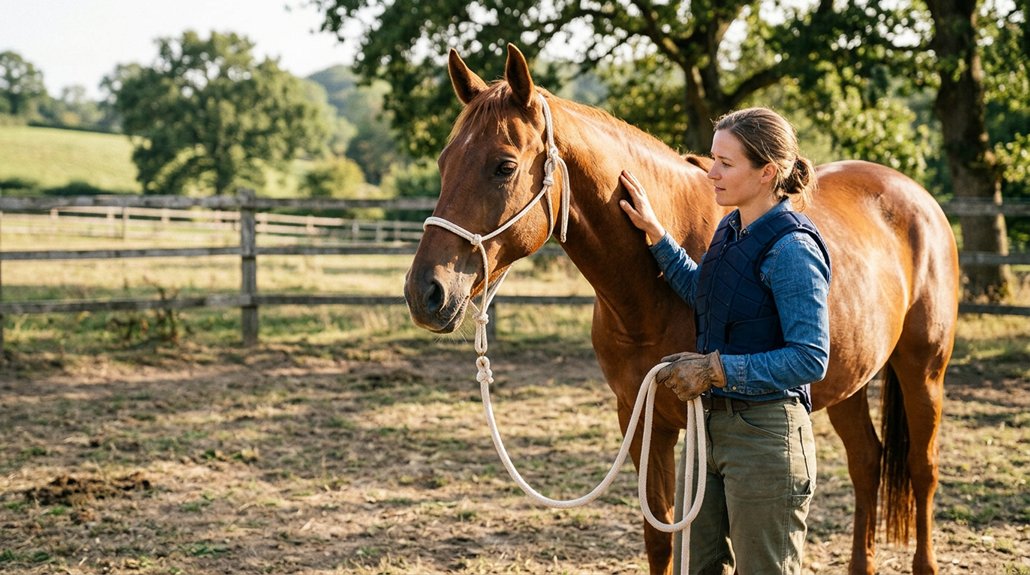
To stop a horse from biting or kicking, monitor its body language for warning signs like pinned ears or pawing. Use firm verbal corrections and distraction techniques when necessary. Feeding from a bucket can help minimize aggression, creating a calmer feeding environment. Consistent corrective actions, such as teaching the horse to back up on command, establish respect and boundaries. By understanding these methods, you’ll be on your way to fostering a safer, trust-filled relationship with your horse.
Key Takeaways
- Use loud verbal corrections consistently to interrupt biting or kicking behaviors immediately.
- Stand at the horse’s shoulder to monitor movements and prevent aggression.
- Implement distraction techniques, like tossing a bucket, to refocus the horse’s attention.
- Recognize and address discomfort from tack or health issues to reduce irritability.
- Train the horse to back up on command to establish boundaries and respect.
Immediate Actions for Safety
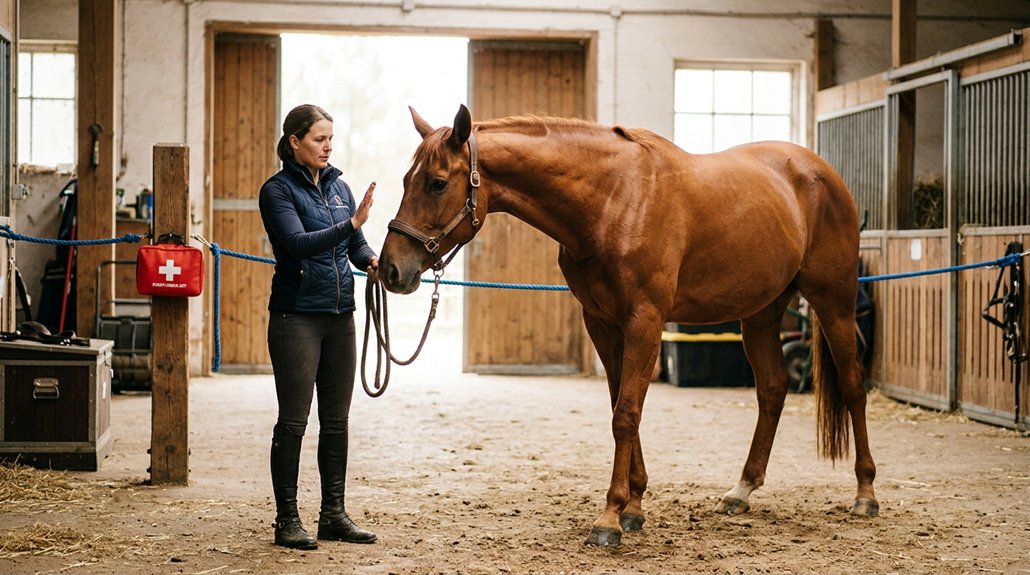
When facing a horse’s sudden biting or kicking, immediate safety actions are paramount to prevent injury and promote a secure environment. React with loud verbal corrections like “no” or “stop” to interrupt the behavior and deter future occurrences. Stand strategically at the horse’s shoulder, where you can effectively monitor its movements and implement corrective measures promptly. If aggression arises, distraction techniques such as tossing a halter or a plastic bucket can shift the horse’s focus from the undesired behavior. Recognize warning signs like pinned ears or pawing to act preventively. Consistently apply corrections calmly, ensuring they’re firm yet reassuring, fostering a safe, respectful bond. This approach not only maintains safety but also supports a well-mannered horse-human interaction.
Common Causes of Horse Biting and Kicking
Understanding why horses bite or kick is essential to managing and preventing these behaviors. Often, it boils down to social dynamics and environmental triggers. In group settings, horses might bite or kick to establish dominance, especially during feeding times when competition for resources is high. Watch for behavioral clues like pinned ears or turning hindquarters, as these may signal an impending strike.
Additionally, discomfort from tack or health issues like gastric ulcers can cause irritation, leading to increased aggression. Limited access to pasture could also result in restlessness or boredom, prompting a horse to act out. Be cautious with correction methods—aggressive actions like slapping can worsen the situation. Understanding these elements helps you address root causes compassionately and effectively.
Why Feeding From a Bucket Reduces Biting Risk
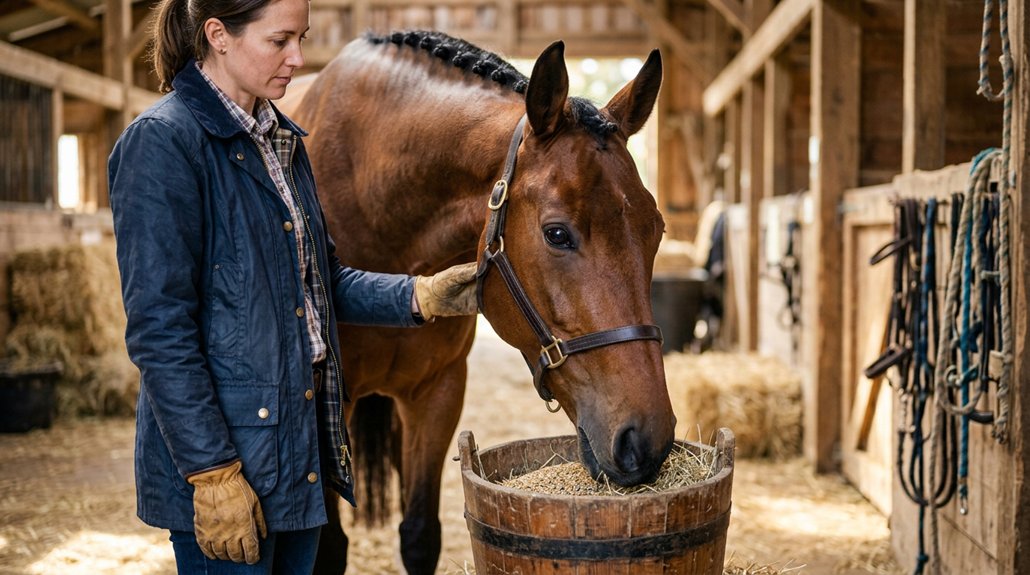
Feeding horses from a bucket, instead of by hand, markedly reduces the risk of biting by creating a clear separation between food and the human provider. This method of bucket feeding helps alter horse behavior by establishing boundaries, ensuring food is dispensed from a safe space, avoiding direct hand-to-mouth contact. By doing so, you can encourage more respectful interaction with horses, minimizing the chance of them associating you directly with treats. Benefits include:
- Reduced aggression during feeding, as horses learn not to demand food aggressively.
- Decreased anxiety while feeding, allowing horses to eat at their own pace.
- Improved trust between you and your horse by removing food-related tensions.
- Clear boundaries that help horses understand humans aren’t food dispensers.
- Healthier relationship, fostering mutual respect and reducing biting incidents.
Early Detection of Biting Signals
In addition to establishing clear feeding boundaries to reduce biting, it is crucial to become adept at identifying early signals of biting behavior in horses. Start by observing body language cues like pinned ears and a tense jaw—these can signal a horse’s stress or intent to bite. Anxiety signals, such as pawing or a fixed stare, alert you to a horse’s discomfort, prompting a need for caution. Recognizing these signs early allows for timely intervention, preventing escalation into more severe incidents. Be mindful during activities like saddling or grooming when horses might exhibit aggression due to discomfort. By regularly monitoring interactions and applying consistent handling practices, you’ll enhance awareness of subtle shifts in demeanor, effectively curbing biting behaviors.
Effective Corrective Tactics Against Horse Biting
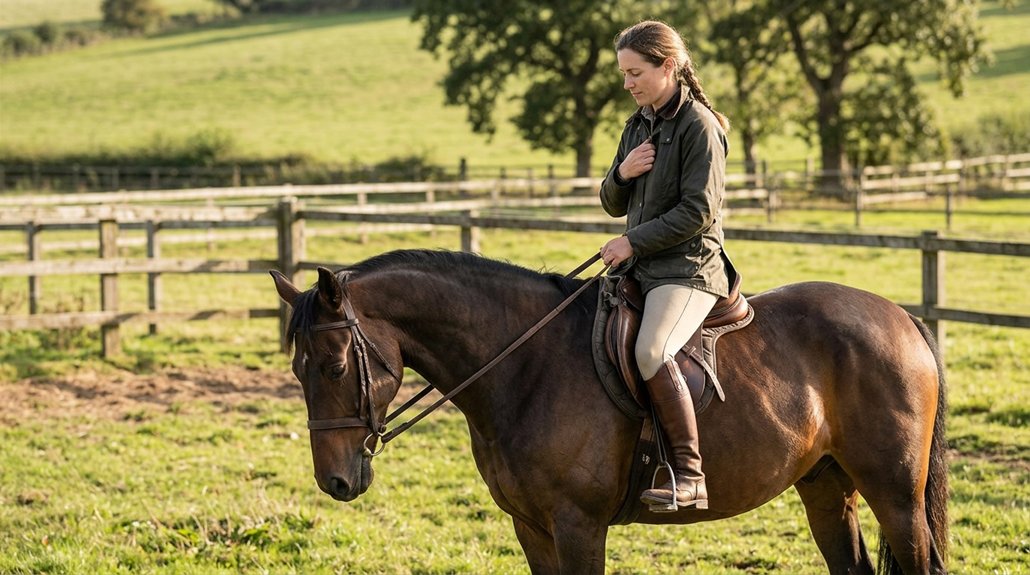
When faced with a biting horse, employing effective corrective tactics is essential for both safety and behavioral management. Your goal should be biting prevention and ensuring the horse understands this behavior isn’t acceptable. Start with immediate verbal corrections like a strong “no” or “stop” to show disapproval. Introduce distraction techniques to redirect the horse’s focus. Consistency is vital; always respond the same way to reinforce behavioral modification. Gentle corrective measures, such as a light tap on the shin, can create a negative association without harm. Training your horse to back up on command also establishes boundaries, promoting respect for your personal space.
- Immediate verbal correction
- Distraction techniques
- Consistency in responses
- Gentle corrective measures
- Training to back up
Safe Handling Practices for Aggressive Horses
When handling aggressive horses, it’s essential to avoid responding with aggression yourself, as this can escalate the situation and undermine trust. Instead, focus on consistency in your interactions, setting clear boundaries and expectations through calm and confident body language. Building a trusting relationship requires patience, clear communication, and ensuring the horse associates your presence with stability and respect, not treats or confrontation.
Avoiding Aggressive Responses
While managing an aggressive horse can be challenging, employing safe handling practices is essential for guaranteeing a positive outcome both for you and the animal. Assertive communication and positive reinforcement play critical roles in these interactions. Respond immediately with calm, loud verbal correction to diffuse potential biting or kicking without escalating aggression. Instead of physical punishment, use distraction—like the noise from a plastic bucket—to safely redirect the horse’s focus. This promotes a safer environment and builds a respectful relationship.
- Use loud, calm verbal cues to manage aggression.
- Employ noise distractions to divert attention.
- Avoid hitting; it can worsen aggression and damage trust.
- Guarantee the horse faces you upon approach to establish respect.
- Reinforce positive behavior with rewards and consistency.
Building Trust Through Consistency
Building a trusting relationship with your horse is fundamental to managing and reducing aggressive behaviors like biting and kicking. Consistency benefits both you and your horse by establishing clear expectations. Always approach your horse from the front and maintain a calm demeanor to create predictable interactions, which enhances trust. Implement trust strategies like immediate corrections when aggression occurs, reinforcing clear boundaries. Engage regularly in groundwork exercises focusing on respect and obedience to lessen aggressive tendencies. By offering structured routines and consistent expectations, you’re fostering security, which can lead to improved behavior. Patience and non-punitive methods further develop a positive rapport, minimizing aggression. This scientific approach encourages cooperation, ensuring safer, more harmonious handling practices for both horse and handler.
Building Trust Through Structured Training
Establishing trust between you and your horse demands a structured training approach that’s both consistent and clear-cut. By integrating trust building techniques within your structured interactions, you create an environment that discourages negative behaviors such as biting or kicking. Positive reinforcement, a cornerstone of trust, encourages desirable actions without fear. Consistently engage in calm, stress-free interactions to strengthen your bond, making your horse more receptive to guidance. Gradually introduce stimuli, building your horse’s confidence while reducing aggressive responses to new experiences. Bonding activities, absent of treats, enhance communication and clarify boundaries, fostering a solid, trusting foundation.
- Consistent routines to guarantee clarity and stability
- Positive reinforcement to nurture willingness and trust
- Calm interactions to reduce anxiety
- Gradual exposure for building confidence
- Non-treat bonding activities to communicate and connect
Resources and Expert Advice to Tackle Aggression
Seeking expert guidance is essential when addressing equine aggression, as professionals offer tailored solutions that cater to your horse’s unique challenges. You can benefit from attending workshops or clinics that provide practical, evidence-based techniques and connect you with others facing similar issues. Additionally, online resources, books, and forums are invaluable for gaining insights and strategies from specialists and fellow horse enthusiasts in managing biting and kicking behaviors.
Expert Guidance Benefits
Managing the challenges of aggressive horse behavior can be intimidating, but expert guidance offers invaluable support in addressing these issues. Experts provide tailored behavioral modification and targeted techniques to address specific aggression. With hands-on learning from clinics and workshops, you’ll gain insights directly from seasoned equestrians who specialize in managing these behaviors. Additionally, online courses and instructional videos offer visual demonstrations of effective strategies like behavior correction.
- Personalized training techniques tailored to your horse’s specific needs.
- Hands-on experience and insights from seasoned equestrians.
- Visual demonstrations through online resources for better understanding.
- Emphasis on consistency and patience to build a respectful relationship.
- Community connections for shared experiences and problem-solving support.
Expert advice emphasizes patience, fostering a more compliant relationship over time.
Professional Training Resources
Professional training resources present invaluable opportunities for addressing and mitigating aggressive behaviors in horses. By participating in training clinics and workshops, you’ll gain hands-on guidance from experienced trainers on effective techniques to manage biting or kicking. These programs emphasize the importance of consistency and clear communication between you and your horse, reducing misunderstandings. The workshop benefits include a deeper understanding of equine behavior and safe handling practices. Online courses and educational videos are available, allowing you to learn at your own pace. Many trainers use positive reinforcement, fostering trust and cooperation in horses, essential for reducing aggression. Seeking expert advice provides tailored strategies, addressing unique challenges and promoting harmonious relationships with your horse. With professional help, you’re well-equipped to tackle these issues.
Frequently Asked Questions
How to Stop a Horse Kicking and Biting?
You should use positive reinforcement and consistent behavioral training to deter biting and kicking. Reward good behavior promptly. Recognize and respond calmly to warning signs. Your vigilance and systematic approach will encourage safe, respectful interactions with horses.
What Is the 1/2/3 Rule for Horses?
Picture an unruly horse instantly transformed: the 1/2/3 Rule is your magic formula! Swift reaction curtails unwanted horse behavior. It’s a scientific training technique: one chance to correct, two seconds to act, three steps strategically align you.
What Is the Number One Killer of Horses?
Colic is the number one killer of horses, emphasizing the importance of colic prevention strategies. Understanding horse behavior, maintaining regular feeding schedules, and being alert to early signs like pawing can save your horse’s life.
What Calms a Horse Down Immediately?
To calm a horse down immediately, you should maintain relaxed body language and use positive reinforcement. Approach slowly, breathe deeply, and speak softly. Your calm demeanor and comforting presence will reassure the horse, promoting a peaceful reaction.
Conclusion
When it comes to curbing biting and kicking, think of building trust with your horse as nurturing a delicate flower—it requires consistent care and attention. By understanding the root causes and signals of aggression, you can act swiftly and safely, creating a structured environment that allows both you and your horse to thrive. Embrace proven tactics and expert advice to foster a harmonious bond, ensuring your interactions are as safe as they are rewarding.