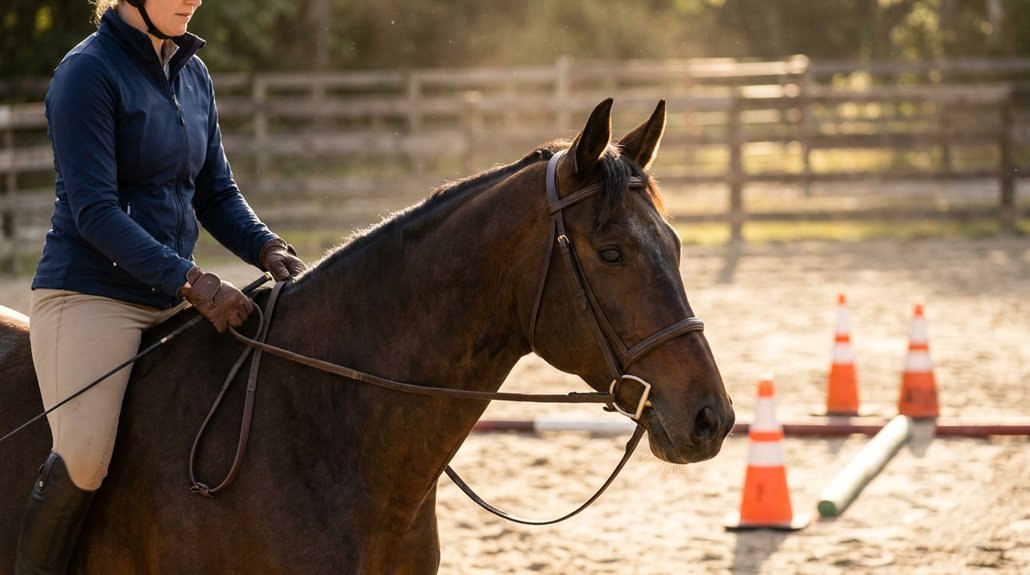
Begin training a horse for riding by focusing on groundwork to establish trust and communication. Use basic commands and gradual exposure to new stimuli to build confidence. Introduce the saddle slowly, and simulate rider weight with sandbags. Employ gentle techniques like leg pressure for commands, and customize training based on your horse’s personality and past experiences. Reinforce positive behavior with treats and praise. Understanding these foundational steps sets the stage for a deeper exploration into effective horse training.
Key Takeaways
- Begin with groundwork to establish effective communication and obedience through basic commands and trust-building exercises.
- Gradually introduce new stimuli and the saddle to build horse confidence and acclimate them to riding equipment and weight.
- Teach riding commands using gentle leg pressure and reinforce correct responses with positive reinforcement techniques.
- Adapt training methods according to the horse’s breed, age, and personality to effectively cater to their individual needs.
- Engage in bonding activities to strengthen trust and communication, reducing anxiety and fostering a cooperative training environment.
Getting Started With Groundwork
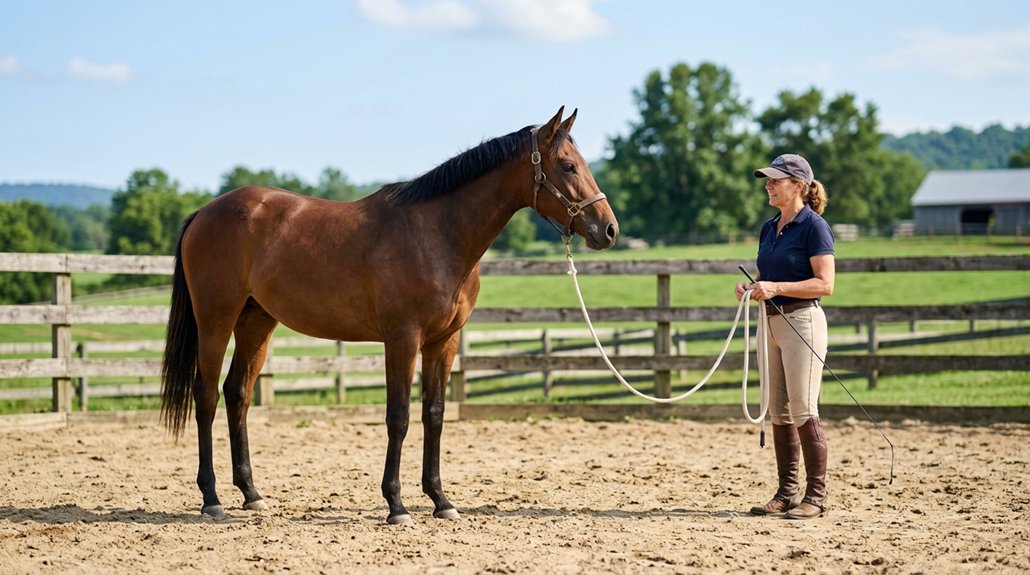
Groundwork is truly the cornerstone of any successful horse training program, laying the groundwork for effective communication between you and your horse. It’s vital to start this process early, especially with young horses. Focus on teaching basic obedience commands like ‘whoa’, ‘walk on’, and ‘turn around’. Prioritize safety considerations by conducting these exercises in a secure environment, such as an arena or a round pen. This minimizes distractions and guarantees a safe learning space. Consistent groundwork practice enhances your horse’s responsiveness and calmness, fostering a relaxed demeanor when ridden. By incorporating diverse groundwork exercises, you build your horse’s confidence and adaptability, essential groundwork benefits that set the stage for progressive training. Always work patiently and consistently.
Easing Into New Experiences
When easing your horse into new experiences, it’s essential to start with gradual exposure techniques that build confidence and safety. Trust-building exercises, like desensitizing your horse to different sounds or objects, help them remain calm and adaptable in unfamiliar situations. Incorporating body rubbing and allowing them to see you from both eyes will create a foundation of trust, making each new experience less intimidating.
Gradual Exposure Techniques
Introducing a horse to new experiences requires patience and a methodical approach to guarantee they remain calm and confident. Begin with basic desensitization exercises, such as gently touching your horse’s body or walking around with them, ensuring they’re comfortable with a rider’s presence. In the initial exposure phases, consider simulating the weight a rider would add by placing sandbags on your horse’s back. This helps them gradually get used to different feelings and sensations. Always observe your horse’s reactions closely during each phase. Adjust the training pace as needed to prevent them from feeling overwhelmed. Consistent, patient reinforcement during these gradual exposure techniques doesn’t just help your horse learn— it also strengthens their trust in you, setting a solid foundation for future training.
Trust-Building Exercises
Establishing trust with your horse is critical for successful training, and it all starts with fundamental groundwork. Begin with basic obedience in a safe environment to lay the foundation for trust exercises. Incorporate desensitization techniques to gradually introduce your horse to new stimuli. This builds an emotional connection and guarantees calmness in varied surroundings. Jeffrey’s Method is a useful approach, focusing on body rubbing to provide a sense of maternal comfort, making the horse associate touch with positive feelings. Let your horse see you from both sides during initial sessions to reduce surprises and foster security. Patience is key; consistently acclimate your horse to new sensations such as the saddle’s weight to ease the shift into riding.
Saddle Training Basics
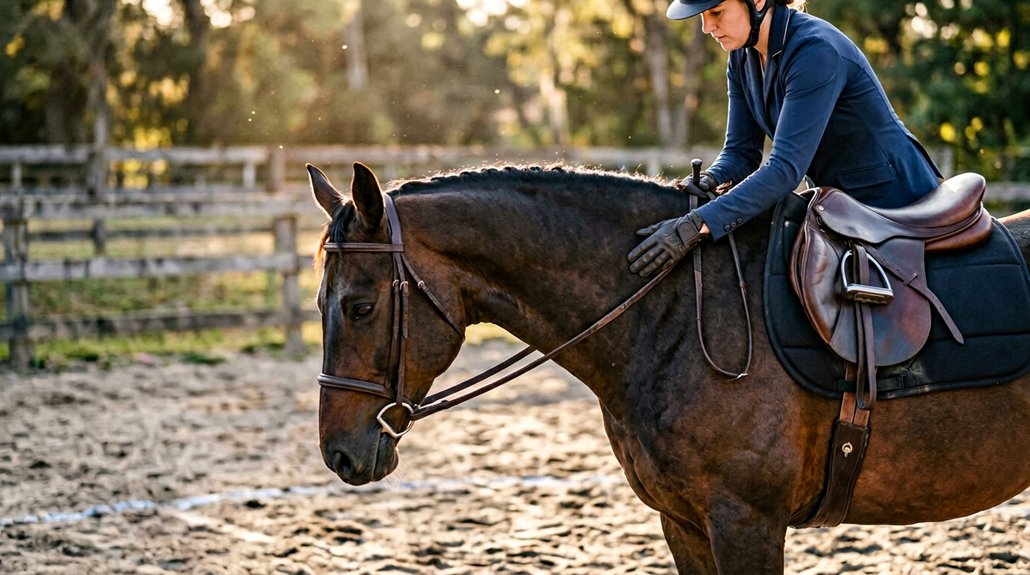
When starting saddle training, introduce the saddle gradually by placing it on your horse’s back without immediately securing it, allowing for initial familiarization with the sensation. Use sandbags or a light rider to help the horse get accustomed to the added weight over time, ensuring the process is slow and steady. Always practice patience in a safe, controlled environment to prevent anxiety and foster positive associations with the saddle.
Gradual Weight Introduction
Gently place the saddle on your horse’s back as the first step in gradual weight introduction, allowing your equine partner to become accustomed to the new sensation. Verify correct saddle positioning for ideal weight distribution, creating a comfortable experience. Start in a controlled environment, like a round pen, to limit distractions. As your horse becomes more comfortable, introduce additional weight with sandbags, moving with patience and precision.
Give your horse time to adapt at each stage, using consistent exposure to build their confidence and ease anxiety. Positive reinforcement will help form a stronger trust between you and your horse. Through patience and careful management of weight introduction, you’ll set up a foundation for a positive riding experience, fostering a confident, reliable partner.
Sensation Familiarization Approach
As you commence saddle training, it’s important to introduce your horse to the physical sensation of wearing a saddle with care, creating a positive experience. Recognizing saddle sensitivity and emotional awareness is vital for building your horse’s confidence. Start by placing the saddle on their back to get them used to this new feeling. Mimic maternal contact through gentle body rubbing techniques, encouraging trust and reducing anxiety.
Here are essential steps to follow:
- Begin with just the saddle, then gradually introduce weight, like sandbags, to acclimate.
- Use a calm and patient demeanor throughout this process.
- Monitor the horse’s reactions for signs of discomfort.
- Provide positive reinforcement for calm behavior.
- Engage in groundwork to reinforce the horse’s comfort with touch.
Consistent, patient practice guarantees success.
Patience and Acclimatization
Building on the sensation familiarization approach, patience and acclimatization are your trusted allies in saddle training. Start by placing the saddle gently on your horse, creating an awareness of sensory input without breaching comfort zones. Use gradual acclimatization to incrementally introduce weight, ensuring the horse’s comfort. Begin with placing light items like sandbags, progressing to a rider while closely observing the horse’s sensory awareness.
“`markdown
| Step | Action |
|---|---|
| Initial | Saddle placement – familiarize with weight |
| Intermediate | Add light pressure – use sandbags |
| Advanced | Introduce a rider – enhance comfort through positive reinforcement |
“`
Patience is key. Give your horse the time they need to adjust. Maintain calm and offer consistent positive reinforcement, reinforcing trust and cooperation. With each session, the horse’s confidence grows, transforming saddle training into a positive experience.
Teaching Commands With Gentle Pressure
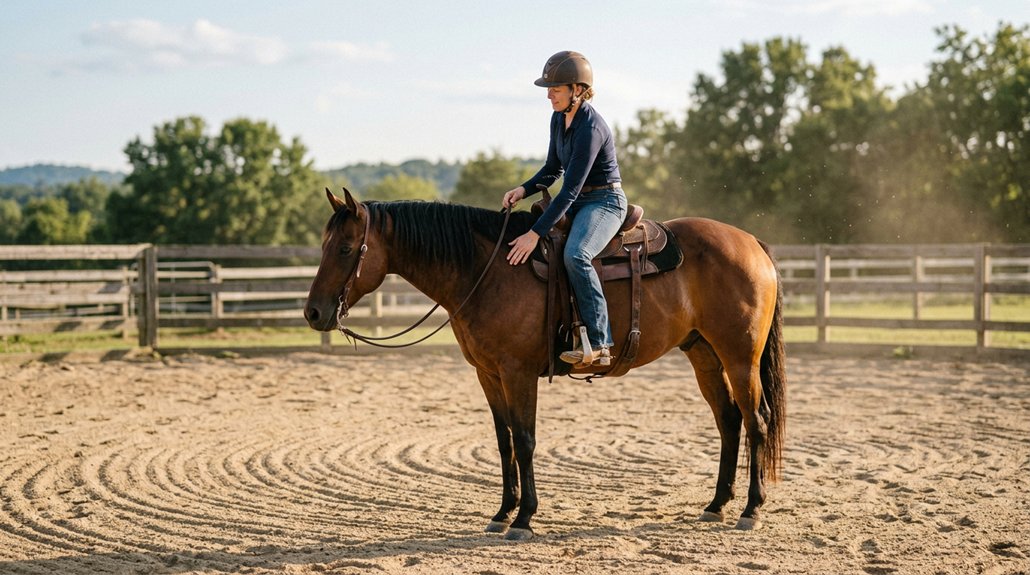
Start teaching commands with gentle pressure by introducing your horse to the concept of leg pressure as a signal to move forward. This is essential for building a strong response association. Consistency in your cues guarantees your horse knows what’s expected, strengthening the training foundation. Practice these techniques in short riding sessions within a controlled environment to keep your horse focused and calm. Positive reinforcement like praise or treats promotes learning and instills a sense of accomplishment.
Introduce your horse to leg pressure as a forward cue to build strong response association.
Here are some key points to remember:
- Apply gentle leg pressure consistently.
- Associate pressure with movement.
- Use a calm, controlled environment.
- Reinforce correct responses with rewards.
- Gradually increase pressure as responsiveness improves.
Through patient repetition, your horse will learn the cues, responding promptly and confidently.
Tailoring Techniques to Your Horse’s Needs
Understanding that every horse is unique is essential to tailoring training techniques to meet their specific needs. Start by evaluating your horse’s individual personality and diving into their past experiences. Consider their maturity and experience level; younger horses often need a different training adaptation compared to seasoned ones. Pay attention to breed specificity, as some breeds, like Thoroughbreds, have distinct temperaments influencing their response variation. Your involvement as a rider is vital. Adopt a flexible approach, experimenting with varied methods to accommodate different learning styles. Consistently provide observational feedback, adjusting techniques as necessary. Embrace this process with patience—this isn’t a race. By aligning your methods to each horse’s unique traits, you create a responsive training environment fostering more successful rides.
Building a Lasting Bond With Positive Reinforcement
Trust serves as the cornerstone of building a lasting bond with your horse through positive reinforcement. Start early with consistent groundwork to establish this essential trust. By employing reinforcement techniques such as praise or treats, you encourage cooperation and make bonding activities more rewarding. Horses thrive when they feel secure and understood, so tailor your approach to individual needs.
Building trust through early groundwork and positive reinforcement forms the foundation of a lasting horse-human bond.
- Use praise or treats as positive reinforcement to encourage desirable behavior.
- Focus on gentle pressure techniques, combining them with rewards for effective learning.
- Individualize training approaches to guarantee horses feel secure.
- Engage in bonding activities that promote communication and reduce horse anxiety.
- Consistent groundwork helps build trust, shaping the foundation for riding communication.
Frequently Asked Questions
What Is the 1/2/3 Rule for Horses?
You should follow the 1/2/3 Rule for horses by ensuring ground manners are established first. Then, move on to saddle fitting and rider introduction, making sure your horse is comfortable before progressing to confident and responsive riding.
What Is “I Love You” in Horse Language?
“I love you” in horse language is shown through relaxed body language and gentle gestures. You’re building trust by observing equine emotions. Soft eyes, nickering, or standing close reflect horse communication, indicating a secure, affectionate bond.
Can You Ride Horses if You Have Scoliosis?
Absolutely, you can ride horses with a scoliosis diagnosis. Isn’t it empowering when riding techniques improve posture and strength? Just prioritize consulting professionals, adapt techniques, and guarantee a proper saddle fit to enjoy safe, beneficial riding.
Is It Hard to Train a Horse to Ride?
It’s not inherently hard if you adapt to the horse’s behavior and use effective training techniques. Your patience and understanding will build trust, making both groundwork and riding more successful. Consistency is key for positive progress.
Conclusion
So, you’ve mastered the art of horse whispering with the finesse of a circus ringmaster juggling flaming hoops while blindfolded. You’ve charmed your equ