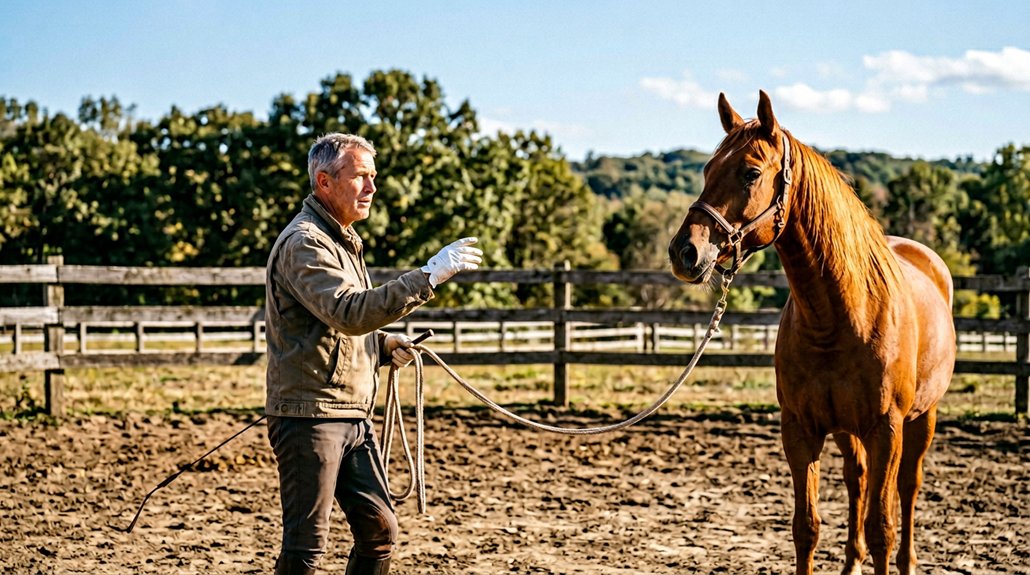
To train a horse to respond to commands, keep communication clear and consistent. Use distinct verbal cues like “walk,” “trot,” and “stop,” paired with gentle physical cues and hand gestures. Implement positive reinforcement, such as a rub or scratch, immediately following correct responses. Gradually increase pressure while maintaining a calm tone. Make sessions short to retain engagement, and vary the training environments. Embrace challenges as learning opportunities, and you’ll uncover more effective strategies.
Key Takeaways
- Use consistent verbal cues paired with physical cues like gentle halter pressure for clear communication.
- Employ distinct hand gestures to reinforce verbal commands and guide the horse’s focus and movement.
- Implement positive reinforcement, such as treats or rubs, immediately after the horse responds correctly.
- Conduct training sessions in varied settings to enhance command reliability and adaptability.
- Keep training sessions short and engaging to maintain the horse’s focus and interest.
Teaching Basic Commands: Walk, Trot, and Stop
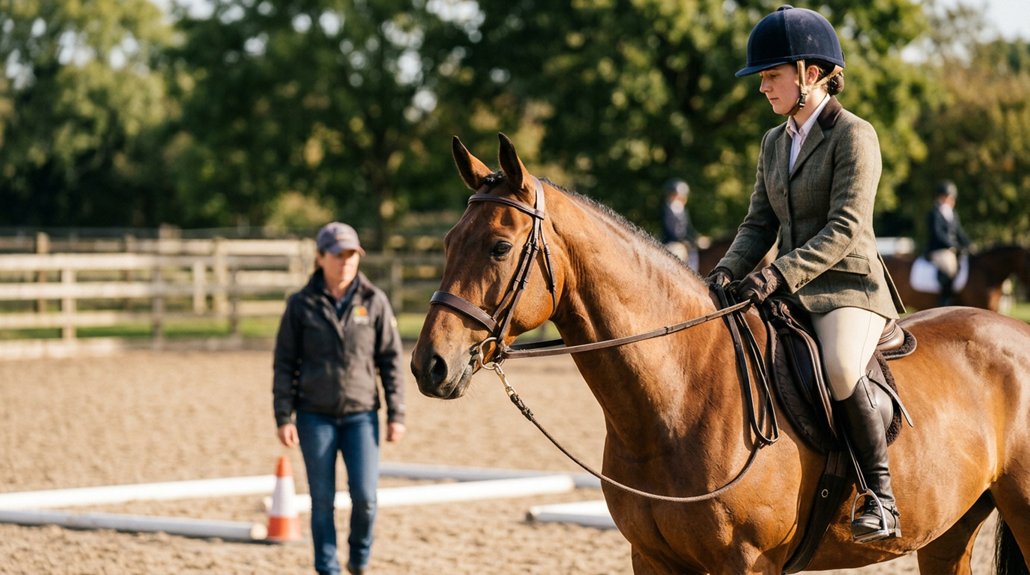
When you’re beginning to train a horse to respond to basic commands such as walk, trot, and stop, it’s essential to maintain clear and consistent communication. Start with distinct verbal cues that are straightforward, ensuring command clarity. For example, each action should have its own unique word—“walk,” “trot,” or “stop”—making it easy for the horse to associate them with their respective movements. Train in a small, controlled environment like a round pen to minimize distractions and promote focus. Use positive reinforcement, such as a rub or scratch, immediately after correct responses to reinforce learning. Combine verbal commands with physical cues, like gentle halter pressure, to enhance understanding. As the horse progresses, challenge them by practicing commands at varying speeds to maintain training consistency.
Using Gestures to Communicate With Your Horse
Understanding how to use gestures effectively can elevate your horse training experience. Gesture effectiveness relies on clear, distinct hand movements that enhance visual communication with your horse. Non-verbal signals like a sweeping arm to indicate a turn should be consistent and paired with verbal commands to maximize understanding.
| Gesture | Emotion it Evokes |
|---|---|
| Pointing | Focus and Direction |
| Sweeping Arm | Movement and Guidance |
| Open Palm | Calm and Assurance |
| Raised Hand | Reunion and Alertness |
| Outstretched Arm | Encouragement and Trust |
Begin with basic commands, allowing your horse to slowly associate gestures with specific responses. The right timing—using gestures in harmony with words—reinforces actions, promoting a strong bond between you and your horse through authentic visual cues.
Combining Voice With Physical Cues Effectively
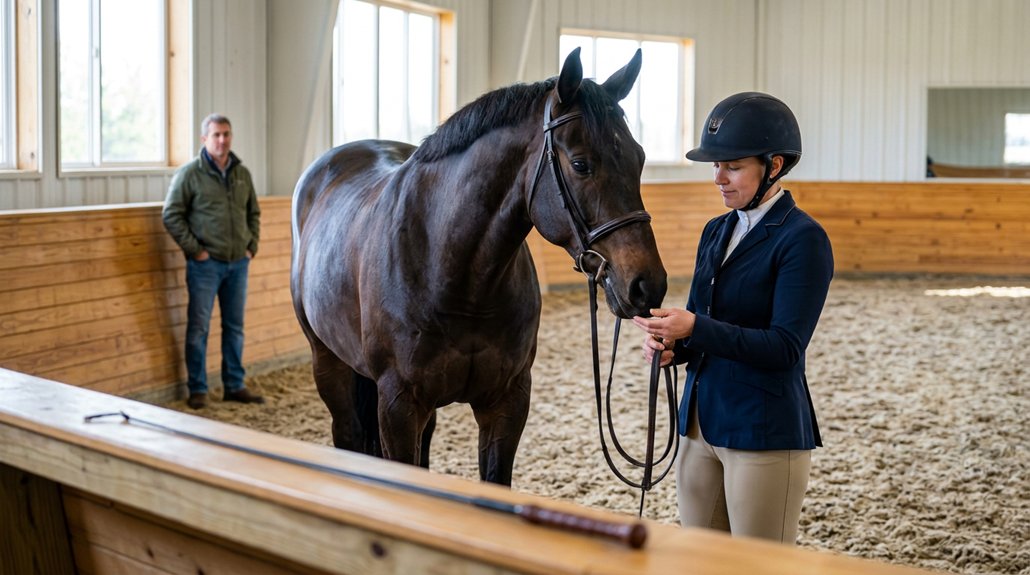
Harnessing the power of voice alongside gestures can further deepen your bond with your horse, enhancing communication and understanding. Voice clarity is key: start with a distinct, single command, then pair it with a corresponding physical cue. Your voice should be firm yet gentle, while the cue timing is vital—apply a light tap or mild pressure directly after the verbal command. Think of how a lead horse guides its herd; your goal is to guide without intimidating. Once your horse responds correctly, immediately release the pressure and offer a reward. This reinforces that compliance brings positive outcomes. Regular practice in different settings will solidify the connection between voice and action, ensuring your horse responds consistently across various scenarios.
Training Tips to Keep Your Horse Learning
Instill consistency in your horse’s training to keep their learning trajectory steady. Use clear, distinct voice commands paired with specific actions to avoid confusion. Gradually increase pressure during training—start with gentle cues and escalate only if your horse doesn’t respond. This mimics natural herd behavior, enhancing comprehension. Implement reinforcement strategies by immediately rewarding your horse with positive reinforcement following the desired response. This strengthens their understanding and motivation.
To further solidify learning, practice in different settings. Environmental variations challenge your horse and guarantee they reliably respond regardless of context. Keep training sessions short and focused to maintain engagement and enthusiasm to learn. Through consistent practice with these methods, you’ll establish a productive training routine that fosters lifelong learning.
Encouraging Progress and Tackling Challenges
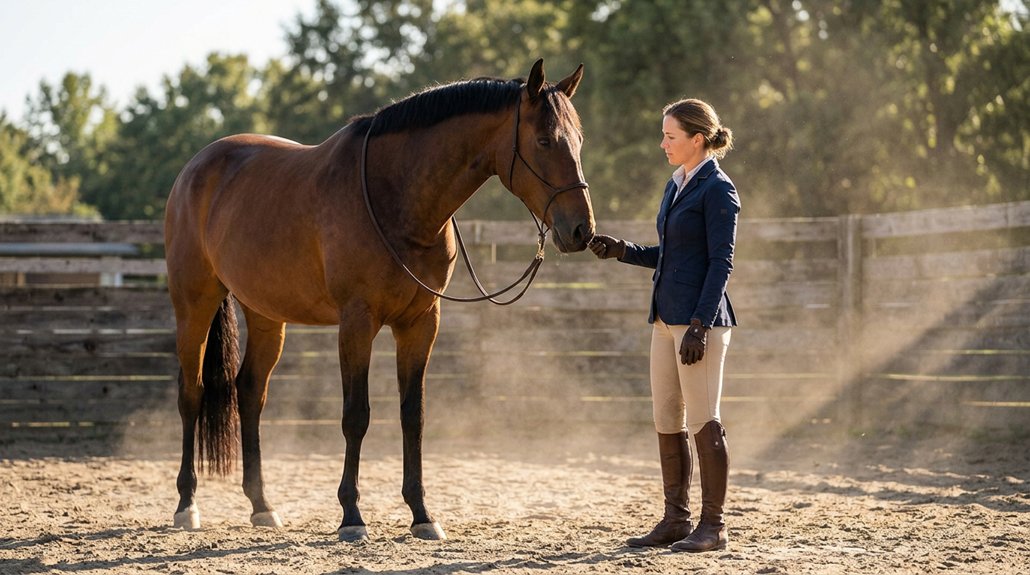
Just as consistent training and clear commands anchor learning, addressing challenges head-on is key to encouraging your horse’s progress. Start by incorporating motivation strategies that emphasize positive reinforcement, like immediate rewards or praise, to boost their enthusiasm to learn. Recognize that addressing setbacks is part of the process; patience is crucial. Every horse learns at its pace, so adjust your expectations accordingly.
Develop a structured training plan that eases your horse into higher pressure levels gradually. This helps them understand expectations while minimizing frustration. Keep sessions varied to maintain your horse’s engagement and prevent boredom. Regular and diverse practice helps solidify their response to cues, ensuring steady progress. Remember, patience and thoughtful strategies will guide both you and your horse to success.
Frequently Asked Questions
What Is the 1/2/3 Rule for Horses?
The 1/2/3 Rule for horses is a training technique focused on horse communication. You give one clear command, wait two seconds for a response, then apply up to three physical cues if necessary, building trust and understanding.
What Is “I Love You” in Horse Language?
In horse language, “I love you” is expressed through equine communication involving gentle body language, like soft eye contact and nuzzling. Understanding these cues helps deepen your bond with the horse, enhancing mutual trust and affection.
Do Horses Respond to Verbal Commands?
Yes, horses do respond to verbal commands. By using clear verbal cues and ensuring consistency, you enhance horse communication. Be patient; some horses need time to understand commands, while others may grasp them quickly.
How to Get a Disrespectful Horse to Respect You?
To earn your horse’s respect, establish clear boundaries and consistently enforce them. Build trust through patient, positive interactions. Use gradual pressure and rewarding compliance, which mirrors natural herd dynamics. Persistence and patience will eventually foster mutual respect.
Conclusion
With dedication, patience, and an unwavering spirit, you’re not just teaching commands—you’re creating a bond that’s as extraordinary as galloping across endless meadows. Every “walk,” “trot,” and “stop” becomes a dance that echoes in the heart. Challenges will seem like mere pebbles beneath your mighty hooves. Keep nurturing this incredible partnership, and you’ll find a friendship deeper than oceans, stronger than steel. You’re on a journey where the only limits are the horizon itself. Keep riding!