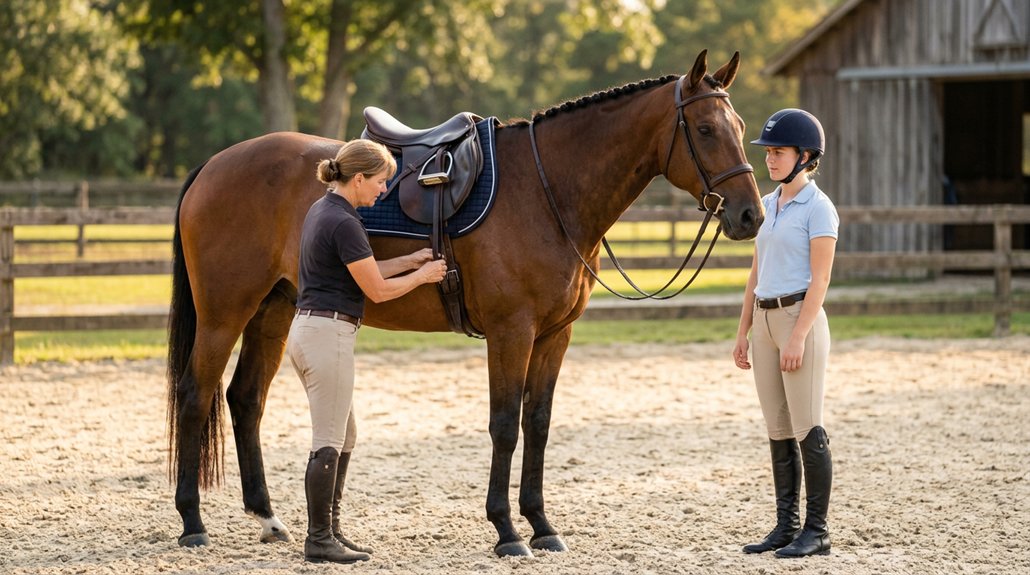
To prepare a horse for first-time riders, recognize its comfort signals like ear and tail positions. Build trust through groundwork, ensuring the horse sees you from both eyes. Calm it with gentle body rubbing and simulate mounting actions while maintaining a soothing environment. Use safe mounting techniques in controlled settings to build confidence. Always focus on safety with proper gear and skilled support. There’s plenty more to discover about creating rewarding riding experiences.
Key Takeaways
- Recognize comfort cues like relaxed ears and posture to ensure a positive experience for first-time riders.
- Build trust with groundwork exercises, including body rubbing and leaning against the horse to facilitate rider familiarity.
- Employ calming preparatory exercises, such as gentle full-body rubbing and mounting simulation, to soothe the horse.
- Introduce mounting in controlled environments with minimal distractions for a stress-free experience.
- Use safety gear and gentle techniques, ensuring a skilled helper is present during training for added safety.
Understand the Horse’s Emotions and Comfort Level
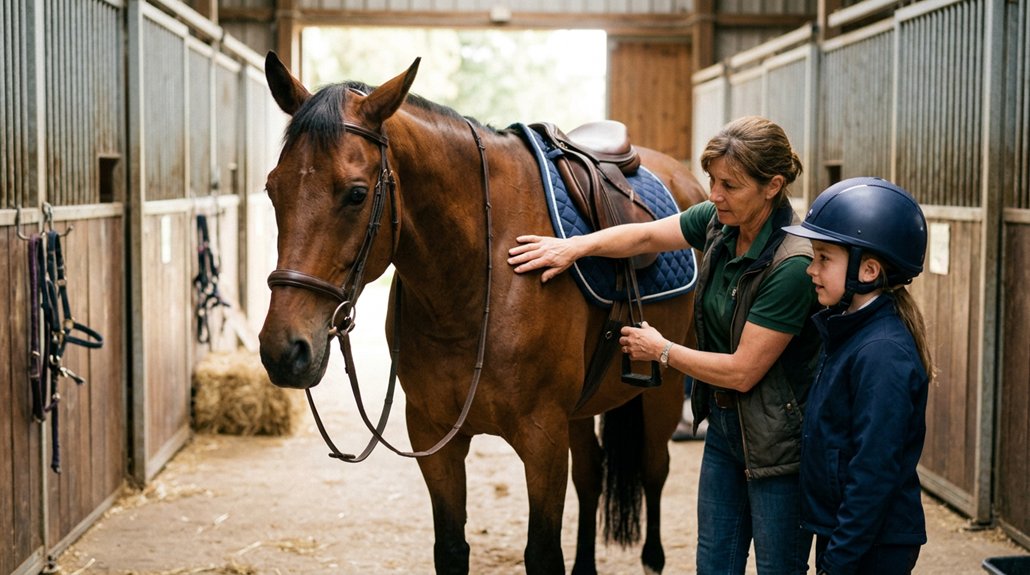
Understanding a horse’s emotions and comfort level is essential when introducing them to first-time riders. Horses communicate through subtle body language, making it vital to notice comfort cues such as ear positioning, tail movements, and posture. Ears pinned back or a swishing tail might indicate discomfort or anxiety. Ensuring the horse remains in a relaxed state helps build positive associations with riding, shaping their future experiences.
Creating a calm environment both physically and mentally supports the horse’s emotional well-being. The mere presence of a rider should be introduced gradually, allowing the horse to see the rider with both eyes to lessen surprise. Recognizing these signals means you’re responding sensitively, reducing the risk of fear or resistance, and therefore preparing the horse for a smoother riding experience.
Build Trust With Horse Through Groundwork Techniques
Once you’ve become adept at reading your horse’s emotions and guaranteeing their comfort, it’s time to focus on building trust through groundwork techniques. Start with trust building exercises like body rubbing and leaning against the horse, simulating maternal comfort. This familiarity is essential. Try jumping beside the colt’s shoulder—this mimics mounting and prepares them for future rider interactions. Make certain your horse sees you from both eyes during these exercises to prevent surprises and foster security. Groundwork benefits include improving the horse’s mental relaxation and decreasing anticipatory behaviors, essential for a positive bond. As their trust grows, you’ll find they become more comfortable and responsive, smoothly adapting to riding and laying a strong foundation for effective learning.
Calm the Horse With Preparatory Exercises
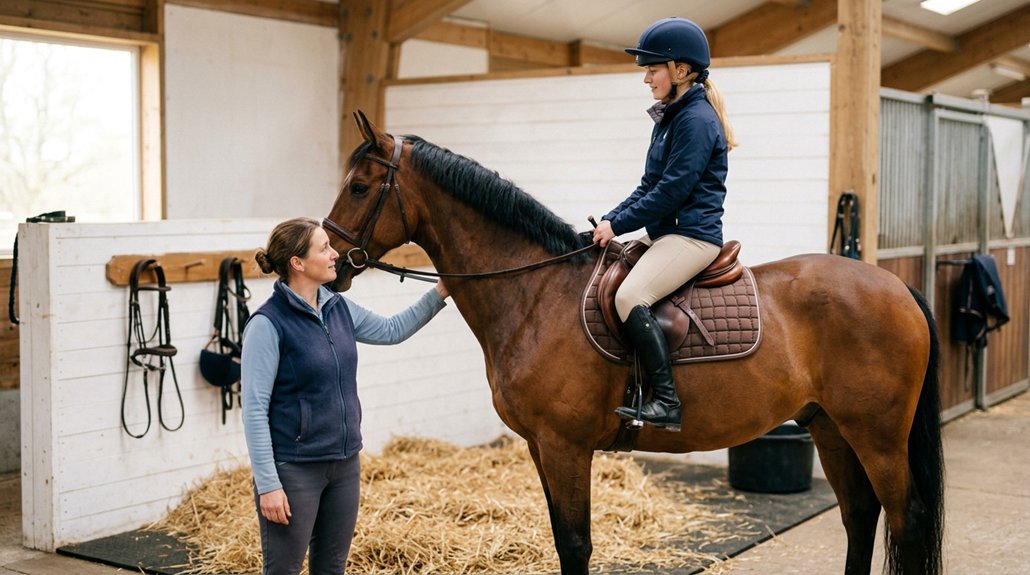
When preparing your horse for first-time riders, calming exercises are key to ensuring a smooth change. Start with gentle, full-body rubbing to provide sensory stimulation that mimics maternal comfort. This familiar touch reassures your horse and prepares it for gradual exposure to new experiences. Leaning against your colt while rubbing lets it feel a rider’s presence, gradually easing it into accepting weight and movement.
Mimic mounting actions by jumping beside the horse’s shoulder. This movement, along with rubbing, helps the horse acclimate to the dynamic presence of a rider. Remember to position yourself so the colt sees you from both eyes, enhancing security and reducing surprise. These steps thoughtfully engage the horse, building calmness and readiness for future riders.
Introduce Mounting Safely in Controlled Environments
After effectively calming your horse with preparatory exercises, it’s time to introduce mounting in a safe and controlled environment. Start by establishing a calm setting with minimal distractions; this guarantees both you and your horse feel at ease. Utilize mounting techniques by gently placing your left foot in the stirrup, encouraging your horse to regulate hindquarter movement. Rider communication is vital—maintain a soothing tone and consistent body language to keep your horse relaxed. Practice mounting from small circles to manage any excess forward momentum, promoting focus on your movements. Regular, controlled sessions help build confidence, allowing your horse to remain stationary and calm during these initial riding experiences. This foundation supports smoother shifts into active riding.
Adjust Training Techniques Based on Horse’s Feedback
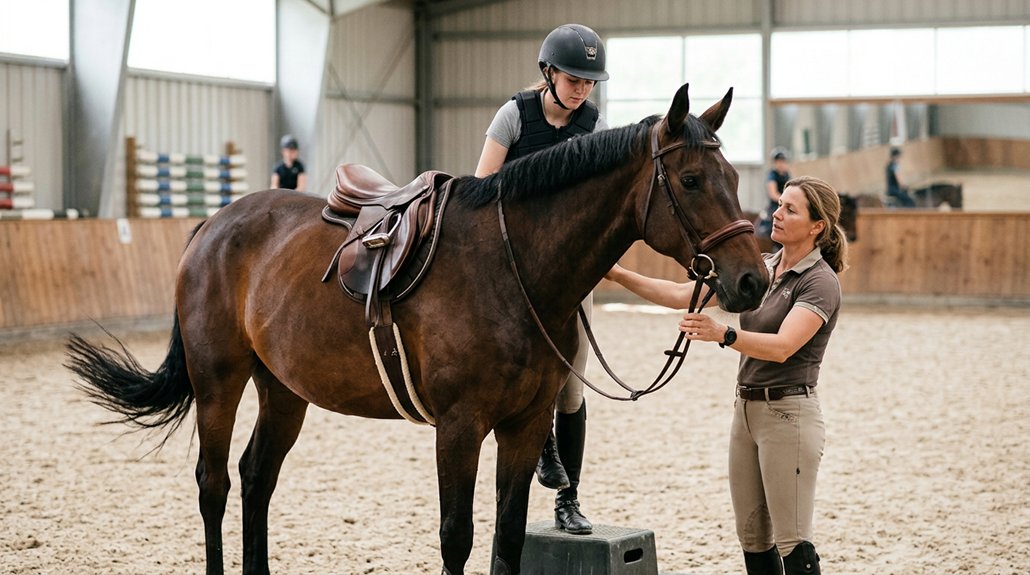
Pay careful attention to your horse’s feedback during training sessions. Begin with feedback assessment by observing body language, like relaxed ears and posture, indicating comfort or tension signs—such as a raised head or pinned ears—that suggest anxiety. Tension monitoring is essential; adjust your techniques to match the horse’s comfort level. Gradual exposure strategies allow you to evaluate its reactions; jumping beside the horse or briefly mounting can highlight stress triggers. Employ flexible groundwork methods such as lunging to reinforce commands, always adapting if the horse shows discomfort. Regularly assess physiological aspects, such as saddle fit and rider weight, ensuring they’re not causing stress. This approach creates a positive, responsive learning environment fitting for first-time riders.
Keep Everyone Safe During Training
Keeping everyone safe during training is paramount, so first, guarantee riders are equipped with essential safety gear like helmets to protect during unforeseen incidents. It’s vital to calm the horse using gentle and familiar techniques, such as body rubbing or resting on its back, to foster a secure and relaxed environment. Having a skilled helper on hand will aid in monitoring the horse’s response to new experiences, effectively reducing risks for both the animal and the rider.
Ensure Rider Safety Gear
Gear up for safe and enjoyable horseback riding by prioritizing the right safety equipment. Start with a certified helmet specifically designed for horseback riding—it’s essential for protecting against head injuries. Proper attire includes closed-toe footwear with a small heel, like riding boots, ensuring your feet are secure and well-positioned in the stirrups. Wear long pants to avoid chafing and scrapes while riding. Fitted clothing is key; loose garments can catch on the tack, posing a safety risk. Don’t overlook protective gear for the elements; sunscreen shields you from harmful sun exposure, and gloves improve grip on the reins, enhancing control. By focusing on these essentials, you’re ensuring a safer, more comfortable ride each time.
Maintain Horse Calmness
Although patience is key when introducing a horse to new experiences, calming your colt before its first ride is essential for ensuring a safe training environment. Start by using body rubbing techniques, mimicking how a mother horse comforts her foal, to help your colt relax and get accustomed to human touch. This bond is vital. Gradual exposure to mounting is next—begin by jumping beside its shoulder, allowing it to see you out of both eyes to avoid surprises. Lie across the colt’s back rather than fully mount initially, minimizing risk. Such measured steps and a calm setting nurture trust and minimize anxiety, establishing a strong foundation for future rides. These strategies safeguard both the horse and rider during training.
Guide Safe Riding Experiences
One of the key aspects of guaranteeing safe riding experiences for first-time riders is to prioritize the horse’s comfort and trust. Start with riding techniques like Jeffrey’s Method, focusing on body rubbing to soothe horse behavior and introduce rider contact. Conduct routine health checks—consider the horse’s dental work, vaccinations, and hoof care to guarantee they’re pain-free. Introduce the horse to mounting by mimicking the rider’s movements, applying gradual pressure on its back in a controlled setting. This helps build comfort and reduce anxiety. Use a consistent training routine where the horse becomes familiar with riding aids and cues, promoting relaxation and better response. Always have appropriate gear, maintain clear communication, and involve a reliable helper for safe initial rides.
Frequently Asked Questions
What Is the 1/2/3 Rule for Horses?
The 1/2/3 rule helps you manage horse behavior and riding techniques. Start with one hour of prep, two hours of careful riding, and three days for acclimatization. It builds trust and guarantees smoother riding experiences.
What Is “I Love You” in Horse?
“Bite the bullet” and recognize a horse saying “I love you” through equine body language. Pay attention to relaxed ears, soft eye contact, gentle nicker, or nuzzling that signals horse communication expressing comfort, trust, and affection.
What to Know Before Riding a Horse for the First Time?
Before riding a horse for the first time, remember these riding tips: wear appropriate attire, understand beginner safety by learning to read the horse’s body language, and make certain a knowledgeable instructor helps you manage the experience safely and effectively.
Can You Ride Horses if You Have Scoliosis?
Absolutely, you can ride horses with scoliosis! It’s safe and beneficial for core strength and balance. Just verify you consult a doctor, use supportive gear, take lessons, and heed riding precautions tailored to your condition.
Conclusion
You’ve laid the foundation for a safe and enjoyable riding experience. Remember, 90% of horse-related injuries occur when mounting or dismounting, highlighting the importance of controlled environments. Building trust and understanding a horse’s emotions are key to reducing stress, while adjusting training based on their feedback guarantees progress. By prioritizing safety and mastering groundwork techniques, you’ll foster a lasting bond between horse and rider, creating confident, first-time riding experiences that both parties will cherish.