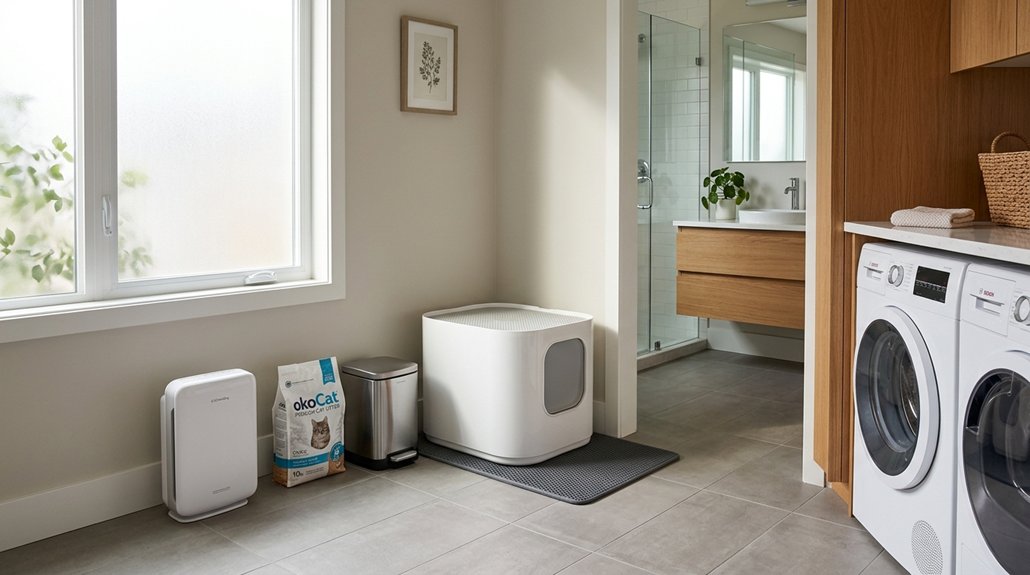
To manage litter box odor, scoop waste daily and completely change the litter every 1-2 weeks. Choose clumping litter with natural odor-control agents like baking soda or activated charcoal. Position one litter box per cat in ventilated, serene areas, avoiding enclosed spaces. Enhance air quality with purifiers using HEPA and activated carbon filters. Baking soda can further neutralize odors when sprinkled under fresh litter. Further exploration will reveal effective strategies and product recommendations.
Key Takeaways
- Scoop the litter box daily and use clumping litter to reduce odor effectively.
- Place litter boxes in well-ventilated areas away from food to minimize odor.
- Use litters with activated charcoal or baking soda for natural odor control.
- Change litter every 1-2 weeks and deep clean the box monthly for hygiene.
- Consider air purifiers with activated carbon filters to improve air quality around the litter box.
Immediate Solutions for Litter Box Odor Control
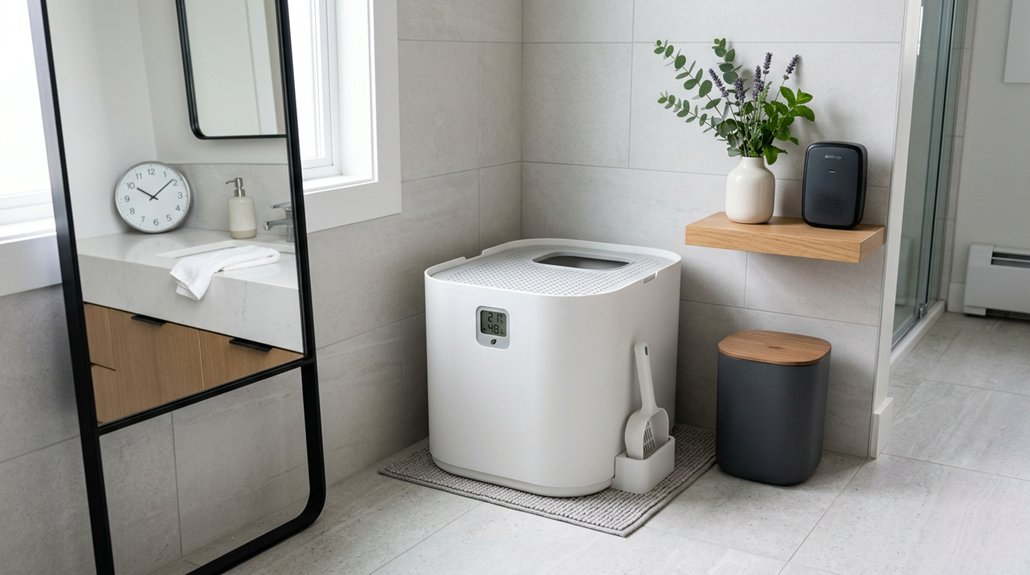
Efficient litter box odor control starts with daily maintenance routines. Scoop the litter box at least once daily to swiftly eliminate waste, reducing the risk of olfactory discomfort. Opt for clumping litters enhanced with odor-controlling agents like baking soda or activated charcoal, which scientifically trap smells, functioning as natural remedies. These substances have been clinically proven to neutralize mercaptans and amines, the malodorous compounds in cat urine.
For an added measure, sprinkle a thin layer of baking soda at the base before replenishing with fresh litter; this provides a scented alternative to help manage odors. Further optimize a well-ventilated location to prevent stagnant air. For airborne particles, an air purifier with activated carbon filters can effectively capture and eliminate lingering odors.
Daily and Weekly Litter Box Cleaning Tips
While maintaining litter box hygiene can seem challenging, implementing a strategic cleaning schedule drastically mitigates odor issues. Prioritize daily maintenance by scooping waste 2-3 times daily, especially in multiple-cat households. Remember, litter box frequency is essential for promoting an odor-free environment. Weekly routines are also important; replace all litter every 1-2 weeks. Utilize a regimen that includes disinfecting the box with mild soap and water, then allowing it to air dry.
| Frequency | Action |
|---|---|
| Daily | Scoop waste 2-3 times |
| Weekly | Change litter completely |
| Monthly | Deep clean with disinfectant |
Incorporate baking soda to control odors naturally by sprinkling a thin layer before adding fresh litter. Maintain one box per cat, plus an additional one, to alleviate overcrowding, ensuring ideal sanitary conditions for your pets.
Choosing Effective Odor-Control Litter
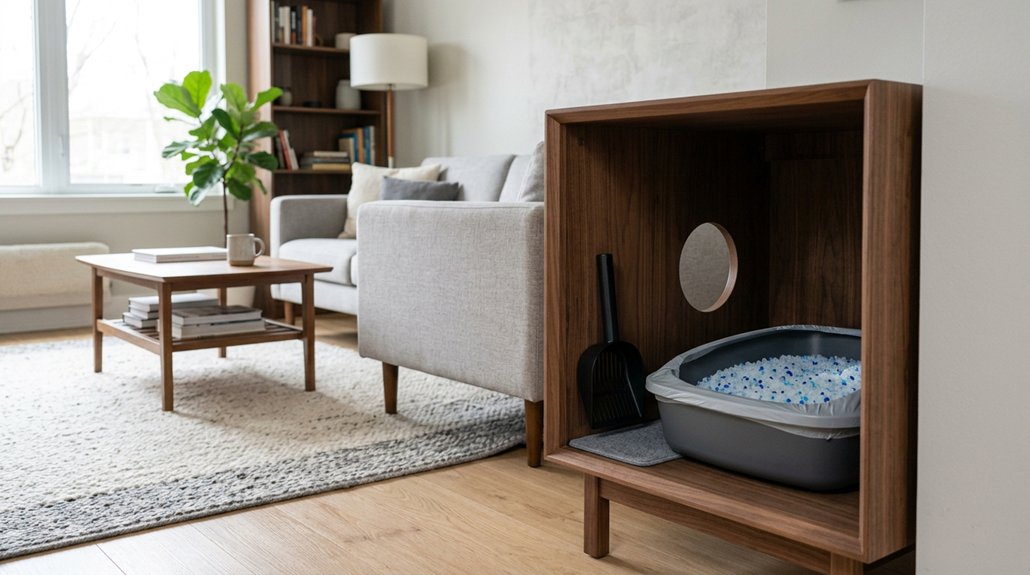
A paramount aspect of managing litter box odor lies in selecting the right odor-control litter. Litter comparison is essential in evaluating options that deploy natural ingredients, such as baking soda or activated charcoal, to enhance olfactory neutralization. These additives improve olfactory integrity by augmenting absorption mechanisms, effectively managing malodorous molecules. Scientific scrutiny reveals that low-dust litters also benefit respiratory health by minimizing particle dispersion—ideal for pet owners prioritizing a hypoallergenic home milieu. It’s worth considering products like Dr. Easley’s Ultra and World’s Best Kitty Litter, both renowned for their odor control efficiency and eco-conscious formulations. However, individual cats’ preferences in litter impact aromatic effectiveness, necessitating iterative experimentation to pinpoint the best choice. Your health and the ambient environment both benefit from precision in selecting effective litter solutions.
The Benefits of Clumping Litter for Odor Management
When considering strategies for effective odor control, clumping litter stands out as a superior choice due to its capacity to form solid aggregates with moisture, allowing you to efficiently remove waste and curtail unpleasant odors. Many advanced formulations integrate odor-neutralizing agents like baking soda or activated charcoal, which further mitigate olfactory disturbances while enhancing hygiene. From a maintenance perspective, clumping litter markedly reduces the frequency and effort required in cleaning, thereby promoting a sanitary environment and ensuring better air quality for both you and your feline companion.
Effective Odor Control
In the domain of effective litter box odor control, clumping litter emerges as a top choice due to its superior design and functionality. Cat behaviors and litter preferences considerably impact odor control. Clumping litter forms solid clusters, facilitating the immediate removal of waste, thereby reducing olfactory offenses. Enhanced with baking soda or activated charcoal, such litter neutralizes odors more efficiently, which is essential in multi-cat households.
| Feature | Benefit |
|---|---|
| Clumping action | Quick waste removal |
| Odor control additives | Enhanced smell neutralization |
| Low-dust formulation | Healthier respiratory environment |
| Efficient waste elimination | Prevents odor buildup |
| Reduced litter usage | Cost-effective and eco-friendly |
Choosing a high-quality, low-dust clumping litter is critical. It not only curtails odor effectively but also promotes a healthier habitat for you and your feline companions.
Ease of Maintenance
Clumping litter revolutionizes the ease of litter box maintenance by forming solid masses that are simple to remove. This characteristic allows you to maintain a cleaner environment through efficient maintenance routines. The addition of odor-control ingredients, such as baking soda or activated charcoal, enhances its capacity to neutralize unpleasant smells, promoting a healthier space for both pets and humans. Compared to non-clumping litter types, clumping varieties typically produce less dust, minimizing respiratory irritants.
Adopting clumping litter reduces your workload, as both solid and liquid waste can be extracted without disorganizing the entire litter bed. For ideal odor control, fully replace clumping litter every 1-2 weeks and clean the litter box to sustain a sanitary milieu. Implementing this systematic approach guarantees superior odor management.
Strategic Placement of Litter Boxes
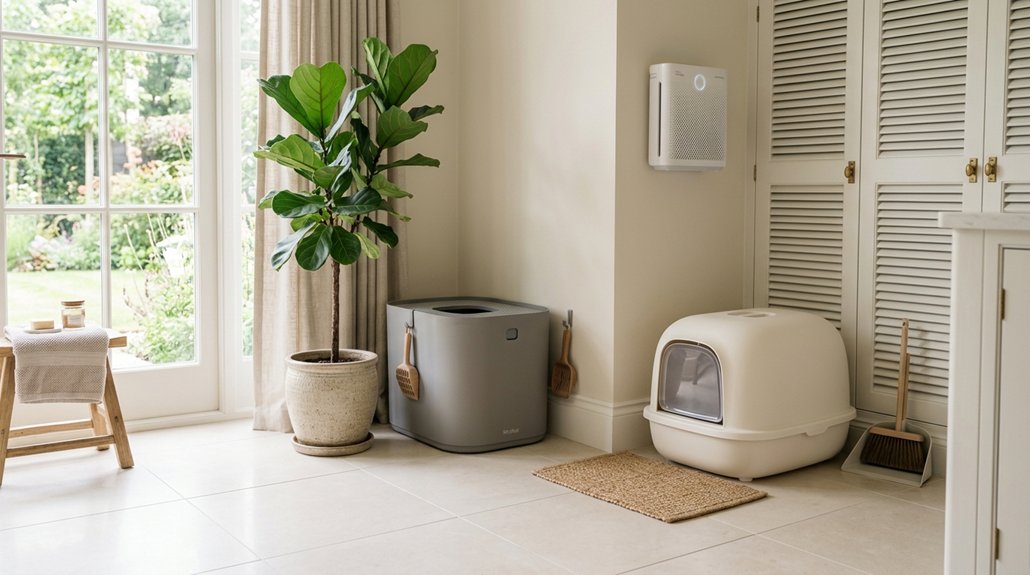
Effective management of litter box odor begins with strategic placement, guaranteeing both functionality and hygiene for your feline companions. Ideal litter box locations are essential for odor prevention. Experts recommend having one box per cat plus an additional one, each positioned in distinct areas to enhance accessibility and encourage consistent usage. A vital factor is avoiding confined, enclosed spaces, which can amplify odors and potentially deter your cat from using the box. Instead, select well-ventilated zones where air circulation helps mitigate odor accumulation. Confirm these areas are separate from food and water bowls, promoting a sanitary environment. Additionally, low-traffic, serene locations are advised, minimizing disturbances and fostering a comfortable atmosphere for your cat, thereby supporting routine use.
DIY Solutions: Using Baking Soda and More
To effectively control litter box odor with economical solutions, you can sprinkle a thin layer of baking soda at the bottom of the box before adding litter, as this can help neutralize odors naturally. Integrating baking soda directly into the clumping litter optimizes moisture absorption and reduces olfactory nuisances, thereby simplifying routine cleaning. For an enhanced aroma without overpowering scents, consider a baking soda and cat-safe essential oil blend, and remember to refresh the application with each litter change to guarantee continual odor mitigation.
Baking Soda Application Tips
When working for ideal odor control in your cat’s litter box, incorporating baking soda can be a game-changer. Scientifically, baking soda acts as a chemical buffer, neutralizing acidic compounds that cause odor. To start, consider applying a thin layer at the bottom of the litter box before adding fresh litter. This method guarantees an even distribution of baking soda dosages, optimizing its odor-absorbing capabilities. You might explore different baking soda varieties available on the market, each offering unique absorption properties. Mix it directly with the litter to enhance long-term smell mitigation. For ongoing freshness, lightly dust baking soda after each scooping session. Integrating these practices with consistent litter changes will facilitate a hygienic habitat, mitigating pungent ammonia emissions.
Effective Odor-Neutralizing Techniques
For an ideal odor-free litter box, several effective techniques leverage the power of baking soda alongside other natural remedies. This compound not only aids in odor absorption but also provides scent enhancement. By sprinkling a thin layer of baking soda beneath the litter, you create a barrier that neutralizes odors effectively. Regular maintenance, including daily scooping and bi-weekly litter changes, is essential for sustained odor control. Incorporating essential oils into baking soda can further enhance fragrance, provided they’re cat-safe. Placing the litter box in a ventilated space plays a significant role in dispersing odors. Consider the following table for peak techniques:
| Technique | Benefits | Considerations |
|---|---|---|
| Baking Soda Layer | Odor absorption | Affordable and natural |
| Regular Scooping | Reduced odor buildup | Daily commitment |
| Essential Oils Mix | Scent enhancement | Guarantee pet safety |
| Complete Litter Change | Freshness | Bi-weekly routine |
| Proper Ventilation | Odor dispersion | Location choice |
Affordable DIY Odor Solutions
Transform your litter box management with affordable DIY odor solutions, leveraging the natural power of baking soda and other accessible methods. As a proven deodorizer, baking soda benefits are unparalleled. Start by sprinkling a thin layer at the base of the litter box to neutralize odors effectively. This simple, cost-effective alternative enhances smell control while maintaining olfactory freshness.
To maximize odor absorption, employ these four expert strategies:
- Base Layer Application: Spread baking soda before adding fresh litter.
- Mixed Integration: Combine directly with clumping litter to entrap odors and maintain ideal freshness.
- Layering Technique: Pair baking soda with advanced clumping litter for enhanced absorption properties.
- Routine Maintenance: Regularly renew the baking soda layer within your cleaning protocol for persistent odor alleviation.
These techniques offer scientific precision in odor management, ensuring a harmonious home environment.
Using Air Purifiers and Ozone Generators for Odor Removal
While managing litter box odor challenges, leveraging technology like air purifiers and ozone generators can substantially enhance your environment’s olfactory comfort. Utilizing air purifiers with HEPA and activated carbon filters is pivotal for air quality improvement and odor neutralization. Place these units near the litter box to capture and neutralize airborne particles effectively. Consistent usage reduces reliance on harsh chemical air fresheners, fostering a healthier living environment.
Ozone generators, on the other hand, offer profound odor molecule breakdown. Exercise caution since ozone poses health risks to both pets and humans. Operate these devices only in unoccupied spaces and guarantee thorough ventilation post-use, upholding safety guidelines. Combining these technological solutions with diligent litter management maximizes odor control efficacy, creating a fresher, pleasant home.
What Are Cat Owners Saying About These Products?
Curiously enough, how do cat owners perceive the effectiveness of litter solutions on odor management? Drawing from user experiences, the consensus indicates remarkable product comparisons that aid in decision-making. Observations include:
- Clumping Litters: Enhanced with baking soda or activated charcoal, these greatly improve odor control, according to multiple user experiences.
- Tidy Cats Breeze System: Praised for its innovative pellet and pad design, effectively minimizing odor by reducing waste interaction.
- Dr. Easley’s Ultra Litter: Its superior clumping and odor control make it a champion among multi-cat households, garnering positive user reviews.
- Natural Litters: “World’s Best Kitty Litter” receives accolades for being low-dust, supporting respiratory health for both felines and humans.
Implementing regularity in cleaning procedures enhances long-term success, but durable options like stainless steel boxes also receive high marks for maintaining freshness over time.
Frequently Asked Questions
How to Stop a House From Smelling Like a Litter Box?
To stop a house from smelling like a litter box, prioritize litter box maintenance: scoop daily and deep clean monthly. Employ odor neutralizing products like clumping litter and baking soda. Guarantee proper ventilation to mitigate odor accumulation scientifically.
How to Keep a House Smelling Good With a Litter Box?
To keep your house smelling good with a litter box, prioritize litter box maintenance using effective odor control tips. These include frequent cleaning, using odor-optimized litter, and ensuring proper ventilation and air purification strategies through scientifically-backed methodologies.
What Is the Hardest Smell to Get Rid of in a House?
Imagine using home remedies to tackle pet odors because cat urine’s uric acid makes it notoriously hard to eliminate. Despite various techniques, it persistently clings until professionally treated, underscoring the complexity of neutralizing these stubborn smells.
Do Air Purifiers Work for Cat Litter Smell?
Yes, air purifiers enhance air filter effectiveness against cat litter smells, especially when paired with regular litter box maintenance. Combining HEPA and activated carbon filters optimizes odor neutralization, promoting healthier air for pets and humans alike.
Conclusion
You’ve tackled litter box odor like a pro, turning the impossible task into a breeze. With strategic placement, expert cleaning routines, and scientifically-backed solutions like clumping litter and baking soda, you’re transforming your cat’s corner into an aroma-free zone. Incorporating air purifiers isn’t just eliminating smells; it’s purifying your environment, safeguarding health. Remember, these aren’t mere tips—they’re a pathway to olfactory nirvana through expert management. Your home smells fantastic, thanks to your dedication!