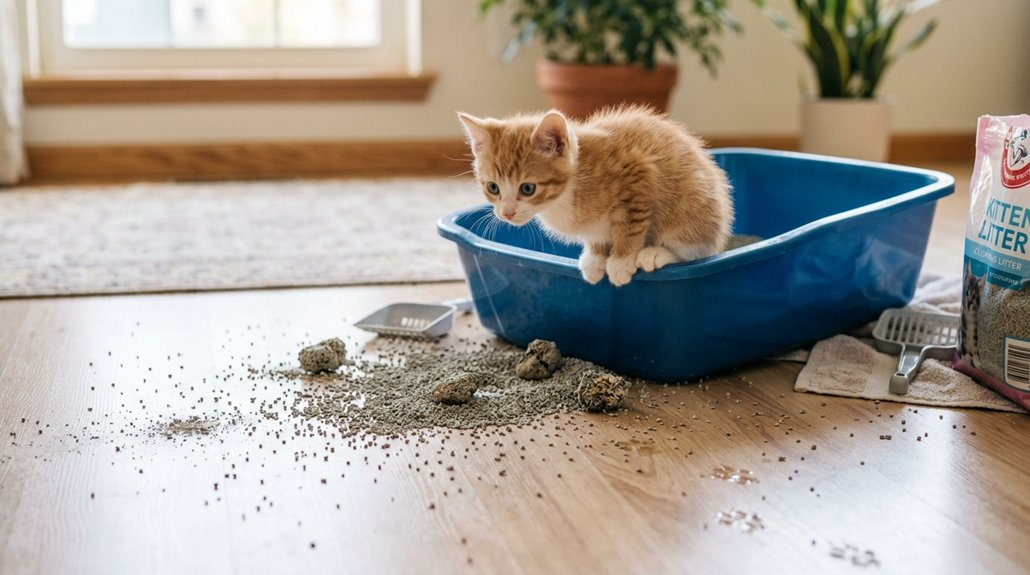
When training your kitten, common mistakes include using mismatched litter types and placing the litter box in noisy areas, like near appliances. Choose unscented, fine-grain clumping litter to suit their sensitive needs, and locate the box in quiet, low-traffic areas to reduce stress. Keep a consistent cleaning schedule, scooping daily and washing monthly, to prevent litter box avoidance. By addressing these elements, you’ll encourage consistent habits. For more insights, you’ll discover effective strategies.
Key Takeaways
- Introducing new litter too quickly can lead to aversion; a gradual transition over 7-10 days is advised.
- Placing the litter box in noisy or high-traffic areas may cause stress and avoidance.
- Skipping daily scooping increases odors and discourages litter box use.
- Using strong scented litter may overwhelm kittens’ sensitive noses, leading to litter box avoidance.
- Punishing inappropriate elimination can increase anxiety; instead, focus on positive reinforcement to encourage proper habits.
How to Choose the Perfect Litter for Your Kitten
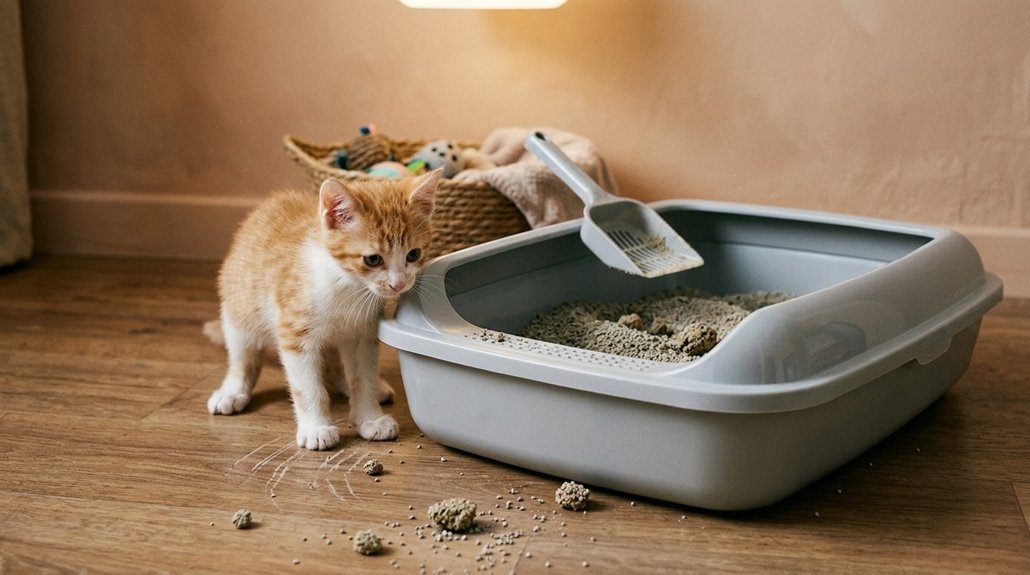
Selecting an ideal litter for your kitten involves understanding their unique needs and preferences. Kittens can be quite particular about litter texture preferences, often showing a bias toward unscented, fine-grain clumping litter or paper-based options. These litter material options are gentle on their paws, facilitating digging and reducing dust exposure. Their delicate sense of smell can be overwhelmed by strong fragrances, hence plain, unscented choices are paramount to avoid deterrence. Monitor your kitten’s reactions as they adapt, ensuring the depth remains around two inches for the best clumping. When shifting to a new type, do so gradually over 7-10 days. By attentively matching litter type to your kitten’s tactile and olfactory preferences, you greatly enhance their litter box acceptance and consistent usage.
Avoid Noisy Litter Box Locations
While providing your kitten with an ideal environment for using the litter box, it’s important to avoid placing it in noisy areas. Placing the litter box in spots like laundry rooms or near busy appliances increases kitten stress, often leading to avoidance. Cats naturally gravitate towards quiet, low-traffic locations where they can feel secure during elimination. Noisy distractions, such as self-cleaning litter box mechanisms or nearby machinery, can startle your kitten, causing them to associate stress with the litter box location. To promote consistent usage, make sure that the litter box placement is in a calm, minimally trafficked area of the home. Creating such an environment minimizes anxiety, supporting the establishment of healthy litter box habits crucial for your kitten’s well-being.
Maintain Regular Litter Box Cleaning for Kittens
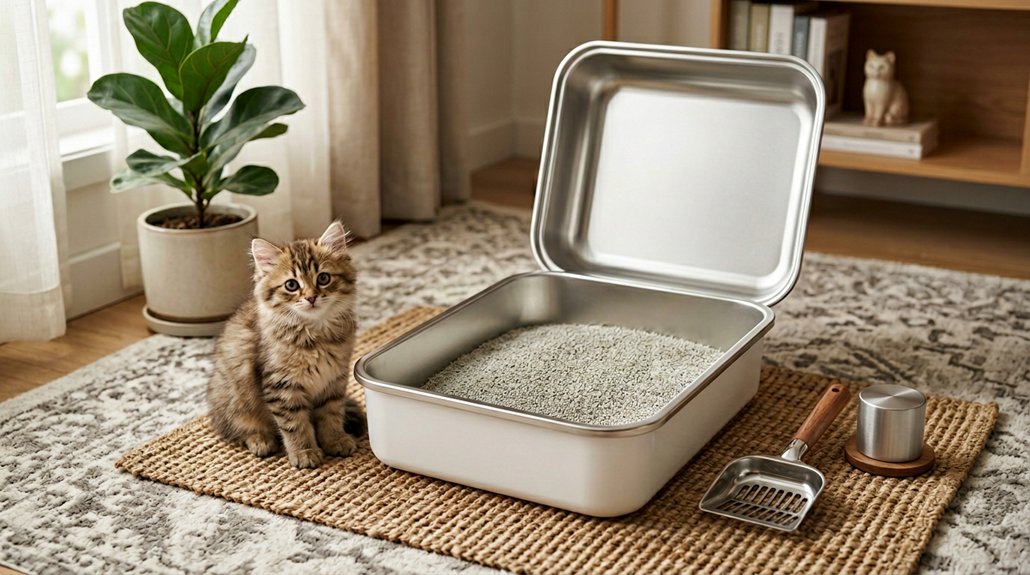
To sustain a stress-free environment for your kitten, maintaining regular litter box cleanliness is key. Establishing a consistent cleaning schedule guarantees ideal litter box hygiene. Scoop solid waste and clumps daily, which reduces odors and deters avoidance. A monthly deep clean using warm water prevents bacteria buildup, maintaining a welcoming atmosphere for your kitten. Enzyme-based cleaners excel at removing stubborn stains and odors without repelling your cat. If signs of avoidance appear, increase cleaning frequency to guarantee hygiene is not compromised. Keep about two inches of litter to facilitate easier maintenance.
Here’s a suggested cleaning schedule:
| Task | Frequency | Benefit |
|---|---|---|
| Scoop waste | Daily | Reduces odor, prevents avoidance |
| Empty and wash | Monthly | Minimizes bacteria, maintains cleanliness |
| Inspect for avoidance | As needed | Guarantees the kitten’s comfort |
| Litter adjustment | Weekly | Maintains ideal litter depth |
| Enzymatic clean | As required | Eliminates tough odors and stains |
Transition Kittens Slowly to New Litter Types
Gradually shifting your kitten to new litter types is vital for encouraging consistent litter box use without causing stress. Begin by mixing a small amount of the new litter with your kitten’s current litter to facilitate gradual adaptation over a period of 7-10 days. Sudden changes might deter them from using the litter box, as kittens are sensitive to different textures and scents. Closely monitor your kitten’s comfort by observing their willingness to continue using the box during this change. Choose a high-quality, unscented clumping litter, especially for sensitive kittens, to minimize disruptions. Patience is important; rushing this process could result in litter box avoidance or accidents. A methodical approach guarantees your kitten’s comfort and reinforces positive litter habits.
Why Punishing With Litter Doesn’t Work: and What to Do Instead
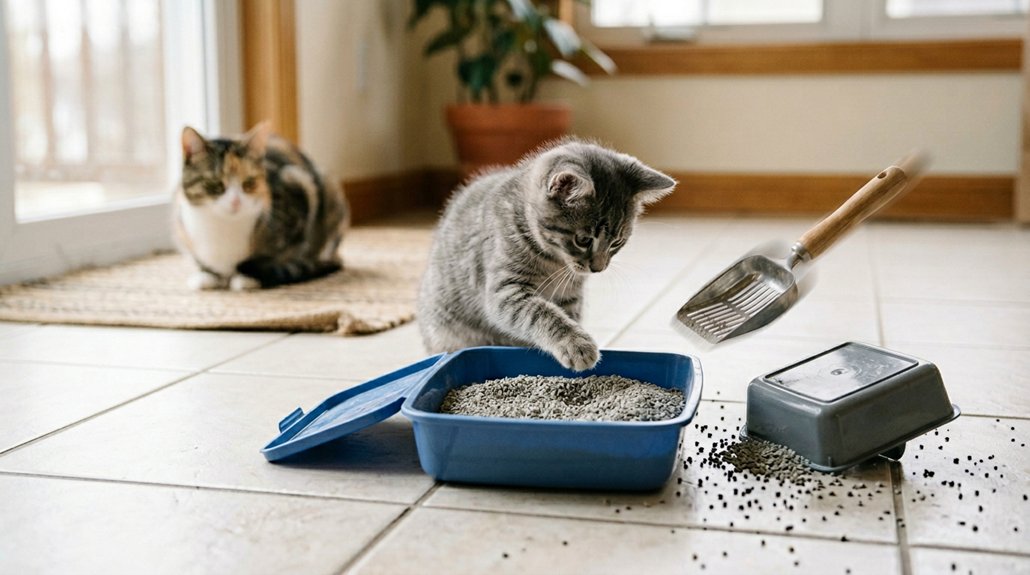
Effective litter training prioritizes your kitten’s comfort, but addressing inappropriate elimination habits requires understanding rather than punishment. Using litter as a punitive measure creates fear, increasing anxiety and exacerbating behaviors you’re trying to correct. Negative reinforcement breaks down the trust between you and your kitten, hampering your training efforts. Instead, focus on understanding behaviors by observing patterns and environments that may lead to accidents. Positive reinforcement, like praise or treats, bolsters desired habits, building trust and confidence in your kitten’s ability to use the litter box correctly. Clean any accidents with enzyme-based cleaners to completely remove odors, reducing the chance of repeated behaviors. A supportive and stress-free setting is vital for creating successful litter habits in your kitten.
Frequently Asked Questions
What Is the 3-3-3 Rule for Kittens?
The 3-3-3 rule for kitten acclimation is a 3-3-3 timeline involving three days for immediate adjustment, three weeks for exploring and settling routines, and three months for full adaptation to their new environment. Monitor and support throughout.
What Are Common Litter Training Mistakes?
You might neglect kittens’ litter box preferences by choosing scented litter or placing boxes in stressful spots. Guarantee a calm training environment, scoop regularly, and gradually change litter. In multi-cat homes, provide ample boxes to avoid disputes.
What Is the Fastest Way to Litter Train a Kitten?
Did you know 90% of kittens adapt quicker with consistent training techniques? Start with a strategically placed litter box, observe kitten behavior, and guarantee regular cleaning. These steps effectively streamline the process, fostering quick and successful litter training.
What Is Kitten Litter Syndrome?
Kitten Litter Syndrome involves litter box issues from improper training, affecting kitten behavior like box avoidance and inappropriate elimination. Addressing poor location, cleanliness, and unsuitable litter promptly helps establish healthy habits and reduces future problems.
Conclusion
Mastering litter training with your kitten requires patience and attention to these key elements. Choose a suitable litter, position the box wisely, and keep it squeaky clean—like covering all bases in a game of chess (but with tiny paws!). Shifting to new litter types gradually and avoiding punitive measures guarantees a healthier, stress-free environment for your feline friend. Remember, patience is your ally, and with time, your kitten will become a litter training maestro.