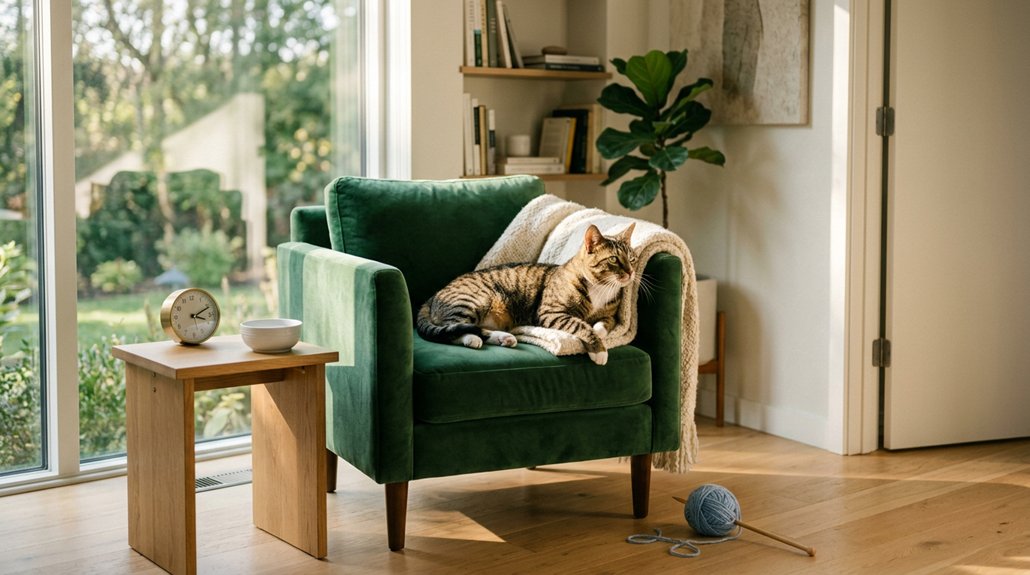
You can leave a healthy adult cat alone for 8 to 12 hours daily, but it’s vital to factor in age, health, and personality. Kittens under four months need more frequent monitoring, while senior cats or those with health issues require more attention. Adjust the home by securing hazards and providing stimulation through toys and climbing structures. Automated feeders and clean litter boxes are necessary. Explore more to guarantee your cat’s emotional well-being and ideal care.
Key Takeaways
- Healthy adult cats can be left alone for 8 to 12 hours each day.
- Kittens under four months should not be alone for more than 2 to 4 hours daily.
- No cat should be left alone for over 24 hours without check-ins.
- Elderly cats and those with health issues require more frequent monitoring.
- Providing interactive toys and environmental enrichment reduces stress during alone time.
How Long Can Cats Be Safely Left Alone?
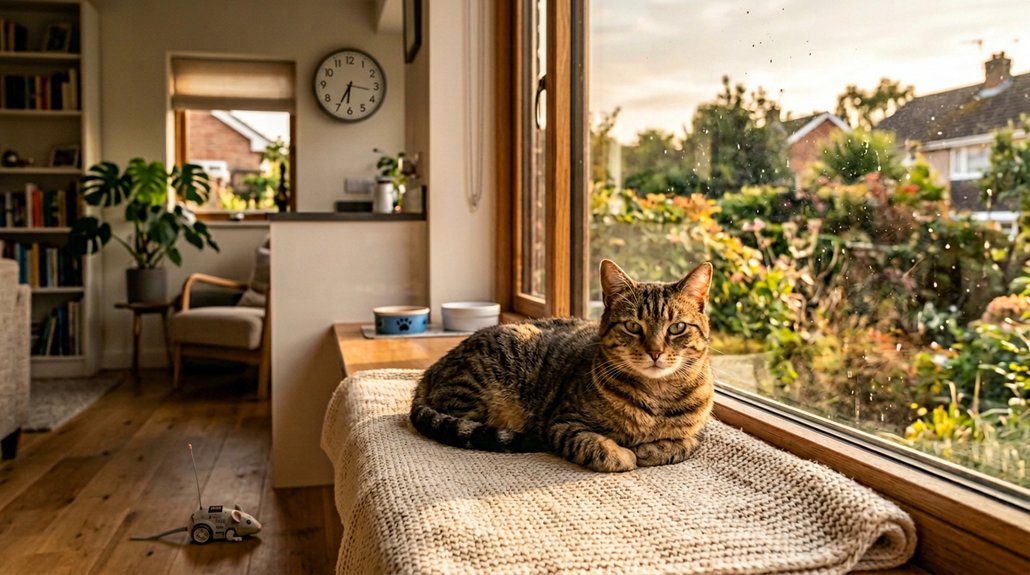
While considering how long cats can be safely left alone, it’s important to account for their age and health status. A healthy adult cat generally manages solitude for 8 to 12 hours without adverse effects on their behavior. This timeframe acknowledges the independent nature of felines, although it’s vital to remember they still benefit from human presence as a form of companionship. Cats thrive on routine; any disruption might impact their emotional stability, hinting at the importance of consistent interaction.
Conversely, kittens under four months shouldn’t be left alone for more than 2-4 hours due to their need for care and socialization. Prolonged isolation—over 24 hours—isn’t advisable for any cat, as it risks negatively affecting their behavioral and emotional health, undermining their social needs.
Age, Health, and Personality Factors in Alone Time
When determining how long a cat can be left alone, it’s essential to take into account not only their age and health but also their individual personality. Age differences mean kittens under 4 months need frequent monitoring, while older, healthy adults can manage 8 to 12 hours of solitude. However, senior cats or those with health considerations demand more regular check-ins due to potentially critical care requirements. Individual personality types also play a significant role; some felines have greater social needs and may experience heightened anxiety if left alone too long. Using adjustment techniques like gradual acclimatization can aid in anxiety management, particularly for younger cats. Each cat’s unique temperament and physical state should guide any alone-time decisions.
Preparing Your Home for Cats Left Alone
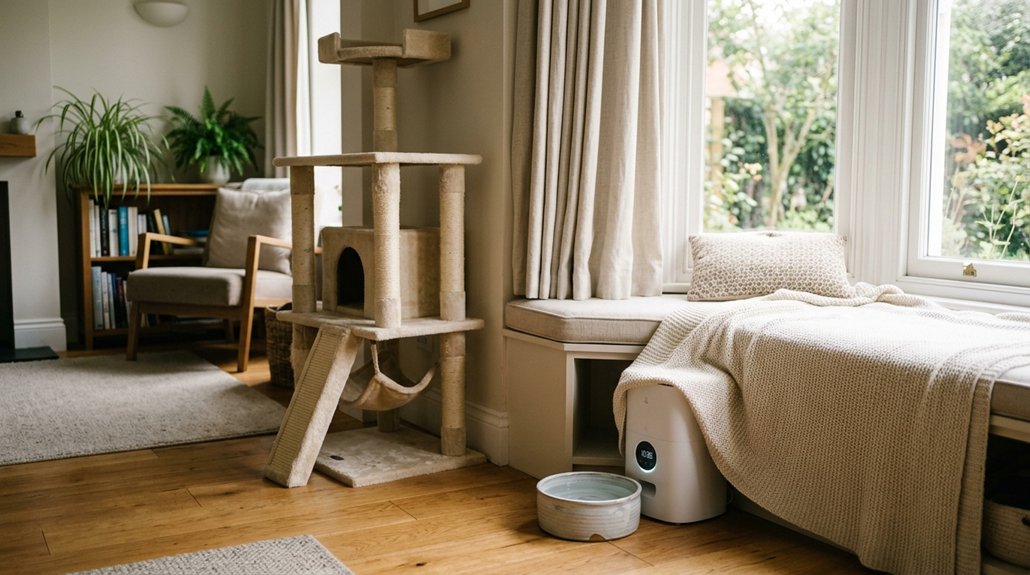
When you leave your cat alone, ensuring their safety involves securing any hazardous substances and providing multiple clean litter boxes to prevent accidents. Integrating interactive toys and puzzle feeders will keep them mentally engaged, reducing the risk of boredom and associated destructive behaviors. Additionally, using automatic feeders and water fountains guarantees consistent access to fresh nourishment, mitigating the need for daily interventions.
Creating a Safe Environment
To guarantee a safe environment for your cat when left alone, it is crucial to address potential hazards in your home. Implement safety measures by securing toxic substances like plants and chemicals, cat-proofing your surroundings, and storing away small objects that could be ingested. To bolster environmental enrichment and keep your cat engaged, you should:
- Remove swallowable items and secure cords to prevent accidents or injuries.
- Provide several clean litter boxes to cater to your cat’s elimination needs.
- Set up cozy spots and safe climbing areas to create a comfortable environment.
- Maintain a stable home temperature and consider using ambient noise like a TV or radio.
These preparations guarantee your cat remains safe and content during periods of solitude.
Interactive Toys and Enrichment
Ever considered how to keep your feline friend engaged when you’re not home? Ensuring interactive playtime is essential. Incorporate puzzle feeders and wand toys to provide mental and physical stimulation. Strategically using climbing structures not only satisfies their exploratory instincts but also offers vital exercise. Rotate toys regularly to maintain their interest and prevent boredom. Additionally, automatic toys that move unpredictably can mimic hunting behaviors, a key to reducing destructive tendencies.
| Feature | Benefit |
|---|---|
| Puzzle Feeders | Mental and physical stimulation |
| Climbing Structures | Exercise and natural instinct appeal |
| Automatic Toys | Mimics hunting, reduces boredom |
| Treat Dispensing Toys | Engaging unsupervised play options |
Lastly, window perches and bird feeders outside offer visual enrichment, turning observation into engaging downtime.
Ensuring Food and Water
Properly preparing your home for a cat left alone involves guaranteeing they have access to adequate food and water. Prioritize food accessibility and implement hydration monitoring to maintain your pet’s well-being. For healthy adult cats, consider automatic feeders and water fountains to guarantee a steady supply. Kittens, who should not be left alone longer than six hours, require proportionate food and hydration. It’s critical for sick cats to have smaller meals more frequently and unfettered access to water to support their health needs. Follow these technical guidelines to enhance your cat’s environment:
- Regularly check and refill automatic dispensers to maintain supply.
- Guarantee water bowls are stable and spill-proof.
- Keep food containers tightly closed.
- Monitor ambient temperature to prevent dehydration risks.
What Your Cat Needs When They’re Home Alone
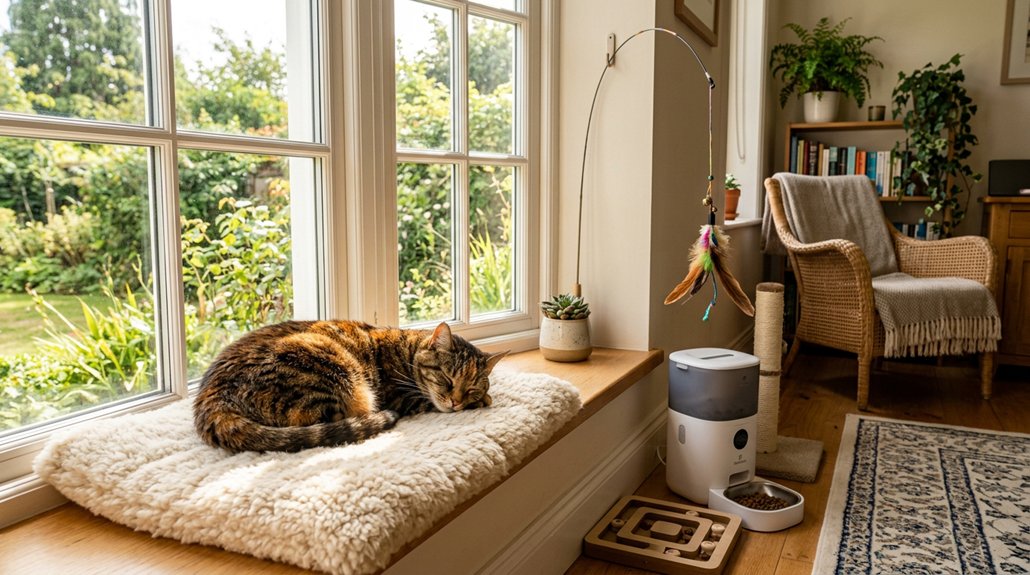
When leaving your cat alone, it’s vital to guarantee they have all the essential supplies, including balanced food, fresh water, and a clean litter box. Engaging activities such as interactive toys, climbing structures, and cozy resting areas can provide the necessary mental and physical stimulation. Considering calming products like Feliway can also mitigate potential stress, enhancing your cat’s comfort during solitary periods.
Essential Supplies Checklist
Cats are independent creatures, but guaranteeing their well-being while they’re home alone requires careful planning and the right supplies. Maintaining fresh food and pet hydration is essential, using automatic feeders and water fountains to provide continuous access. Proper litter box arrangements must be made; having multiple clean boxes minimizes the risk of soiling, especially in multi-cat households. Create a comforting environment by setting up spaces with your own scent and a cozy resting area to alleviate any loneliness they might feel. Coordination with a pet sitter or a friend for periodic check-ins can be beneficial for revitalizing supplies and monitoring health.
- Automatic feeder for continuous food access
- Water fountain for ideal hydration
- Multiple clean litter boxes
- Resting area with scented personal items
Engaging Activities for Cats
Engaging activities play an essential role in maintaining your cat’s well-being when they’re home alone. Providing cat puzzles and interactive toys is vital for mental stimulation and reducing boredom. Puzzle feeders, for instance, challenge your cat’s problem-solving skills and encourage active play. Setting up a modern cat tree near a window allows your feline friend to enjoy birdwatching, engaging them with their environment. To further stimulate their instincts, install wall-mounted cat shelves, offering vertical climbing opportunities. These spaces not only satisfy your cat’s natural behavior but also create a dynamic environment for exploration. Also, consider including various toys and cozy spaces to promote relaxation and independent play. Using calming products like Feliway can further alleviate stress during their alone time.
Spotting Separation Anxiety Signs
Detecting separation anxiety in cats requires a keen understanding of their behaviors and emotional health. Recognizing stress signals is vital for ensuring your feline’s well-being when they’re left alone. Cats may exhibit separation anxiety through several indicators:
- Excessive Meowing: Continuous vocalization can be an obvious cry for attention or an indication of distress in your absence.
- Altered Appetite: A sudden loss of appetite might suggest anxiety, impacting their physical health over time.
- Destructive Behavior: Scratching furniture or knocking items over often reveals heightened stress when alone.
- Grooming Alterations: Over-grooming or hair loss signifies emotional turmoil stemming from extended solitude.
Gradually acclimating your cat to longer periods alone helps mitigate stress and nurtures their emotional stability, making adjustments smoother.
Keeping Your Cat Entertained While You’re Away
Understanding separation anxiety is key, but equally important is ensuring your cat’s environment remains stimulating in your absence. Consider installing modern cat trees near windows for birdwatching, a natural outlet for curiosity. Interactive feeders, like puzzle toys, can transform mealtime into an engaging challenge, minimizing destructive behaviors. Wall-mounted shelves tap into their vertical exploration instincts, enhancing comfort.
| Strategy | Benefits | Application |
|---|---|---|
| Cat Tree | Natural curiosity stimulation | Place near windows |
| Interactive Feeders | Mental engagement | Use during meals |
| Wall-Mounted Shelves | Vertical exploration | Install along walls |
| Calming Products | Stress reduction | Apply in living areas |
| Auditory Stimulation | Environmental enrichment | Leave the TV or radio on |
Integrating these elements optimizes their environment and safeguards their well-being.
Choosing the Right Pet Sitter for Your Cat
When you’re planning to leave your cat in someone else’s care, identifying the right pet sitter is essential to guaranteeing your pet’s comfort and well-being. Prioritize pet sitter qualifications and cat behavior expertise. Choose a sitter with:
Selecting a qualified pet sitter ensures your cat’s comfort and well-being in your absence.
- Feline-specific experience to understand and accommodate your cat’s care needs effectively.
- Empathy during a meet-and-greet to verify they’re compatible with your cat’s temperament.
- Active engagement skills, incorporating playtime to minimize loneliness and promote mental stimulation.
- Strong references and reviews, demonstrating reliability and quality of care.
Confirm they have your veterinarian’s emergency contact info and are prepared to handle health or behavioral changes. Thorough screening allows you to select a sitter who’ll keep your cat happy and cared for in your absence.
Alternatives to Leaving Your Cat Alone at Home
While leaving your cat alone at home might seem convenient, it’s not always in their best interest, especially for extended periods. Hiring a professional pet sitter offers consistent daily check-ins with fresh food, water, and companionship, aiding in alleviating loneliness. Alternatively, consider cat boarding options that provide specialized care, particularly beneficial for cats sensitive to changes or health issues. Engaging a trusted friend or neighbor guarantees your cat receives necessary care and social interaction. Utilizing pet camera systems with two-way audio allows remote check-ins, offering interaction and reassurance. Supplement these strategies with interactive toys or puzzle feeders for mental stimulation. These alternatives assure your cat remains healthy and content while you’re away, maintaining their well-being.
Ensuring Your Cat’s Emotional Well-Being
Recognizing the emotional well-being of your cat is critical, as it heavily influences their overall health. Cats are inherently social creatures; prolonged solitude can trigger anxiety and behavior changes. Typically, adult cats can manage alone time for 8 to 12 hours, but it’s important to mitigate isolation by enriching their environment. Consider these strategies to enhance emotional support and engage your cat with bonding activities:
- Interactive Toys: Stimulate mental engagement and mimic prey interactions.
- Climbing Structures: Offer elevated spaces to satisfy their instinctual need to perch.
- Regular Play Sessions: Strengthen owner-cat bonds and burn off excess energy.
- Gradual Training: Increase their comfort and reduce stress related to being alone.
Implement these to maintain your cat’s emotional health and prevent separation anxiety.
Frequently Asked Questions
What Is the 3-3-3 Rule for Cats?
The 3-3-3 rule highlights the cat adjustment period, recommending three days to acclimate, three weeks for socialization, and three months for full settling. Use feline socialization tips to foster trust and comfort during this change.
What Color Cat Is Least Desired?
Black cats often face lower adoption rates due to cultural superstitions, making them among the least desired in adoption settings. Understanding cat color preferences and addressing stereotypes can help reduce the stigma around these unwanted cat breeds.
What Is “I Love You” in Cat Language?
In cat language, “I love you” is expressed through slow blinking, gentle face rubs, purring, and specific vocalizations like meows or trills. These feline body language cues and cat vocalizations signify affection and trust towards you.
Can I Have a Cat if I Work 12 Hours a Day?
You can, but it’s essential to establish strong cat care routines. Picture your feline basking in sunlit windows, with automatic feeders and interactive toys. Regular companionship reduces separation anxiety, so consider a pet sitter or friend for daily check-ins.
Conclusion
Imagine your home as a bustling ship, and your cat as a sailor who’s left alone to navigate its waters. Just like a ship requires a competent crew to remain on course, your furry sailor needs the right environment for balance. With keen observation, guaranteeing there’s enough entertainment and care angles, you create a harmonious sea. This thoughtful approach not only prevents behavioral storms but also assures your sailor’s emotional well-being remains anchored securely.