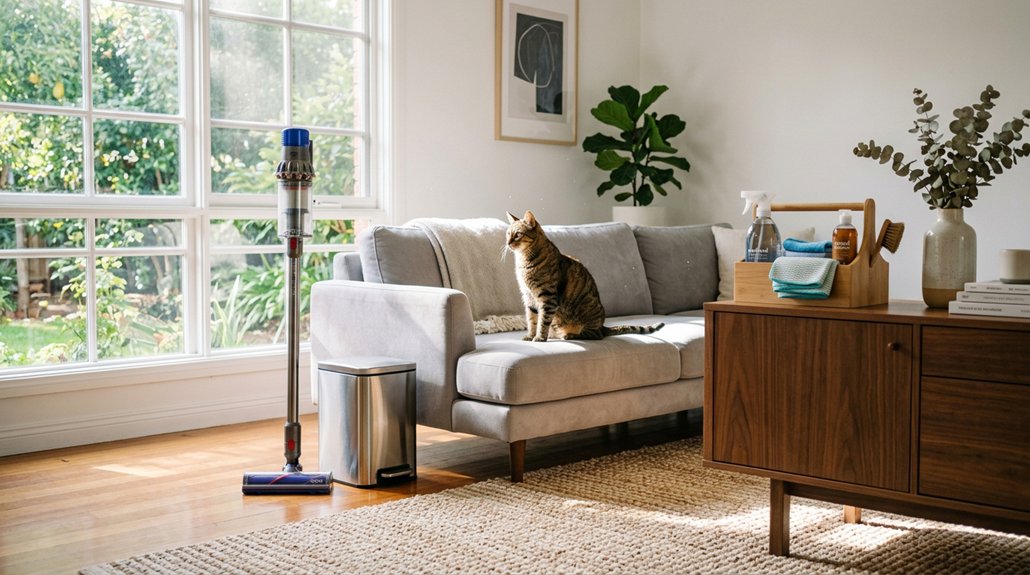
To keep your home clean with cats, focus on strategic litter management and odor control by using enzyme cleaners and quality clumping litters. Implement a grooming routine with effective tools to reduce shedding dramatically. Position scratching posts correctly to protect your furniture. Organize feeding areas with waterproof mats and weekly bowl washes. Embrace non-toxic, pet-safe cleaning solutions for a healthy environment. Stay consistent with these strategies, and you’ll discover even more ways to maintain a fresh, cat-friendly home.
Key Takeaways
- Use high-quality clumping litter and scoop it 2-3 times daily to control odor and maintain cleanliness.
- Regularly groom your cat using a double-sided brush to manage shedding and minimize fur buildup.
- Maintain a weekly cleaning schedule to wash feeding bowls and prevent bacteria and slime buildup.
- Place scratching posts strategically and use decorative throws to protect furniture from damage and fur.
- Opt for non-toxic, fragrance-free cleaning solutions to ensure a safe living environment for cats.
Stop Litter Scatter: Tips for Effective Management
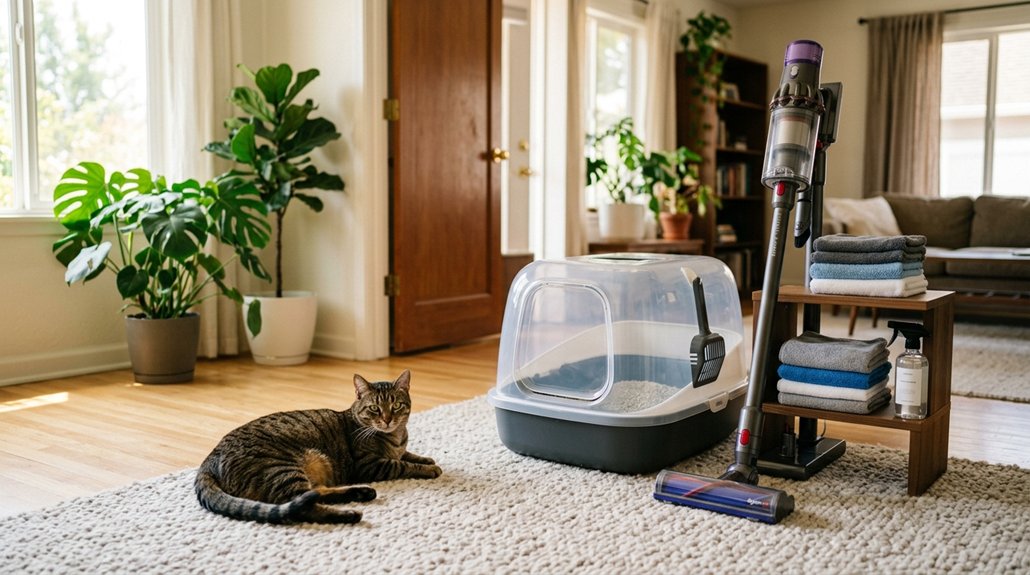
When you’re managing a household with cats, controlling litter scatter becomes vital to maintain a clean environment. Start by strategically placing your litter box in a well-ventilated area away from high-traffic zones. Opt for high-sided or covered boxes to contain litter. Selecting the right litter type, like low-dust or larger granules, can further minimize scatter and tracking. Consistent cleaning frequency is important; scoop the litter box 2-3 times daily to keep it clean and reduce scatter. Use a high-quality mat, like the All-Absorb, to trap litter before it spreads. Consider a regular vacuum routine focused around the litter area to remove any stray particles. These steps, combined with meticulous odor control, guarantee an organized and comfortable living space.
Neutralize Cat Odors With Pet-Safe Solutions
Efficiently managing litter scatter is just the beginning; effectively neutralizing cat odors guarantees a truly pleasant living environment. Start with odor neutralizers like enzyme cleaners for resilient urine smells. Nature’s Miracle or Resolve are ideal. Integrate natural remedies by sprinkling baking soda on carpets and furniture to absorb unwanted scents.
| Technique | Benefit |
|---|---|
| Litter Techniques | Traps odors, simplifies cleanup |
| Enzyme Cleaners | Targets organic odors for lasting freshness |
| Natural Remedies | Cost-effective deodorization option |
| Ventilation | Enhances air quality, reduces airborne odors |
High-quality, clumping litters capture smells while making scooping easier. Regularly perform litter techniques: scoop 2-3 times daily, change monthly. Open windows or use HEPA filter air purifiers to enhance air quality. Embrace these DIY solutions for a fresher home.
Master Grooming for Minimal Shedding
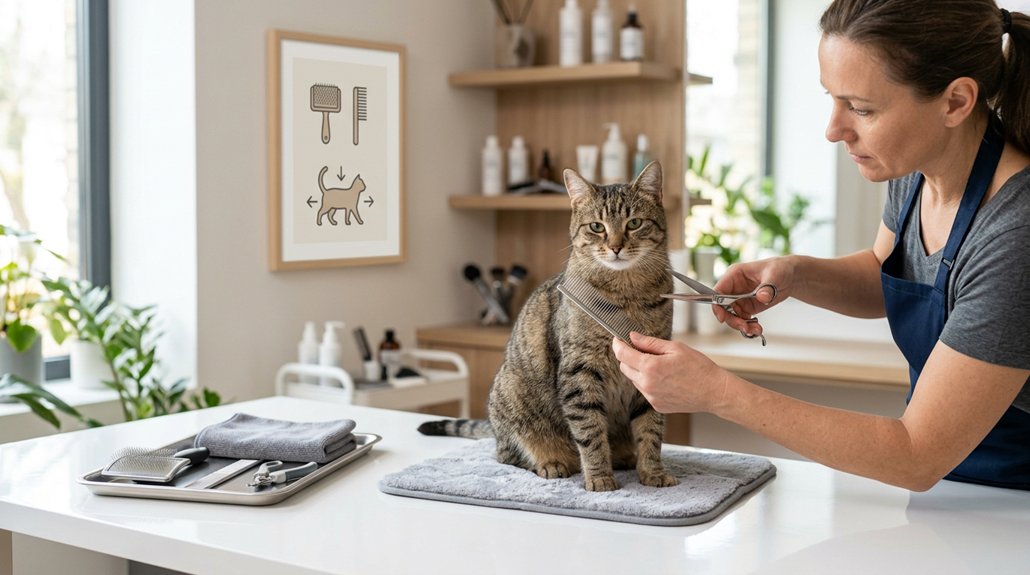
Grooming is a significant element in managing a cat’s shedding. Regular sessions can cut down shedding by up to 90%, essential for reducing fur and allergens. Invest in a double-sided brush, like the Hartz Groomer’s Best combo brush, as it’s effective for different fur types and enhances grooming efficiency. Focus on brushing techniques by maintaining a consistent schedule—once a week for short-haired and several times weekly for long-haired felines—to prevent matting. Occasionally bathe your cat if they tolerate it, to further reduce loose fur and dander. Additionally, equip your home with a quality pet vacuum, such as those from Dyson or Bissell, for efficient fur management. Consistent vacuuming complements grooming tools in maintaining a shed-free environment.
Prevent Furniture Damage With Scratching Post Placement Tips
Managing shedding isn’t the only challenge you face with cats; preventing furniture damage is equally important. Start by placing scratching posts in areas your cat already frequents. This strategy redirects their attention, reducing damage to your beloved furniture. Choose scratch surface types your cat prefers—whether vertical, horizontal, cardboard, or sisal—since individual preferences vary. For ideal post heights, make sure they stand at least 28 inches so your cat can stretch fully. Cats often scratch as part of exercise, so taller posts encourage natural behavior. Position posts near resting spots and feeding areas for accessibility. Consider cat trees with built-in scratching posts; these offer vertical climbing spaces, satisfying instinctual needs and preventing unwanted scratching. Tailoring these elements can profoundly impact your home’s furniture preservation.
Organize Feeding Areas to Minimize Mess
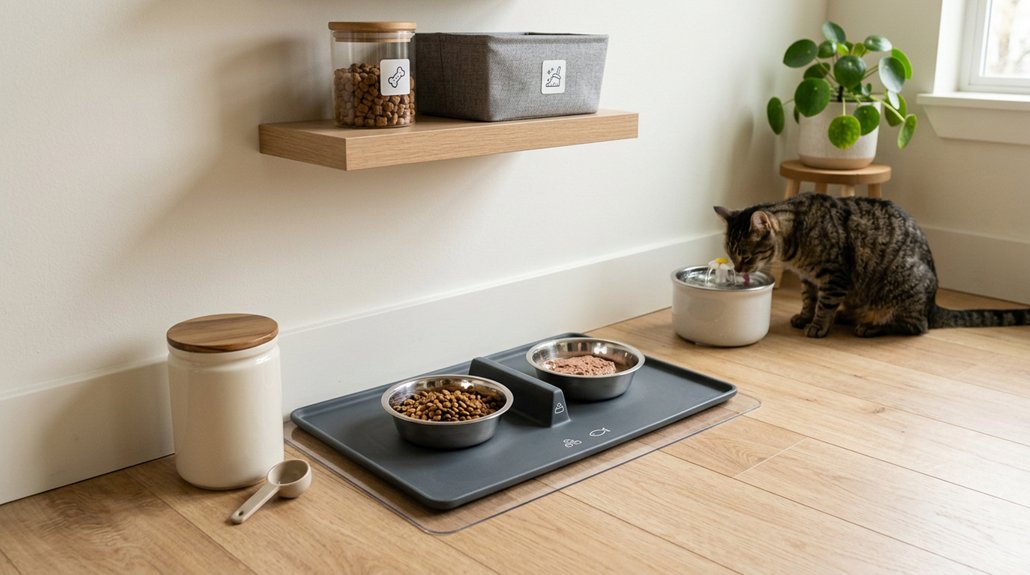
To maintain a clean and organized feeding area for your cats, start by placing silicone or waterproof mats under food and water bowls. These mats catch spills, making cleanup easier and keeping the floor mess-free. For peak food bowl organization, verify that feeding bowls are washed weekly to prevent slime and bacteria buildup, promoting a hygienic eating environment. Strategically design your feeding zone by incorporating a filtered water fountain, which encourages hydration and reduces spills. To further streamline the space, consider a Feeder-Robot. It accurately manages meal portions and schedules feeding times, keeping the area tidy. Finally, store dry kibble in a sealed hopper to maintain freshness, control portions, and minimize scattered food around the feeding zones.
Quick and Efficient Techniques to Clean Fur
Maintaining a tidy and fur-free home goes beyond organizing feeding areas; it also involves strategic attention to cleaning fur from your living environment. Regular grooming techniques are fundamental. Use the FURminator for long-haired breeds and a basic brush for short-haired cats to minimize loose fur and hairballs. Regarding fur removal, a vacuum designed specifically for pet hair, like those from Dyson or Bissell, is invaluable for capturing dander and fur effectively. Consider investing in a robotic vacuum for automated, regular cleaning that reduces fur buildup. Additionally, keep lint rollers accessible for quick fur removal from clothes and surfaces. These strategies guarantee your home stays cleaner with minimal daily effort, addressing the common challenge of managing cat fur.
Keep Cats Off Counters to Maintain Clean Kitchen
Many cat owners find it challenging to keep their furry friends off kitchen counters, but implementing a few practical strategies can effectively help prevent this behavior. One approach is using baby gates or pet barriers to physically restrict access to these areas. To cater to your cat’s climbing instincts, install elevated spaces like cat trees or shelves as counter alternatives. This satisfies their natural desire to perch without invading kitchen zones. Enhance kitchen cleanliness by immediately cleaning up food spills or crumbs that attract cats. For a texture deterrent, apply double-sided tape or foil on countertops, as many cats dislike these surfaces. Consistently reinforce positive cat behavior by rewarding them with treats or praise when they avoid jumping onto the counters.
Shield Your Furniture With Stylish Covers
When living with cats, investing in washable slipcovers is a practical way to protect your furniture from scratches and prevent fur accumulation. Opt for durable, easy-to-clean fabrics like microfiber or old denim, as they can withstand your cat’s claws while resisting stubborn stains. Regular cleaning of these stylish covers not only extends their lifespan but also keeps your home fresh and odor-free.
Protect Against Scratches
Start with durable, washable furniture covers to effectively shield your home from cat scratches. Choose protective materials like slipcovers or throws that not only safeguard your upholstery but also blend seamlessly with your decor. These covers are not just about protection; they make cleanup a breeze.
- Durability: Opt for covers that stand up to daily wear and tear while resisting your cat’s claws.
- Fit and Removal: Guarantee a snug fit to prevent slippage. Look for designs that are easy to remove for quick washing or replacement.
- Aesthetic Appeal: Select stylish options that enhance the room’s look while serving a protective function.
Prevent Fur Accumulation
Though it may seem challenging, controlling cat fur accumulation on your furniture starts with consistent grooming. Employ fur proofing strategies using tools like the Hartz Groomer’s Best combo brush to noticeably reduce shedding. For additional protection, invest in washable slipcovers for sofas and chairs. These covers not only shield furniture from fur but also enhance cleaning efficiency and style. Consider pet-specific covers designed to repel fur; their easy maintenance allows you to replace or clean them regularly. Decorative barriers such as throws or blankets add a stylish layer that complements your home decor while safeguarding your furniture. Finally, regularly use a vacuum equipped with a HEPA filter or pet hair attachment to effectively eliminate embedded fur from upholstery.
Pet-Safe Cleaning Strategies for Cat Owners
An essential aspect of keeping your home clean and safe when living with cats is choosing the right cleaning products. Opt for toxic-free products to protect both cats and humans while enhancing your home’s air quality. Regularly vacuum with a HEPA filter to efficiently capture pet dander and hair, thereby minimizing allergens.
Choose non-toxic cleaning products and use HEPA filters to safeguard your home and enhance air quality.
- Toxic-Free Products: Use non-toxic, fragrance-free cleaning solutions. They’re safe and effective.
- HEPA Filters: Frequent vacuuming with HEPA filters improves indoor air quality.
- Homemade Solutions: An alkaline mix of baking soda and hydrogen peroxide can tackle fresh stains effectively.
Ensure good ventilation during cleaning to further enhance air quality. Store all hazardous substances securely to prevent accidental cat ingestion, and consider incorporating deep cleaning routines to thoroughly manage mess and odors.
Frequently Asked Questions
What Is the 3-3-3 Rule for Cats?
The 3-3-3 rule for cats explains feline adjustment by outlining phases: three days to assess cat behavior in a new environment, three weeks to become comfortable and interactive, and three months to fully settle and reveal true personality.
How to Keep a House Clean When You Have Cats?
To keep your house clean with cats, prioritize litter box maintenance by scooping daily and use clumping litter. Employ fur removal strategies by vacuuming with a HEPA filter weekly and grooming with specialized tools to manage shedding effectively.
What Is the #1 Cause of Death in Cats?
The #1 cause of death in cats is chronic kidney disease (CKD). To combat common cat diseases, focus on feline health tips like regular vet check-ups and preventive care, ensuring early detection and management of potential issues.
What Is “I Love You” in Cat Language?
In cat communication, “I love you” can be seen through feline affection behaviors like slow blinking, purring, head-butting, kneading, and allogrooming. Respond with patience and reciprocity to strengthen your bond with your cat friend.
Conclusion
Living with cats can be as challenging as managing a switchboard in a bustling 1950s office. However, with strategic litter placement, smart odor-neutralizing techniques, and regular grooming, you can maintain a tidy home. Remember, scratching post positioning and stylish furniture covers protect your decor, while organized feeding zones reduce mess. Keep your kitchen spotless by steering cats away from counters, and employ pet-safe cleaning strategies to guarantee both cleanliness and your feline friend’s safety. Practicality reigns supreme!