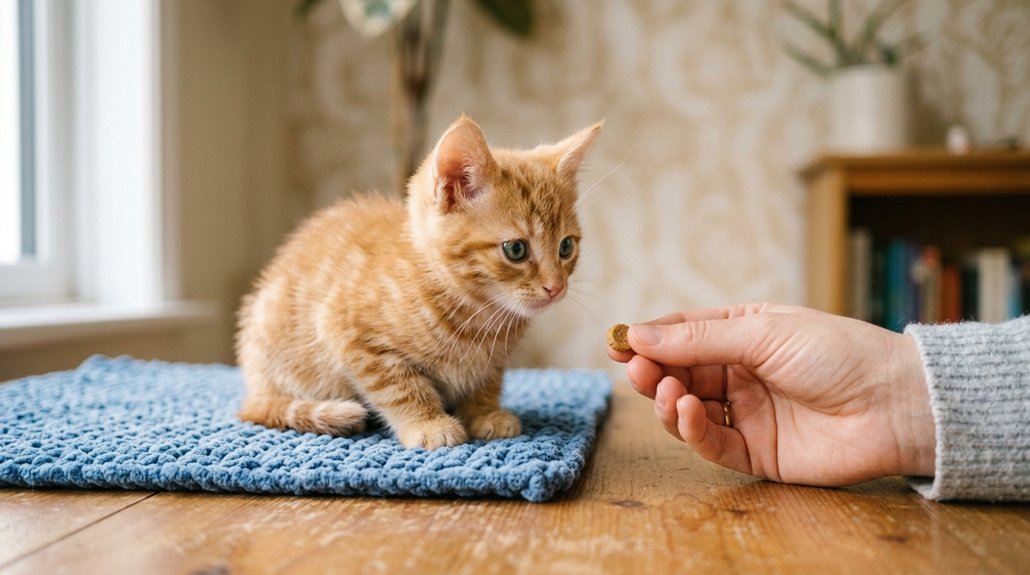
Start kitten training by creating a safe, distraction-free environment. Use positive reinforcement with treats and praise to encourage good habits. Introduce your kitten to a designated training area, and establish a litter box routine immediately after meals or playtime. Engage your kitten with gradual introductions to new people and pets to boost social skills. Redirect unwanted behaviors with interactive toys and scratch posts. Continue to guide your kitten’s development for rich rewards in your relationship.
Key Takeaways
- Establish a designated, distraction-free area for training to enhance the kitten’s focus and learning.
- Use positive reinforcement with treats and praise to encourage repetition of desirable behaviors.
- Begin litter box training immediately by placing the kitten in the box after meals and playtime.
- Introduce the kitten to new people and environments gradually to build confidence and adaptability.
- Redirect unwanted behaviors by providing appropriate alternatives like scratching posts and interactive toys.
Understanding Kitten Training and Its Importance
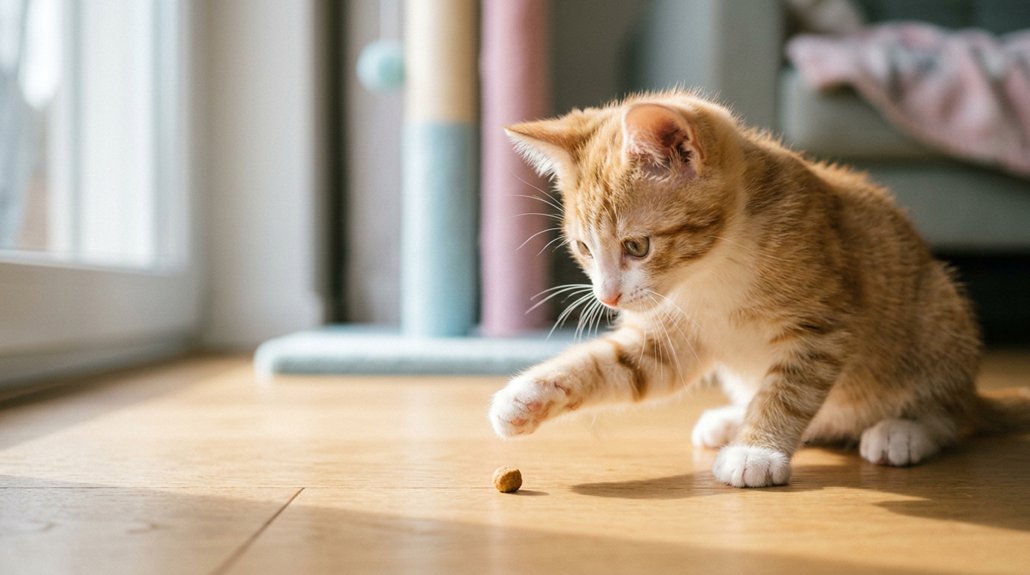
Understanding the intricacies of kitten training is essential for nurturing their developmental journey. You’ll find that training benefits not only your kitten’s behavior, but also strengthens the bond you share. Early training helps establish a foundation of good habits, important for a well-behaved feline. Kittens are surprisingly adept learners, capable of responding to training methods resembling those used with dogs. By reducing problem behaviors, your kitten becomes easier to manage. Positive reinforcement, using treats and praise, encourages them to repeat those desirable actions. It’s critical to begin training when your kitten arrives home, as this is when foundational habits form. Guarantee their environment is quiet and distraction-free for effective learning, allowing focused interaction and fostering a deeper understanding between you and your kitten.
Introduce Your Kitten to Their Training Home
To set the foundation for successful training, it’s essential to create a safe and calming space for your kitten, free of distractions. This environment should include essentials like treats, toys, and possibly a clicker, ensuring your kitten can focus and respond positively. Allowing your kitten to explore their new training area at their own pace will build their confidence and curiosity, promoting a stress-free learning process.
Create a Safe Space
When introducing your kitten to their training home, it’s essential to create a safe space that nurtures their sense of security and curiosity. Begin by establishing a designated area where safe exploration is encouraged. Remove hazards that might cause injuries, allowing your kitten to roam freely without stress. Introduce positive associations within this environment by placing favorite toys and treats strategically to stimulate curiosity and engagement. Observe your kitten closely, conducting a comfort assessment to guarantee they’re adapting well and feeling secure. It’s important to provide a retreat option for moments when your kitten might feel overwhelmed. Creating this peaceful and secure foundation will aid in their focus and confidence, setting the stage for effective training sessions ahead.
Minimize Distractions
In the journey to train your kitten effectively, minimizing distractions is crucial to their ability to learn and retain skills. Begin by choosing a quiet, distraction-free training environment away from loud appliances, other pets, and active household zones. This will help your kitten concentrate and reduce anxiety. Establish a designated training area, like a small room or cozy corner, where they feel safe. Preparing training supplies in advance, such as treats and toys, limits the need for mid-session interruptions. Utilize professional distraction techniques by timing training after meals or playtime when your kitten is naturally more alert. By creating an ideal training environment, you enhance your kitten’s focus and allow them to flourish in their newfound learning space.
Establish a Litter Box Routine
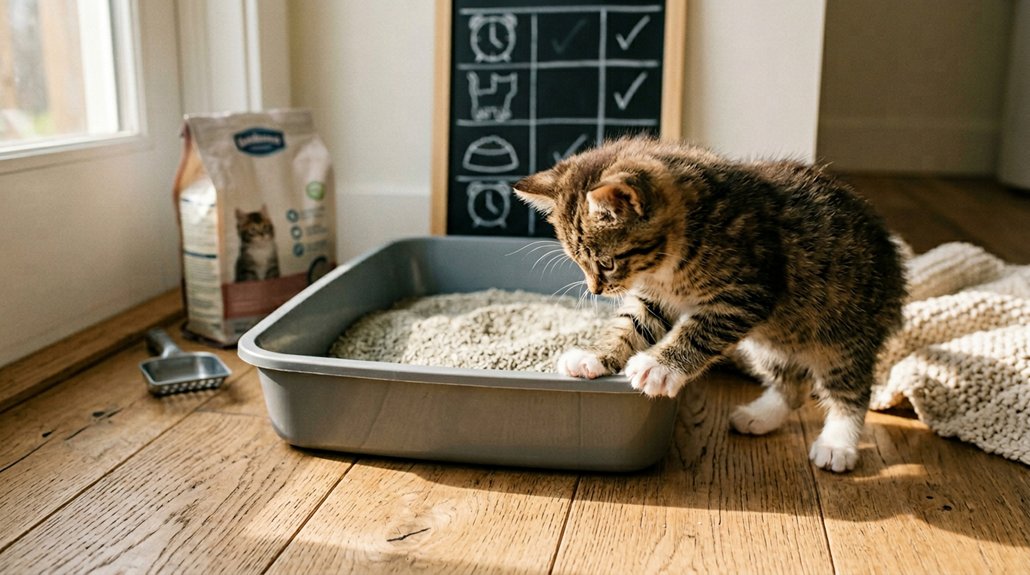
Although bringing a new kitten home is an exciting time, it is crucial to establish a litter box routine immediately to foster healthy habits. Starting litter box training early guarantees your kitten develops consistent practices, benefiting both them and your household. Place your kitten in the litter box after meals, playtime, or naps—these strategic times increase their likelihood of success. Confirm the box is in a quiet, private spot, allowing your kitten to feel secure. Opt for a shallow, uncovered box with 2-3 inches of unscented litter, facilitating natural digging and covering instincts. Clean up accidents swiftly to prevent negative associations. Consistency in this routine is key to imprinting positive behavior and highlighting litter box benefits.
| Aspect | Recommendation | Purpose |
|---|---|---|
| Timing | After meals and naps | Increase success rate |
| Location | Quiet and private | Encourage security |
| Litter Choice | Unscented, shallow box | Promote instinctive use |
Implement Positive Reinforcement Techniques for Training
Engage your kitten’s natural curiosity by implementing positive reinforcement techniques during training. Positive reinforcement is key to success, as it helps your kitten associate good behavior with delightful outcomes. Use treat variations as training rewards, balancing between low-calorie options like clickers or verbal praise to maintain your kitten’s health.
Positive reinforcement fosters a kitten’s good behavior by associating it with rewarding outcomes using treats and praise.
- Set goals: Establish clear, achievable objectives and reward your kitten immediately when it meets them. This strengthens the behavior-reward link.
- Consistency: Guarantee all family members use uniform training rewards, so your kitten receives consistent behavioral messages.
- Incorporate play: Making training sessions fun with interactive toys or games keeps your kitten engaged, turning learning into a positive experience.
Combining scientific techniques with compassion leads to a well-behaved, content kitten.
Help Your Kitten Make New Friends
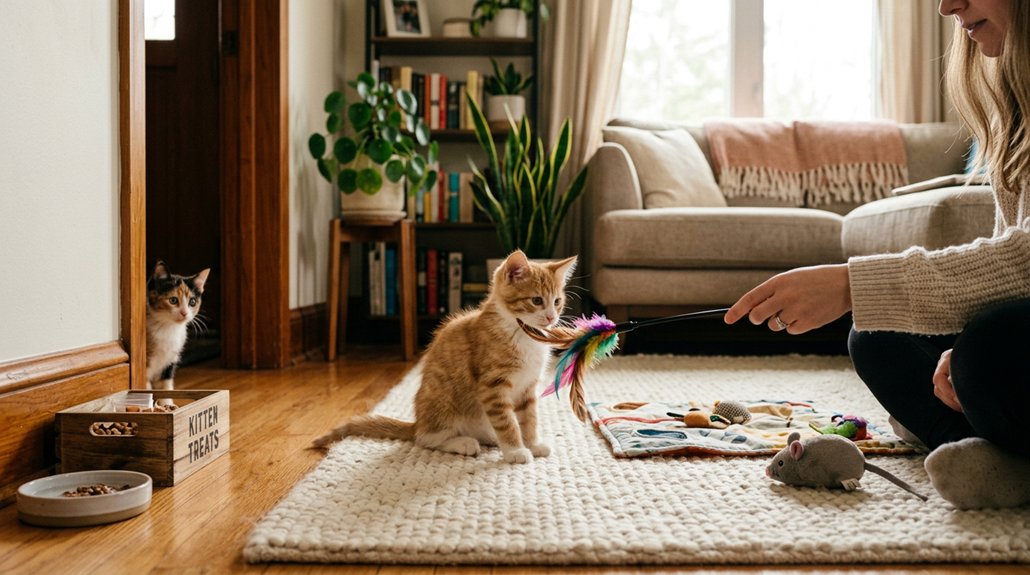
When you’re helping your kitten make new friends, it’s essential to foster positive interactions by introducing them to various people and friendly animals early on. Make use of treats and toys to encourage calm behavior, and always supervise playtime to guarantee safety and comfort. Gradual exposure to new environments and sounds will build their confidence, while consistent praise and snacks for calm behavior will improve their enthusiasm to engage with others.
Encouraging Positive Interactions
If you want your kitten to grow into a well-adjusted and sociable cat, it’s crucial to encourage positive interactions from an early age. Early socialization techniques involve gently introducing your kitten to various people and environments. This helps build their confidence and comfort in unfamiliar situations. Use reward systems to promote positive associations—offer treats or toys during interactions. These satisfy their natural curiosity and boost learning.
- Supervise and guide interactions with children and other pets to confirm they’re handled gently, fostering a sense of security.
- Gradually increase their exposure to different animals, monitoring their responses to promote calm behavior.
- Regularly invite friends over to help your kitten become accustomed to visitors, lessening anxiety and assuring future positive experiences.
Engage with patience and compassion, knowing you’re shaping a well-balanced feline companion.
Safe Playtime Activities
Play is an essential component of a kitten’s development, serving both as a physical exercise and a critical means of learning social skills. To facilitate safe playtime activities, engage your kitten in interactive play using feather wands and balls. These safe toys not only stimulate their hunting instincts but also encourage social play. Arranging playdates with other friendly, vaccinated pets can help your kitten build confidence and learn appropriate interactions. During these sessions, treat-based games can foster positive associations, reinforcing calm, friendly behaviors. Always supervise playtime with children and other animals to guarantee experiences remain positive and safe, minimizing stress. Providing a safe retreat encourages exploration while safeguarding your kitten’s well-being, laying a foundation for balanced social development.
Gradual Introduction Techniques
Although introducing your kitten to new friends may feel intimidating, using gradual introduction techniques can greatly ease the shift. The socialization benefits are immense when you allow your kitten to approach new companions at their own pace. Gradual exposure is key to reducing anxiety and enhancing their confidence. Here’s how to help them make new friends:
- Gentle Introductions: Begin with well-behaved, vaccinated animals and individuals, ensuring positive associations form.
- Observation and Reward: Closely monitor interactions, rewarding calm behavior with treats and playtime.
- Varied Environments: Gradually expose your kitten to different settings, sounds, and situations to boost adaptability.
Redirect and Manage Your Kitten’s Behaviors
When your kitten is climbing your curtains yet again, it’s essential to understand that this behavior stems from their natural instincts that need redirection. Provide them with appropriate outlets, such as scratching posts, to satisfy their urge without damaging your furniture. Engaging in behavior redirection by introducing interactive toys or laser pointers can channel your kitten’s energy effectively, ensuring they’re engaged in constructive play. Consistently reward desired behaviors with praise or treats, reinforcing positive habits scientifically proven to work. Implement a clear set of house rules, and address undesirable actions immediately for clarity. Gently monitor their actions and intervene, offering positive reinforcement when they opt for suitable alternatives. With patience and understanding, you’re encouraging a harmonious living environment.
Frequently Asked Questions
What Is the 3-3-3 Rule for Kittens?
The 3-3-3 rule guides you on a kitten’s behavior change. Initially, they need three days to adjust, three weeks to acclimate, and three months to settle. Use socialization tips to support this compassionate and gradual process.
What Is “I Love You” in Cat Language?
“I love you” in cat language involves cat communication like purring, slow blinks, and tail language. When your kitten shows these signs of feline affection, it’s expressing love and trust, seeking comfort and companionship with you.
How Hard Is It Training a Kitten for Beginners?
You’ve picked a seemingly easy task, right? Training a kitten is surprisingly manageable. With beginner tips, focus on short sessions and use positive reinforcement. It’s scientific, but you’ll need patience. Kittens’ curiosity actually makes things smoother than expected.
Where Should a Kitten Sleep on the First Night?
Your kitten’s ideal sleeping spot is a cozy, quiet area with a small bed or blanket. First night essentials include fresh water, a nearby litter box, and a soft blanket from their previous environment for comfort.
Conclusion
Guiding your kitten’s early days is a gentle dance of patience and encouragement. By creating a welcoming environment and embracing regular routines, you’re laying the foundation for harmonious companionship. Positive reinforcement becomes your secret handshake, fostering trust and understanding. As you help your kitten make new friendships, remember, it’s all about gentle redirection when those exploratory paws stray. It’s a journey of nurturing growth and adaptation, where every small step is a leap towards a lifetime of shared joy.