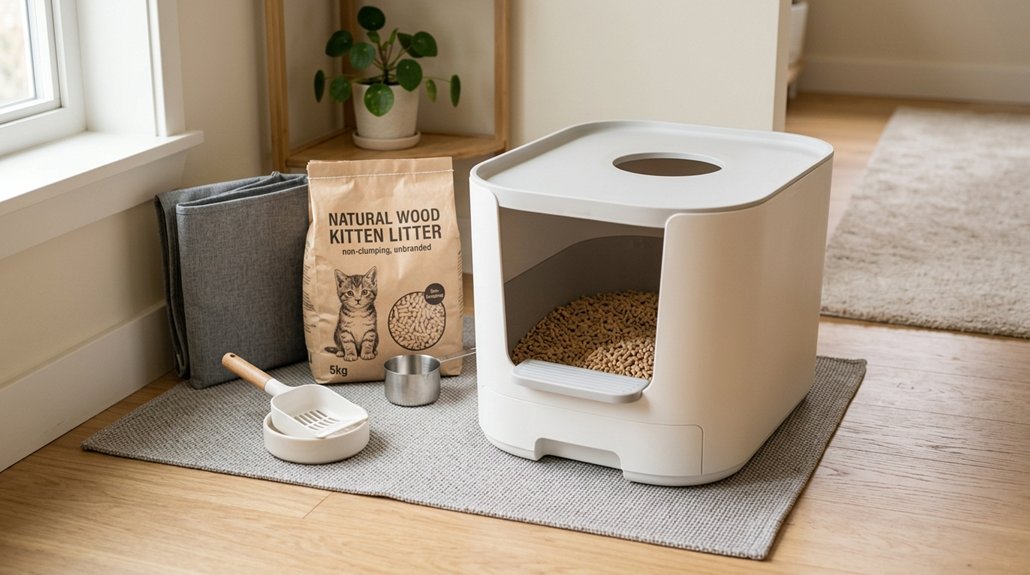
To set up a litter box for your kitten, choose a shallow, open-top box around 14–16 inches to start. Use natural, unscented litter, avoiding clumping types for kittens under 3 months. Place the box in a quiet, accessible area away from food and water. Encourage use with positive reinforcement and maintain cleanliness by scooping daily. By managing these aspects, you’ll create an inviting space for your kitten. Explore further to guarantee successful litter box training.
Key Takeaways
- Choose a shallow, open-top litter box with a height of no more than 3 inches for easy kitten access.
- Opt for natural, unscented litter made from corn, wheat, or recycled paper to ensure safety.
- Place the litter box in a quiet, low-traffic area away from food and water to minimize disturbances.
- Begin box training around 3 weeks, using positive reinforcement to encourage consistent use.
- Scoop daily and wash the box regularly to maintain cleanliness and control odors.
Choosing the Right Litter Box for Your Kitten
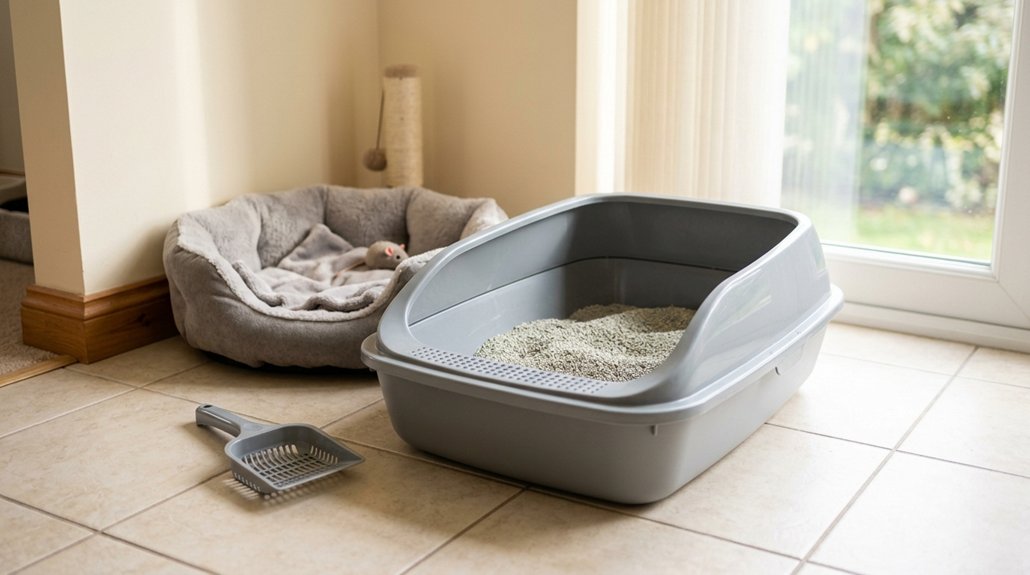
When setting up a litter box for your kitten, it is crucial to select an open-top, shallow model with a maximum height of 3 inches to guarantee easy access for your young furry friend. Initially, consider a compact size of 14–16 inches. This allows ample movement without overwhelming your kitten, aligning with typical kitten preferences. Cardboard trays serve as an excellent starting option due to their low entry barriers. As your kitten grows, shifting to semi-covered litter box types with high backs and low fronts is advisable. These models effectively minimize litter scatter while maintaining ease of access. To accommodate growth, regularly monitor space, upgrading to larger options between 22–26 inches for unrestrictive turning. Pay attention to your kitten’s preferences throughout these adjustments.
Selecting Kitten-Safe Litter Choices
When selecting litter for your kitten, prioritize natural, pellet-based options that are free from fragrances and harsh chemicals to guarantee safety for their sensitive systems. Avoid using clumping litter for kittens under 2-3 months, as it can be a choking hazard if ingested. By choosing litter without additives or irritants, you can prevent adverse reactions and create a comfortable environment for your kitten’s exploration.
Opt for Natural Options
Selecting the appropriate litter for your kitten is essential, as natural, pellet-based options can reduce the risk of ingestion—a common occurrence for kittens exploring their surroundings with their mouths. Opt for litters crafted from natural materials such as corn, wheat, or recycled paper. These eco-friendly options are not only safe but also biodegradable, aligning well with sustainable practices. Avoid clumping litters until your kitten is at least 2-3 months old, as their curious ingestion behaviors can lead to health risks with these types. Unscented litters are preferable to protect your kitten’s sensitive nose from irritants. Additionally, observe your kitten’s response to different textures, as a preference for fine-grained options may increase their comfort and encourage consistent litter box use.
Avoid Harmful Additives
Having chosen a natural litter option, it’s equally important to carefully examine what your kitten’s litter doesn’t contain. Litter toxicity awareness is vital, especially for kittens exploring with their mouths. Opt for safe litter materials like natural, pellet-based litters that minimize ingestion risks. Avoid clumping litters if your kitten is under 2-3 months old, as they can be hazardous if ingested. Steer clear of scented litters with potent fragrances, which might irritate your kitten’s sensitive nose. Additionally, make sure the chosen litter is free from harsh chemicals to prevent health risks during critical developmental stages. Stay vigilant by monitoring your kitten’s reactions and be prepared to switch brands if they exhibit signs of aversion or distress.
Optimal Placement of the Litter Box
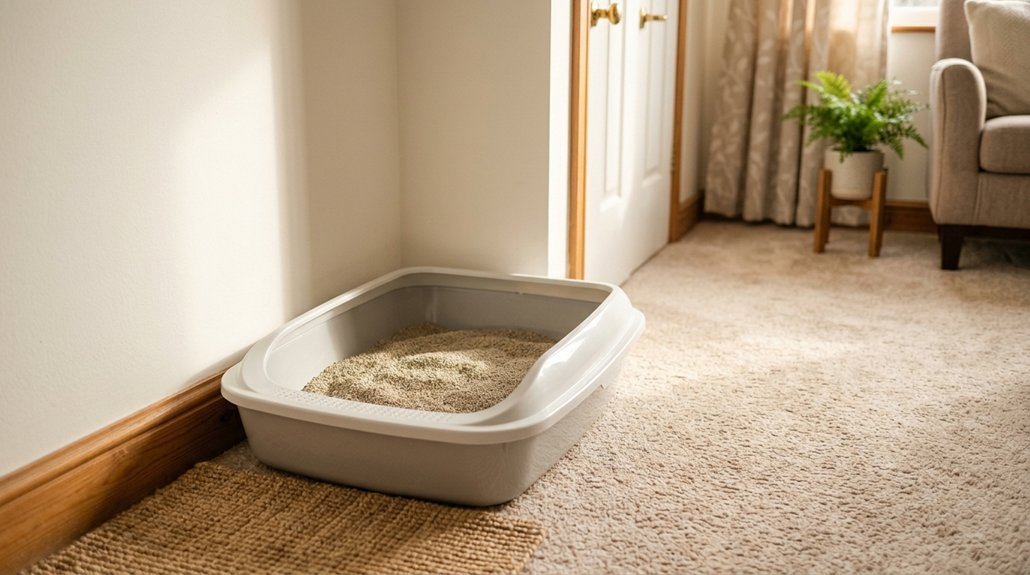
Finding the ideal placement for your kitten’s litter box is essential to guarantee they adapt comfortably. The right litter box location plays a vital role in stress reduction and fosters seamless use. Prioritize quiet, low-traffic areas to minimize disturbances, ensuring your kitten feels secure. Additionally, avoid positioning it near food and water dishes, as proximity can discourage use. In multi-level homes, provide at least one litter box per floor, maintaining easy access throughout the house. Make sure the box is accessible 24/7, allowing consistent location training. Position the litter box away from noisy appliances and clutter to establish a peaceful environment, promoting efficient use. By attending to these details, you’ll create a welcoming space for your kitten.
Help Your Kitten Use the Litter Box
To successfully guide your kitten to use the litter box, begin introducing it when the kitten is approximately 3 weeks old. At this age, kitten habits start forming, and it’s vital to stimulate their usage consistently. Opt for a natural, pellet-based, kitten-safe litter, avoiding clumping litter until your kitten is 2-3 months old for their safety. Make sure the litter box is in a clean, quiet location, away from food and water, which encourages positive behavioral cues.
Use positive reinforcement by praising your kitten’s success, and promptly attend to any accidents to prevent scent associations in undesired areas. Monitor your kitten’s habits closely; if accidents occur frequently, consider relocating the box or experimenting with different litter types to optimize comfort and success.
Keeping the Litter Box Fresh and Clean
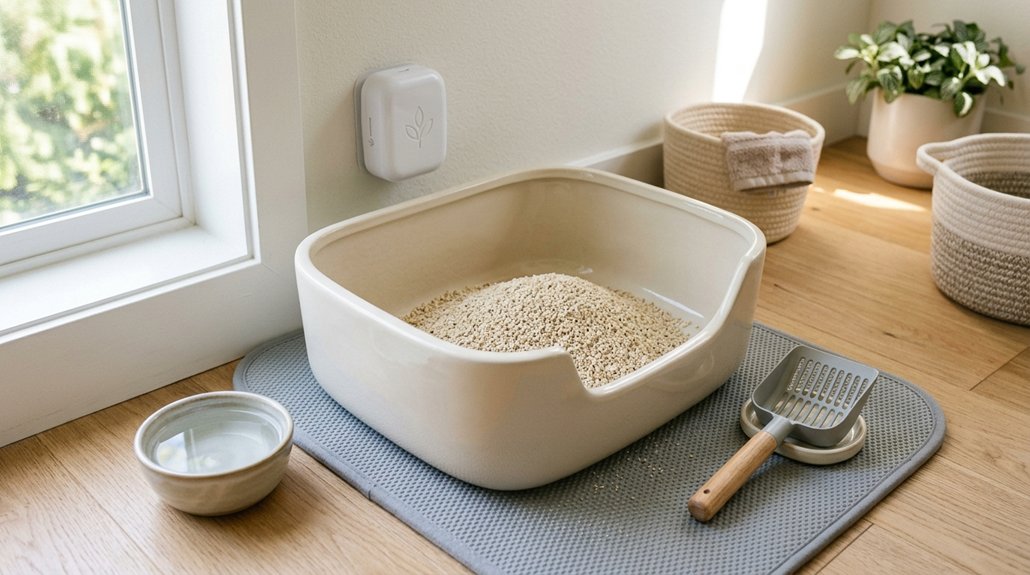
To guarantee your kitten’s litter box remains fresh and inviting, establish a routine of daily scooping to effectively manage waste and control odors. In multi-cat homes, increase the frequency of scooping to accommodate higher usage and minimize any unpleasant smells that might discourage use. For enhanced odor management, consider using a litter box deodorizer, and remember to replace clumping litter every 2-3 weeks or change non-clumping litter twice weekly during cleaning sessions with mild soap to maintain a healthy environment.
Daily Scooping Routine
A clean litter box is vital for maintaining a hygienic and inviting environment for your kitten. Daily scooping is a significant step in achieving this. Use precise scooping techniques, such as consistently removing waste with a suitable scoop, to prevent odor buildup. Regular litter monitoring guarantees your kitten remains comfortable and willing to use the box.
Consider the following steps to enhance cleanliness:
- Scoop at least once daily: Regular removal of waste stops unpleasant smells from developing.
- Multiple daily scoops for multiple cats: Guarantee each cat has a clean box, reducing territorial disputes and encouraging use.
- Change litter regularly: Replace clumping litter every 2-3 weeks; non-clumping, twice a week.
- Add fresh litter between changes: Maintain ideal conditions and encourage usage.
Neglect can lead to behavioral issues.
Odor Control Strategies
Ensuring your kitten’s litter box remains fresh and clean involves effective odor control strategies. Start with frequent cleaning by scooping the litter box daily to achieve consistent odor elimination. Full litter replacements every 2-3 weeks for clumping types or weekly for non-clumping litter curb waste buildup, essential for odor management. Implement odor neutralizers or unscented litter to balance aroma without overwhelming sensitive noses. During litter changes, wash the litter box with mild dish soap to eradicate bacteria and remaining smells, steering clear of harsh chemicals that may deter your cat. A litter mat or puppy pad below the box captures spills, easing cleanup and preserving freshness. Efficient waste management and considered material choices form a solid foundation for maintaining a welcoming environment.
Ensuring Successful Litter Box Training
Launching your kitten’s litter box training journey requires careful consideration of their developmental needs. Understanding kitten behavior is essential as you establish a positive litter box association early on. Start by selecting a low-sided, open litter box no more than 3 inches high to accommodate young kittens. Opt for natural, kitten-safe pellet-based litter to minimize health risks. Follow these steps to foster successful training:
- Consistency: Position the litter box in a clean, quiet corner to help kittens associate the space with doing their business.
- Encouragement: Use positive reinforcement by praising litter box use, enhancing the positive association.
- Prompt Cleanliness: Clean accidents immediately to prevent negative associations.
- Patience and Persistence: Some kittens take longer than others; patience is vital for success.
Ensuring these elements are in place will bolster your kitten’s litter box training experience.
Frequently Asked Questions
What Is the 3-3-3 Rule for Kittens?
The 3-3-3 rule outlines a kitten’s three-day, three-week, and three-month adaptation phases. In these periods, focus on understanding litter box habits and effective kitten training to facilitate a smoother adjustment into their new home environment.
What Is the Best Cat Litter for Diabetic Cats?
Maneuvering the litter landscape for diabetic cats is akin to finding the perfect fit for a twice-folded puzzle. Choose brands like Dr. Elsey’s that offer non-clumping, dust-free varieties. Prioritize diligent litter box maintenance to prevent infections.
At What Age Does a Kitten Start to Use a Litter Box?
Kittens typically start using the litter box at around 3 weeks old. Encourage proper litter box habits with positive reinforcement. Training tips include consistent placement and gentle redirection to guarantee successful usage as they develop more coordination.
How Do I Stop My Kitten From Peeing and Pooping in the House?
Monitor your kitten’s behavior closely for litter box training, offering positive reinforcement when used. Correct behavioral issues by cleaning accidents quickly with enzymatic cleaners and maintaining a consistent routine. Confirm comfort with an appropriate litter box setup.
Conclusion
Ultimately, setting up a litter box for your kitten might seem coincidental to ensuring their happiness, but it’s fundamentally linked. By choosing the right box and litter, placing it efficiently, and maintaining cleanliness, you establish a crucial routine. It’s not merely about convenience; it’s about fostering a healthy environment. With thoughtful training, your kitten will naturally adapt, reinforcing your connection. Remember, every detail in this setup directly influences their comfort and well-being, harmonizing your home life beautifully.