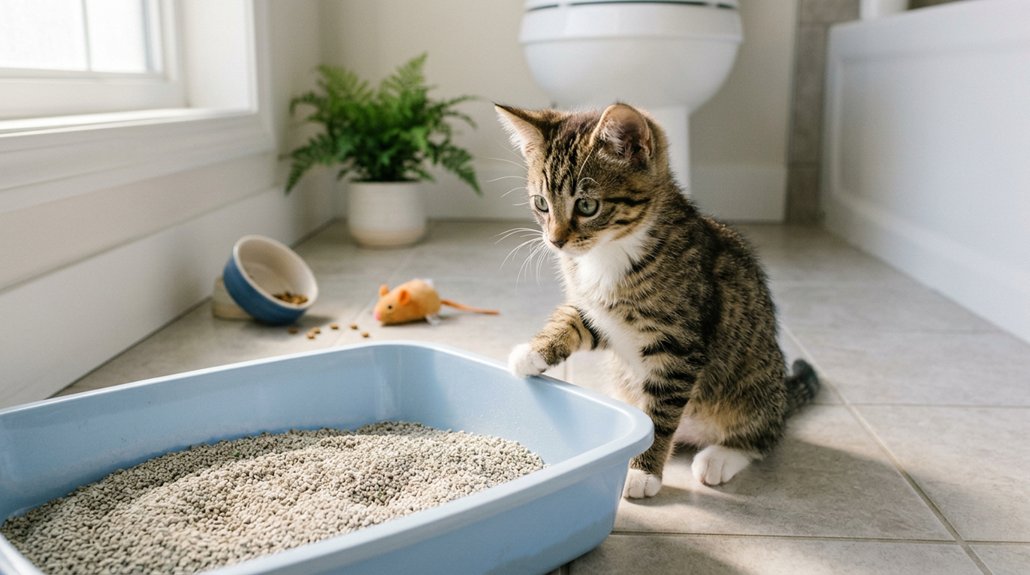
If your kitten won’t use the litter box, start by checking for accessibility and cleanliness issues. Kittens often prefer unscented, clumping litter. Confirm health concerns like urinary tract infections are ruled out by visiting a vet. Strategically place the box in quiet areas and consider having one box per cat plus an extra to manage territorial disputes. Positive reinforcement can effectively shape litter habits. Discover more solutions and expert strategies tailored to your needs.
Key Takeaways
- Ensure the litter box is accessible and placed in a quiet, low-traffic area.
- Clean the litter box daily using unscented, clumping litter to maintain hygiene.
- Provide one litter box per cat and an extra in multi-cat homes to prevent territorial conflicts.
- Use positive reinforcement with treats and praise to encourage consistent litter box use.
- Consult a veterinarian to rule out medical issues if the kitten avoids the litter box.
Common Reasons and Solutions for Litter Box Avoidance
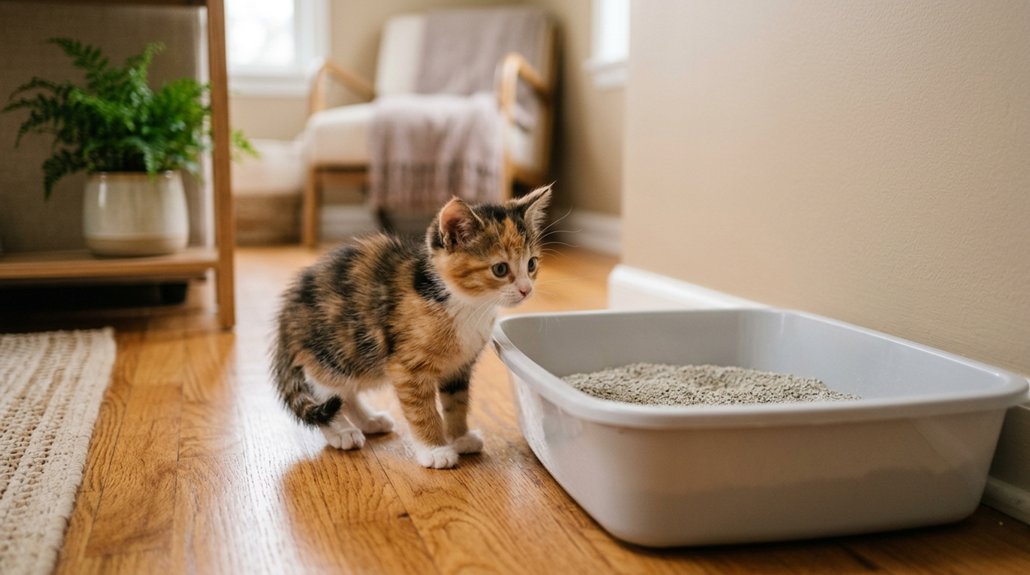
When your kitten won’t use the litter box, identifying the underlying causes is crucial to finding effective solutions. Accessibility issues often arise from improper litter box location or household dynamics, demanding placement in quiet, private areas. Variations in litter box styles cater to kitten preferences, potentially improving usage. While clumping, unscented litter options tend to be favored, maintain cleanliness and comfort to prevent aversion. In multi-cat environments, territorial disputes can hamper access, so provide one box per cat plus an extra. Reinforce positive associations through treats and praise after successful use, promoting consistent habits. If your kitten’s behavior persists despite addressing these preferences and environmental factors, consulting with a veterinarian may uncover additional complications, necessitating further professional intervention.
Checking for Health Concerns With Your Vet
When your kitten avoids the litter box, it’s essential to schedule a veterinary consultation to rule out medical issues like urinary tract infections, kidney disease, or diabetes that alter elimination behavior. Be vigilant for signs necessitating immediate care, such as straining to urinate or blood in the urine, as these could indicate serious health problems. Discuss potential behavioral health aspects with your vet to guarantee the problem isn’t solely medical, and explore spaying or neutering if marking is a concern.
Identifying Medical Causes
Even mild reluctance from your kitten to use the litter box should prompt immediate consideration of medical causes. Urinary health plays an essential role; conditions like urinary tract infections and kidney issues often lead to discomfort and subsequent litter box aversion. Such discomfort can exacerbate behavioral issues, triggering inappropriate elimination behaviors. A thorough veterinary examination will rule out any medical concerns such as diabetes, bladder stones, or other conditions impacting your kitten’s health.
During the vet visit, it’s important to discuss any observed symptoms like straining, excessive licking, or blood in the urine. Early intervention guarantees effective treatment, alleviating both physical discomfort and reducing stress-induced aversions. Regular check-ups are crucial in maintaining your kitten’s health, catching potential issues early, and ensuring their continued wellbeing.
Signs Requiring Immediate Attention
Straining to urinate, excessive licking of the genital area, or blood in the urine are immediate red flags that warrant a visit to the veterinarian. These symptoms could indicate urinary issues like a urinary tract infection or more severe conditions. Sudden behavioral changes in litter box habits can also suggest underlying health problems. If your kitten starts eliminating outside the litter box or shows pain due to declawing, seek urgent veterinary assessment. Here are critical signs needing immediate attention:
- Frequent, unsuccessful box attempts – Possible infection.
- Blood in urine – Urinary tract concern.
- Genital area over-grooming – Pain or irritation.
- Sudden litter area avoidance – Pain or negative associations.
Prompt intervention can guarantee effective treatment and maintain your kitten’s health.
Creating an Ideal Litter Box Environment
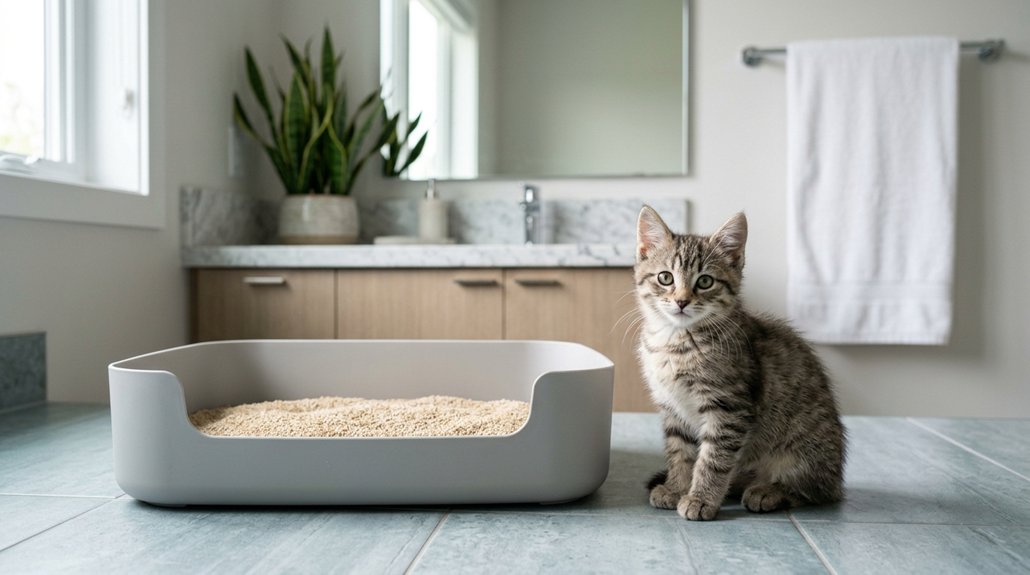
To guarantee your kitten readily adopts good litter habits, it’s important to create an ideal litter box environment tailored to their needs. Start with strategic litter box placement; position the box in a quiet, low-traffic area to help your kitten feel secure and encourage consistent usage. Confirm the litter box size is appropriate, allowing the kitten ample room to turn around and dig comfortably; spatial constraints can deter use. Daily cleaning is vital to maintain hygiene and avert behavior aversion from odors or soiled litter. In multi-cat households, provide one litter box per cat plus an additional one to mitigate territorial disputes. These measures foster a balanced environment where kittens feel safe and more inclined to use their litter box correctly.
Best Litter Choices for Your Kitten
When selecting the ideal litter for your kitten, consider unscented, clumping options that simulate fine sand for ease of digging and waste coverage, thereby improving litter box compliance. Experimenting with various formulations—such as clumping clay, plant-based options, and lightweight versions—can help you determine the best texture and scent your kitten prefers. To facilitate a smooth change and avoid litter aversion, introduce any new litter gradually by mixing it with the current type they are accustomed to.
Comparing Litter Types
Choosing the right litter for your kitten involves evaluating various types, each offering specific benefits and drawbacks. Consider these options:
- Clumping Clay Litter: With a preferred litter texture for felines, this option is highly absorbent, forming solid clumps that simplify cleaning tasks. It’s especially effective in odor control due to its structure.
- Non-Clumping Clay Litter: While more affordable and common amongst shelter-raised kittens, it demands more frequent changes due to inferior odor control capabilities.
- Natural Litters: Environmentally sustainable, these are crafted from biodegradable materials like corn or wheat. Absorbency and odor control can differ considerably.
- Pine Litter: Known for efficient odor neutralization and gentleness on paws, pine litter is crafted from lumber waste. Its notable softness suits kittens well, creating a nurturing environment.
Kitten-Friendly Litter Options
Maneuvering the world of kitten-friendly litter options necessitates understanding your feline’s unique preferences and needs. Begin by trialing unscented, clumping litter with a fine texture. This choice closely mimics sand, promoting natural digging and covering instincts. Eco friendly options, such as biodegradable plant-based or pine litters, not only cater to texture preferences but also prove gentler on sensitive paws while enhancing odor control. Consider lightweight litters for kittens over three months old, ensuring they can comfortably dig and bury their elimination. Conduct side-by-side tests of different types to ascertain your kitten’s proclivities. Employ a gradual shift strategy, mixing existing litter with new options over time, to avoid frightening aversions and encourage consistent litter box use.
Training Techniques for Successful Litter Box Use
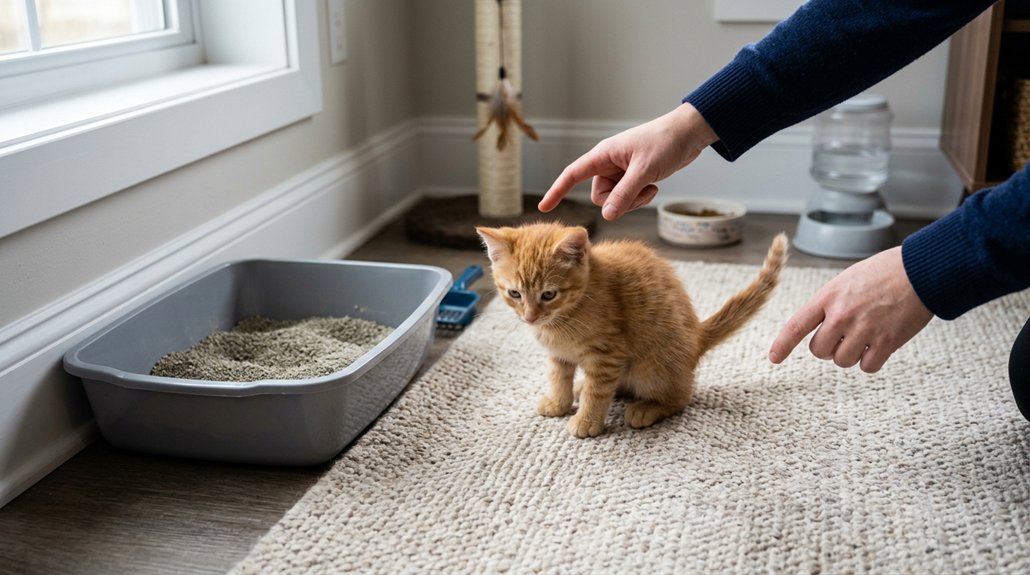
Effective training techniques are essential for ensuring your kitten consistently uses the litter box. Proper litter box placement can greatly influence compliance. Position it in a quiet, accessible area where your kitten feels safe. After meals or naps, place your kitten in the litter box to reinforce habitual usage. Positive reinforcement strategies are vital; immediately reward successful litter box use with treats or verbal praise to foster a favorable association.
Ensure your kitten’s litter box success with strategic placement and timely positive reinforcement.
- Litter Box Placement: Choose tranquil, accessible locations.
- Timing: Encourage use after meals or naps.
- Positive Reinforcement: Reward immediately with treats or praise.
- Litter Variety: Experiment with unscented, clumping litter to ascertain preference.
Ensure cleanliness; a spotless environment is paramount. Multiple litter boxes in different locations can mitigate territorial disputes in multi-cat households, enhancing access and usage.
How to Manage Stress and Multi-Pet Interactions
While stress and multi-pet interactions can complicate litter box training, understanding and managing these dynamics is crucial for your kitten’s well-being. First, assess household dynamics to identify stressors, such as conflicts between pets. This understanding aids in implementing effective stress reduction strategies. Utilize pheromone diffusers like Feliway to create a soothing atmosphere that can greatly ease tensions in multi-pet households. An additional litter box per cat, plus one extra, should be provided to prevent territorial disputes. Monitor pet interactions closely and intervene when signs of intimidation or aggression arise. Finally, make sure litter boxes are placed in quiet, low-traffic areas to offer your kitten a sense of privacy. This combination of strategies promotes healthier pet interactions and encourages regular litter box use.
Handling Accidents: Steps to Reinforce Positive Behavior
Addressing accidents in litter box training requires a swift and strategic approach rooted in expertise and understanding. A methodical plan guarantees your kitten learns effectively. Here’s what you need to do:
- Accident Cleanup: Use enzyme-based cleaners immediately after an incident. This removes odor traces that might attract your kitten back to the spot.
- Reinforced Litter Habits: After meals or naps, place your kitten in the litter box. This consistent action helps establish a proper association.
- Positive Reinforcement: Reward successes with treats and praise. Positive reinforcement is essential to encouraging litter box usage.
- Environmental Modifications: Provide multiple litter boxes in varying locations and styles. This caters to preferences and reduces any territorial disputes.
Monitor closely for continuous improvement, avoiding punitive measures to prevent negative litter box associations.
When Should You Seek Professional Help?
How do you know when it’s time to seek professional help for your kitten’s litter box issues? If your kitten consistently abandons their litter box habits for more than a week, consulting a veterinarian is imperative. This helps rule out medical concerns like urinary tract infections. Look for behavioral triggers: straining to urinate, excessive grooming, or blood in the urine necessitate immediate attention. Persistent refusal, despite clean and accessible boxes, signals potential behavioral issues.
Evaluate inter-cat conflict in multi-cat households—it may affect litter box usage. If you’ve tried all home training strategies without success, professional guidance can offer tailored solutions. Here’s a quick reference:
| Signs to Monitor | Recommended Action |
|---|---|
| Consistent avoidance | Veterinary consultation |
| Discomfort or distress signs | Immediate veterinary aid |
| Multi-cat dynamics impact | Stress-related assessment |
Frequently Asked Questions
What to Do if a Kitten Refuses to Use a Litter Box?
If your kitten refuses, investigate litter box training techniques and observe for behavioral reasons. Consider litter type, box location, or stressors. Consistent cleaning and possible medical assessment are essential steps in addressing this issue effectively.
What Is the 3-3-3 Rule for Kittens?
The 3-3-3 rule outlines kitten settling phases to manage behavioral expectations: initial three days for acclimatization, three weeks for exploration, and three months for full integration, ensuring a supportive environment to foster ideal adjustment.
What Is the Best Cat Litter for Diabetic Cats?
You should choose highly absorbent clumping options like unscented, natural litters for diabetic cats. These litters, often made from plant-based materials, limit irritation and enhance monitoring, essential for managing health and preventing urinary infections effectively.
Why Is My Kitten Pooping on the Floor All of a Sudden?
Coincidentally, sudden changes disrupt your kitten’s litter box habits. Consider stress from new surroundings, inadequate box size, unsanitary conditions, or medical issues. Consult a vet if the behavior persists. Guarantee a clean, accessible, and comfortable litter box setup.
Conclusion
Tackling litter box challenges can seem intimidating, but with a proactive approach, you can turn it into a manageable task. Have you considered how a simple change in litter type or box placement might transform your kitten’s behavior? Identify potential health issues, optimize their environment, and employ thoughtful training methods. Don’t forget, professional guidance is always available if needed. With patience and strategic interventions, you’ll foster a harmonious and clean space for both you and your feline friend.