Ever feel like picking the right dog for your family is harder than picking a name for a new baby?
You’ve got so many dog breeds to choose from, and not every one fits a home with little ones running around. Excitable dogs can spook a toddler, and big, bouncy pups might knock a small kid flat without even meaning to.
Here’s the good news. There are plenty of family dogs out there with the patience and gentle spirit that young kids need.
I’ll walk you through the traits that actually matter, plus the breeds that tend to fit best with families like yours. Grab a cup of coffee, and let’s go through it together.
Key Takeaways
- Match your family’s lifestyle, living space, and activity level to a dog’s temperament, size, trainability, and energy needs for success.
- Labrador Retrievers and Golden Retrievers rank as top family choices because they show friendliness, patience, and eagerness to please children.
- Small breeds like Cavalier King Charles Spaniels weigh 13 to 18 pounds and won’t accidentally knock over toddlers during playtime.
- Bichon Frises have hypoallergenic coats and live 12 to 15 years, making them suitable for families concerned about dog allergies.
- Beagles weigh 20 to 30 pounds, stay loyal and patient with children, and need consistent exercise to prevent behavioral issues.
Important Traits for Choosing the Right Family Dogs
Picking a dog for your family takes real thought. It’s not about falling for the cutest face at the shelter.
You need to match your household’s lifestyle with a dog’s temperament, size, trainability, and energy level. This matters even more for families with kids of different ages living under one roof.
What Temperament Is Best for Families with Young Children?
Your search for the perfect family dog starts with temperament. You need a dog that’s happy, gentle, and patient with your little ones. An outgoing, friendly, and affectionate personality works best for families with young children.
Dogs like this bond quickly with everyone in the house and show real interest in playing safely. The American Kennel Club recognizes that these traits matter most when kids are in the home.
Keep in mind that breed shapes temperament, but it doesn’t set it in stone. One Labrador Retriever might be calm and loving while another acts more excitable. That’s why meeting your potential companion matters so much before you bring them home.
- Stays calm when startled or handled a little roughly
- Shows patience during unpredictable, bumpy play
- Bonds easily with kids of different ages
- Recovers quickly after a stressful moment
Excitable dogs can scare small kids. Large, energetic dogs may even knock a child over while jumping, without meaning any harm at all. You want calm, patient dogs in homes with infants or toddlers.
About 4.5 million dog bites happen in the US every year, and children under 12 make up roughly half of the victims. According to 2026 emergency department statistics highlighted by the AVMA and CDC, most of these incidents happen at home with a dog the child already knows.
That stat matters because it shows why a stable, patient temperament, plus close supervision during playtime, beats picking a dog based on looks alone. Calm dogs stay relaxed during play and respond gently to a child’s sudden movements.
Many child-friendly dogs are mixed breeds waiting at rescue centers and organizations like the Humane Society of the United States. Don’t rule out rescue dogs, and check local Facebook groups too. Plenty of these dogs have already proven they’re gentle around kids.
Your family’s energy level and living space matter too. Active families with yards might love a Golden Retriever and its higher exercise needs, while apartment living suits smaller breeds like a Bichon Frise or Cavalier King Charles Spaniel much better.
The best dog for your family is one whose temperament matches your home’s rhythm and your children’s ages.
How Does Size Affect a Dog’s Suitability for Families?
Size matters more than you might think when picking a family dog. Large, energetic dogs can knock over small children without meaning to, turning playtime into a trip to the emergency room.
A Bernese Mountain Dog or other extra-large breed, weighing 100 to 150 pounds, needs careful supervision around toddlers. Small dog breeds like the West Highland White Terrier (15 to 20 pounds) or the Maltese (4 to 7 pounds) offer safer options if your kids are very young.
These compact companions fit well in apartments and homes with limited space. Your living situation shapes which size category works best for your family’s daily life.
| Size Category | Typical Weight | Example Breeds |
|---|---|---|
| Toy | 4 to 10 pounds | Chihuahua, Maltese, Pomeranian |
| Small | 13 to 20 pounds | Cavalier King Charles Spaniel, West Highland White Terrier |
| Medium | 20 to 60 pounds | Beagle, Cocker Spaniel, Whippet |
| Large | 55 to 80 pounds | Labrador Retriever, Golden Retriever, Boxer |
| Giant | 100 to 150 pounds | Bernese Mountain Dog, Newfoundland |
Toy breeds and miniature varieties bring their own challenges, though. A Yorkshire Terrier or Miniature Schnauzer, both under 20 pounds, can be fragile and may not handle rough play from energetic kids well.
Larger dogs called “gentle giants,” like Newfoundlands, turn out surprisingly patient with children despite their massive size. Your children’s ages and physical abilities should guide your size decision.
A family with teenagers might handle a spirited Boxer or active Cocker Spaniel just fine, while families with toddlers do better with medium-sized, calm breeds. Training through programs like the AKC Canine Good Citizen course helps any dog, big or small, learn how to act around kids.
The right size dog becomes your family’s perfect match once you weigh these practical factors.
Why Is Trainability Important in Family Dogs?
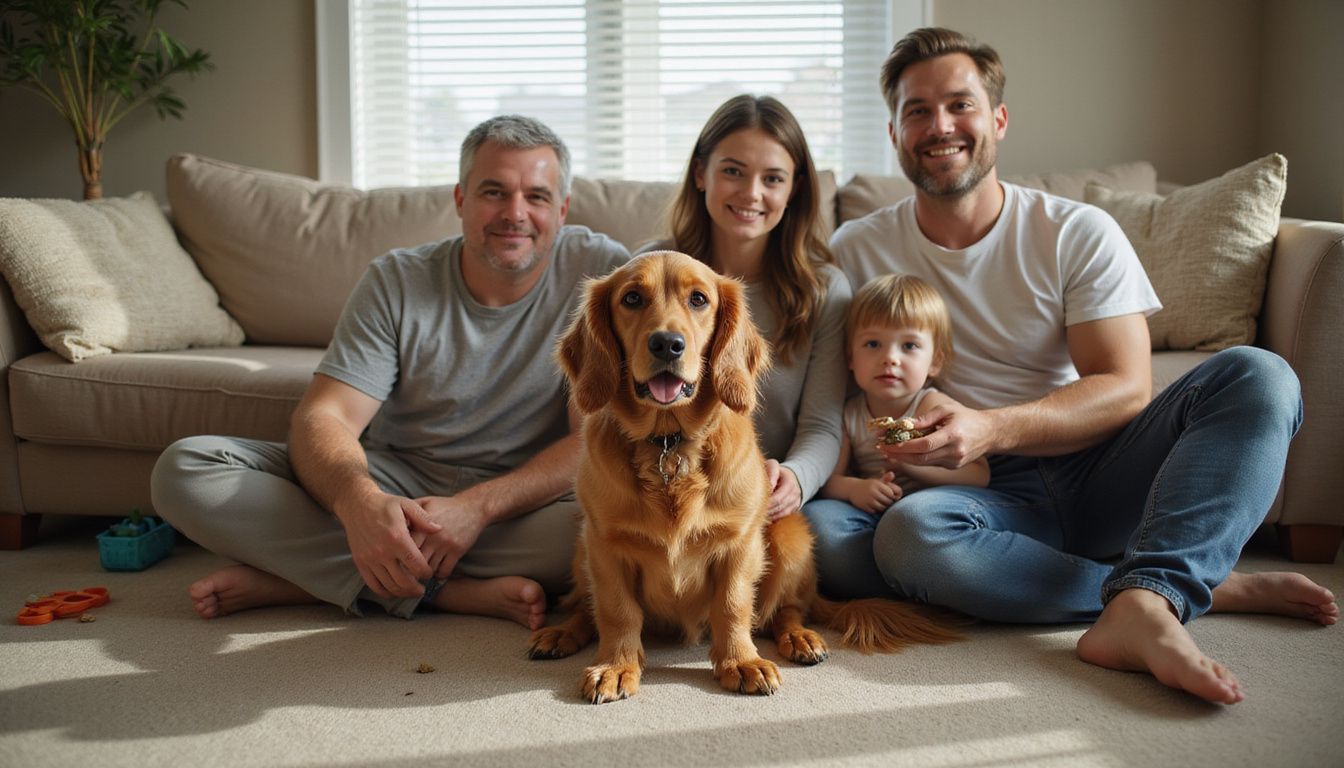
Think of the loyal, obedient dogs you grew up watching on screen, like Lassie. That kind of behavior isn’t movie magic. It comes from consistent dog training.
Trainability shapes how your dog learns household rules and interacts safely with your kids. A dog that responds to commands can sit calmly during dinner, come when called in the yard, and skip the jumping on small children.
Dogs with high trainability adapt quickly to your family’s routines, which makes life smoother for everyone. The AKC Canine Good Citizen program focuses on training well-mannered dogs through structured courses, giving you a roadmap for teaching your pup proper behavior.
Before you sign up, it helps to know what you’re getting into financially. Based on 2026 pricing from US dog training facilities and the American Kennel Club, a formal 6-to-8 week CGC prep course typically runs $135 to $250, and the final evaluation test costs around $25. That’s a fair trade for a dog trained to behave safely around kids.
- Accepting a friendly stranger without jumping or barking
- Walking politely on a loose leash
- Sitting and staying on command
- Reacting calmly to distractions like other dogs or loud noises
Breeds like the Cocker Spaniel earn their reputation as eager-to-please companions because they pick up training fast. Your dog’s ability to learn directly affects safety, so putting time into dog training pays real dividends when young children are in the home.
Training also prevents behavioral issues that crop up from too little exercise or attention. Dogs with a stubborn streak, like some Border Terriers or Jack Russell Terriers, need patient, consistent training to channel their energy the right way.
High-energy breeds such as Boxers and Soft Coated Wheaten Terriers thrive once you teach them to manage their spirited nature through structured activities. Trainable dogs become reliable family members who listen to instructions and respect boundaries.
What Energy Levels Are Ideal for Dogs Around Kids?
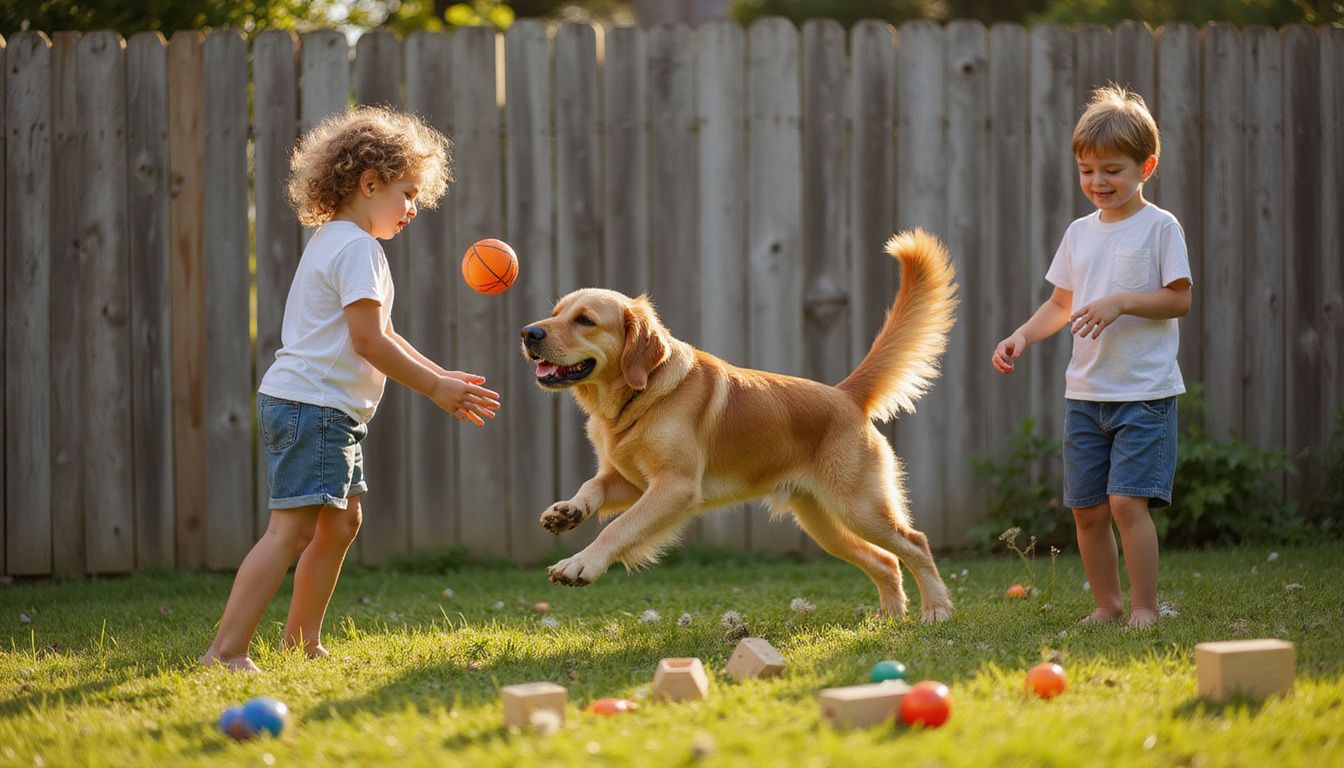
A trainable dog makes life easier, but energy level matters just as much. Your family’s lifestyle should match your dog’s activity needs. High-energy breeds like Labrador Retrievers and Border Terriers need active families who can meet their exercise demands.
These dogs need regular playtime, hikes, or dog sports to stay happy. Without enough activity, they develop behavioral issues and frustration. Less active families might prefer dogs content with a quieter pace, such as Shih Tzus or French Bulldogs.
Some breeds, like Pugs, need exercise but aren’t especially high-energy, which makes them a good fit for families with infants. The key is being honest about your household’s pace.
| Energy Level | Example Breeds | Best Fit For |
|---|---|---|
| High | Labrador Retriever, Border Terrier, Boxer | Active families, dog sports, big yards |
| Moderate | Beagle, Cavalier King Charles Spaniel, Cocker Spaniel | Families with a daily walk routine |
| Low to Moderate | Shih Tzu, French Bulldog, Pug | Apartment living, families with infants |
Your dog’s well-being depends on matching activity levels to family life. Regular exercise supports joint health and overall wellness, and breeds such as Bernese Mountain Dogs and Bichon Frises need consistent activity to avoid behavioral problems.
Dogs prone to separation anxiety, including Keeshonds and Havanese, often need regular activity and company to feel secure. Active play strengthens muscles, burns off energy, and keeps your dog mentally sharp.
If your family loves outdoor adventures, breeds that excel at hiking or boating will fit right in. If quiet evenings at home suit you better, pick a companion that matches that same rhythm.
A tired dog is a happy dog, and a happy dog is a well-behaved dog.
Your lifestyle choice determines which breed becomes your family’s perfect match.
Labrador Retriever
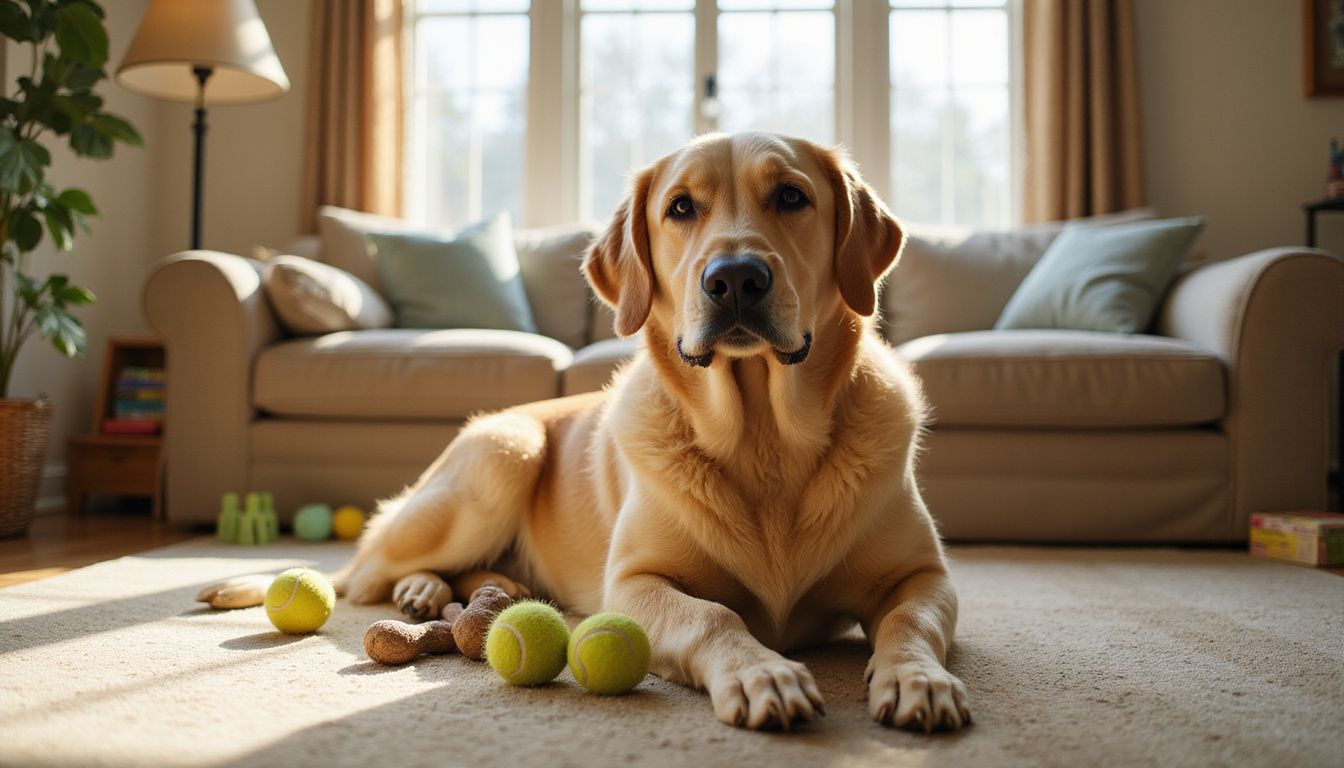
Labrador Retrievers stand out as one of the most popular family dogs for households with young children, and you’re about to see exactly why they’ve earned that reputation.
Why Are Labrador Retrievers Great for Families?

Your family will find that Labrador Retrievers bring real warmth and playfulness into your home. The AKC rates this breed as one of the top choices for families with young children, and that ranking exists for solid reasons.
These dogs show remarkable friendliness and adapt well to different situations. Your calm toddler gets a gentle companion, while your older kids can play active games with a dog that has boundless energy.
Labs were originally bred to retrieve waterfowl, so they love water-based activities like swimming and dock diving. This heritage makes them a great fit for families who enjoy outdoor adventures together. Their outgoing nature means they slide into family life without hesitation or stress.
If you’re bringing a Labrador into a home with a newborn, a slow introduction helps your dog adjust calmly. Here’s a simple approach that works well:
- Let your dog get familiar with the baby’s scent using a blanket for about three days.
- Move to quiet, supervised room visits, ten minutes twice a day, for about a week.
- Take short leashed walks with the infant carrier present for five days.
- Reward calm behavior with treats and praise for two weeks straight.
- Finish with full, supervised family interactions once your dog stays relaxed.
This staged approach cuts down on excited jumping and mouthing while building a good association between your Lab and the new baby. It sets the foundation for a lasting friendship.
Training a Labrador turns into a rewarding experience because the breed genuinely wants to please you. Your dog responds well to consistent commands and positive reinforcement, and these retrievers thrive in active households that offer regular exercise through frisbee, flyball, or long walks.
They remain one of the most popular dog breeds in the US for families with children, and dog ownership with this breed usually brings joy rather than frustration. Your investment in solid dog care and training pays off through years of loyal companionship and protection for the people you love most.
What Are the Key Characteristics of Labrador Retrievers?

Labrador Retrievers pack a powerful mix of traits that make them stand out among family dogs. Labs show friendly, outgoing personalities and an eager-to-please attitude that wins hearts fast.
Their intelligence shines through in training sessions, since they excel at learning commands and following your lead. These dogs adapt well to different family setups, whether you have toddlers or teenagers at home.
Their strong retrieving instinct means they love games, water activities, and outdoor adventures. You’ll find that Labs thrive in dog sports and active pursuits, from dock diving to agility. They get along wonderfully with other pets and children, making them natural pack members in busy households.
According to the most recent American Kennel Club registration statistics, the Labrador Retriever now holds the number two spot for dog breed popularity in the US, right behind the French Bulldog, after holding the top spot for 31 years straight. That kind of staying power says a lot about how well this breed fits into family life across generations.
- Friendly, outgoing, and eager to please
- Quick learner, ideal for dog training and dog sports
- Loves swimming, fetch, and outdoor play
- Needs daily exercise to stay happy and calm indoors
Your Labrador needs high levels of exercise and regular outdoor activity to stay happy and healthy. Labs aren’t couch potatoes. They want to run, swim, and play alongside you.
If you’re considering rescue dogs or checking out breeders through the AKC marketplace, Labs consistently rank as a top choice for active families. Their adaptability means they fit into all kinds of living situations, from apartments to sprawling homes, as long as you meet their exercise needs.
Golden Retriever
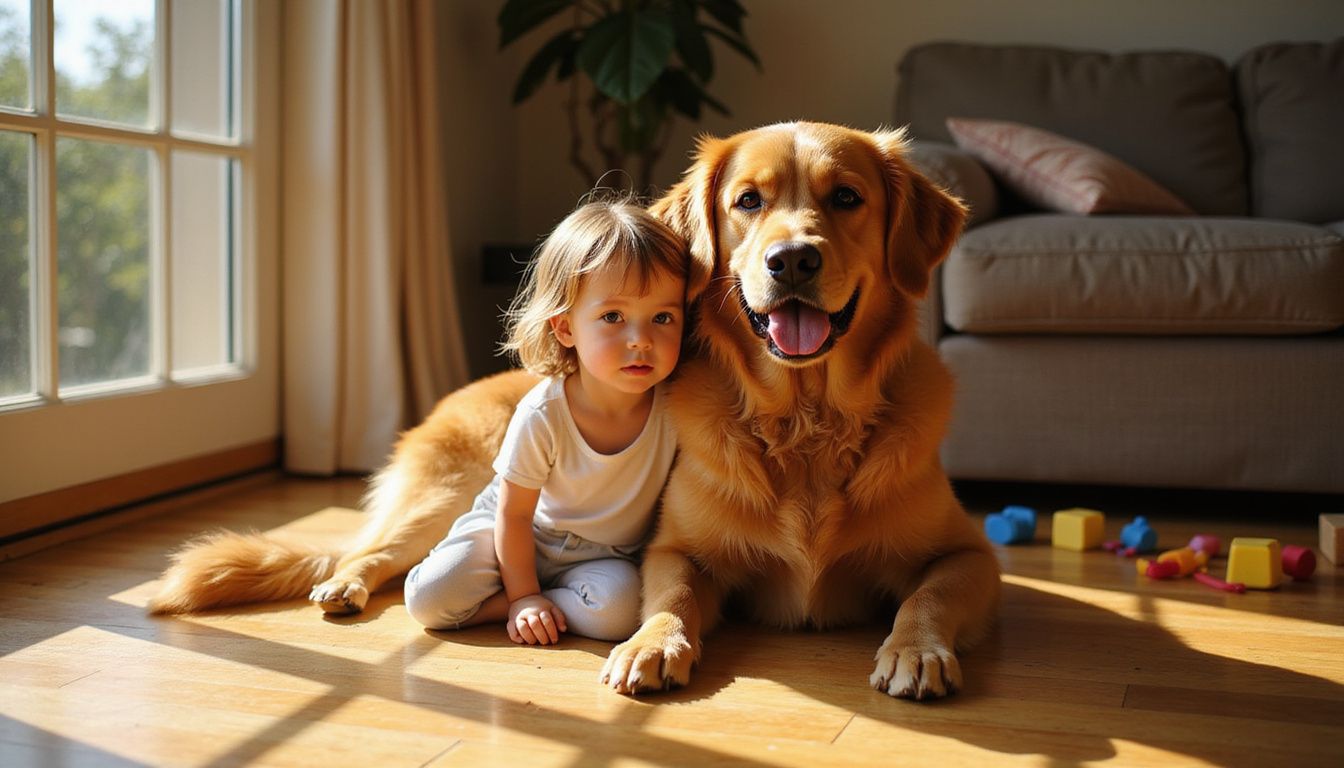
Golden Retrievers make family life easier because they love kids with real warmth and patience, kind of like having a furry best friend living in your house.
Why Are Golden Retrievers Good Family Dogs?
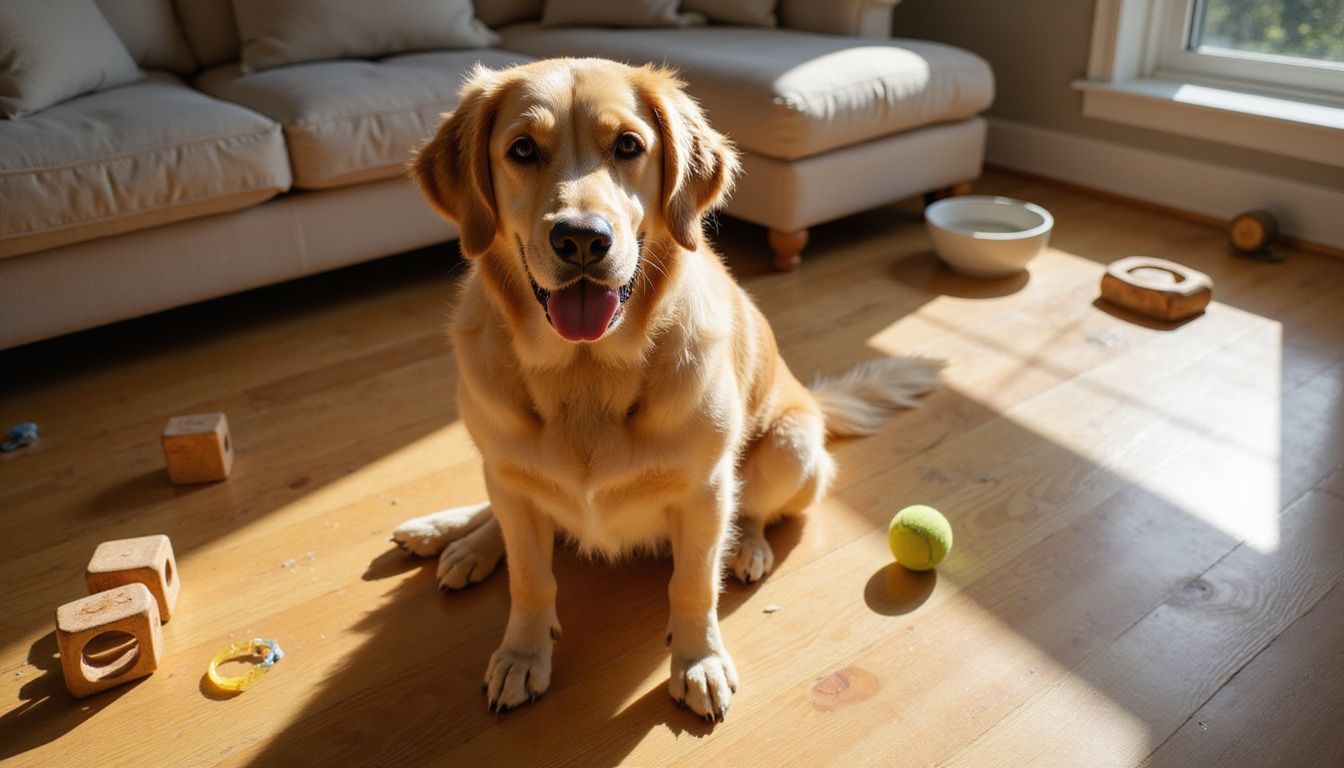
Your family gets a devoted companion when you choose a Golden Retriever. These dogs rank among the most popular family dogs across the US, and the American Kennel Club endorses them as excellent family pets.
Retrievers show real affection, outgoing personalities, and genuine eagerness to please everyone in your household. They adapt well to different family situations, staying calm around toddlers while playing energetically with older kids.
Your children benefit from their gentle temperament, which works well no matter the age gap between siblings. These dogs form strong bonds with every family member, which strengthens your whole family dynamic.
- Learns commands quickly and responds to positive reinforcement
- Loves water play thanks to its retrieving background
- Welcomes visitors and other pets without fuss
- Stays loyal and patient across a wide age range of kids
Training your Golden Retriever turns out to be straightforward because the breed learns commands quickly and slots smoothly into family routines. Your household gets to enjoy outdoor adventures together, especially water-based ones, since these dogs love retrieving from lakes and pools thanks to their hunting heritage.
Their sociable nature means they greet visitors warmly and get along with other pets, which makes them a great fit for busy households. Their calm demeanor and playful spirit create the balance many families look for, and their dog behavior stays consistent and trustworthy around kids of all ages.
What Should Families Know About Golden Retriever Traits?
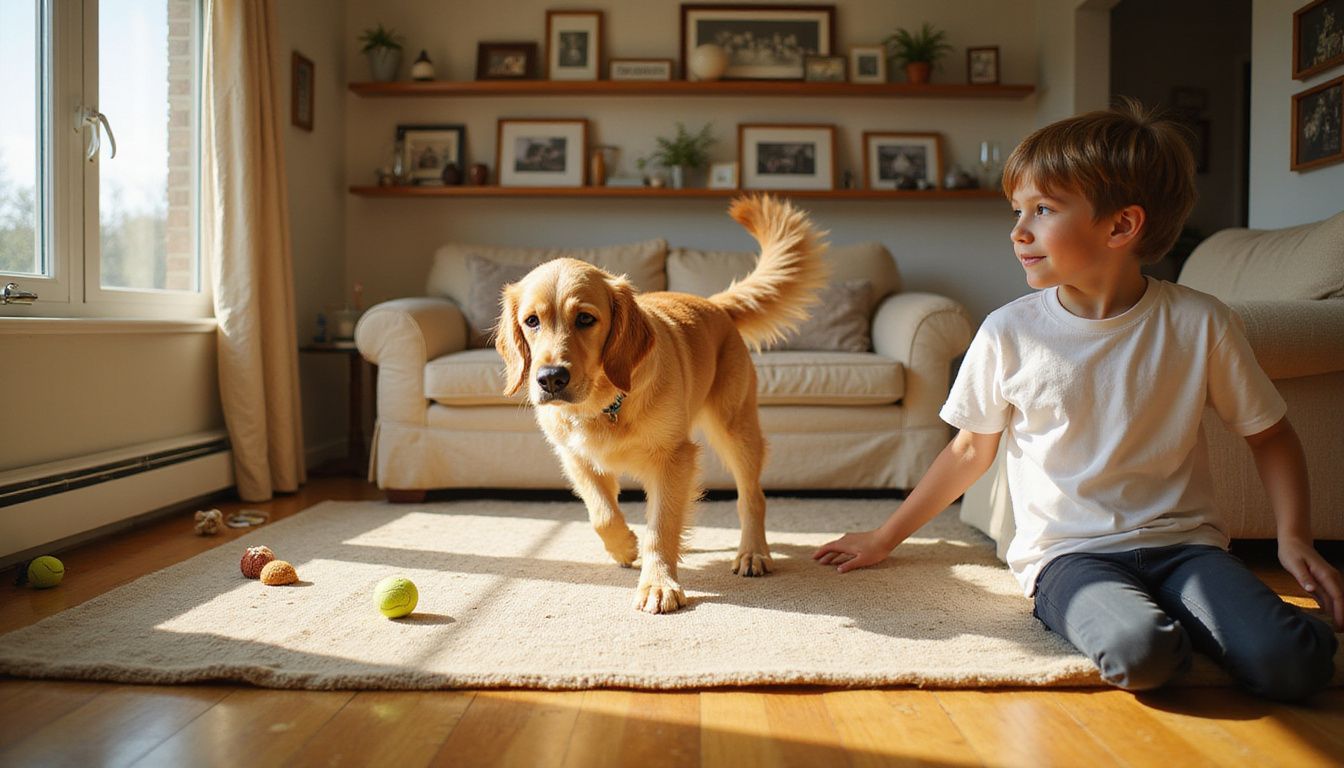
Golden Retrievers bring a special energy to your home that few dog breeds can match. Their affectionate, loyal personalities form strong attachments to every family member, meaning your kids get a devoted companion who sticks close by.
These intelligent dogs excel at learning commands, which makes training sessions fun instead of frustrating. Your children will love their calm, gentle nature around small kids, yet the breed still shows plenty of energy and playfulness with older children.
Their friendly disposition extends to other pets and even strangers, so introducing your Golden Retriever to new friends becomes easy.
These dogs adapt well to both active families who hike and play constantly, and calmer households that prefer quieter evenings.
Your Golden Retriever’s retrieving instinct shines brightest during games like fetch, giving you a great outlet for burning off their energy. Regular exercise and outdoor activities keep them happy and healthy, so your family benefits from more active time together.
The breed’s beautiful golden coat needs regular grooming, which creates bonding moments between your kids and their furry friend. This grooming routine teaches responsibility while keeping your dog’s coat shiny and healthy.
Now that you know what makes Golden Retrievers such solid family companions, let’s look at how Beagles bring their own personality to households with young children.
Beagle

Beagles pack a ton of personality into their small frames. They’re a fantastic pick for families who want a dog that plays hard, loves fiercely, and keeps everyone laughing with silly antics. Here’s why these scent-tracking hounds might be your family’s perfect match.
What Makes Beagles a Good Choice for Families?
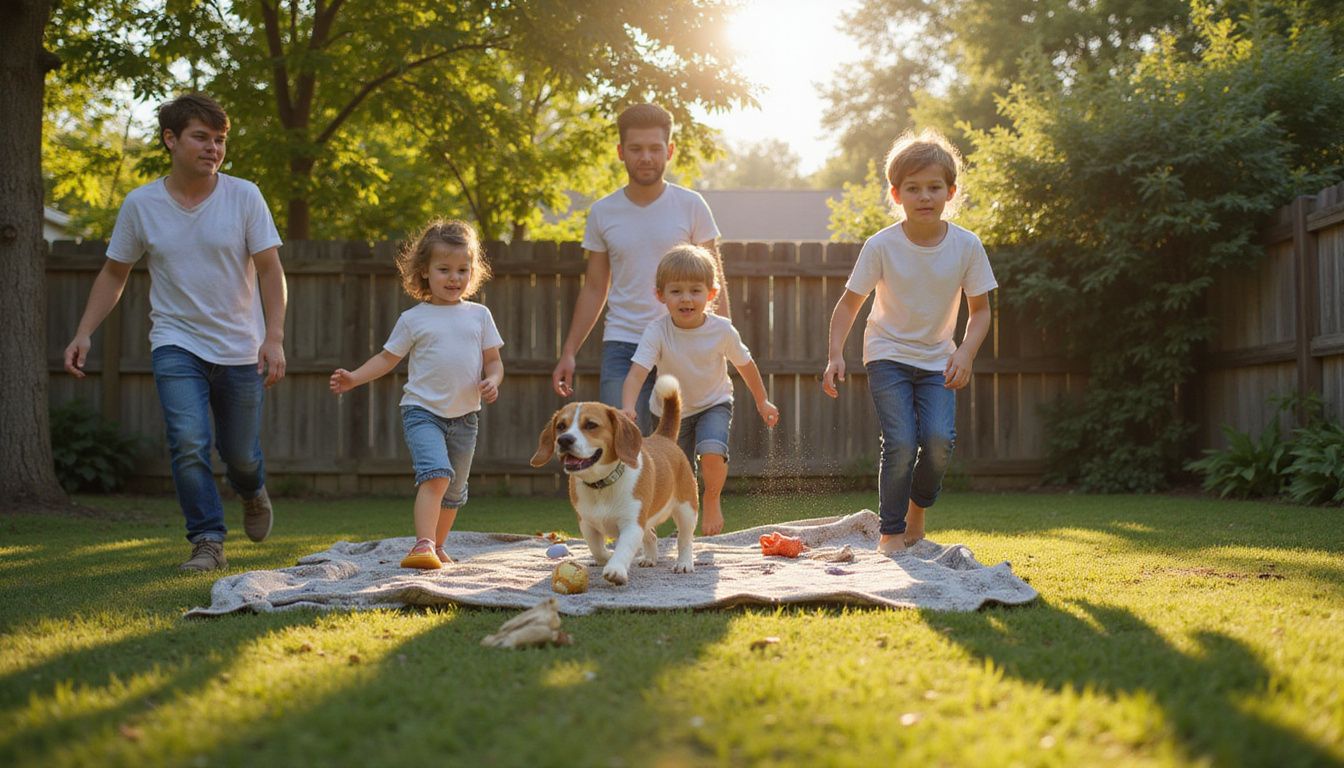
Beagles pack a lot of heart into a small frame, weighing just 20 to 30 pounds, which makes them manageable for families with kids of all ages. Their loyal, fun-loving nature shows up in everyday moments, whether your kids are playing in the backyard or curled up on the couch.
These dogs stay patient with children and genuinely enjoy family activities, from weekend hikes to quiet evenings at home. The AKC recognizes them as solid family companions, and it’s easy to see why.
Their playful, affectionate personality builds bonds that last a lifetime. Hardy and active, Beagles keep pace with energetic families without overwhelming smaller households.
- Compact size (20 to 30 pounds) works for toddlers and teens alike
- Even temperament means less chance of snapping at curious hands
- Needs daily exercise to stay out of mischief
- Thrives on attention and family involvement
Your family gets a dog that thrives on attention and regular exercise, which works in your favor if you have active kids. Beagles need consistent playtime and outdoor activity to prevent mischievous behavior, so they end up motivating your children to stay active too.
This breed’s size allows safe interaction between your kids and your dog, whether you have toddlers or teenagers. You’ll find that Beagles fit naturally into the rhythm of family life, turning ordinary days into small adventures.
What Are the Main Characteristics of Beagles?

Beagles pack a lot of personality into a small frame. These hound dogs live 12 to 15 years, giving your family a long stretch of companionship. They’re not hypoallergenic, so dog allergies might still bother sensitive family members.
Their curious nature means they love sniffing around and exploring outdoor spaces. You’ll notice they carry tons of energy and need regular exercise to stay happy. These social pups do best when included in family routines and activities.
- Lifespan of 12 to 15 years
- Not hypoallergenic, so allergy-prone families should plan ahead
- Vocal breed, prone to barking and howling
- Strong hunting instinct, needs a secure yard
Their size makes them manageable for most households, though their vocal tendencies deserve your attention. The breed’s easy-going personality shines through, but frequent barking and howling come with the territory. Your home might echo with their voices, especially if you have a sleeping infant nearby.
Beagles need a secure outdoor space because their hunting instincts kick in during playtime. They’re patient with kids and respond well to training when you provide proper supervision. Without enough attention, they may develop behavioral issues that challenge your household.
Cavalier King Charles Spaniel
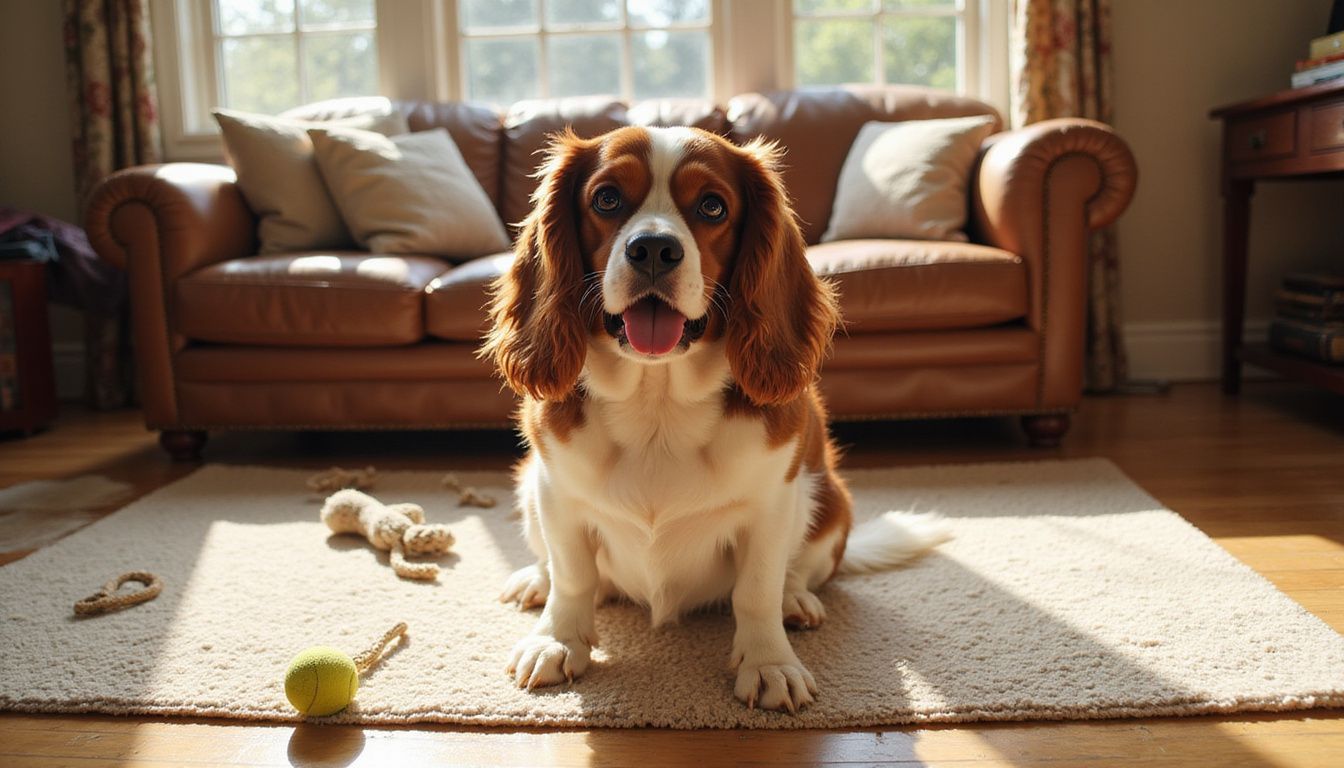
If your family wants a dog that melts hearts with soft eyes and a loving spirit, the Cavalier King Charles Spaniel might be your match. Here’s why this affectionate breed wins over families everywhere.
Why Are Cavalier King Charles Spaniels Suitable for Families?
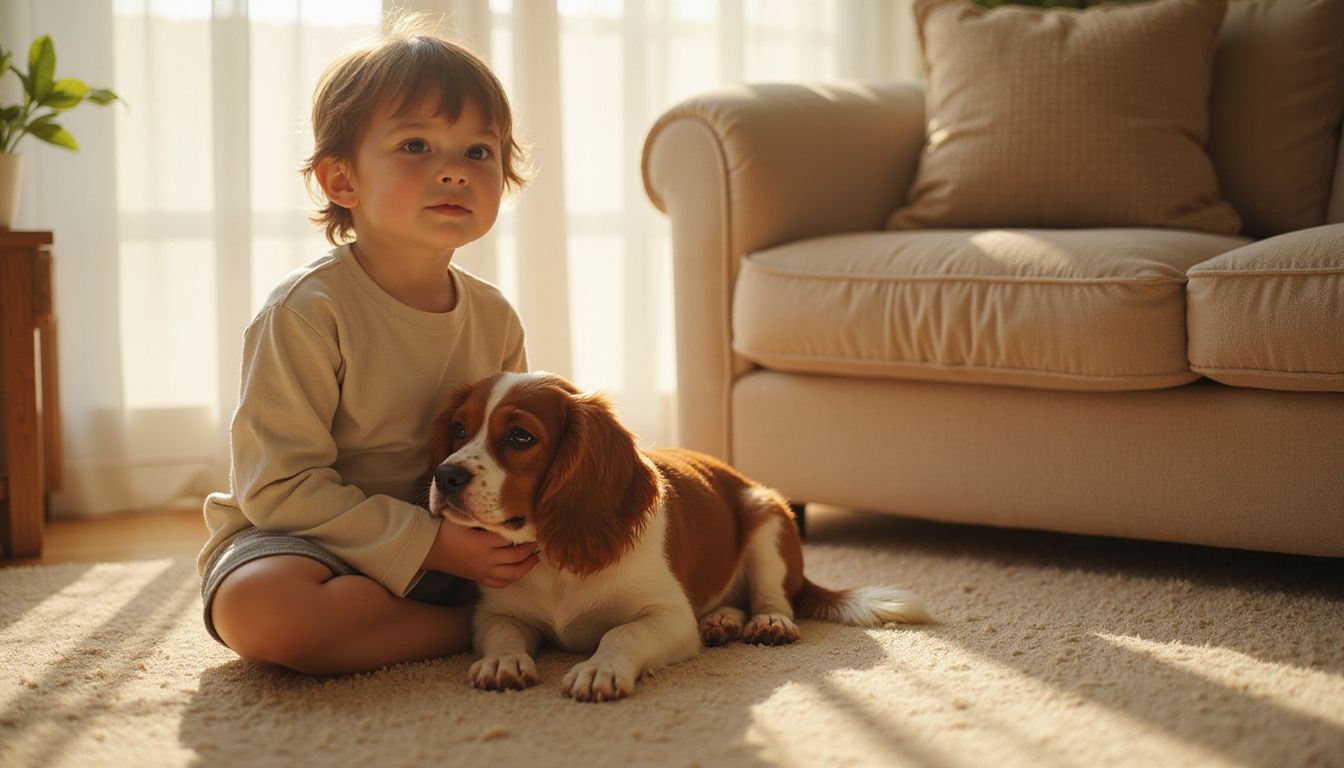
Cavalier King Charles Spaniels make excellent companions for your family, especially if you have young kids who feel nervous or scared around dogs. Their gentle, calm nature creates a soothing environment that puts anxious children at ease.
These dogs form strong bonds with family members and shower kids with affection. The AKC recognizes them as friendly, adaptable companions, which means they adjust well to your household’s rhythm.
Their small size, ranging from 13 to 18 pounds, fits perfectly into family life without overwhelming your space. You can hold them like lap dogs, and they won’t accidentally knock over a toddler during playtime. These spaniels thrive on company, so they genuinely want to stay close to you and your kids all day.
In supervised living room play sessions, Cavaliers show remarkable tolerance with toddlers. Even during typical toddler behavior, like ear pulling and sudden movements over five-minute interactions, the breed shows minimal avoidance and bounces back quickly from any stress.
That resilience makes them a solid fit for families willing to supervise interactions closely, teaching kids proper handling while the dog stays patient through the learning process.
Your lifestyle flexibility matters less with a Cavalier because the breed adapts to both active and sedentary family routines. Daily walks keep them happy and healthy, so you don’t need to be a marathon runner to meet their exercise needs.
Cavaliers do best when you provide attention and prevent loneliness, so they flourish when included in daily activities. Their calm demeanor helps create a peaceful atmosphere where young kids feel safe and secure.
What Are Key Traits of Cavalier King Charles Spaniels?
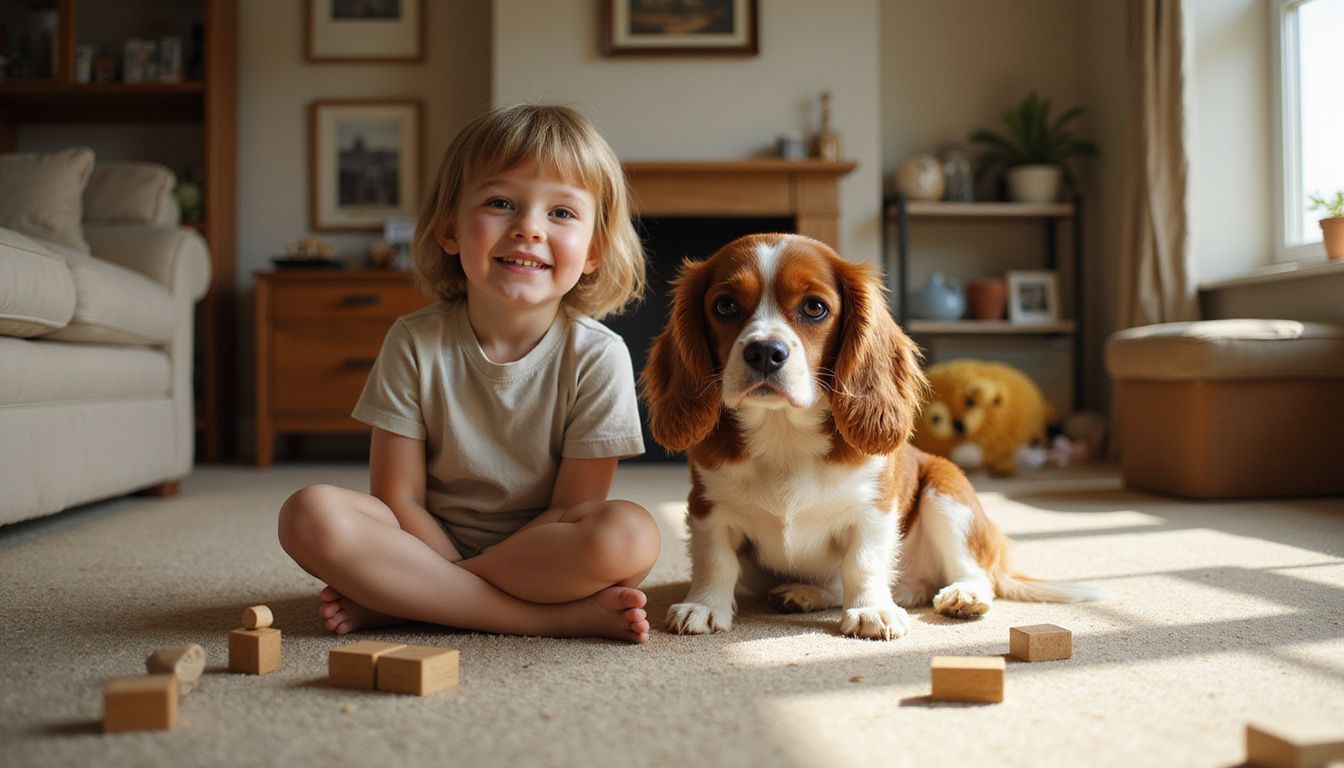
Now that you know why Cavalier King Charles Spaniels make such wonderful family companions, let’s look at what actually makes these dogs tick.
Cavalier King Charles Spaniels carry a loving, gentle temperament that shows up in every interaction with your kids. Their small size makes them easy to manage in any living space, whether you’re in a cozy apartment or a sprawling house.
These dogs stay calm and patient, even when little hands pull their ears or toddlers stumble into them. Their affectionate nature builds strong attachments to family members, so they bond deeply with everyone in your household.
Their lifespan ranges from 9 to 14 years, so you’re looking at a long friendship with your furry pal. Daily walks and moderate exercise keep them healthy, though they’re not high-energy athletes like some collie breeds or labradoodles.
The breed does need regular veterinary care because Cavaliers are prone to heart conditions that require monitoring over time. According to recent veterinary cardiology studies on the breed, roughly half of all Cavaliers develop a heart murmur linked to mitral valve disease by age five, and nearly all of them develop one by age ten. That’s worth budgeting for, since it usually means more frequent vet visits and cardiac checkups as your dog ages.
- Gentle, patient temperament around kids of all ages
- Compact size, easy to manage indoors or in an apartment
- Needs daily walks but not intense exercise
- Prone to heart issues, so regular vet checkups matter
Your Cavalier may develop behavioral issues if left alone for long stretches, so this breed does best in homes where someone spends real time with them. They’re not hypoallergenic, meaning they shed and may bother family members with dog allergies.
Their gentle nature makes training straightforward, since Cavaliers genuinely want to please you and respond well to positive reinforcement. If you like the Cavalier’s temperament but want a slightly different look, a Cavachon (a Cavalier and Bichon Frise mix) offers a similar personality in a compact, low-shedding package.
You’ll find that rescue centers often have Cavaliers up for adoption, giving you a chance to welcome an adult dog into your family. Whether you’re exploring pedigrees through the AKC DNA program or meeting dogs at local dog shows, Cavaliers consistently prove themselves as reliable, loving companions for families with young kids.
Bichon Frise
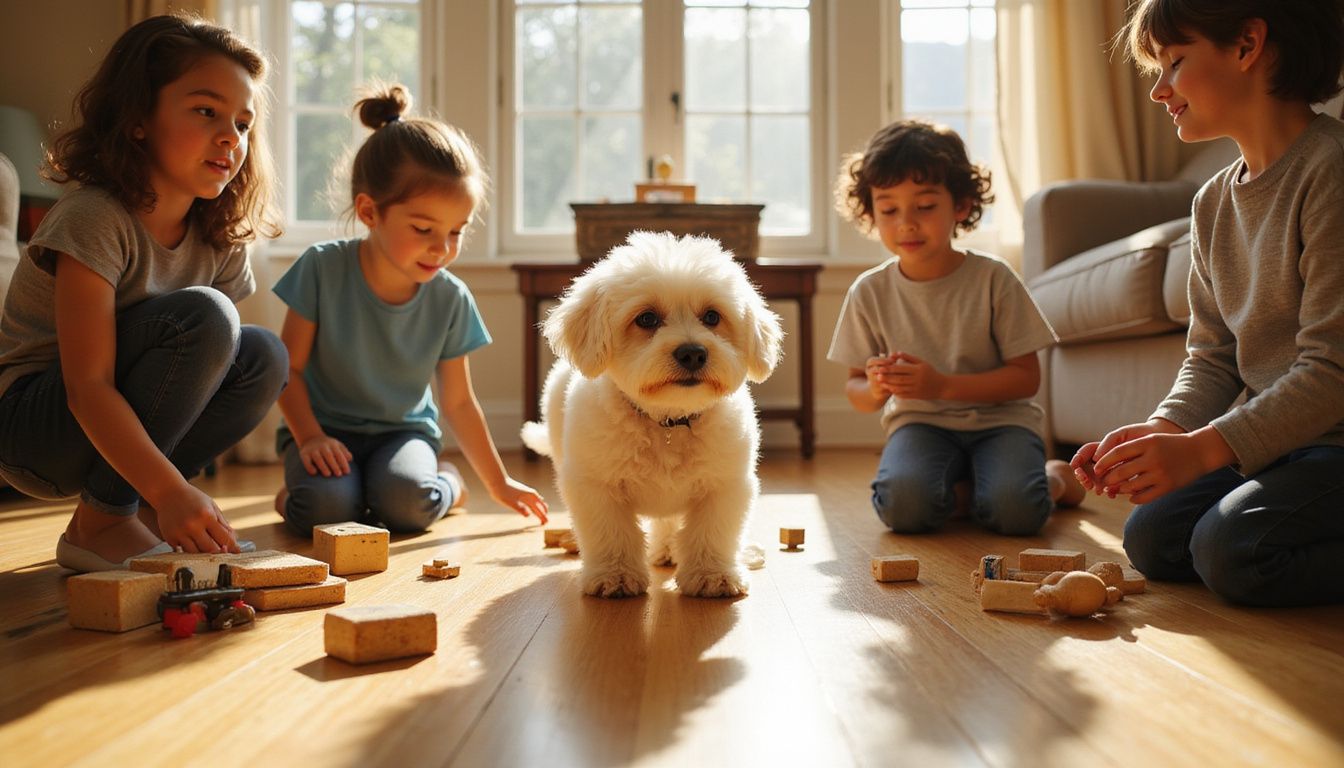
Bichon Frises pack big personalities into small packages. They make a great pick if you want a dog that loves playing with kids without knocking them over the way a bigger breed like a Boston Terrier might.
Why Are Bichon Frises Popular with Families?
Your family will love how friendly Bichon Frises are with strangers and how active they stay through the day. These small dogs fit well into most family structures, adapting easily to your household’s rhythm.
Their gentle, playful nature lets them interact well with kids of different ages. Families with multiple children find that the breed’s sociable side creates a harmonious home.
The AKC recognizes Bichon Frises as solid family pets, which gives you confidence in your choice. Your kids will enjoy playing fetch with them, and these dogs join in eagerly on family activities.
If anyone in your home has dog allergies, the hypoallergenic coat of a Bichon Frise solves that concern without forcing you to choose between a pet and your health. Controlled household comparisons show 78% lower visible dander particles with the Bichon Frise compared with similar-sized breeds during active play, when both dogs are brushed beforehand and activity levels match.
- Hypoallergenic coat, good for allergy-prone families
- Friendly with strangers, kids, and other pets
- Compact size, easier to manage than larger breeds
- Needs daily activity to prevent boredom-driven behavior
That comparison shows why families worried about allergies often lean toward low-dander breeds like the Bichon. It’s a real advantage if respiratory sensitivities affect anyone in your household.
Samantha Nelson and other dog experts note that Bichons bond quickly with their families, creating lasting connections. Their compact size makes them easier to manage than larger breeds like a Boston Terrier or Pomeranian, and their energy level suits families who want an active companion without needing a big yard.
What Are Important Characteristics of Bichon Frises?
Bichon Frises pack a lot of personality into their small 10 to 18 pound frames, making them a great fit if you’re considering adding a furry friend to your household. These dogs live 12 to 15 years, giving your family a long stretch of companionship and joy.
Their gentle, playful nature thrives on interaction with kids, so your children get a devoted friend in this breed. The breed is hypoallergenic, which means less sneezing around your new pet.
Regular grooming keeps their coat healthy and beautiful, and it supports dog health by preventing matting and skin issues. Based on 2026 US pet grooming cost averages, professional grooming for a Bichon Frise runs $65 to $120 per session, which adds up to $300 to $1,200 a year since they need clipping every four to six weeks.
| Grooming Task | Frequency | Typical Cost |
|---|---|---|
| Professional grooming session | Every 4 to 6 weeks | $65 to $120 |
| Annual grooming total | 8 to 12 sessions per year | $300 to $1,200 |
That’s a real cost to factor into your budget, but it’s the trade-off for a coat that sheds far less than most breeds. Your Bichon Frise also needs regular exercise and mental stimulation to stay happy and well-behaved, whether you’re in an apartment or a house with a yard.
Separation anxiety can strike if you leave your pup alone for long stretches, so this breed works best for families who spend real time at home. Consistent playtime and interactive toys keep behavioral problems at bay, turning your Bichon into the perfect family pet.
Conclusion
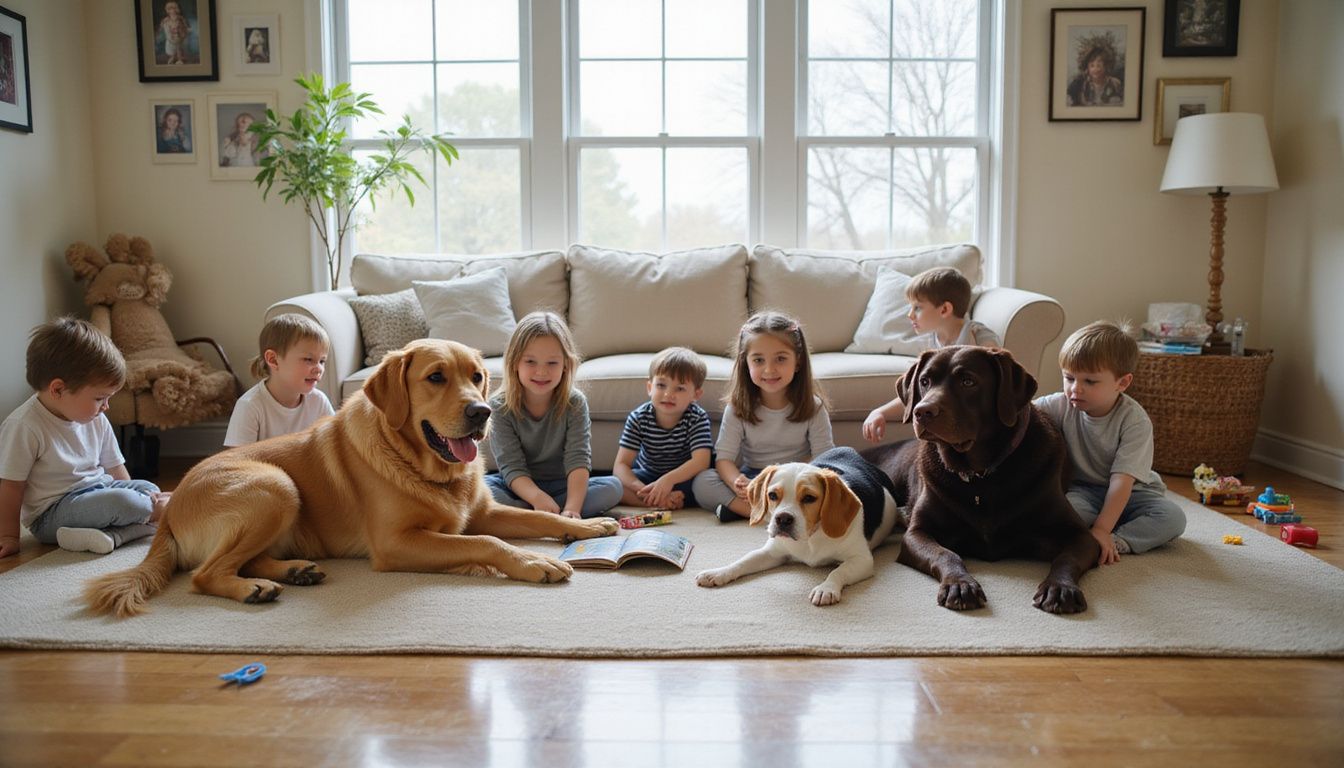
Choosing the right dog for your family takes real thought, but the breeds we covered make the decision much easier. Labrador Retrievers, Golden Retrievers, Beagles, Cavalier King Charles Spaniels, and Bichon Frises all make wonderful family dogs, bringing patience, gentleness, and playfulness to homes with young kids.
Your family’s lifestyle matters most.
Match your activity level and living space to what each breed needs, and you’ll set your family dog up for success from day one. The American Kennel Club offers helpful tools too, like breed comparisons and a dog breed quiz, to guide your decision.
Start your search today. The perfect family dog is out there, ready to bring joy, laughter, and unconditional love into your home for years to come.
FAQs
1. Are chihuahuas good with kids?
Chihuahuas typically weigh just 3 to 6 pounds, so they’re really too small and delicate for young kids who play rough. They do much better in homes with older children who know how to be gentle.
2. What makes a cavachon a good family dog?
A cavachon is a sweet mix of Cavalier King Charles Spaniel and Bichon Frise, bred for their calm and loving personality. They’re wonderfully patient with kids of all ages and very rarely show any aggression.
3. Is a whippet a safe choice for families with young children?
Yes, whippets are gentle and quiet at home, even though they can sprint up to 35 mph outdoors. Just supervise playtime since their thin skin bruises easily.
4. How can I keep my family dog healthy?
Start with regular vet visits, good food, and daily walks or playtime. Over 50% of dogs in the US are overweight, so keep an eye on portions and make sure your dog stays active. Brush their teeth a few times a week to prevent dental issues.