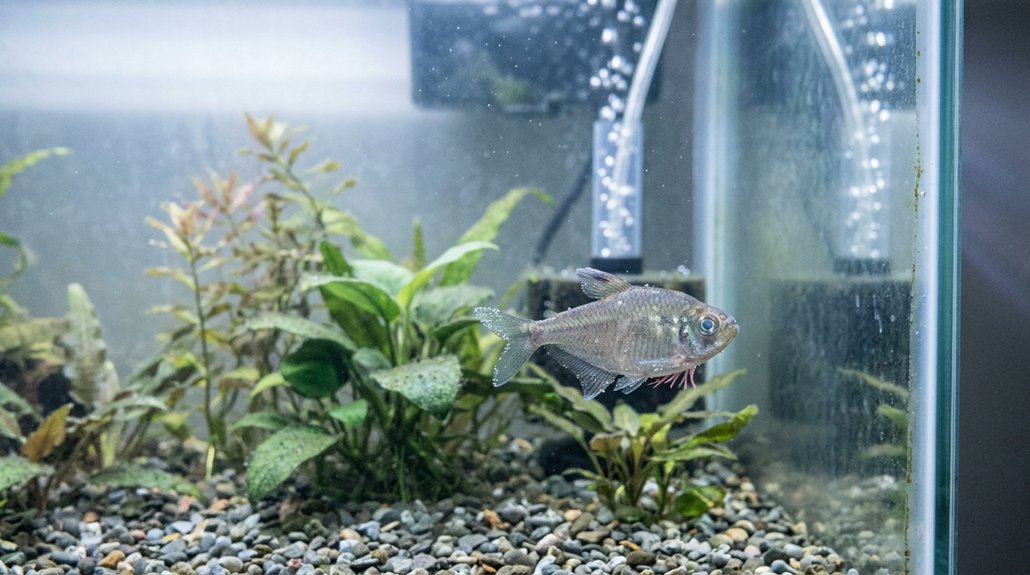
Ammonia poisoning in fish is a serious water-quality emergency caused when ammonia builds up in your tank from waste, uneaten food, or an uncycled filter. It irritates and burns your fish’s gills and skin, so you may see gasping, red gills, clamped fins, lethargy, or sudden death. Even low levels can injure them, especially if pH is high. With the right signs, causes, and treatment, you can act before the damage worsens.
Key Takeaways
- Ammonia poisoning in fish is toxic damage caused by ammonia building up in aquarium water.
- It often results from waste, uneaten food, overstocking, or an uncycled filter.
- Fish may gasp, breathe rapidly, become lethargic, lose appetite, or show red, damaged gills and fins.
- Even low ammonia levels can burn gills, weaken immunity, and cause sudden death.
- Treatment requires immediate water changes, stopping feeding, removing waste, and improving aeration.
What Is Ammonia Poisoning in Fish?
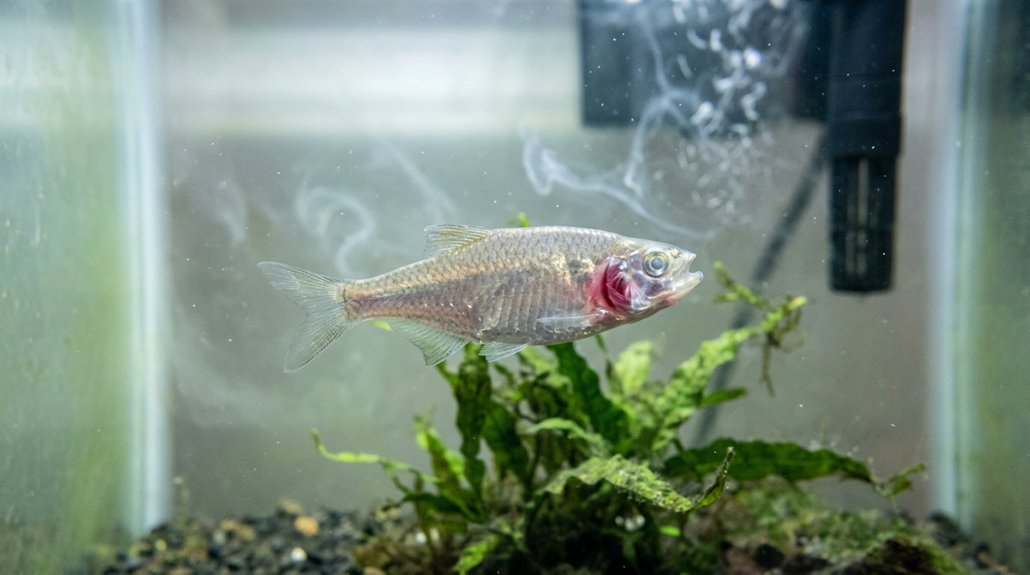
Ammonia poisoning in fish happens when toxic unionized ammonia (NH3) builds up in the aquarium faster than the biological filter can convert it to nitrite and nitrate, a failure that often occurs in new tanks or after sudden system changes. You’re dealing with a dissolved waste product that’s colorless, odorless, and highly toxic. It comes from fish excretion, decomposition of uneaten food and dead plants, and chloramine-treated tap water that can release ammonia after dechlorination. Even low concentrations can injure gills, and higher levels may be fatal. If ammonia remains elevated, you can expect tissue damage, behavioral changes, and immune suppression. Effective prevention depends on cycling the tank, maintaining nitrifying bacteria, avoiding overstocking and overfeeding, testing regularly, and correcting rising levels with prompt water changes.
Signs of Ammonia Poisoning in Fish
Once ammonia begins rising, the warning signs usually show up quickly in the gills and behavior. Even 0.25 ppm can injure your fish, so you may see:
Once ammonia begins rising, warning signs appear quickly in the gills and behavior.
- Respiratory distress: gasping at the surface, rapid breathing, and red gills or purple gill tissue.
- External damage: bloody patches, red streaks on the body or fins, and torn fins from ammonia burns.
- Behavioral decline: lethargy, clamped fins, loss of appetite, lying on the tank bottom, and greater infection risk.
You might also notice cloudy water, a recent pH spike, overfeeding, a new tank, filter failure, or recent medication use. In severe cases, acute toxicity can cause sudden, unexplained deaths, especially in larger fish.
How to Treat Ammonia Poisoning Fast
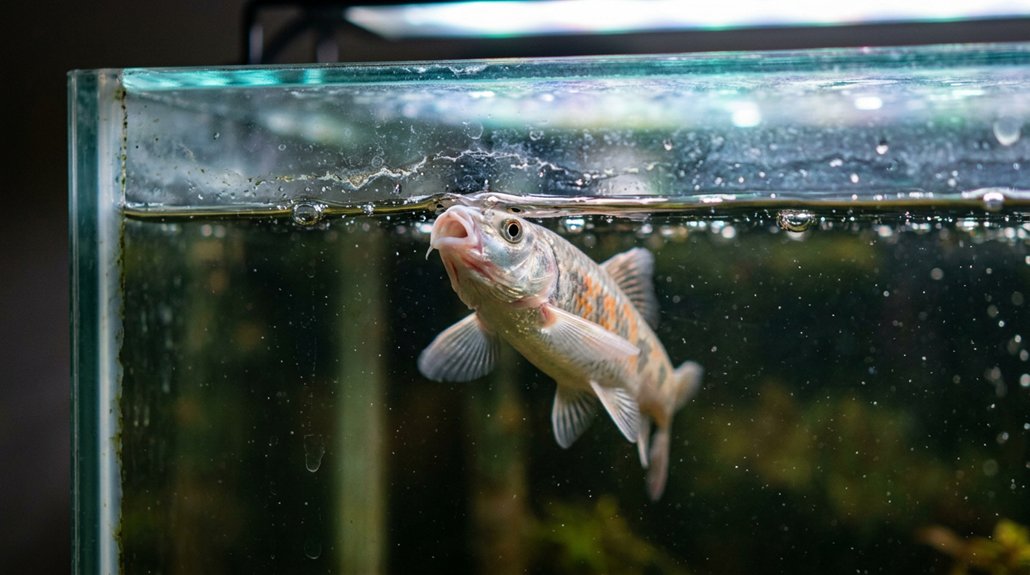
Act immediately if your tank tests above 1.0 ppm ammonia: perform a 50% water change with temperature-matched water, then repeat daily until ammonia is undetectable. Stop feeding, or reduce feedings sharply, so you don’t add more waste. Siphon debris and uneaten food from the substrate. Provide immediate aeration and strong circulation to support oxygen delivery to stressed fish and impaired gills. Use ammonia binders only as a short-term emergency aid; they can neutralize ammonia temporarily, but they won’t fix the underlying water problem. After levels stabilize, quarantine any visibly affected fish and treat secondary infections with veterinary guidance. Don’t add new fish until both ammonia and nitrite are zero.
What Causes Ammonia Poisoning in Aquariums?
Ammonia poisoning happens when un-ionized ammonia (NH3) builds up faster than your tank’s biological filtration can convert it into less toxic compounds. You’re most vulnerable during tank cycling, when nitrifying bacteria haven’t established and new tank syndrome can occur. Common causes include:
- Fish waste, uneaten food, and decomposing organic matter adding ammonia faster than your filter can process it.
- Chloramine-treated tap water introducing ammonia if water conditioners don’t neutralize it, or bacterial die-off after antibiotics or aggressive filter cleaning.
- Overfeeding, overstocking, and poor gravel or filter maintenance increasing waste load; elevated pH also shifts ammonia toward the more toxic NH3 form.
Even low total ammonia can be hazardous when pH rises, because toxicity increases sharply.
How to Prevent Ammonia Poisoning
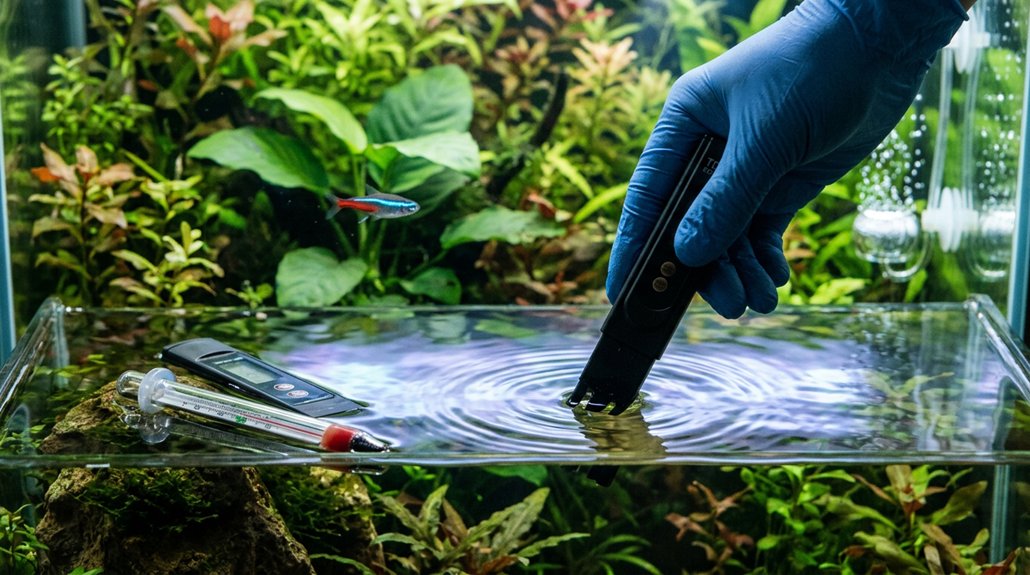
Prevention starts with keeping ammonia from accumulating faster than your tank can process it. You should use water testing at least twice a month, and daily during cycling or if you suspect a spike, aiming for total ammonia at 0.1 mg/L or less, ideally zero. Before adding fish, cycle new tanks for 4–6+ weeks or seed them with established media so nitrifying bacteria can convert ammonia to nitrite and nitrate. Respect stocking limits, add fish slowly, and feed small portions that leave no residue. Remove uneaten food within five minutes, siphon gravel weekly, trim dead plant matter, and perform partial water changes at least every other week, more often in crowded tanks. Use a conditioner to remove chloramine from tap water.
Frequently Asked Questions
Can a Fish Recover From Ammonia Poisoning?
Yes, your fish can recover if you act fast with home treatment: rapid water changes, aeration, and no feeding. Long term recovery depends on ammonia dropping to zero; severe gill damage can cause lasting problems.
How to Tell if Your Fish Has Ammonia Poisoning?
You’ll notice gasping, red gills, clamped fins, lethargy, and appetite loss—what else could signal trouble? These behavioral changes, plus gill damage, bloody streaks, or sudden deaths, strongly suggest ammonia poisoning; verify with a liquid ammonia test.
How Long Does Ammonia Poisoning Last in Fish?
It can last days to weeks after chronic exposure, and severe cases may become fatal within hours. If you correct water quickly, you’ll often see improvement in 24–72 hours, though immune suppression and gill damage can persist.
What Is the Fastest Way to Remove Ammonia From a Fish Tank?
You’ll remove ammonia fastest with rapid waterchanges—ideally 50% now, then again tomorrow if needed. Add chemical neutralizers immediately, boost aeration, vacuum waste, and stop feeding; you’re buying time while levels fall.
Conclusion
Ammonia poisoning is a silent toxin in your aquarium, turning clear water into a hidden hazard that can burn gills, stress fish, and quickly become fatal. If you notice labored breathing, lethargy, or gasping at the surface, act fast to restore balance. By monitoring water quality, maintaining filtration, and avoiding overfeeding, you can keep your tank stable. In your aquarium, healthy water isn’t just a setting—it’s the shield that keeps life thriving.