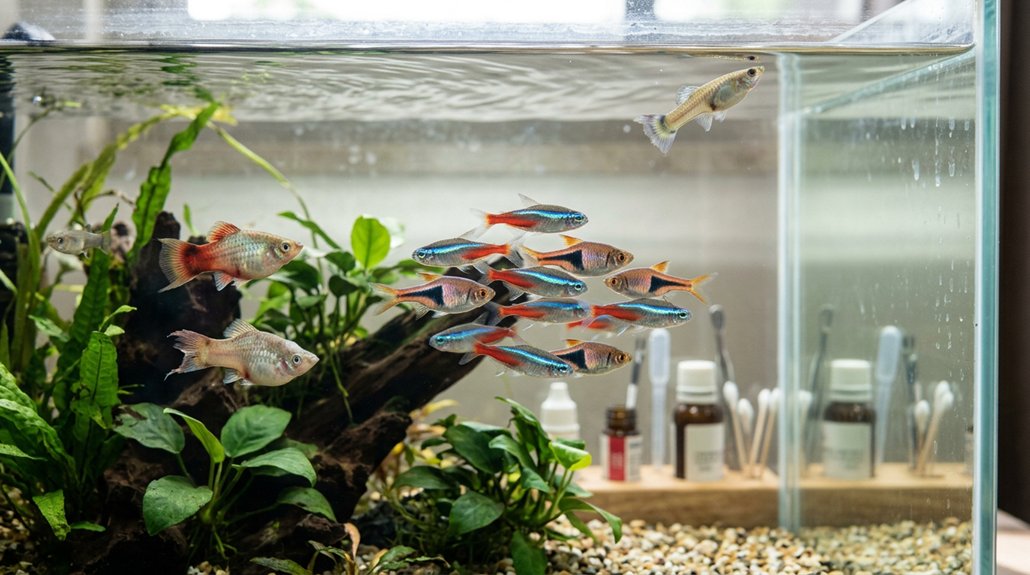
Common fish diseases often show up as flashing, clamped fins, white spots, dusty coating, ulcers, fin fraying, swollen eyes, or abnormal buoyancy. You should isolate the fish, test ammonia and nitrite, and fix water quality first. Parasites like ich, velvet, flukes, and anchor worms usually need targeted anti-parasitic treatment, while bacterial infections may need antibiotics or antiseptics. Remove carbon during medication and quarantine new fish. More specific signs and treatments are covered next.
Key Takeaways
- Ich causes white salt-like spots, flashing, clamped fins, and fast breathing; treat with repeated anti-parasitic medication and quarantine.
- Velvet looks like a dusty gold film with rapid breathing; dim lights and use repeated treatment in a hospital tank.
- Flukes, costia, and anchor worms cause scratching, mucus, and gill irritation; confirm with scrapes and treat appropriately.
- Bacterial infections, fin rot, and ulcers cause reddened sores, frayed fins, and swelling; improve water quality and use antibiotics if needed.
- Prevent disease by cycling tanks, quarantining new fish, avoiding overcrowding, and maintaining clean, stable water conditions.
What Are the Most Common Fish Diseases?
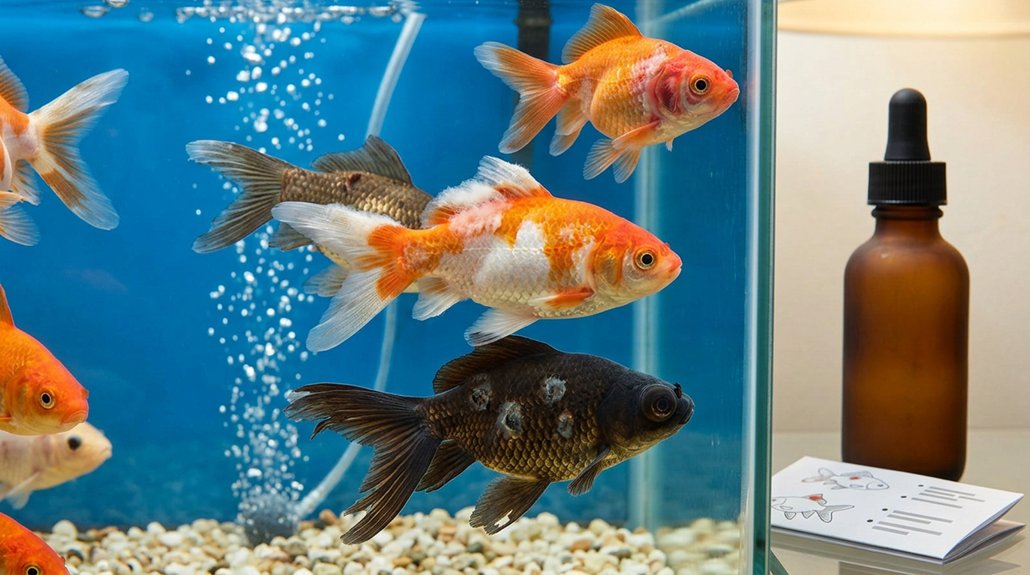
The most common fish diseases are typically parasitic or bacterial and often show clear external signs before they become severe. You’ll most often encounter ich, velvet, columnaris, bacterial ulcers, flukes, and anchor worms. Ich causes white salt-like spots, flashing, and labored breathing; velvet produces a dusty gold coating and rapid respiration. Columnaris creates white-gray mouth or fin lesions, while Aeromonas infections lead to ulcers, fin rot, and dropsy. Flukes and anchor worms trigger scratching, inflamed gills, or visible parasites. Your tank stock, crowding, and handling stress influence risk, and genetic resistance can alter susceptibility. Accurate identification matters because each disease needs targeted therapy, from copper or malachite green to antibiotics, quarantine, antiparasitic agents, and careful supportive care.
Signs of Ammonia Poisoning in Fish
When ammonia levels rise, fish often begin showing labored breathing and surface gasping because toxic unionized ammonia damages the gills. You may also notice bright red gills, skin streaking, lethargy, and reduced appetite. Behavioral thermoregulation isn’t the issue here; instead, you’ll see rubbing, bottom sitting, and poor responsiveness as ammonia exposure worsens.
| Sign | Meaning | Action |
|---|---|---|
| Gasping | Gill irritation | Test water |
| Red gills | Acute injury | Change water |
| Lethargy | Physiologic stress | Siphon substrate |
| Rubbing | Irritation response | Check ammonia |
These findings reflect gill histopathology and usually appear in new or overcrowded tanks with immature nitrifying bacteria. You should confirm ammonia, nitrite, and nitrate abnormalities, then begin frequent partial water changes immediately. Long term, establish the nitrogen cycle and avoid overfeeding or overstocking.
How to Spot Fish Parasites
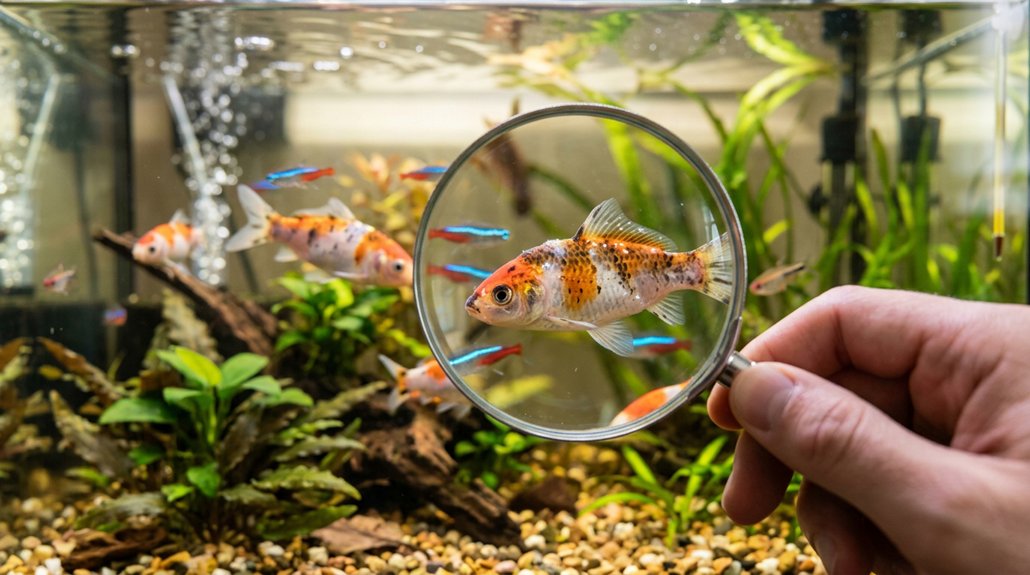
Fish parasites often show up first as subtle behavior changes: flashing against decor, lethargy, reduced appetite, and rapid or labored breathing can all signal irritation from ich, flukes, or velvet. You should watch these behavioral cues closely, then inspect the body, fins, gills, and mouth. Look for salt-like white spots, a dusty yellow-gold film, thread-like anchor worms, pale or inflamed gills, and excess mucus. In internal infestations, you may notice weight loss, a sunken abdomen, or stringy white feces. Because many parasites look similar, microscopic identification is essential. Quarantine affected fish, take skin or gill scrapes if you can do so safely, and consult a veterinarian or experienced aquarist. Correct diagnosis guides targeted treatment and prevents unnecessary stress.
Bacterial Fish Infections and Ulcers
You’ll often see bacterial fish infections as hemorrhagic patches, frayed fins, lethargy, loss of appetite, and open ulcers with reddened edges. These lesions usually start when opportunistic gram-negative bacteria enter through wounds, parasite damage, poor water quality, or stress-impaired skin, and they can progress quickly if you don’t intervene. Immediate care means isolating the fish, correcting water conditions, and treating visible wounds, while definitive recovery often requires targeted antibiotics and strict prevention of recurrence.
Common Bacterial Signs
Bacterial fish infections often announce themselves with hemorrhagic lesions, red streaks, ragged fins, cloudy or swollen eyes, and open ulcers; in severe cases, affected fish may develop dropsy with abdominal swelling and pineconing scales. You may also see ulcer progression: a shallow wound enlarges, edges redden, and tissue becomes necrotic as the skin microbiome is disrupted. These signs usually indicate bacterial invasion through damaged skin or an existing sore. If the lesion stays moist, inflamed, or deepens, suspect a systemic process rather than a simple abrasion. Watch for lethargy, clamped fins, and reduced feeding, especially when lesions spread. Prompt recognition matters because untreated ulcers can extend into muscle and invite secondary infections. Isolate affected fish, correct water quality immediately, and assess the need for targeted treatment.
Ulcer Causes And Risks
Ulcers in fish usually start as open sores in the skin and underlying muscle after opportunistic bacteria, especially *Aeromonas*, take hold through an injury, parasite damage, or compromised water conditions. You’ll often see red, hemorrhagic edges, ragged flesh, excess mucus, and dull behavior.
| Risk factor | Effect | Warning sign |
|---|---|---|
| High ammonia/nitrite | Tissue irritation | Rapid lesion spread |
| Overcrowding/trauma | Skin breaks | Scrapes, torn fins |
| Stress/poor nutrition | Weak defenses | Lethargy, anorexia |
Poor wound hygiene and weak stress reduction let lesions deepen, increasing the chance of septicemia or dropsy. You should treat every ulcer as a serious biosecurity event, because the surrounding tank can amplify bacterial load and worsen recurrence.
Treatment And Recovery
When bacterial fish infections or ulcers are suspected, act quickly by correcting the environment first: perform a large water change, siphon waste from the substrate, and restore safe ammonia, nitrite, pH, and temperature levels. Move the fish to a quarantine tank to lower stress and pathogen load. Use targeted antibacterial therapy for Aeromonas and related opportunists, ideally via medicated food; severe systemic disease may need veterinary-prescribed injectable antibiotics. Localized ulcers can benefit from topical antiseptics or antibacterial baths.
- Monitor for reduced redness, shrinking ulcers, and improved appetite.
- Maintain pristine quarantine conditions and repeat treatments as directed.
- Provide nutrition support and immune modulation through high-quality feed.
If severe dropsy, unresponsive gasping, or widespread ulceration persists, humane euthanasia may be necessary.
Ich, Velvet, and Other Protozoan Diseases
When you see white salt-like spots, a dusty yellow film, flashing, clamped fins, or rapid breathing, you should suspect protozoan disease such as ich or velvet. You’ll often need repeated treatment because these parasites have free-swimming stages that aren’t killed at once, so quarantine the fish and follow a full dosing schedule. For ich, velvet, costia, and flukes, prompt identification and targeted therapy are essential to prevent gill damage and relapse.
Recognizing Protozoan Signs
How do you tell protozoan disease apart at a glance? You look for pattern, location, and behavior. Protozoans often spread through a parasite lifecycle with free-swimming stages, so your fish’s feeding behavior may drop before the skin changes become obvious.
- White salt-like cysts, flashing, and heavier gill movement suggest Ich.
- Dusty yellow-rust sheen, rapid breathing, and clamped fins point to Velvet.
- Fine white veil, excess mucus, gasping, or rubbing indicate Costia or flukes.
You should treat early, quarantine affected fish, and improve water quality. Because many of these organisms cycle off the fish, repeated treatment is often necessary. Use targeted therapy, remove activated carbon, and vacuum substrate to reduce reinfection.
Ich And Velvet
Ich and velvet are the two protozoan diseases most often recognized by their rapid progression and distinctive external signs. Ichthyophthirius multifiliis produces tiny salt like cysts on the skin and gills, and you may see flashing, lethargy, and labored breathing. Freshwater velvet causes a dusty coating with rapid breathing, clamped fins, and rubbing against objects. Both parasites have an off-host stage, so the infestation can seem to fade, then return if you don’t interrupt the cycle. You should expect repeated signs over about a week unless the full life cycle is addressed. Sensitive or scaleless fish can react poorly, so monitor closely and consider species-specific guidance. Quarantine new fish, maintain water quality, and remove debris to limit spread and reduce infectious stages.
Treatment And Prevention
Effective treatment starts by breaking the parasite’s life cycle: for ich, remove activated carbon, raise the water temperature to about 28–30°C if the species can tolerate it, and treat with a malachite green or copper-based ich medication, repeating doses and water changes as directed so you catch the free-swimming theronts. For velvet, use a quarantine protocol, dim lights, and treat with copper sulfate or vet-recommended chloroquine for the full reproductive cycle, usually 7–10 days.
- Maintain pristine water with frequent changes and gravel vacuuming.
- Apply stress management by limiting crowding, handling, and sudden parameter shifts.
- Use dips or baths only with careful monitoring; scaleless fish need modified dosing.
After primary therapy, watch for secondary bacterial lesions and treat promptly.
How to Treat Fin Rot and Dropsy
When fin rot appears as frayed, discolored, or missing fin edges with inflammation at the base, start by correcting the underlying environment: improve water quality with partial water changes, verify temperature and other parameters, remove stressed tankmates, and vacuum the substrate; then treat with an appropriate antibacterial agent such as erythromycin or a broad-spectrum aquarium antibiotic, and remove activated carbon while medicating. Track healing weekly; intact fin bases can regenerate, but deep damage may scar. For fin rot prevention, maintain stable, clean water and avoid injury. For dropsy, isolate the fish immediately, optimize water quality, and offer vitamin-rich food plus antibacterial therapy; metronidazole may help if protozoa’re suspected. Its dropsy prognosis is guarded, especially once pineconing and abdominal swelling are advanced.
| Condition | Key signs | Action |
|---|---|---|
| Fin rot | Fraying | Antibiotics |
| Dropsy | Swelling | Isolation |
| Both | Decline | Rapid care |
Popeye, Swim Bladder, and Slime Disease
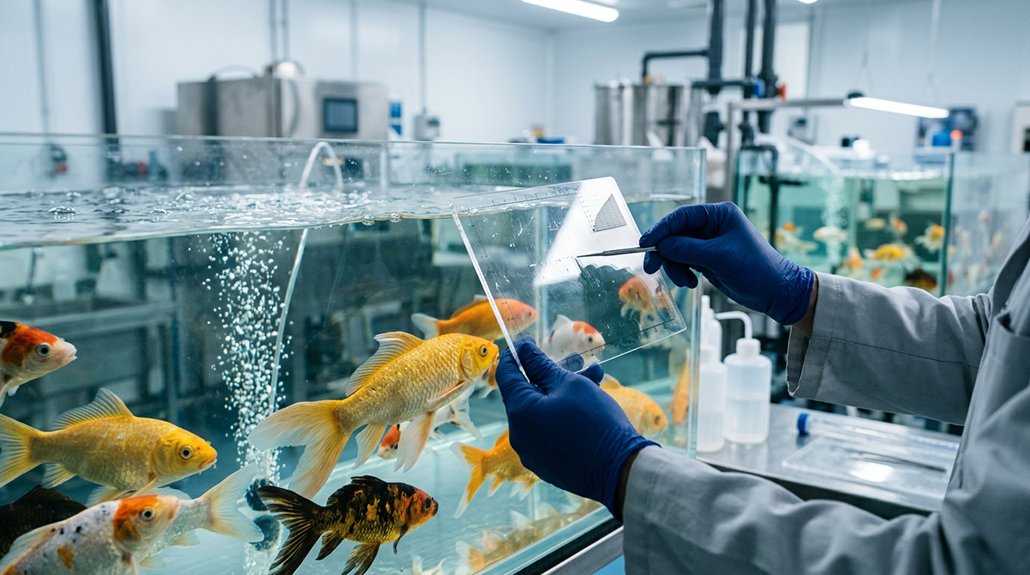
Popeye, swim bladder disease, and slime disease each present with distinct but often stress-related signs that warrant prompt correction of the underlying cause. You’ll see bulging or cloudy eyes, abnormal buoyancy, or excess mucus with clamped fins and labored breathing.
- Isolate the fish in a quarantine tank and improve water quality immediately.
- For popeye, use targeted antibiotics when bacterial infection is likely; for swim bladder disease, withhold food 24–48 hours and offer a skinned frozen pea if constipation’s suspected.
- For slime disease, treat the cause with appropriate anti-parasitics or antiseptic therapy if indicated.
Preventive quarantine of new arrivals, stable chemistry, and overcrowding avoidance are essential. Dietary management should be balanced and consistent, because poor nutrition and stress increase susceptibility and secondary infection risk.
Best Treatments for Anchor Worms and Flukes
Because anchor worms and flukes require different approaches, treatment has to match the parasite: anchor worms are visible Y-shaped crustaceans that should be grasped with fine forceps and pulled steadily from the skin, then the site treated with a topical antiseptic or antibiotic ointment to prevent secondary infection; afterward, quarantine the fish and recheck weekly for newly emerged adults. For these larger parasites, manual extraction is essential, and your quarantine maintenance should include repeated inspection and removal of any new worms. Flukes are microscopic, so you’ll need a confirmed diagnosis from skin or gill scrapes and then treat in a well-aerated hospital tank with formalin or a praziquantel-based fluke medication, following label directions and oxygenation precautions. If sores appear, add an antibacterial.
How to Prevent Fish Disease With Better Water Quality
Keeping fish healthy starts with water quality: cycle the aquarium fully before adding livestock so nitrifying bacteria can convert ammonia to nitrite and then nitrate, and maintain ammonia and nitrite at 0 ppm while keeping nitrate below about 40 ppm. Use regular testing to verify stability, and apply controlled filtration to support biological processing without excessive current.
- Perform 20–30% partial water changes weekly, and vacuum substrate to remove waste.
- Keep temperature, pH, and dissolved oxygen in species-appropriate ranges; avoid sudden shifts.
- Quarantine new fish and plants for 2–4 weeks, and prevent overcrowding and overfeeding.
These measures reduce stress, limit pathogen introduction, and sharply lower the risk of bacterial, fungal, and parasitic disease outbreaks.
Frequently Asked Questions
How Long Should I Quarantine New Fish Before Adding Them?
You should quarantine new fish for two weeks minimum; many keepers prefer 4 weeks. This observation period lets you detect hidden problems, stabilize feeding, and treat issues before you add them.
Can Fish Diseases Spread to Other Tank Inhabitants?
Yes—fish diseases can spread to other tank inhabitants through cross infection risks, especially if carrier species are present. You should isolate affected fish, improve hygiene, and monitor all livestock closely for signs of illness.
Is It Safe to Mix Multiple Medications in One Treatment?
No, you shouldn’t mix multiple medications unless you’ve confirmed compatibility; medication interactions can harm fish, and dosage uncertainty increases toxicity risk. Use one treatment at a time, follow labels exactly, and monitor closely.
When Should I Remove a Sick Fish From the Main Tank?
You should remove a sick fish when symptoms persist, worsen, or it’s being bullied. Isolate immediately if breathing’s labored, lesions appear, or eating stops; observe behavior closely for rapid changes.
How Can I Tell if My Fish Is Stressed or Actually Ill?
Look for behavior changes and color fading; stress usually follows a brief storm, while illness lingers like a shadow. If you see persistent clamped fins, rapid breathing, sores, or loss of appetite, you’re likely dealing with disease.
Conclusion
By keeping your tank clean, stable, and closely monitored, you can curb common fish diseases before they take hold. You’ll catch early signs like clamped fins, cloudy eyes, or erratic swimming faster, and respond with prompt, proper treatment. With careful water changes, consistent testing, and controlled feeding, you’ll create a healthier habitat. Stronger water means stronger fish, and steady stewardship helps stop sickness, stress, and suffering before they spread.