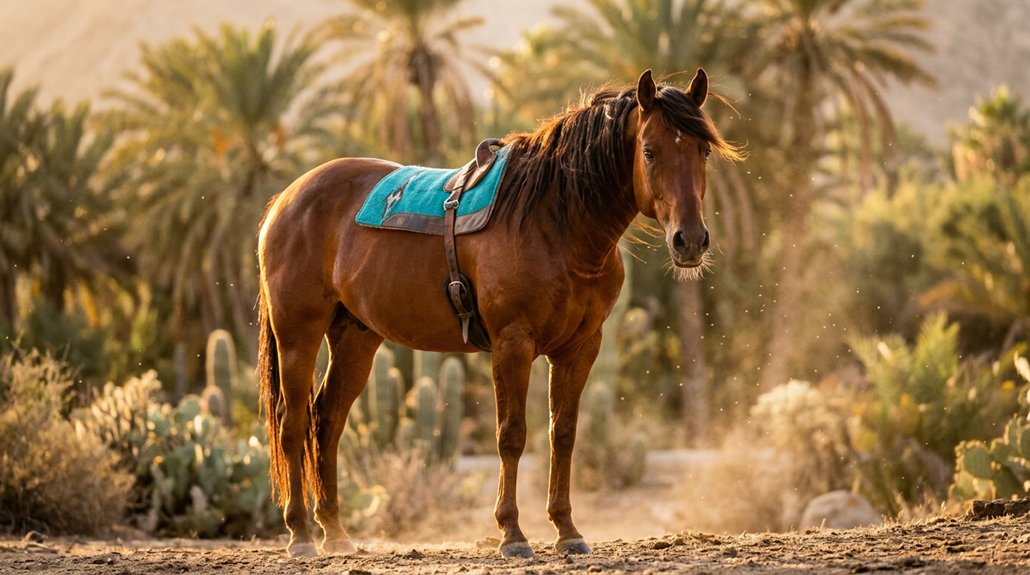
When selecting a horse for warm climates, prioritize breeds like Arabians and Mustangs that exhibit evolutionary adaptations such as efficient sweating, adept hydration strategies, and thin coats for peak heat dissipation. These traits guarantee superior heat tolerance and endurance, essential for thriving in high-temperature environments. Paints and Quarter Horses also excel, showcasing strong constitutions and advanced cooling capabilities. Evaluating these attributes will deepen your understanding of how these breeds excel in warmth-challenging settings.
Key Takeaways
- Arabians excel in warm climates with efficient hydration and exceptional stamina.
- Mustangs are highly adaptable with thin coats aiding in heat dissipation.
- American Paints withstand high temperatures, offering versatility for riding and work.
- Quarter Horses demonstrate agility and advanced sweating for effective cooling in warm regions.
- Carolina Marsh Tackies are bred for hot, humid conditions, featuring efficient sweating and heat tolerance.
Top Horse Breeds for Warm Climates
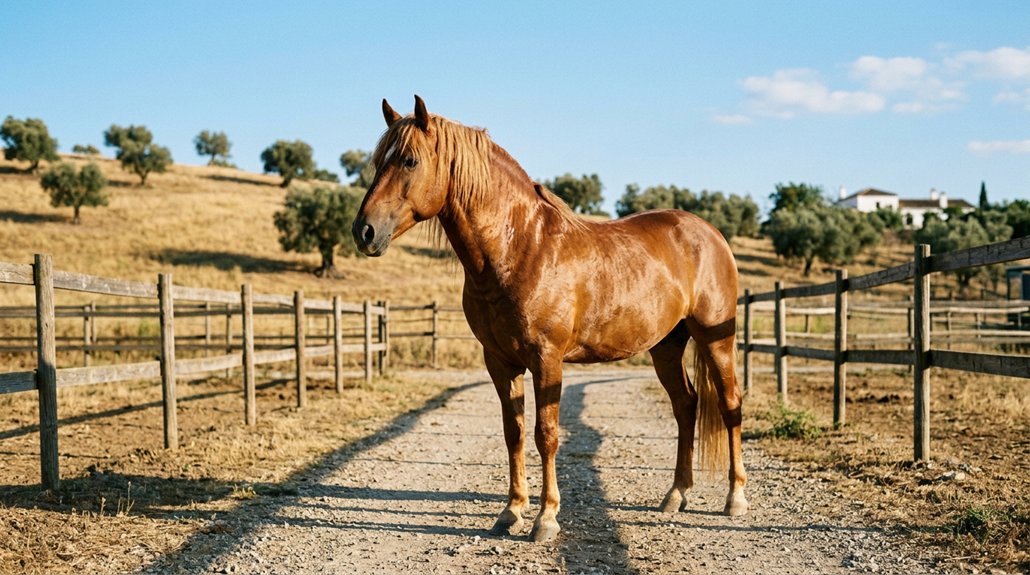
When selecting a horse breed for warm climates, it is crucial to take into account their physiological adaptations to heat. Arabians exemplify climate adaptability due to their desert origins, which provide them with efficient hydration systems and lower water needs. Similarly, mustang resilience is invaluable; these horses thrive across diverse environments, showing exceptional endurance and heat tolerance. Versatile American Paints and Quarter Horses are popular choices due to their capability to withstand high temperatures, suitable for both riding and work in warm regions. Carolina Marsh Tackies stand out for their breeding specifically for hot, humid conditions, making them ideal for southern climates. While Thoroughbreds vary in heat tolerance, with proper management, they too can be appropriate companions in warm-weather settings.
Key Traits for Heat Tolerance in Horses
Although horses are generally robust creatures, certain physiological adaptations enhance their resilience to heat and make them better suited for warm climates. Efficient sweating, seen in breeds like Akhal-Tekes, facilitates body temperature regulation, aiding in cooling mechanisms. Hydration strategies are vital, as these breeds exhibit adept fluid retention and conservation, essential in hot, arid conditions. Regular grooming techniques, emphasizing thin coats, optimize thermal exchange, enabling heat dissipation.
| Trait | Breeds Known For |
|---|---|
| Efficient Sweating | Akhal-Tekes, Carolina Marsh Tacky |
| Hydration Strategies | Arabians, Mustangs |
| Thin Coat for Cooling | Akhal-Tekes, Mustangs |
Mustangs, celebrated for their hardiness, have integrated these traits, showcasing survival acumen. Ensuring regular access to shade, fresh water, and salt supplements fortifies their adaptability to hot environments.
Arabians: The Original Heat-Resilient Breed
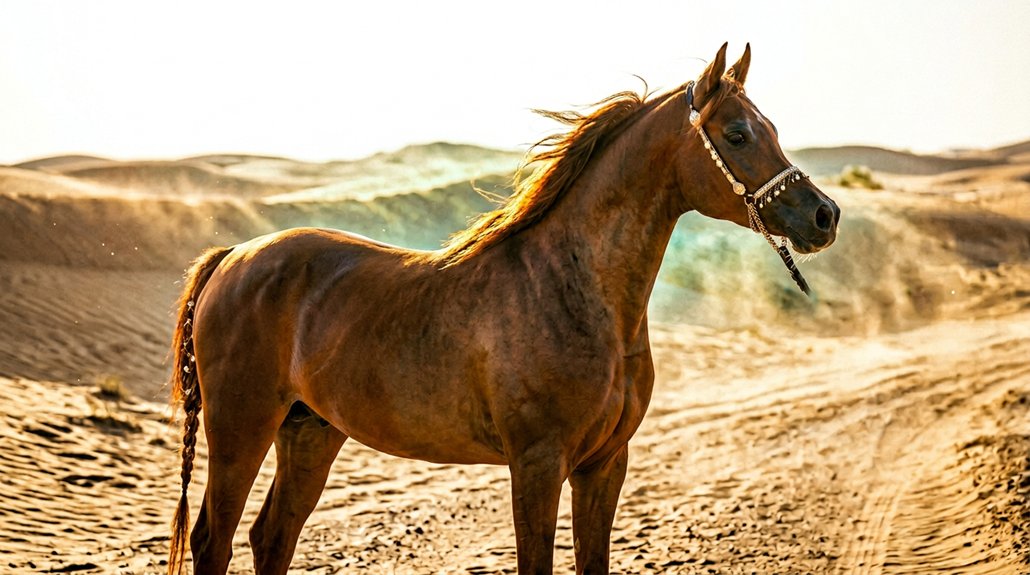
Due to their evolutionary roots in the harsh desert environments, Arabians have developed exceptional adaptations that make them a quintessential heat-resilient breed. Their Arabian history is marked by survival in desert conditions, resulting in a compact frame and thin coat ideal for temperature regulation. This physiological makeup is complemented by efficient hydration mechanisms, minimizing water dependency. Arabians possess tough hooves tailored for rocky and sandy terrains, enhancing endurance training capabilities. Their exemplary stamina is particularly suited for long-distance travel in heat, an attribute refined through generations of selective breeding. Furthermore, Arabians display an efficient sweating mechanism that effectively manages heat stress during exercise, enabling superior thermoregulation. This breed’s evolution illustrates a synthesis of anatomical and physiological features ideally aligned with warm weather environments.
Why Quarter Horses and Paints Excel in Heat
Arabians have long been celebrated for their heat resilience, but they’re not alone in thriving under sunlit skies. Quarter Horses and Paints, known for their agility and endurance, exhibit superior heat tolerance due to their physiological attributes and behavioral qualities. Their short coats minimize heat retention, optimizing thermoregulation alongside advanced sweating capabilities—essential for effective cooling. Implementing rigorous exercise routines aligned with hydration strategies enhances their adaptability in warm conditions. These breeds also feature robust constitutions that prevent fatigue and facilitate prolonged physical exertion. Their temperament plays a significant role, remaining calm under heat stress, complementing scientific hydration strategies and exercise regimens. Collectively, these features assure sustained performance without agitation, certifying Quarter Horses and Paints as exemplary choices for hot climates.
Managing Heat for Horse Comfort
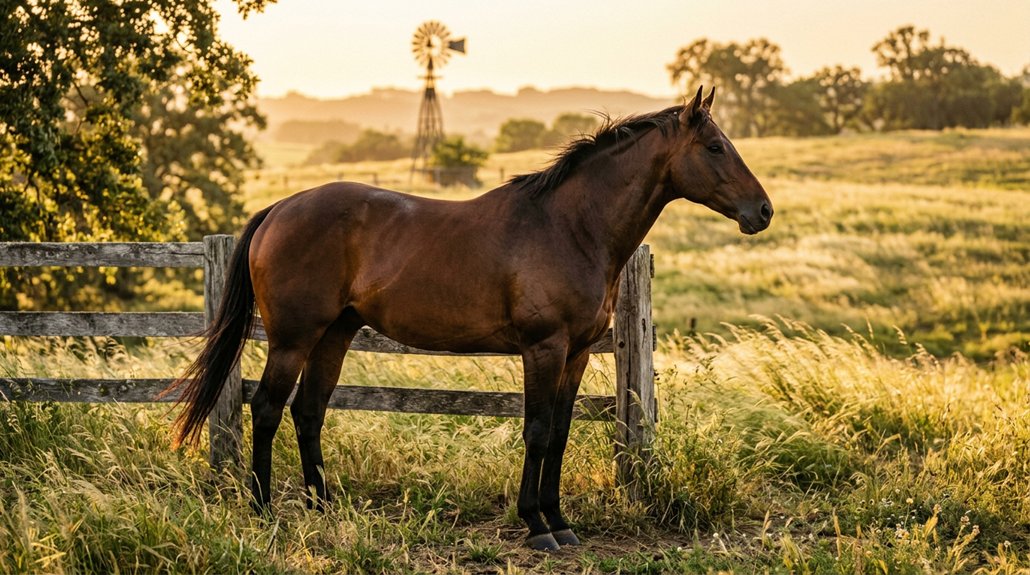
When managing heat for horse comfort, ensuring sufficient shade and fresh water is critical to prevent dehydration and heat stress, supported by scientific studies highlighting their importance. Employing cooling techniques like adequate ventilation, sprinklers, or kiddie pools can facilitate thermoregulation, reducing core body temperature effectively. Additionally, scheduling rides for early mornings or late evenings aligns with research indicating ideal times are outside the peak temperature range of 95-110 degrees Fahrenheit, thereby safeguarding the horse’s well-being.
Ensuring Sufficient Shade
Although horses have a natural instinct to seek relief from the sun, guaranteeing sufficient shade is an essential component of managing their comfort in warm climates. Scientific evidence shows that, during peak temperatures ranging 95-110 degrees Fahrenheit, horses require well-ventilated shady areas to regulate body temperature and avoid heat-related health issues like heat stroke. You should consider installing shade structures, such as cloths or canopies, that can enhance natural shade, providing cooler zones and mitigating extreme heat effects. Constant monitoring is imperative, as horses will instinctively seek shade when uncomfortable. To complement shade structures, implementing effective hydration strategies with fresh water and salt blocks guarantees peak hydration and electrolyte balance, further minimizing heat stress in horses.
Utilizing Cooling Techniques
To effectively manage heat for horse comfort, adopting a combination of cooling techniques is indispensable. Scientific evidence underscores the necessity of controlling a horse’s environment in warm climates. Here are three important considerations:
- Ice Therapy: Applying ice packs to large blood vessels along the neck, chest, and legs can rapidly decrease core temperature, utilizing conductive heat transfer principles.
- Hydration Strategies: Fresh water access is essential, but consider adding electrolytes to replenish minerals lost during sweating. This step is significant to maintain osmotic balance and cellular function.
- Environmental Cooling: Installation of sprinklers, misters, or kiddie pools in shaded areas offers evaporative cooling, effectively aiding thermoregulation when ambient temperatures peak.
Monitoring for heat distress signs like excessive sweating or rapid breathing remains necessary for timely intervention.
Optimal Riding Times
Timing your rides is essential in warm weather to minimize the thermal stress on your horse. Scientific evidence indicates that early morning rides or evening exercises are ideal due to lower ambient temperatures, reducing the risk of heat-related complications. These periods help circumvent peak heat spikes, which can surpass 95-110°F. Monitoring your horse for physiological signs of heat stress—such as increased respiratory rates and excessive sweating—is imperative. Confirm they’re hydrated and have access to shade to avert dehydration and overheating. Post-exercise cooling measures, like applying sprinklers or utilizing fans, are recommended to expedite thermoregulation. Limiting duration and intensity of riding sessions further promotes equine welfare during hot conditions, maintaining their comfort and safety effectively.
Assessing Your Horse’s Heat Adaptability
Horses’ ability to cope with heat is essential for their well-being, especially in warm climates. To assess your horse’s heat adaptability, consider several factors that guarantee ideal health and prevent heat stress. Efficient hydration strategies are critical. Analyze your horse’s water intake and guarantee consistent access to fresh water.
Efficient hydration is vital for horses to thrive in warm climates, ensuring consistent access to fresh water.
Understand individual variations in heat tolerance among breeds. Breeds like Arabians have inherent advantages, but each horse’s history, health, and previous climate exposure play roles too.
Monitor physiological signals to detect heat-related distress. Key indicators include:
- Sweating patterns: Unusual sweating can signal overheating.
- Breathing rates: Elevated respiration may indicate distress.
- Behavioral changes: Lethargy or irritability can precede serious issues.
These evaluations help implement preventive measures, maintaining your horse’s comfort and safety in hot environments.
Real-World Insights: Community Experiences
You’ll find that Arabian horses demonstrate formidable thermoregulatory efficiency, attributable to their genetic and physiological adaptations to arid environments. When managing heat stress, employing creative cooling techniques like strategic shade structures and consistent hydration systems can greatly enhance a horse’s comfort and overall performance. Communities often highlight breed-specific insights, particularly the robustness of Carolina Marsh Tacky and Florida Crackers, which excel in warm climates, underscoring the necessity of understanding individual heat tolerance for ideal care strategies.
Creative Cooling Techniques
Many horse owners in sweltering regions have ingeniously adopted creative cooling techniques to combat the intense heat and protect their animals from overheating. Scientifically, these practices are essential in managing equine thermoregulation. Here’s how:
- Sprinkler Systems: Leveraging sprinklers creates evaporative cooling, efficiently reducing the horses’ core temperatures during peak heat hours.
- Kiddie Pools & Natural Shade: Setting up kiddie pools enables immersive cooling, while natural shade crafted by trees or shade cloth mitigates direct sun exposure, vital for maintaining thermal comfort.
- Frequent Grooming & Electrolyte Balance: Regular grooming enhances air circulation, important in humidity, while adding electrolytes to drinking water maintains hydration, possibly alleviating heat stress.
Breed Adaptation Experiences
Recognizing that breed adaptability plays a significant role in managing equine thermoregulation, Arabian horses stand out due to their desert heritage, which contributes to efficient hydration mechanisms and enhanced heat stress management. Their breed resilience is evident in owner reports, highlighting superior performance in hot climates. Mustang owners also commend their horses for adaptability to climate challenges, citing success stories of withstanding high temperatures and varied terrains. Florida Crackers naturally acclimate to humidity, flourishing in moist environments that test other breeds. Community insights emphasize that while individual horse response varies, breeds like certain Thoroughbreds and Quarter Horses often defy expectations by managing heat efficiently. However, Gypsy Vanners struggle with high humidity, advocating careful breed selection for climatic compatibility.
Individual Heat Tolerance
How do individual horses vary so considerably in their tolerance to heat, even within the same breed? This discrepancy is often attributed to individual variation and health factors. Thoroughbreds or Quarter Horses may show different heat endurance due to health history or acclimatization levels.
- Health Considerations: Conditions like anhidrosis pose significant challenges, affecting a horse’s ability to cope with heat. Regular monitoring of hydration and sweating is essential.
- Breed Resilience: Arabians and Mustangs have shown, through anecdotal community evidence, an inherent resilience to high temperatures.
- Environmental Acclimatization: Lighter breeds with extensive exposure to warm conditions demonstrate better heat tolerance. However, strategic management, including shaded areas and sprinkling systems, remains vital for maintaining ideal comfort levels.
Frequently Asked Questions
What Is the 20% Rule for Horses?
The 20% Rule suggests feeding a horse no more than 20% of its body weight daily to maintain ideal digestive health. This limit assists in horse behavior management and supports temperature regulation, essential in preventing digestive and heat stress.
How Does a Horse Say “I Love You”?
Imagine a whisper from the heart; that’s equine affection. A horse communicates “I love you” through nuzzling, relaxed posture, soft whinnies, and mutual grooming, signifying trust and deep social bonds, as evidenced by their instinctual behaviors and studies.
Does a Horse Remember You?
Yes, a horse can remember you. Scientific evidence shows that horse memory allows them to recall individual humans through emotional connections formed by positive interactions, utilizing recognition cues like body language and vocal tones to reinforce these associations over time.
How Do You Say Hello in Horse Language?
To say hello in horse language, anticipate body movements and vocalizations. Equine body signals like soft nuzzling, relaxed posture, and ear positioning, combined with vocalizations such as whinnying, communicate greetings and acknowledgment scientifically and affectionately.
Conclusion
In your search for the ideal equine companion in sweltering climates, it’s practically impossible to overlook the Arabian, the Quarter Horse, and the Paint. These breeds, with their superior thermoregulatory capabilities, seem almost engineered for searing temperatures, showcasing an evolutionary triumph over heat stress. By delving into meticulous care strategies and evaluating your horse’s heat adaptability, you reveal the secrets to equine comfort in extreme conditions, guaranteeing, without a shadow of a doubt, peak performance and well-being.