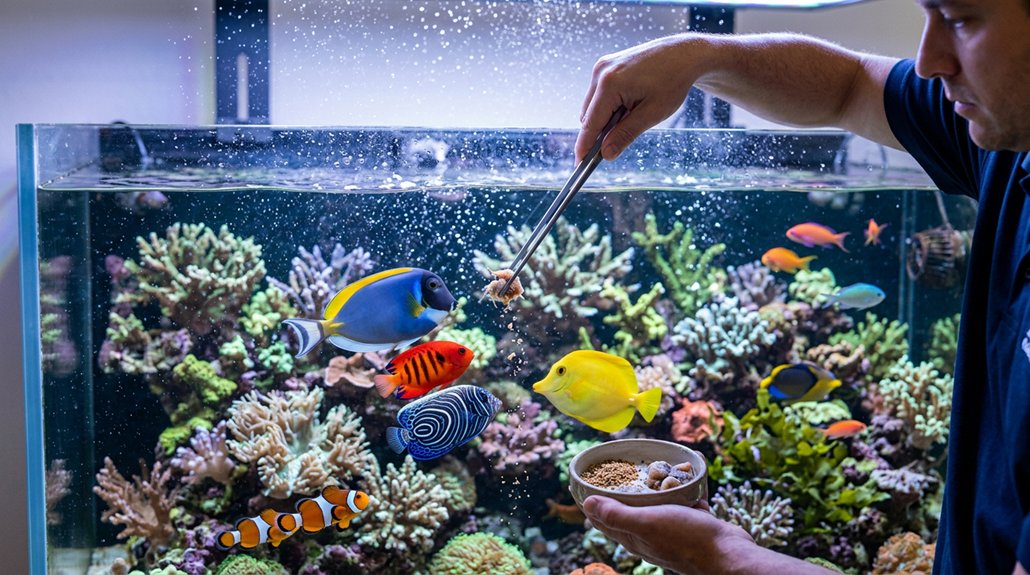
You should feed aquarium fish by matching the diet to the species: herbivores need algae-based foods and blanched vegetables, carnivores need high-protein pellets and frozen or live prey, and omnivores do best on quality flakes with supplemental protein. Feed most adults 1–2 times daily, but offer fry smaller meals 3–4 times daily. Give only what they can eat in 2–3 minutes, and remove leftovers promptly. A few practical details can improve results further.
Key Takeaways
- Match food to species: carnivores need protein-rich foods, herbivores need algae-based foods, and omnivores need balanced flakes or pellets.
- Feed adults once or twice daily, while fry need three to four small feedings spread throughout the day.
- Give only what fish can finish within 2–3 minutes to prevent overfeeding and water pollution.
- Use the correct food size and delivery method, such as sinking wafers for bottom-dwellers and crushed foods for fry.
- Remove uneaten food within 5–10 minutes and keep feeding times consistent for healthier fish and cleaner tanks.
What Aquarium Fish Eat by Species
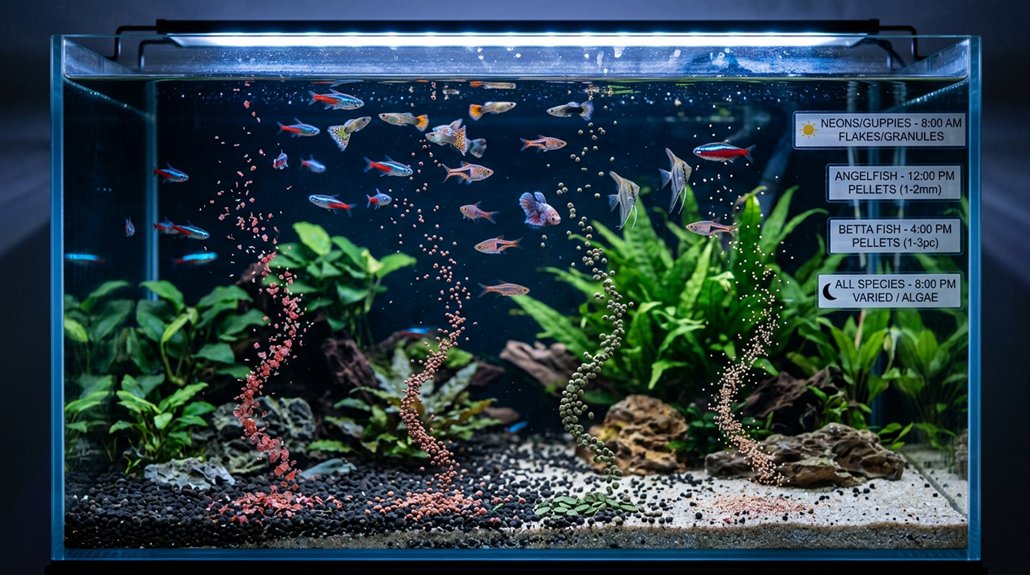
Aquarium fish do best when you tailor their diet to their species’ natural feeding strategy. You should match food type to mouth size and habitat preference. Carnivores, such as bettas and many cichlids, need high-protein pellets and frozen or live foods like bloodworms, brine shrimp, or Mysis. Herbivores, including plecos and tangs, require spirulina flakes, algae wafers, and blanched zucchini, peas, or spinach; some plecos also use driftwood. Omnivores, such as guppies and goldfish, thrive on flakes or micro-pellets with supplemental protein and occasional vegetables. Bottom-dwellers need sinking pellets or wafers near substrate. Fry and very small species need crushed flakes, powdered foods, infusoria, or newly hatched brine shrimp.
How Often to Feed Aquarium Fish
Most adult freshwater fish do well with 1–2 feedings per day, while fry need 3–4 small feedings daily to support rapid growth. You should adjust feeding schedules to species and temperature effects, since warmer water usually increases metabolism and demand. Herbivores and active grazers, such as tangs and plecos, often benefit from smaller, more frequent meals or near-continuous grazing, whereas carnivores can be fed less often. For diurnal fish, give food in morning and evening; for nocturnal species, offer a small sinking feed after lights-off. When you’re away, skip a day or use an automatic feeder with measured portions. Clear instructions to any caregiver help maintain consistency. Feed only what’s consumed quickly, and remove leftovers promptly to protect water quality and prevent waste buildup.
How Much Food to Give Fish
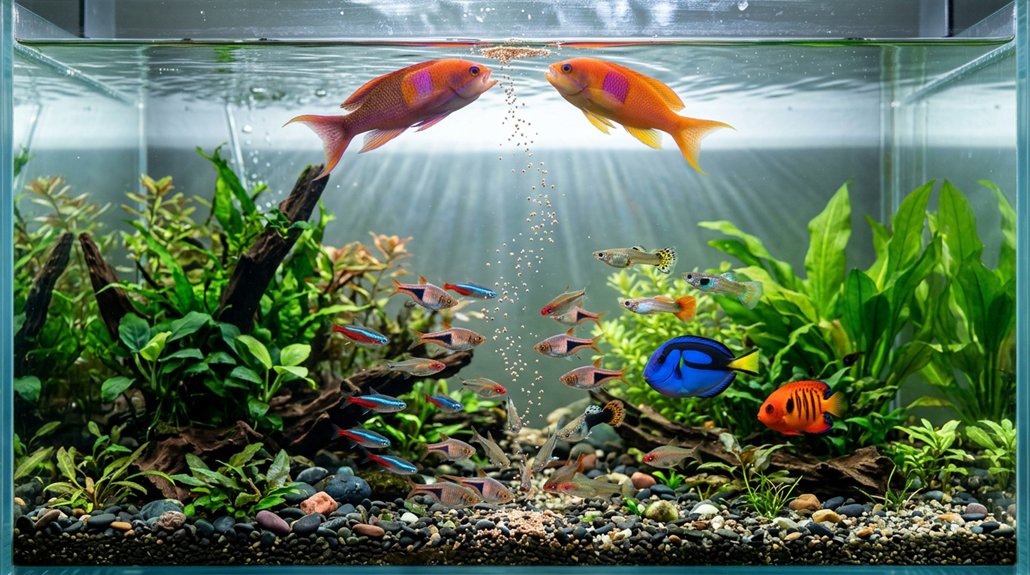
Portion size matters as much as feeding frequency. You should use strict portion control: offer only what each fish can consume within 2–3 minutes, or up to 5 minutes for very slow-eaters. Start with a tiny pinch, then add more only if the food is gone quickly. For most adult freshwater fish, a mouthful per fish at each feeding is adequate; use small pellets, crumbled flakes, or a measured dab to prevent overstocking the water. If you see uneaten food after 5 minutes, remove it promptly and cut later feedings by about 50%. This reduces ammonia and nitrate accumulation and limits algae growth. Make a temperature adjustment as needed; warmer water raises metabolism, so feed slightly more, while cooler water requires smaller amounts.
Best Fish Foods for Herbivores, Carnivores, and Omnivores
Diet should match the fish’s feeding guild: herbivores such as plecos, tangs, and many African cichlids do best on algae-based foods like nori sheets, spirulina flakes, algae wafers, and frequent blanched vegetables such as zucchini, peas, and spinach, offered multiple times daily to mimic grazing. Carnivores, including bettas, angelfish, and many marine predators, need high-protein pellets, frozen or live mysis, brine shrimp, krill, and bloodworms, usually once daily or every other day. Omnivores, such as guppies, tetras, and gouramis, benefit from high-quality flakes or micro-pellets plus frozen or live daphnia and brine shrimp, with occasional vegetable matter. Match particle size and feeding level to the mouth. Choose prudent algae supplementation and reliable live-food sourcing, and only provide portions consumed within 2–3 minutes.
Common Fish Feeding Mistakes
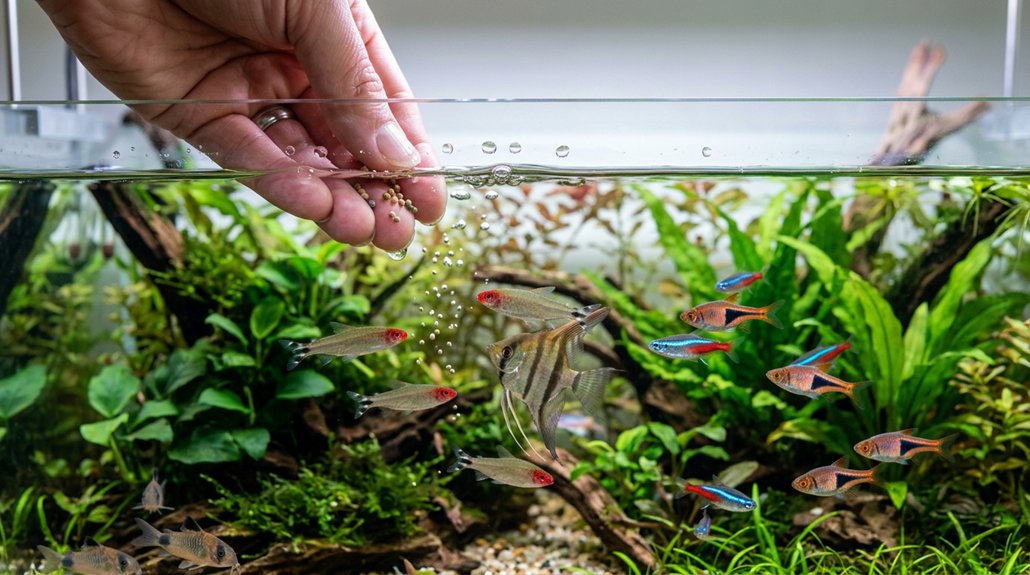
Even when you match foods to herbivores, carnivores, and omnivores, feeding errors can still undermine fish health and water quality. You should avoid overfeeding consequences by offering only what’s consumed in 2–3 minutes and removing leftovers within 5–10 minutes.
- Use small measured pinches, not whole containers.
- Match diet to species’ natural feeding habits.
- Keep frozen/live foods properly thawed.
- Don’t leave thawed food at room temperature.
- Feed small portions once or twice daily.
Improper foodhandling and irregular schedules raise spoilage risk, ammonia/nitrite spikes, clogged filters, bloating, and aggression. If you observe uneaten food, reduce the next portion. If you feed live or frozen diets, thaw in tank water for 10–15 minutes, then discard any compromised portion. Consistency is clinically important for stable metabolism and tank hygiene.
Frequently Asked Questions
How Many Times a Day Should Aquarium Fish Be Fed?
You should feed most aquarium fish once or twice daily; fry need 3–4 small feedings. Adjust your feeding schedule by species, temperature, and metabolism, and keep portion size small, only what they’ll eat in 2–3 minutes.
What Should You Not Feed Fish?
You shouldn’t feed fish human food, spoiled frozen foods, oily meats, or unquarantined feeder fish; avoid overfeeding and uneaten live plants. These can cause blockage, poisoning, pathogens, and ammonia spikes.
Is It Better to Feed Fish Flakes or Pellets?
Pellets’re usually better, since you can match size and sink rate to your fish’s mouth and depth, improving protein sources delivery and reducing waste. Use flakes for surface feeders; feeding frequency should stay minimal.
How to Properly Feed Aquarium Fish?
You feed aquarium fish by using portion control: offer only what they’ll eat in 2–3 minutes, on consistent feeding schedules. Match food to species, vary diet, and remove leftovers promptly to prevent water quality decline.
Conclusion
By following species-specific feeding schedules, portion control, and appropriate diets, you can support your fish’s health, coloration, and immune function. Feeding is not mere routine; it is the circulatory system of aquarium care, moving energy through the tank. Avoid overfeeding, underfeeding, and poor food choices, and you’ll reduce stress, waste buildup, and disease risk. When you feed with precision, you’re giving your fish the consistent nutritional foundation they need to thrive.