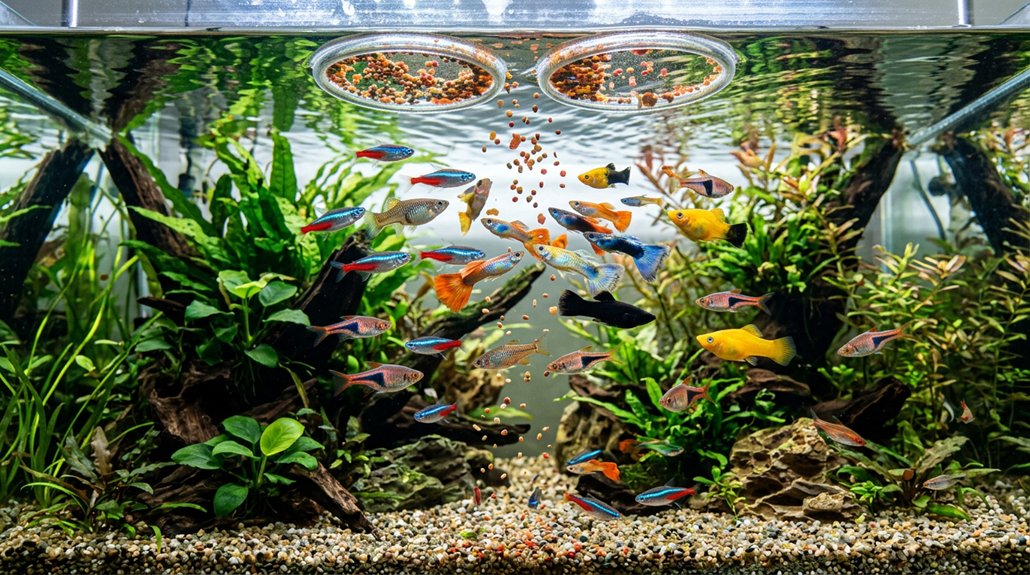
You affect fish health and behavior most through diet. When you match protein, essential amino acids, lipids, phospholipids, vitamins, and minerals to species and life stage, you support growth, immunity, stress tolerance, and normal feeding activity. Omega-3s, balanced phosphorus, and antioxidants help membrane integrity and disease resistance. Probiotics, enzymes, and careful feeding schedules can improve gut health and reduce stress. Get the formulation right, and you’ll see how nutrition shapes performance in more ways than one.
Key Takeaways
- Balanced protein and essential amino acids support growth, immunity, and reduce stress-related disease susceptibility.
- Omega-3s, phospholipids, and adequate lipids strengthen membranes, improve development, and increase handling and environmental stress tolerance.
- Larvae and juveniles need precise nutrients, especially phosphorus and phospholipids, for survival, skeletal development, and healthy growth.
- Probiotics, prebiotics, and digestive enzymes improve gut health, feed efficiency, and can promote calmer, more stable behavior.
- Poor diet, excess additives, or imbalanced formulations can impair immunity, slow growth, increase deformities, and worsen behavior.
Fish Diet Basics for Healthy Growth
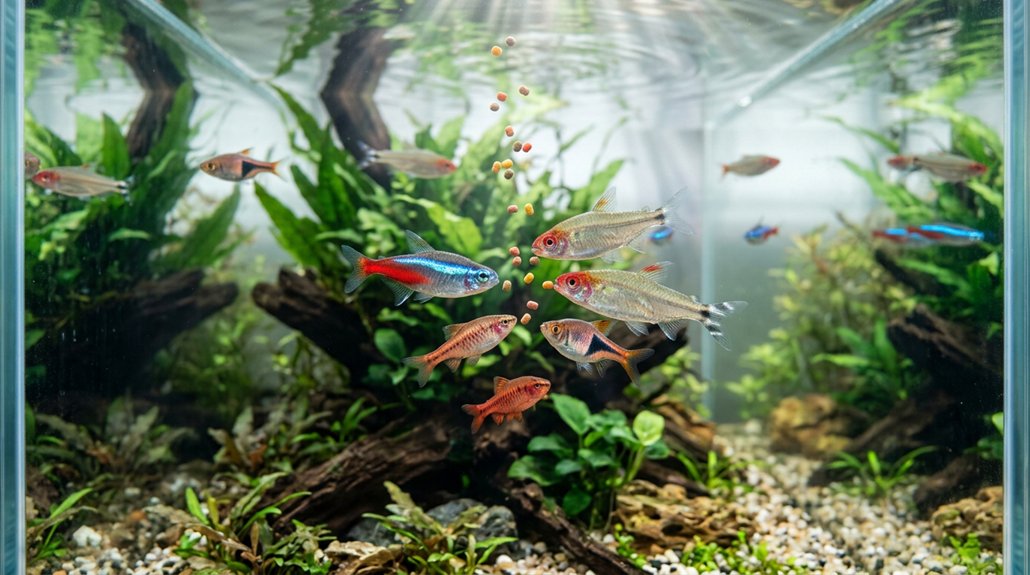
Healthy fish growth depends on a balanced diet that supplies high-quality protein and all essential amino acids, because many immune components are proteins or protein-dependent. You should match nutrients to life stage, since larvae and juveniles often need phospholipids to support survival, growth, stress resistance, and skeletal development. You can reduce fishmeal use by adding digestible alternatives such as corn distillers dried grains with solubles, which provide energy, protein, and phosphorus. In species with limited endogenous enzymes, dietary digestive enzymes may improve digestibility and gut health. Controlled immunostimulants, including beta-glucans and nucleotides, can raise nonspecific immunity when dosing schedules are rotated. You’ll also need to align feeding schedules with water chemistry to preserve feed quality, uptake, and metabolic efficiency.
How Fish Food Shapes Behavior
Beyond supporting growth, fish diets also shape behavior by altering energy status, stress responsiveness, immunity, and gut function. When you include phospholipids, you’re more likely to see higher larval and juvenile survival, less stress-related activity, and fewer abnormal swimming patterns. Brewer’s yeast, beta-glucans, and related immunostimulants can increase phagocytosis and respiratory burst, which often coincides with stronger feeding responsiveness during disease challenge. Enzyme supplements and improved digestibility support nutrient absorption, gut health, and foraging innovation, so you may observe more efficient search and capture behavior. Prebiotics and probiotics can shift microbiota, improve feed conversion, and promote calmer feeding and social behavior, including more stable social hierarchy. By contrast, continuous or excessive synthetic immunostimulants can produce inconsistent effects and may blunt prior benefits.
Protein and Amino Acids in Fish Feed
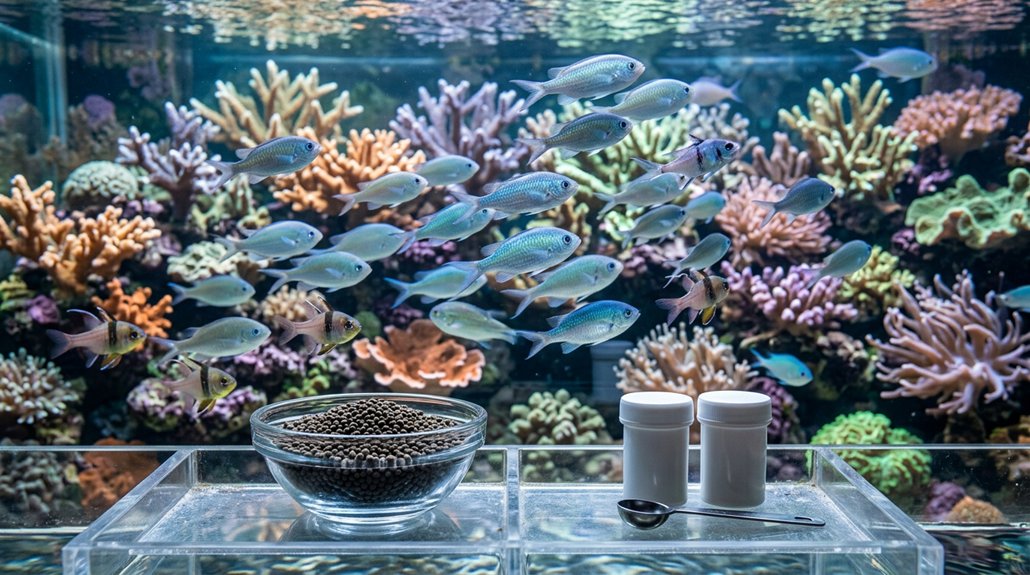
You need high-quality protein with a balanced amino acid profile to support growth and maintain immune function, since many immune factors are proteins or protein-derived products. If essential amino acids are deficient, or total protein is inadequate, your fish’s immunocompetence and disease resistance decline, increasing susceptibility to pathogens. Diets using fishmeal or alternative protein sources must supply digestible amino acids and enough energy, and you should supplement limiting amino acids when needed to preserve normal organ and cellular function.
Protein Quality Matters
Protein quality drives fish growth, immunity, and disease resistance because many metabolic and immune processes depend on an adequate supply of essential amino acids. You should use amino profiling and protein digestibility data to select digestible sources such as fishmeal or DDGS, since poor-quality protein reduces feed efficiency. When essential amino acids are lacking, you’ll see slower growth, weaker immune responses, and greater pathogen susceptibility.
- Adequate protein supports immunocompetence.
- Digestible ingredients improve growth performance.
- Processing losses can be corrected with proteases or nucleotides.
You should also monitor phosphorus and phospholipids in the diet, because they help growth, survival, and skeletal integrity in larvae and juveniles. Precision feeding protects health, limits waste, and reduces reliance on inferior protein fractions while maintaining physiological resilience.
Amino Acid Balance
A balanced amino acid profile determines whether dietary protein can support growth, immunity, and normal development in fish. You need sufficient essential aminoacids, because protein synthesis depends on matching species-specific requirements, not just total crude protein. When methionine, cysteine, or lysine are limiting, growth slows, skeletal defects can appear, and survival may decline in larvae and juveniles. If you replace fishmeal with ingredients such as corn DDGS, you must supplement or blend feeds to restore indispensable amino acid balance for species like tilapia and salmon. You also have to account for processing effects: heat and extrusion can reduce amino acid bioavailability, so post-processing evaluation is essential. Accurate formulation keeps protein utilization efficient and helps prevent nutritional insufficiency.
Growth And Immunity
When dietary protein is high quality and the amino-acid profile is balanced, fish can support both rapid growth and robust immune function, because many immune mediators are themselves proteins or protein-derived molecules. You should supply adequate essential amino acids to sustain antibody, complement, macrophage, and lymphocyte production. Deficits in amino acids, vitamins C and E, or selenium can weaken antioxidative defenses, increase oxidative stress, and reduce pathogen resistance. Consider:
- precise protein formulation for growth;
- seasonal feeding adjustments to match demand;
- immunostimulants, such as yeast or beta-glucans, used cautiously.
Economical ingredients like DDGS can reduce fishmeal use, but you’ll need to monitor digestible amino-acid balance and phosphorus. Proper nutrition improves stress resilience, yet excessive or prolonged immunostimulant exposure may diminish efficacy or cause side effects.
Omega-3s and Fat Requirements in Fish
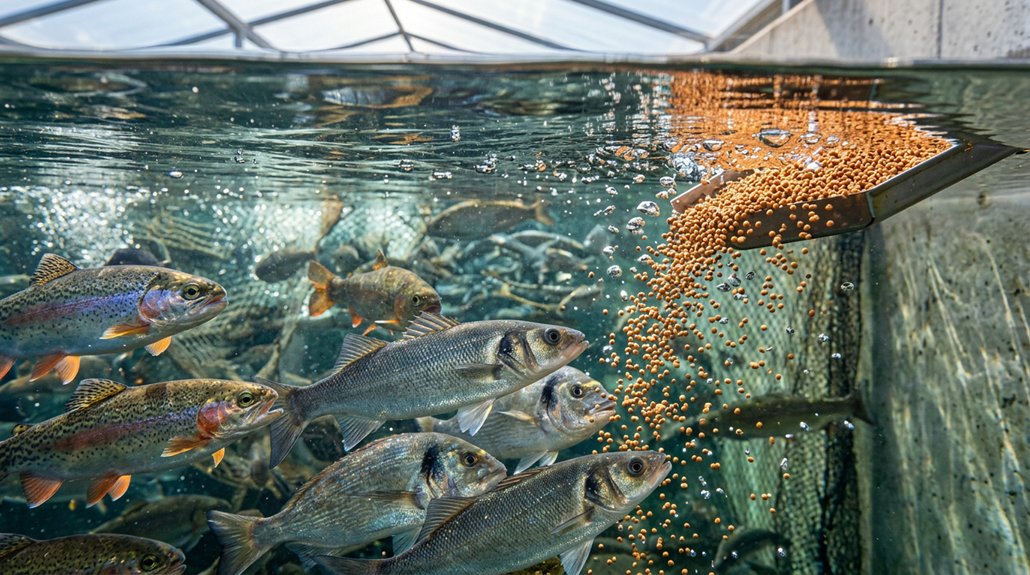
You need adequate long-chain omega-3 fatty acids, especially EPA and DHA, to maintain normal membrane phospholipid composition, growth, neural development, and stress resistance. In aquafeeds, these lipids usually come from fish oil or other EPA/DHA sources, because many fish can’t efficiently convert plant-derived ALA into the required long-chain forms. If dietary omega-3s and phospholipids are insufficient, you can see impaired survival, growth, immune function, and skeletal development, whereas excessive or poorly balanced lipid supplementation may also be harmful.
Omega-3 Roles
Long-chain omega-3 fatty acids, especially EPA and DHA, are essential nutrients for fish because they preserve cell-membrane integrity, support neural and visual development, and promote normal growth. You’ll maintain membrane fluidity by meeting these needs early, especially during larval and juvenile stages. Adequate omega-3 intake also supports neural development, organ function, and skeletal patterning, reducing deformities and improving morphology. These lipids help regulate inflammation and oxidative defenses, which supports macrophage and lymphocyte activity and enhances stress resistance.
- Higher survival under challenge
- Better growth and structure
- Stronger immune competence
If you rely on vegetable ALA alone, you won’t meet EPA/DHA requirements because conversion is poor. Excess nonnutritive additives can blunt responses, so you should optimize, not overuse, supplementation.
Fatty Acid Sources
Marine-derived lipids are the most reliable sources of long-chain omega-3 fatty acids in fish feeds, because EPA and DHA from fish oil, fishmeal, and DHA-rich phospholipids directly support neural development, membrane function, growth, and stress resistance. You should prioritize these fatty acids when formulating diets, since many species convert plant-derived ALA inefficiently. If you rely on terrestrial oils or DDGS to reduce cost, you’ll need supplementation to prevent deficiency. Phospholipid sources are especially important in larval and juvenile feeds, where they improve survival and skeletal integrity. Microalgae supplementation can provide DHA when marine ingredients are limited, offering a controlled alternative. Appropriate lipid balance also helps maintain cell-membrane stability and normal inflammatory regulation, supporting immune competence and disease resistance in your fish.
Growth And Health Impact
Adequate dietary omega-3 fatty acids, especially EPA and DHA, shape fish growth and health by supporting neural development, membrane integrity, stress tolerance, and larval performance. You’ll also see phospholipids and balanced amino acids accelerate juvenile growth, improve organ function, and reduce skeletal deformities. When diets lack essential fatty acids or amino acids, your fish’s macrophage and lymphocyte activity declines, and disease risk rises.
- Faster growth and stronger immunity
- Better survival under pathogen pressure
- Greater resilience to environmental contaminants and social dynamics
Clinical supplementation with brewer’s yeast or prebiotic/probiotic blends can raise survival after challenge, but improper dosing of synthetic immunostimulants may cause toxicity or blunt responses. Intermittent use is safer.
Vitamins and Minerals Fish Need
Vitamins and minerals are essential to fish immune function, growth, and structural development, and even modest deficiencies can have measurable effects. You need adequate vitamin C, vitamin E, and selenium because they serve as antioxidant co factors, limiting oxidative damage to macrophages and lymphocytes. Zinc, copper, and vitamin A support gene expression in immune cells, and shortages can blunt responses. During larval and juvenile stages, insufficient phospholipids impair cell-membrane formation, skeletal development, and stress tolerance. You also need balanced digestible phosphorus and other minerals; low availability after feed processing can restrict growth and immune competence. Monitoring trace mineralization patterns in feeds helps you detect imbalances early. Without precise micronutrient supply, your fish may show reduced growth, weaker structural integrity, and diminished physiological resilience.
Nutrients That Help Fish Fight Disease
High-quality protein with a balanced amino acid profile is a foundational dietary requirement for immune competence, because many immune mediators are themselves proteins and protein deficiency can impair both growth and disease resistance. You should also provide:
- Vitamins C and E, plus selenium, to support antioxidant defenses in macrophages and lymphocytes.
- Phospholipids, which stabilize cell membranes, improve survival, and strengthen stress resistance in larval and juvenile fish.
- Defined bioactive additives, including functional peptides and plant extracts, when evidence supports improved immune metrics.
These nutrients help your fish maintain cellular integrity under infectious challenge. Adequate intake reduces oxidative injury, supports normal leukocyte function, and can improve survival in challenge trials. Because nutrient balance matters, you shouldn’t rely on excesses; precise formulation is more effective than indiscriminate supplementation.
Immunostimulants in Fish Feed
Beyond basic nutrient adequacy, fish feeds can also include immunostimulants that temporarily amplify host defenses and improve resistance to disease. You’ll see the strongest evidence with yeast derived beta-glucans and nucleotides, which raise macrophage activity, phagocytosis, and leukocyte counts, and can improve survival after bacterial challenge. Levamisole, often near 100 mg/kg feed, may enhance respiratory burst, phagocytosis, and lymphokine production, although protection is inconsistent across species. Other candidates, including chitin, lactoferrin, peptidoglycan, sulfated polysaccharides, HMB, and selected bacterins, also show promise. However, prolonged or excessive use can reduce efficacy or cause toxicity, so dosage cycling with unsupplemented feed is commonly advised, often every four weeks. Always match the additive to species, life stage, and health pressure.
Probiotics and Prebiotics for Gut Health
Probiotics and prebiotics can be useful tools for supporting gut health in fish, although their effects are species- and formulation-dependent. You can use live bacteria or yeast for microbiome modulation, and you may see improved growth, feed efficiency, and lower disease risk when beneficial microbes dominate the gut. Prebiotics, including 1–2% dietary inclusions in fishmeal-based diets, have improved immune responses in trials such as hybrid striped bass. In one study, a commercial blend yielded 73–90% survival after Streptococcus iniae challenge versus 53% in controls.
- Better gut stability
- Stronger disease resistance
- Greater feeding confidence
You should select strains or blends carefully, then validate them in feeding trials. Synbiotic strategies may further enhance neutrophil and macrophage activity, but only when matched to your species and diet.
Feeding Practices That Reduce Stress
Feeding practices can reduce stress by matching diet composition to the fish’s physiological demands. You should provide balanced protein with sufficient essential amino acids to support immune function and limit stress-related disease susceptibility. Include phospholipids and adequate lipids, particularly in larvae and juveniles, because they strengthen cell membranes and improve resistance during handling or environmental change. Use feeding schedules that are consistent and appropriate for species needs, since irregular delivery can elevate physiological stress. Brewer’s yeast or beta-glucan supplements may enhance nonspecific immunity, but you should alternate them periodically, about every 4 weeks, and keep doses appropriate. Enzyme additives and prebiotic or probiotic feeds can improve digestion and survival under suboptimal conditions. Avoid prolonged high-dose synthetic immunostimulants. Pair feeding with tank enrichment to further reduce stress.
Frequently Asked Questions
How Does Water Temperature Change a Fish’s Nutritional Needs?
Warmer water raises your fish’s metabolic rate, increasing energy and protein needs; colder water lowers metabolism and appetite regulation, so you’ll need to feed less and choose more digestible, nutrient-dense foods.
Can Fish Recover From Long-Term Nutrient Deficiencies?
Yes, you can sometimes see partial recovery, but chronic deficiencies may cause irreversible damage. With prompt supplementation, cellular repair can resume and behavioral adaptation may improve, though growth, immunity, and organ function often won’t fully normalize.
Do Different Life Stages Need Different Diets?
Yes—juveniles need higher protein and energy for growth, while adults and older fish often need maintenance-focused senior nutrition. Juvenile feeding should be frequent; mature diets can be less dense, tailored to metabolism and reproduction.
How Does Feed Quality Affect Fish Reproduction?
Wouldn’t you expect better feed to boost reproduction? You’d see improved nutrient bioavailability, supporting gonadal development, higher egg quality, and stronger spawning success. Poor feed can delay maturation, reduce fecundity, and lower fertilization rates.
What Signs Show a Fish Is Not Eating Properly?
You’re seeing trouble if your fish shows loss of appetite, leaves food uneaten, becomes lethargic, or develops pale gills. You may also notice weight loss, reduced activity, or abnormal swimming; these signs suggest poor intake.
Conclusion
To sum up, you see that diet directly governs fish growth, behavior, and resistance to disease. When you provide adequate protein, essential fatty acids, vitamins, and minerals, you support tissue development and metabolic function. Immunostimulants, probiotics, and proper feeding practices further reduce stress and improve gut health. In short, balanced nutrition isn’t optional; it’s the keystone of aquatic health, a veritable lodestar guiding better survival, performance, and welfare in your fish.