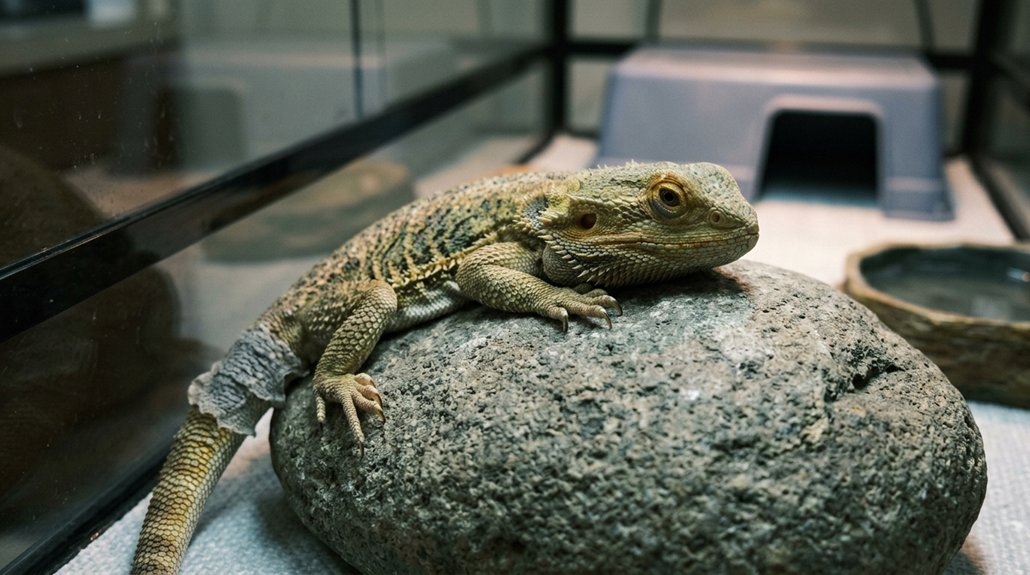
Recognizing signs of illness in your reptile is essential for timely intervention. Breathing difficulties, sudden aggression, and refusal to eat require immediate veterinary attention. Look for sunken eyes, weight loss, or unusual shedding, as these can indicate dehydration or malnutrition. Changes in activity, droppings, or excessive hiding are red flags. Monitoring your reptile’s health and environment regularly helps catch issues early. There’s more to learn about maintaining your reptile’s wellness and when to seek help.
Key Takeaways
- Sudden aggression or hiding behaviors indicate stress or discomfort needing a vet’s assessment.
- Difficulty breathing or persistent open-mouth breathing requires immediate veterinary care.
- Refusal to eat for over two days suggests underlying health problems needing professional evaluation.
- Sunken eyes and stuck skin signal dehydration, needing prompt veterinary attention.
- Dramatic changes in droppings consistency or reduced quantity signify health issues requiring veterinary assessment.
When to Seek Immediate Veterinary Care
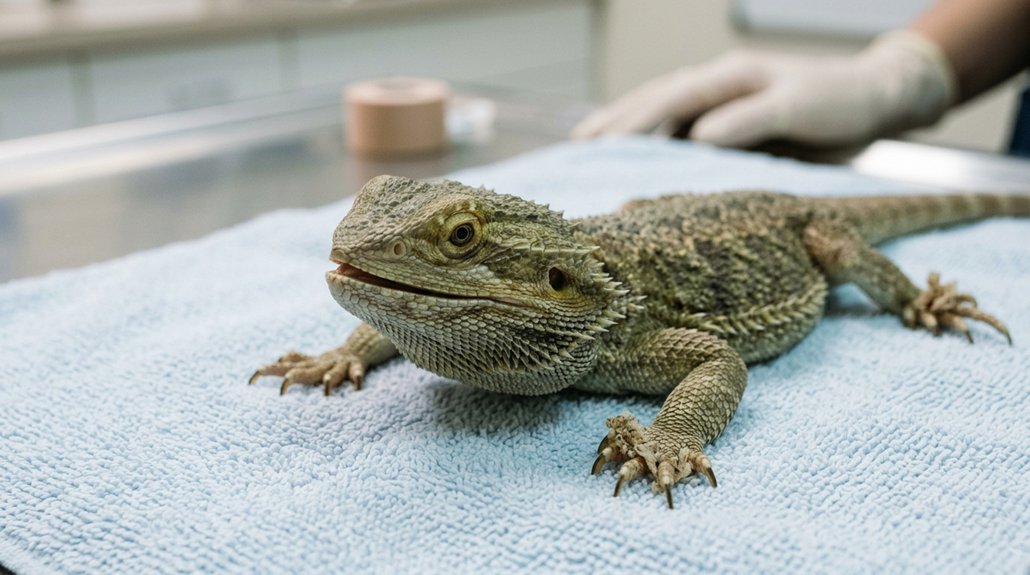
When it comes to caring for your reptile, recognizing signs that require immediate veterinary care can make all the difference in ensuring their well-being. Breathing troubles, such as open-mouth breathing or difficulty breathing, are emergency symptoms of potential respiratory issues that demand swift medical attention. Likewise, if your lizard suddenly collapses or cannot stand, these are critical conditions indicating serious underlying problems. Excessive bleeding from any source is also alarming and necessitates urgent care. Persistent lethargy, despite rest, signals a deteriorating state requiring evaluation. Seizures, a serious emergency symptom, need immediate intervention to identify the cause. Addressing these critical conditions promptly can prevent further complications, ensuring your beloved reptile receives the best chance at recovery and a healthy life.
Recognize Hiding and Sudden Aggression as Illness Signs
While it may seem harmless, hiding behavior in reptiles is often a subtle yet vital indicator of stress or illness that shouldn’t be ignored. If your reptile is spending excessive time under bedding or in corners, it’s displaying classic hiding signs. These behaviors suggest underlying stress or illness, warranting immediate veterinary evaluation. Similarly, sudden aggression, such as biting or defensive posturing, serves as significant aggression cues. These actions often occur when your reptile is in discomfort, unable to express its distress verbally. Since reptiles naturally hide symptoms due to evolutionary instincts, prompt attention to behavioral changes is essential. If your typically social pet becomes isolated or aggressive without clear triggers, it might need a professional assessment to guarantee its well-being.
Spot Sunken Eyes, Shedding Issues, and Weight Loss
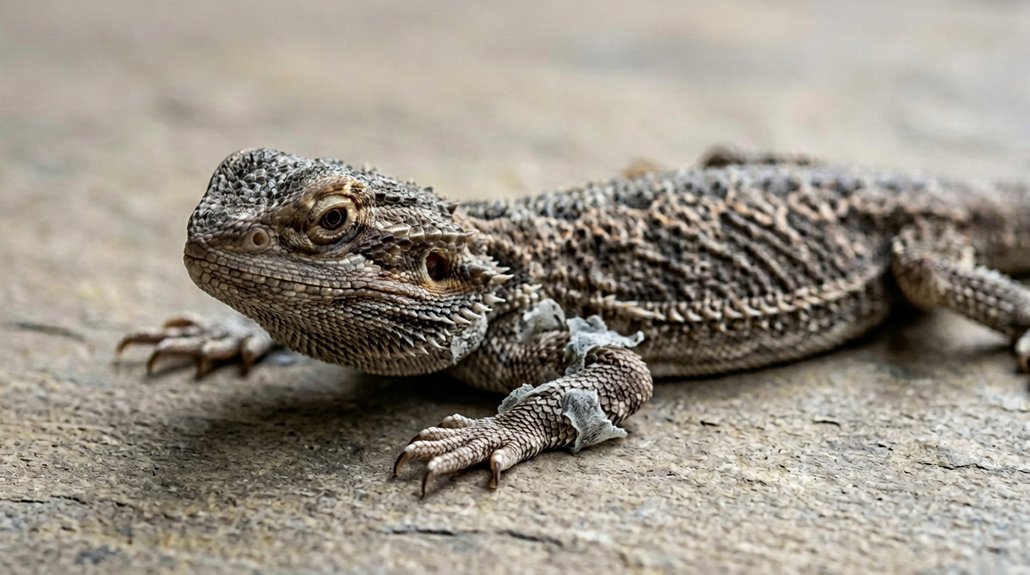
Spotting signs like sunken eyes, shedding issues, or unexpected weight loss in your reptile shouldn’t be overlooked, as these can indicate serious health concerns. You’ll want to act promptly by addressing dehydration with proper hydration methods or adjusting your pet’s environment to aid their shedding process. Keep a close watch on appetite and body changes, and seek veterinary guidance to guarantee your reptile’s well-being.
Recognize Dehydration Symptoms
Have you ever looked at your reptile and wondered if its sunken eyes might be a sign of dehydration? This can be an alarming indicator requiring swift care. To prevent these issues, use hydration tips like soaking your reptile in fresh water regularly and always monitor humidity levels in their habitat. Dehydration might also manifest as:
- Prominent ribs and thinning tail, indicating weight loss and inadequate nutrition or water intake.
- Prolonged lethargy or unusual hiding, where a normally social reptile withdraws, possibly highlighting discomfort or illness.
- Stuck skin, resulting from poor hydration, which can escalate to more severe health problems.
An empathetic, watchful approach guarantees your reptile remains in peak health. Don’t hesitate to contact a vet if needed.
Address Shedding Complications
Identifying shedding complications in reptiles requires careful consideration of several signs, such as sunken eyes, which often indicate dehydration. This condition suggests a need for immediate intervention through soaking or misting. Incomplete or abnormal shedding, including retained skin, highlights possible deficiencies in humidity requirements or underlying health concerns. Monitor your reptile’s enclosure closely to ascertain the correct balance of humidity and temperature, as these factors heavily impact shedding success.
Shedding stress can cause unusual behaviors like excessive hiding or lethargy. These signs warrant attention, as they often accompany health complications if not promptly addressed. Spotting weight loss can be tricky; look for thinning tails or prominent ribs, suggesting inadequate nutrition. Seek prompt veterinary care for persistent issues to prevent serious health risks.
Monitor Weight Fluctuations
While it may be subtle, monitoring weight fluctuations in your reptile is essential to ensuring its health. Regular weight monitoring allows you to catch early signs of malnutrition, dehydration, or illness. It’s vital to pay attention to physical changes such as sunken eyes and incomplete shedding. These conditions might be indicative of dehydration or other health complications needing prompt care.
- Sunken eyes: A clear sign of dehydration that requires immediate hydration measures and possibly veterinary intervention.
- Shedding problems: Incomplete shedding can signal underlying health issues, necessitating close observation and timely action.
- Weight loss indicators: Look for prominent ribs and thinning tails as signs of significant weight loss, prompting the need for rapid professional assessment.
Being vigilant in signs monitoring can truly save your reptile from more severe health concerns.
Understand Droppings and Appetite Changes
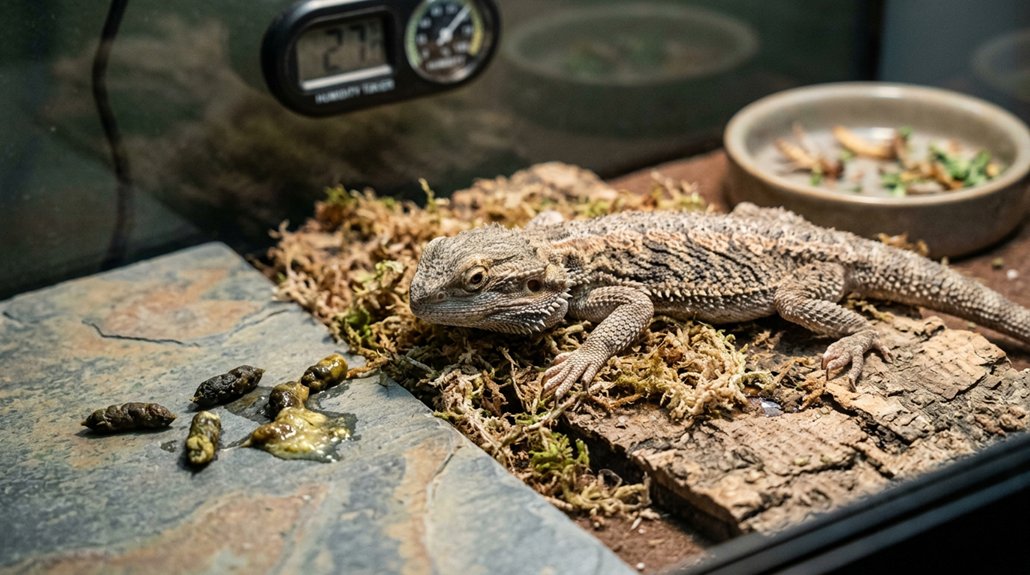
When monitoring your reptile’s health, pay close attention to changes in droppings and appetite, as these can be early indicators of illness. Dropping characteristics, such as reduced quantity or altered consistency, often reflect decreased food intake and suggest potential health concerns. A healthy lizard produces regular droppings; any noticeable lack may indicate decreased appetite, signaling that vet consultation is needed. Observing appetite patterns is equally critical; if your reptile refuses food for more than a couple of days, it may point to an underlying issue requiring prompt veterinary care. Additionally, promptly remove uneaten food from the tank, as it can stress your reptile and harm its environment. Early detection through attentive observation greatly aids in ensuring your reptile’s well-being.
Recognize Low Energy and Activity Levels
Recognizing low energy and activity levels in your reptile is essential for early detection of health issues. If your lizard seems unusually inactive or is spending more time hiding, these changes in behavior might indicate it’s unwell and in need of immediate veterinary attention. Observing your pet’s normal patterns will help you spot significant deviations quickly, ensuring you can act promptly to address any potential threats to its health.
Observe Lizard Behavior
Although it might seem normal for a lizard to occasionally rest or hide, persistent low energy and inactivity are clear indicators that something could be amiss with its health. Observing deviations from your lizard’s natural behaviors is essential. Behavioral changes such as excessive hiding or lack of movement may signal underlying issues. A sick lizard often exhibits these conspicuous symptoms:
- Extended hiding periods: This can suggest distress or discomfort.
- Reduced explorative movements: Unwillingness to explore might indicate lethargy.
- Weak grip strength: Struggling to hold onto surfaces is a concerning red flag.
Monitoring for these signs with an empathetic yet clinical approach helps you determine if your pet’s condition is deteriorating. Approach these changes with urgency, ensuring your lizard receives the care it needs.
Immediate Veterinary Attention
Persistent low energy and a noticeable lack of activity in your lizard aren’t mere quirks of behavior; they’re often glaring indicators of underlying health issues that warrant immediate veterinary attention. Lethargy indicators include prolonged inactivity and diminished responsiveness. If your lizard struggles with grip strength, finding it challenging to cling to surfaces or climb, it’s a strong signal something might be wrong. These symptoms can point to more severe conditions requiring urgent care.
Additionally, sudden reluctance to move or engage with their environment, alongside unexpected changes in behavior—like excessive hiding or disinterest in food—shouldn’t be ignored. These signs collectively underscore the need for a prompt consultation with a veterinarian. Timely intervention could be vital for safeguarding your reptile’s health.
Preventing Common Health Issues in Reptiles
Ensuring the well-being of your reptile hinges on a proactive approach to their care. Addressing dietary deficiencies means maintaining a species-appropriate diet and adhering to proper feeding schedules. Habitat optimization is vital—regularly monitor temperature and humidity to suit your reptile’s species-specific needs and avoid stress-related illnesses.
Care for your reptile by ensuring a suitable diet and optimal environmental conditions to prevent stress-related issues.
Routine health checks are essential. By observing changes in behavior or physical condition, you can detect issues early for more effective intervention. Your reptile’s mental well-being also requires attention; provide enrichment to encourage natural behaviors and reduce stress.
- Monitor dietary needs: Prevent nutritional deficiencies.
- Optimize habitat: Maintain correct environmental conditions.
- Enrich environment: Support mental well-being.
Finally, schedule annual veterinary check-ups, as many health issues can silently develop without visible symptoms.
Get to Know Your Reptile’s Normal Behavior
To truly prioritize your reptile’s health, it’s important to develop a keen awareness of their typical behavior patterns. Understanding normal activity and feeding habits is essential. Healthy reptiles typically exhibit active movement and alertness. They show interest in their surroundings, basking, exploring, and demonstrating predictable feeding habits. Regularly observing these behaviors helps you identify unexpected changes.
If your reptile becomes lethargic, hides excessively, or shows a lack of response to stimuli, these deviations could indicate stress or illness. It’s also important to maintain a consistent record of eating and drinking habits. Any reduction in appetite or reluctance to eat often signals underlying health issues. Your attentive observation is key in ensuring your reptile stays healthy and stress-free.
Create Your Reptile Health Monitoring Routine
Although keeping a close eye on your reptile’s health might initially seem overwhelming, establishing a systematic monitoring routine can make the process both manageable and effective. Start by crafting a detailed health checklist, focusing on consistent observation techniques. Make daily observations of appetite, behavior, and activity levels to catch subtle shifts signaling health issues. Inspect droppings for frequency and consistency changes, as these can warn of decreased food intake or illness.
Weekly or biweekly weight logs are essential to detect any alarming weight loss. Regular checks of skin and shedding patterns reveal potential problems often masked by your reptile’s silence. Don’t overlook environmental factors:
- Confirm temps and humidity align with species needs.
- Verify basking area effectiveness.
- Update habitat following your checklist.
Your vigilant care safeguards their wellness.
Frequently Asked Questions
When Should You Take Your Lizard to the Vet?
You should take your lizard to the vet if you observe symptom changes, like altered behavior or appetite shifts. A knowledgeable examination can identify underlying issues. Don’t hesitate to seek professional advice for your reptile’s wellbeing.
What Is the Average Life Expectancy of a Lizard?
Imagine balancing the scales of time – most common lizard breeds live 10-20 years. With proper care, like a nurturing compass guiding their journey, you’ll potentially extend their lifespan beyond nature’s unpredictable whims.
How Much Does a Reptile Vet Visit Cost?
Reptile vet expenses typically range from $600 to $1,200. Average consultation fees are significant, so you’ll want to prepare financially. Addressing health concerns early can prevent further costs, ensuring your reptile’s well-being doesn’t burden your wallet unnecessarily.
What Illnesses Can Reptiles Get?
Reptiles can suffer from common illnesses like metabolic bone disease, respiratory infections, and parasites. Watch for health symptoms such as lethargy, weight loss, or breathing issues. It’s essential to seek veterinary advice promptly to protect your reptile’s health.
Conclusion
In sum, savvy reptile caretakers should stay watchful for sudden shifts. Spotting signs swiftly, such as sunken eyes or shedding issues, can save your scaly sidekick’s health. Don’t disregard decreased energy or distinct droppings; act decisively to deter disease. Develop dedicated diligence by design, knowing normal behaviors to nurture their needs. Regular routines of monitoring guarantee your reptile remains robust. Remember, recognizing and responding rapidly assures your reptilian friend’s future flourish.