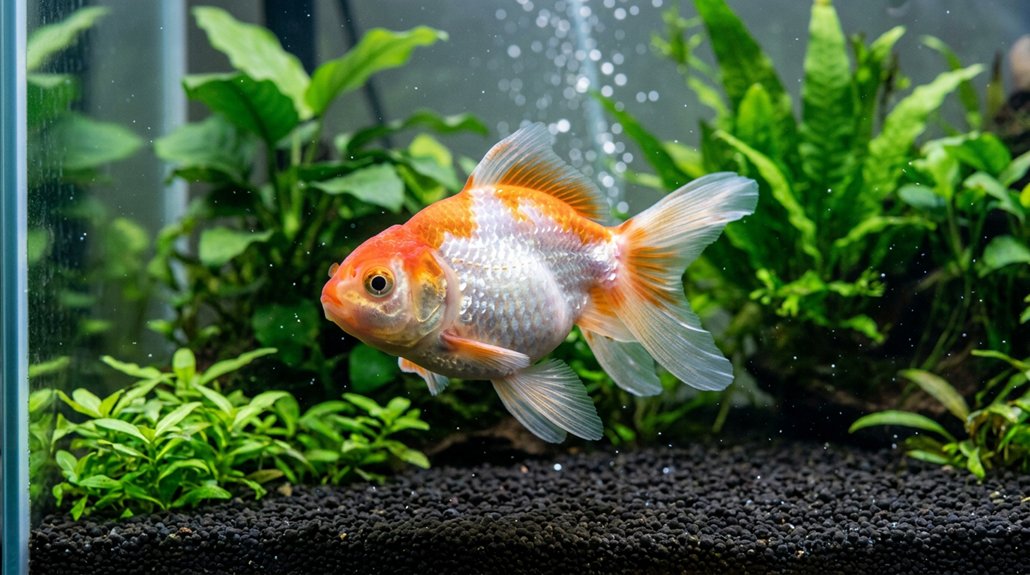
If your fish have white spots, assume ich and act fast. Quarantine affected fish, stop adding new fish, and remove carbon or Purigen and UV before dosing. Improve aeration, confirm ammonia and nitrite are 0, and start a proven ich medication that targets free-swimming stages, repeating doses exactly as directed. If the spots are tiny grains and fish are flashing or gasping, quick treatment matters, and the details below can help you respond more effectively.
Key Takeaways
- Isolate affected fish and stop adding new fish; white salt-like spots may be ich, which spreads quickly.
- Remove carbon or Purigen, turn off UV sterilizers, and increase aeration before medicating.
- Start a proven ich treatment immediately and repeat doses exactly as directed to target free-swimming parasites.
- Keep ammonia and nitrite at 0 ppm, perform partial water changes, and maintain stable, warm temperatures if your fish tolerate it.
- Quarantine new or sick fish for 2–4 weeks and inspect gills, since early ich may be hidden there.
What Ich White Spots Look Like
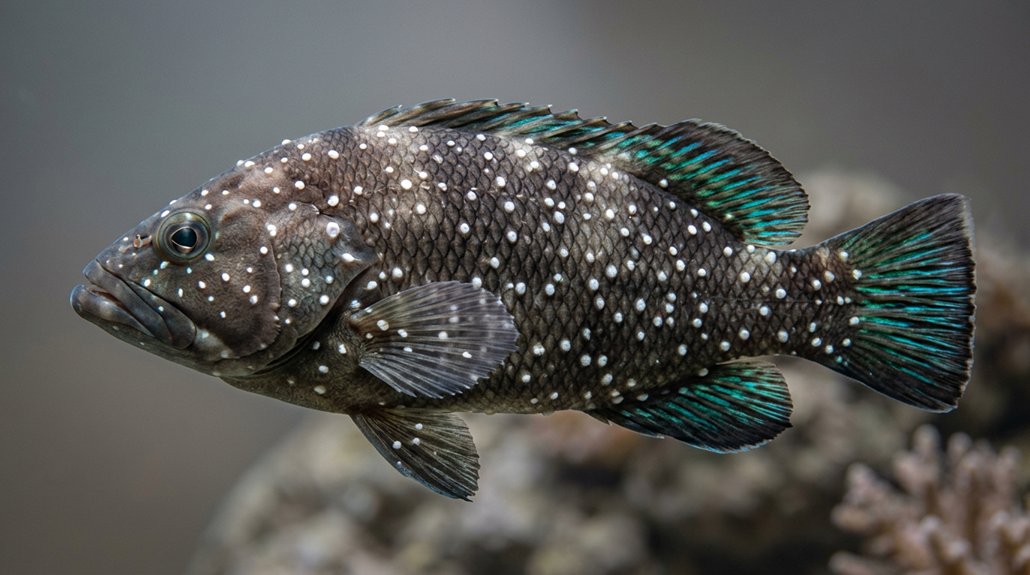
Ich typically appears as small, bright white, flat spots about 0.5–1 mm across on the skin, fins, or gills, resembling grains of salt or sugar. You’ll usually see spots that are fairly uniform in size because they come from trophonts, and in severe infections they can merge into larger white patches, especially on pale fish. In early cases, you may notice respiratory distress or gill-only involvement before skin spots become obvious. Affected fish often show behavioral irritation, rubbing or flashing against substrate or ornaments. For microscopic identification, mature trophonts removed from skin are oval, 0.5–1.0 mm, move in a rolling manner, and show a horseshoe- or C-shaped macronucleus at 40x magnification. Scratched areas can then develop scale damage or secondary infections.
Are White Spots Always Ich?
No—white spots aren’t always ich, and a visual diagnosis alone can be misleading. You should treat the appearance as a clue, not proof. Ich usually causes bright, flat, salt-grain spots about 0.5–1 mm wide, but epistylis can look translucent, clustered, and may involve the eyes. Marine velvet and similar protozoans often create a powdery coating instead of distinct grains, so texture matters. For parasite differentiation, consider the tank context: new fish, sudden temperature shifts, stress, and water quality can point toward ich, while poor filtration and organic buildup can favor epistylis or other opportunists. Definitive identification needs diagnostic microscopy, ideally a skin or gill scrape showing an ich trophont with a horseshoe-shaped macronucleus.
Spotting Ich Early
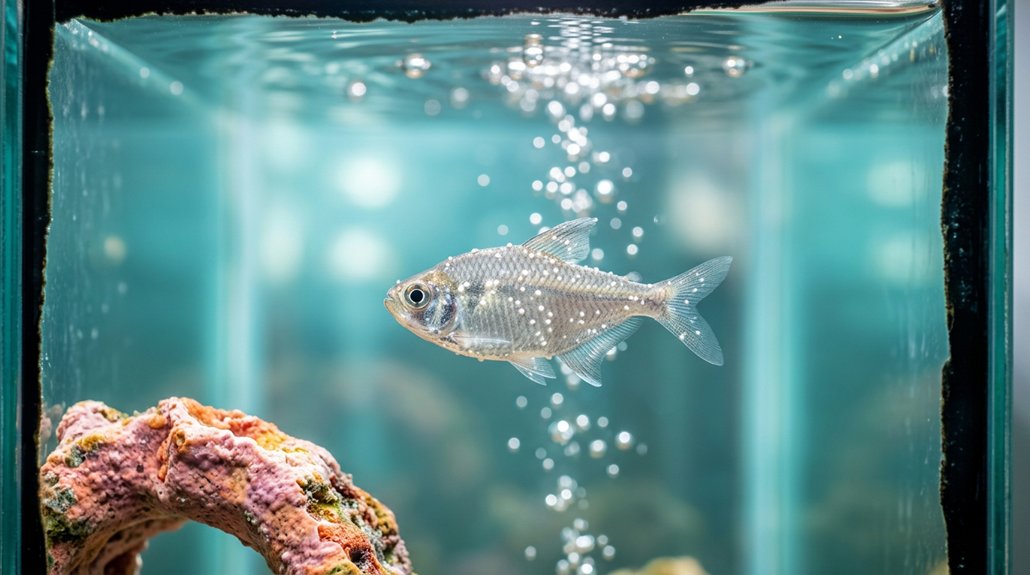
You’ll often spot ich first as tiny, bright white specks on the body, fins, or tail that look like grains of salt or sugar, but early signs can also appear before the spots do. Watch for flashing, increased mucus, rapid gill movement, loss of appetite, lethargy, or hiding, especially if several fish are affected. Because gill-only infections and look-alike conditions can be missed, inspect stressed fish closely and confirm suspicion with a skin or gill scrape if needed.
Early Spot Clues
Early signs are usually tiny, bright white spots about 0.5–1 mm across on the skin, fins, or gills, with a grain-of-salt or grain-of-sugar appearance that’s characteristic of Ichthyophthirius multifiliis. You’ll often see behavior changes before the spots fully develop, including substrate rubbing, flashing, rapid gill movement, or brief lethargy.
| Clue | What you see | Why it matters |
|---|---|---|
| Spots | Small white specks | Classic early sign |
| Rubbing | Scratching on décor | Irritation is developing |
| Gills | Pale, swollen, fast motion | Hidden infection |
| Timing | One new fish first | Spread is likely |
| Check | Scrape and microscope | Confirms diagnosis |
Inspect several fish, not just one. If spots are absent, check the gills carefully; heavy infection can hide there. When uncertainty remains, a skin or gill scrape at 40x–100x can confirm the parasite.
Look-Alike Conditions
When white spots appear on a fish, Ichthyophthirius multifiliis is a common cause, but it isn’t the only one: ich usually causes bright, flat, uniform specks about 0.5–1 mm across, while epistylis tends to form more irregular, fuzzy or filamentous clusters that can look translucent and may involve the eyes, and marine velvet in saltwater systems looks more like a fine dusty or velvety film than distinct dots. Watch for flashing, excess mucus, rapid gill movement, lethargy, and reduced appetite, especially if the gills are affected. Fungal infections and bacterial ulcers can also create pale lesions, though they usually have different texture and progression. If the appearance is unclear, confirm with a wet mount skin or gill scrape under a compound microscope to identify ich trophonts or other protozoa.
What Causes Ich Outbreaks?
Ich outbreaks usually happen when a low-level parasite load in the tank is allowed to multiply under favorable conditions. Ichthyophthirius multifiliis can already be present in your aquarium, then expand quickly when water hygiene declines. Poor water quality, especially elevated ammonia or nitrite, stresses fish and reduces immune boosting capacity, making them easier targets. Sudden temperature shifts, overcrowding, transport, or handling can have the same effect. You can also introduce ich by adding new fish, plants, or live food without quarantining them for 2-30 days. Warm water accelerates the parasite’s lifecycle, so theronts emerge faster and outbreaks can surge in 3-6 days at about 75-79°F. High organic load, weak filtration, and low aeration further increase risk by stressing fish and aiding tomont attachment and reproduction.
What to Do Right Away
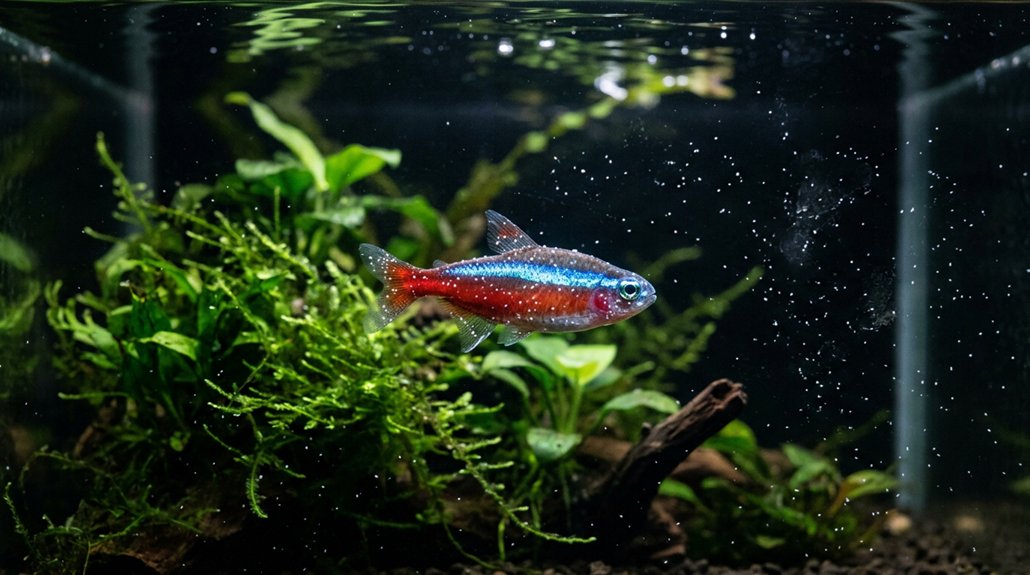
Act immediately if you suspect ich, because the parasite multiplies fast and delays can sharply reduce survival. Move affected fish to immediate isolation if possible, and stop adding new fish or plants. Remove activated carbon or Purigen, and switch off UV sterilizers so medication isn’t removed.
| Action | Purpose | Timing |
|---|---|---|
| Isolate fish | Limits spread | Now |
| Improve aeration | Supports oxygen boosting | Now |
| Check water | Confirms safe conditions | Before dosing |
Begin a reputable ich medication that targets free-swimming theronts, and follow the label’s repeat-dose schedule across the parasite’s lifecycle. Keep ammonia and nitrite at 0 ppm, nitrates low, and have dechlorinated replacement water ready for a 50% change if fish worsen. If your species tolerate it, 3–5 ppt salt can reduce theront survival.
How to Treat Ich
Start treatment as soon as you spot the white, salt-like cysts of ich, because the parasite reproduces quickly and delay lowers survival. You should use a proven ich medication, then repeat doses exactly per label to hit free-swimming theronts, not protected trophonts or tomonts. If your species can tolerate it, gradually raise temperature to about 78–80°F and increase aeration; remove carbon or Purigen first. In freshwater fish that tolerate it, salt therapy at 3–5 ppt can help suppress theronts. With persistent cases, a medication rotation using formalin/malachite green, copper, or another commercial treatment may improve control. Maintain excellent water quality, siphon debris regularly, and don’t add new fish until treatment ends and no new spots appear.
Will Ich Go Away Without Treatment?
You can sometimes see small Ich infestations stabilize or clear without medication if your fish are healthy, but this isn’t reliable and carries real risk. If water quality, temperature, crowding, or recent transport are stressing the tank, the parasite can multiply again and visible spots may return as new theronts emerge. Because Ich spreads quickly and can become fatal, prompt treatment is usually the safer choice than waiting for it to disappear on its own.
Natural Recovery Risks
| Factor | Effect | Risk |
|---|---|---|
| Low-level infection | May clear | Uncertain |
| Encysted stages | Survive briefly | Relapse |
| Survivor fish | Look normal | Carrier fish |
At 75–79°F, the cycle may finish in 3–6 days, so unchecked numbers can rise fast. Even if spots fade, theronts can reappear days to weeks later, and damaged skin may invite bacterial or fungal infection. You also risk keeping subclinical carrier fish that seed future outbreaks.
Why Prompt Treatment Matters
Even when low-level ich seems to fade on its own, waiting is risky because the parasite can multiply quickly and turn a manageable problem into a fatal outbreak within days. You need rapid intervention, because trophonts and tomonts resist treatment while they’re attached or encysted. Delaying care allows more cysts to form and later release hundreds to thousands of theronts. Treatment only works when you target the vulnerable free-swimming stage, so lifecycle targeting matters.
- A fish breathing hard at the surface, gills inflamed and pale.
- Tiny white grains scattered across fins like salt.
- A tank clouded by newly hatched theronts after a missed dose.
Start medication at once, remove carbon or Purigen, keep water pristine, and repeat doses as directed. Early action lowers mortality, limits bacterial complications, and shortens treatment.
How to Prevent Ich From Returning
To keep ich from returning, prevent reintroduction and limit conditions that let it spread: quarantine all new fish, plants, and decorations in a separate tank for at least 2–4 weeks, with 30 days preferred for greater certainty, and watch closely for any signs of disease before adding them to the main aquarium. Follow strict quarantine protocols and keep water testing routine so you can verify 0 ppm ammonia and nitrite, with nitrates low. Maintain pristine water through regular maintenance and 25% monthly water changes, or more often if you’re stocking heavily or treating. Reduce stress by avoiding sudden temperature swings, overcrowding, poor diet, and rough handling. After an outbreak, keep the display fish-free or continue treatment through one full life cycle before reintroducing fish only after a symptom-free period.
Quarantine, Filtration, and UV Protection
When you’re treating ich, quarantine any new or symptomatic fish in a separate hospital tank for at least 2–4 weeks, with 30 days preferred for new additions, so you don’t introduce or spread the parasite. Keep the quarantine duration strict. Remove activated carbon and Purigen before dosing, since they absorb medication; leave them out for seven days after the final dose.
- A bare hospital tank with stable heat and gentle flow.
- A siphon lifting debris and cysts from the bottom.
- A UV steriliser inline, glowing beside the filter as water passes through.
Boost mechanical and biological filtration, and do 25–50% water changes to preserve water quality. Add strong aeration, especially with formalin or copper, because oxygen levels can drop and stressed gills need support.
When to Get Expert Help
If you’re seeing rapid mortality, heavy white-spot coverage on more than a few fish, or respiratory distress such as gasping at the surface or rapid gill movement, seek a veterinarian or experienced aquatic specialist immediately, because ich can escalate to high mortality fast. You should also know when to consult after standard over-the-counter therapy fails to stop new spots after the full repeat-dosing schedule, or when signs return soon after treatment. If lesions are atypical, specialist consultation with skin or gill scrape microscopy can distinguish ich from epistylis or marine velvet. Before using formalin, copper, elevated salt, or combined protocols, get expert advice for scaleless fish, loaches, catfish, invertebrates, snails, or planted tanks. If you suspect parasites, infection, or chronic stress, professional guidance can support targeted treatment and prevention.
Frequently Asked Questions
How to Cure White Dots on Fish?
Use anti-ich medication, improve water quality, raise temperature if safe, and follow a quarantine protocol. You’ll need repeated doses until all free-swimming parasites’re eliminated; remove carbon, increase aeration, and monitor closely.
Can Fish Survive White Spot Disease?
Yes, they can survive if you treat it promptly; you’re not out of the woods yet. Treatment prognosis improves with a strong immune response, clean water, aeration, and repeated, timed therapy to eliminate theronts.
How to Quickly Get Rid of a White Spot?
Treat the tank immediately with ich medication; you can’t quickly cure white spot with salt dips alone. Raise temperature safely, boost aeration, remove carbon, and use UV sterilizers as support, not primary treatment, until spots stop.
How Do I Cure Ich in My Fish Tank?
Don’t wait—treat ich immediately. You’ll need proven medication, careful water changes, and a salt treatment if your species tolerate it. Raise temperature slowly, increase aeration, remove carbon, and repeat dosing until no new spots appear.
Conclusion
If you spot white grains on your fish, don’t wait for the storm to pass like a sailor hoping for calm seas. Ich can spread quickly, so act fast: confirm the diagnosis, treat the tank, and correct stressors such as poor water quality or crowding. With quarantine, filtration, and UV support, you can reduce recurrence. If the spots persist or your fish worsen, you’ll need expert help.