
To train your puppy to sleep through the night, establish a consistent bedtime routine in a calming environment. Make sure they have a comforting sleep area with familiar items and a crate positioned nearby. Offer a final potty break before bed and engage in calming activities an hour prior. Manage nighttime bathroom breaks calmly, and address whining with minimal interaction. With patience and consistency, your puppy’s sleep habits will improve greatly, and understanding additional strategies will further enhance success.
Key Takeaways
- Establish a consistent bedtime routine with scheduled bathroom breaks to help solidify sleep habits.
- Create a calm and comfortable sleep environment with a crate, familiar items, and soft bedding.
- Minimize disturbances and distractions by utilizing a white noise machine and keeping the area dark.
- Implement gradual adjustments to bathroom break intervals as the puppy’s bladder control improves.
- Use calming aids like the Snuggle Puppy or supplements to reduce nighttime anxiety and promote relaxation.
Learn About Puppy Sleep Needs
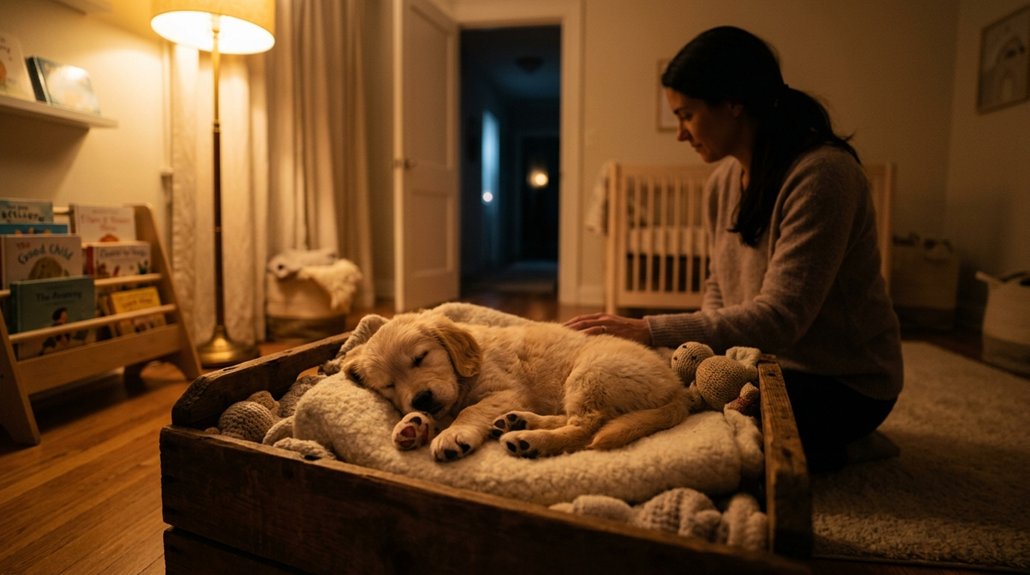
Understanding your puppy’s sleep needs is essential to their overall health and development. Puppies need 18-20 hours of sleep each day to support their rapid growth. It’s important to familiarize yourself with puppy sleep patterns as they often include short bursts of activity followed by rest. Nighttime behavior can be particularly challenging since young puppies have small bladders, requiring more frequent bathroom breaks during the night. Establishing a regular bedtime routine can help regulate their internal clocks, promoting better sleep quality. Additionally, introducing familiar scents or comfort items can offer reassurance, reducing anxiety and aiding smoother nighttime changes. Paying attention to your puppy’s specific sleep patterns will guarantee they’re well-rested and ready to learn and explore each day.
Create a Comfortable Sleep Environment
To create a comfortable sleep environment for your puppy, start by selecting an appropriate crate placement strategy. Position the crate in a quiet area of your home to minimize disruptions and encourage relaxation. Additionally, enhance comfort by adding bedding suitable for puppies and introduce items like a Snuggle Puppy or familiar clothing to provide warmth and familiarity.
Crate Placement Strategy
While creating a comfortable sleep environment for your puppy, consider the strategic placement of their crate as a key factor. Selecting an ideal crate location is critical to enhancing your puppy’s nighttime comfort and promoting crate security. Position the crate in a quiet area of your home, preferably near your bedroom, to reassure and comfort your puppy throughout the night. Place it away from high-traffic areas to minimize disturbances, allowing your puppy to settle peacefully. Ascertain the crate is suitably sized, permitting freedom to stand, turn, and lie down comfortably. A crate cover can be used to create a calm, dark atmosphere akin to a den. Over time, gradually increase the crate’s distance from your sleeping area to aid your puppy in adjusting to independent sleeping.
Comfort-Enhancing Items
When guaranteeing your puppy has a restful night, incorporating comfort-enhancing items into their sleep environment is essential. Start by introducing snuggle accessories like a Snuggle Puppy, which simulates the warmth and heartbeat of their mother, soothing nighttime anxiety. Adding familiar items, such as your worn clothing or a soft blanket, introduces comforting scents, making their space feel safe and inviting. Ascertain your puppy’s bedding is both soft and supportive to boost their overall sleeping comfort. To eliminate external noise disturbances, consider a white noise machine for maintaining a peaceful atmosphere. Finally, place a few favorite toys near their sleeping area to keep them relaxed and content. These thoughtful additions create an ideal environment for your puppy’s restful sleep.
Manage Nighttime Bathroom Breaks
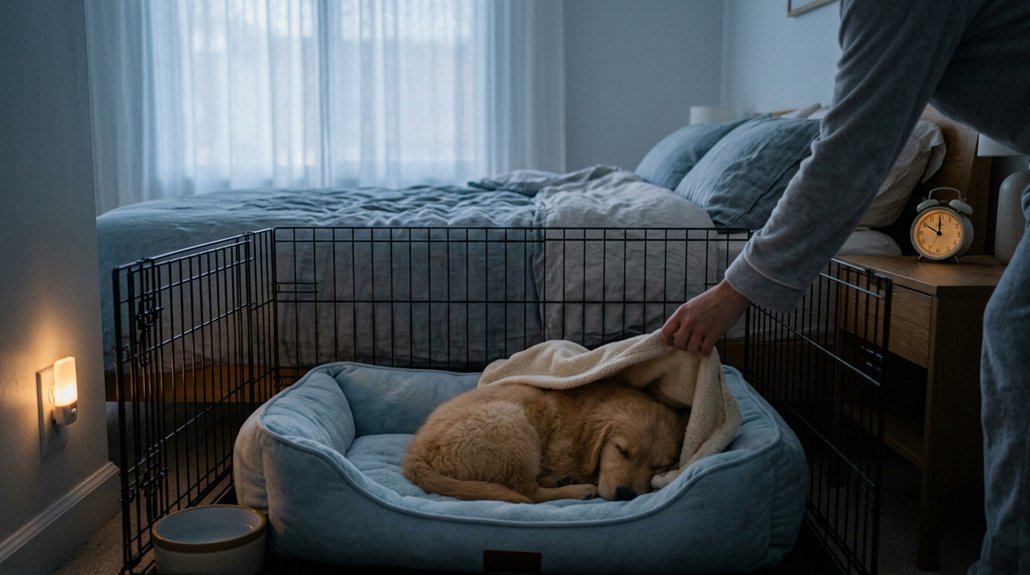
Start by scheduling consistent nighttime bathroom breaks to form a reliable routine, which helps minimize accidents and fosters healthy sleeping habits. Gradually increase the intervals between these breaks as your puppy’s bladder matures, ensuring they can comfortably hold it longer. Remember, maintaining calm interactions during these times is key to reinforcing positive behaviors while avoiding any unnecessary excitement.
Schedule Bathroom Breaks
Establishing a routine for bathroom breaks is essential for teaching your puppy to sleep through the night. By setting a consistent schedule, you’re helping your puppy learn when to expect these breaks, which eases nighttime shifts. Pay attention to timing adjustments based on your puppy’s age and bladder capacity. Recognizing behavior cues, such as restlessness or sniffing, can signal the need for an earlier break to prevent accidents.
Keep interactions calm and low-key during bathroom trips. This minimizes excitement and reinforces that nighttime is for sleeping, not play. Always offer a final potty break just before bedtime to reduce the risk of disturbances. Monitor your puppy’s genuine needs, addressing them promptly, as this encourages healthier sleep patterns for both of you.
Gradual Interval Increase
Begin by introducing gradual interval increases to manage nighttime bathroom breaks effectively and enhance your puppy’s sleep through the night. Start with taking your puppy out every 2-3 hours initially to establish consistent nighttime habits. As their bladder control develops around 4-5 months, make gradual adjustments to extend the time between nighttime trips. Be patient and consistent, increasing intervals only as your puppy shows readiness and can avoid accidents.
To optimize this process:
- Monitor the puppy’s comfort and readiness; if they’re restless, maintain current intervals.
- Keep interactions calm and low-key during breaks to reinforce that nighttime is for sleep.
- Reward your puppy for settling down, promoting gradual adjustments in their routine and encouraging longer sleep periods.
Establish a Consistent Bedtime Routine
A solid bedtime routine is essential for helping your puppy adjust to a relaxing nighttime schedule. It starts with establishing consistent sleep cues and engaging in calming nighttime rituals. Begin by incorporating a final potty break right before bed, which helps regulate your puppy’s internal clock and reduces accidents. About an hour before bedtime, engage in gentle activities such as petting or quiet play to promote relaxation. Make sure you serve the last meal a few hours earlier, aiding digestion and reducing nighttime hunger disruptions. Finally, create a comforting sleeping environment with familiar scents and cozy bedding. All these steps signal to your puppy that it’s time to settle down, making it easier for them to sleep through the night.
Use Positive Reinforcement for Sleep Training
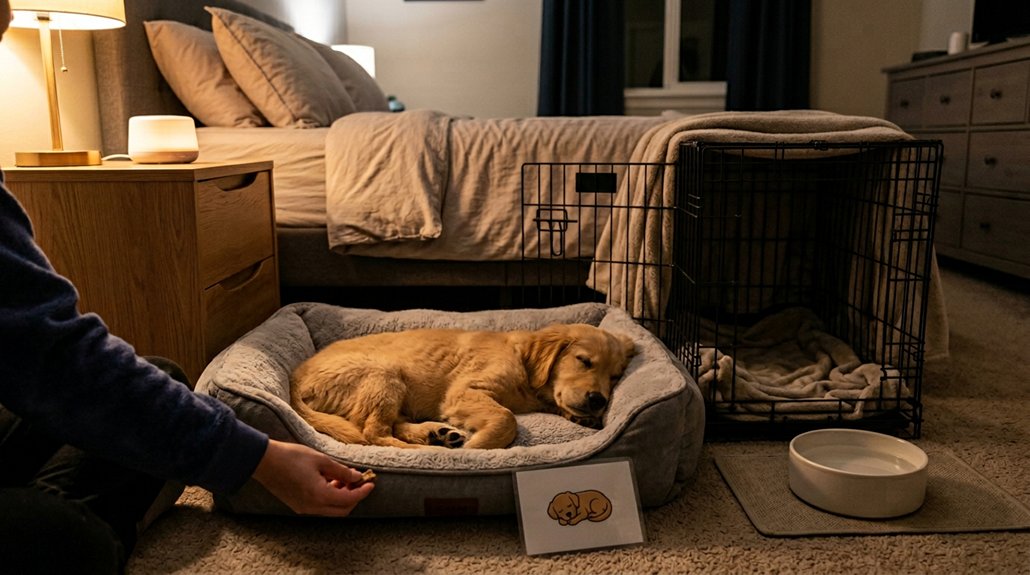
To effectively train your puppy to sleep through the night, incorporating positive reinforcement is essential. Reward techniques are crucial in establishing positive associations with bedtime. Consistently praise and gently pet your puppy whenever they lie calmly in their sleeping area. This reinforces the behavior you want during the night. Offer small treats after successful nighttime bathroom breaks to signal that it’s time to sleep.
To create a seamless experience:
- Use praise and petting: Reward calm behavior in their sleep area.
- Offer treats post-bathroom: Develop a positive association with the bedtime routine.
- Stay consistent: Reinforce that serene nights lead to positive outcomes.
Handle Puppy Whining at Night
Puppy whining at night can often be resolved by addressing a few key needs, which include bathroom breaks and comfort. First, assess whining triggers by checking if your puppy needs a bathroom break; young puppies, especially under 4 months, can’t hold their bladder for very long. Once genuine needs are met, make sure the environment minimizes nighttime distractions by offering comfort items like a Snuggle Puppy or your worn clothing. These items help mimic the warmth of littermates. Maintain a calm, low-key interaction when responding at night to avoid reinforcing attention-seeking behaviors. Gradually increase time between bathroom breaks to build their endurance. A consistent bedtime routine, along with ignoring non-essential whining, teaches them that night is for sleeping, not playing.
Choose the Best Sleeping Arrangement
Choosing the right sleeping arrangement for your puppy is essential for their comfort and well-being. Start by placing their crate in your bedroom to provide reassurance and aid house training. Having them nearby allows you to respond when they need to go outside, promoting bedtime boundaries and nighttime consistency. To guarantee your puppy feels secure, position the crate next to your bed, minimizing anxiety.
Place your puppy’s crate in your bedroom to ensure comfort and support nighttime training.
Be mindful of these key elements:
- Properly Sized Crate: Allow your pup to stand, turn, and lie down comfortably.
- Familiar Items: Include your worn clothing or a soft blanket for enhanced comfort.
- Calm Environment: A quiet, serene setting minimizes disturbances, ensuring restful sleep.
These steps will help your puppy adjust faster and establish a healthy sleep routine.
Best Products to Support Puppy Sleep
After ensuring your puppy’s sleeping arrangement is right, it’s important to contemplate supportive products that enhance their sleep quality. Consider the Snuggle Puppy, priced at $39.95, as one of the best calming products. It mimics a mother’s warmth and heartbeat, reducing nighttime anxiety. For an effective sleep aid, Puppy Bites Night Calm Supplement, available for $24.95, contains calming ingredients to promote relaxation and restful sleep. The Snuggle Blanket for Pets, priced at $19.99, enhances comfort with familiar scents and soft materials. Meanwhile, white noise machines mask disruptive sounds, fostering a tranquil environment. Additionally, using a crate cover helps create a dark, calming atmosphere, aiding your puppy to settle down more easily at night.
Frequently Asked Questions
At What Age Will Puppies Sleep Through the Night?
Puppies usually sleep through the night around 4 to 5 months. Focus on understanding puppy sleep patterns and stick to consistent nighttime routines to help them adjust. Offer comfort and potty breaks if they’re restless.
What Is the 7 7 7 Rule for Puppies?
The 7 7 7 rule symbolizes a balanced journey for your puppy, creating a structured sleep schedule with equal emphasis on sleep, play, and training. This routine establishes predictable nighttime routines and fosters restful puppy sleep habits.
What Is the Hardest Month of a Puppy?
The hardest month is typically between 3 to 4 months old. Focus on consistent nighttime routines and support puppy development with comforting items and potty breaks to help manage their growth spurts, teething discomfort, and separation anxiety.
How Do I Get My Puppy to Sleep Through the Night Without Crying?
Establish a consistent puppy bedtime routine, ensuring a comforting final potty break, then utilize effective crate training tips: familiar items, gradual crate distance from your bed, and white noise. Don’t always respond immediately to whimpering.
Conclusion
To sum up, training a puppy to sleep through the night requires patience and consistency. Remember, “Rome wasn’t built in a day,” so take it one step at a time. By understanding your puppy’s sleep needs, establishing a routine, and creating a comfortable environment, you’ll help them feel secure. Use positive reinforcement to nurture good sleep habits and address any nighttime whining with care. With the right approach and tools, your furry friend will soon enjoy peaceful nights.