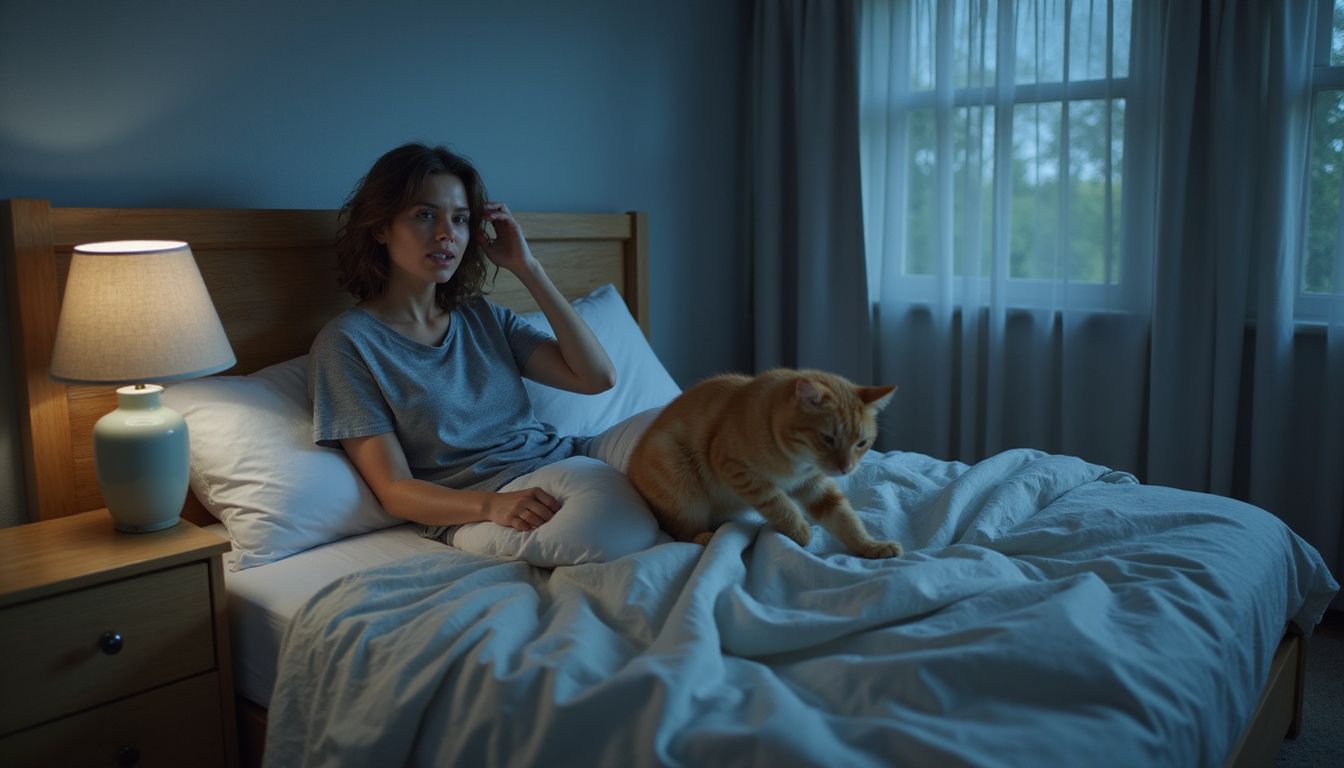
Ever wake up at 2 a.m. to the sound of paws thundering down the hallway like a tiny freight train?
That’s the classic cat zoomies, and your future feline friend isn’t broken. Cats are crepuscular animals, which means they naturally wake up at dawn and dusk to hunt. It’s a habit passed straight down from their wild ancestors.
You’ve probably scrolled past a few of these viral moments on Instagram or Facebook already, cats sprinting sideways across the living room at midnight for no obvious reason.
This guide walks you through exactly why cats get midnight zoomies, what signs to watch for, and simple ways to keep everyone in the house sleeping through the night.
Grab a cup of coffee. I’ll show you exactly what’s going on in that furry head, and what actually works.
Key Takeaways
- Cats naturally hunt during dawn and dusk because they evolved as crepuscular animals, so nighttime hyperactivity is instinct, not bad behavior.
- Cats sleep 12 to 16 hours a day, storing up energy that can explode into midnight zoomies without daytime exercise and enrichment.
- Interactive play for 15 to 20 minutes before bed, followed by a meal, tires cats out and cuts down on nighttime hyperactivity.
- Automatic feeders and steady feeding schedules stop hunger-driven nighttime activity by breaking the link between you waking up and food showing up.
- Sudden changes in nighttime behavior, weight loss, or nonstop crying can point to medical issues like hyperthyroidism or arthritis, and need a vet visit right away.
Reasons Cats Get the Midnight Zoomies
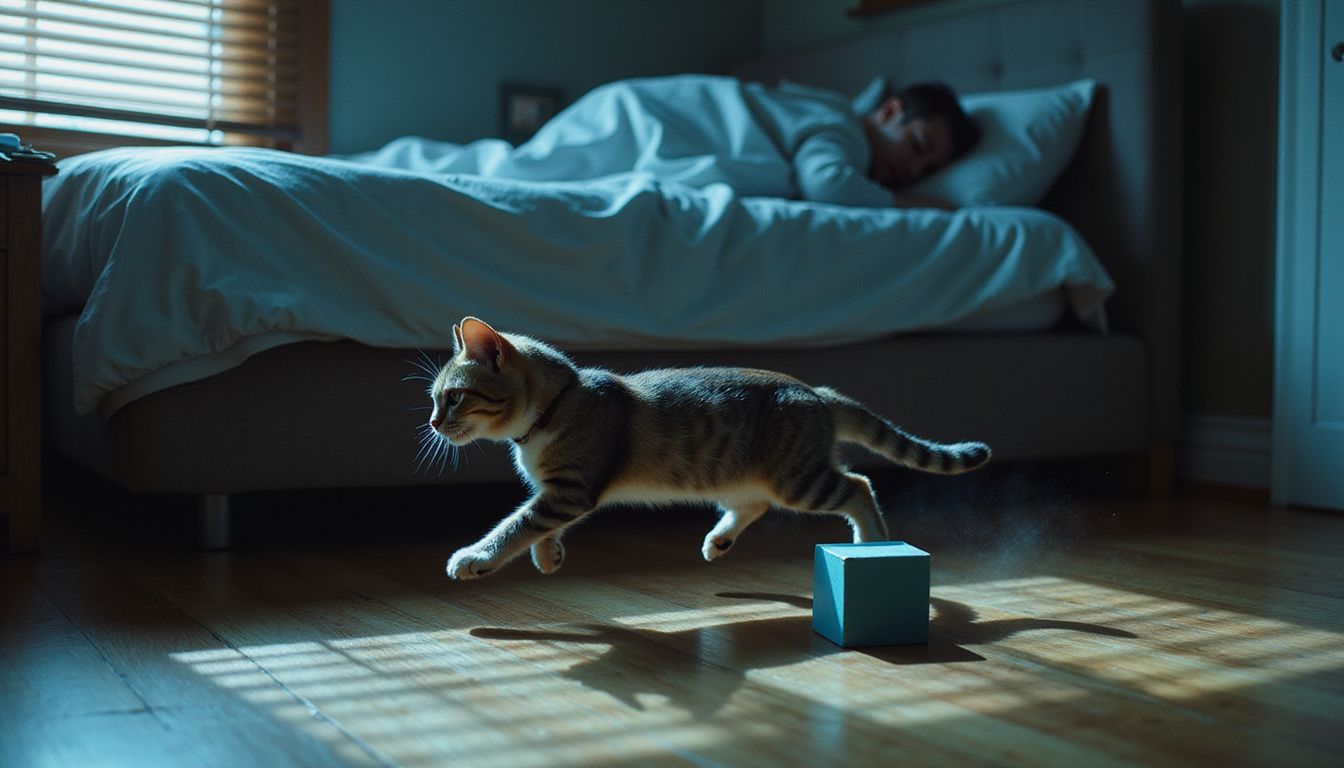
Your cat’s midnight activity comes from deep instincts and natural rhythms that make nighttime their prime time for action. Your feline friend stores energy during daytime naps, hunger pangs strike at odd hours, and the urge to hunt kicks into overdrive once it gets dark.
How do hunting instincts and natural energy cycles cause night activity?
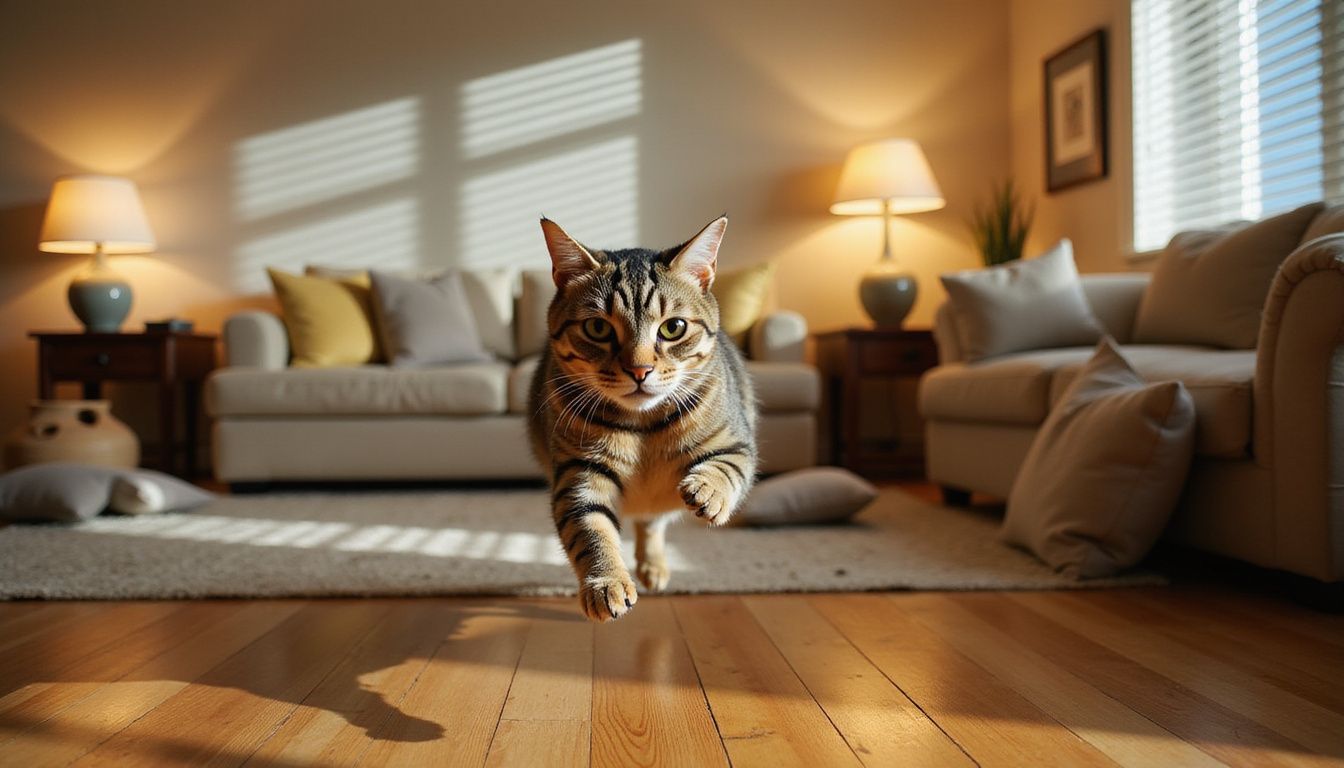
Your cat’s midnight zoomies trace back to millions of years of evolution. Cats evolved as crepuscular hunters, meaning they naturally hunt during dawn and dusk when prey like mice and birds are most active.
This ancient instinct is still hardwired into domestic cats today, even though they don’t need to hunt for survival anymore. That’s why cats tend to get a burst of energy around 5 to 7 a.m. and again after sunset.
Movement flips the hunting switch instantly, setting off bursts of energy and play that look like pure chaos in your living room. According to veterinary experts at VCA Animal Hospitals, this behavior even has an official name: Frenetic Random Activity Periods, or FRAPs. It’s the medical term for a sudden, natural release of pent-up energy.
Large pupils help too, giving cats sharp night vision in low light that would leave you fumbling for a flashlight. This trait, inherited from wild ancestors, gives domestic cats a real edge after dark.
A cat’s night activity is not misbehavior; it’s biology expressing itself through your furniture.
Stored energy from daytime naps makes this natural tendency even stronger. Cats sleep between 12 and 16 hours a day, which means they build up huge reserves of energy just waiting for release.
- Abyssinian cats tend to run the show at night thanks to their high-energy, curious streak.
- Bengal cats carry a strong prey drive that shows up as intense nighttime sprinting.
- Siamese cats are naturally vocal and active, so their zoomies often come with plenty of noise.
Once evening hits, that stored power explodes into running, climbing, and pouncing that wrecks your sleep schedule. Daytime interactive play helps burn some of it off, but plenty of cats still have fuel left in the tank once the lights go out.
Puzzle feeders and other enrichment activities keep their minds busy, but they rarely tire a cat out completely on their own. Once you understand these feline behavior patterns, managing the midnight chaos gets a lot easier.
Why does stored energy from daytime naps lead to nighttime zoomies?
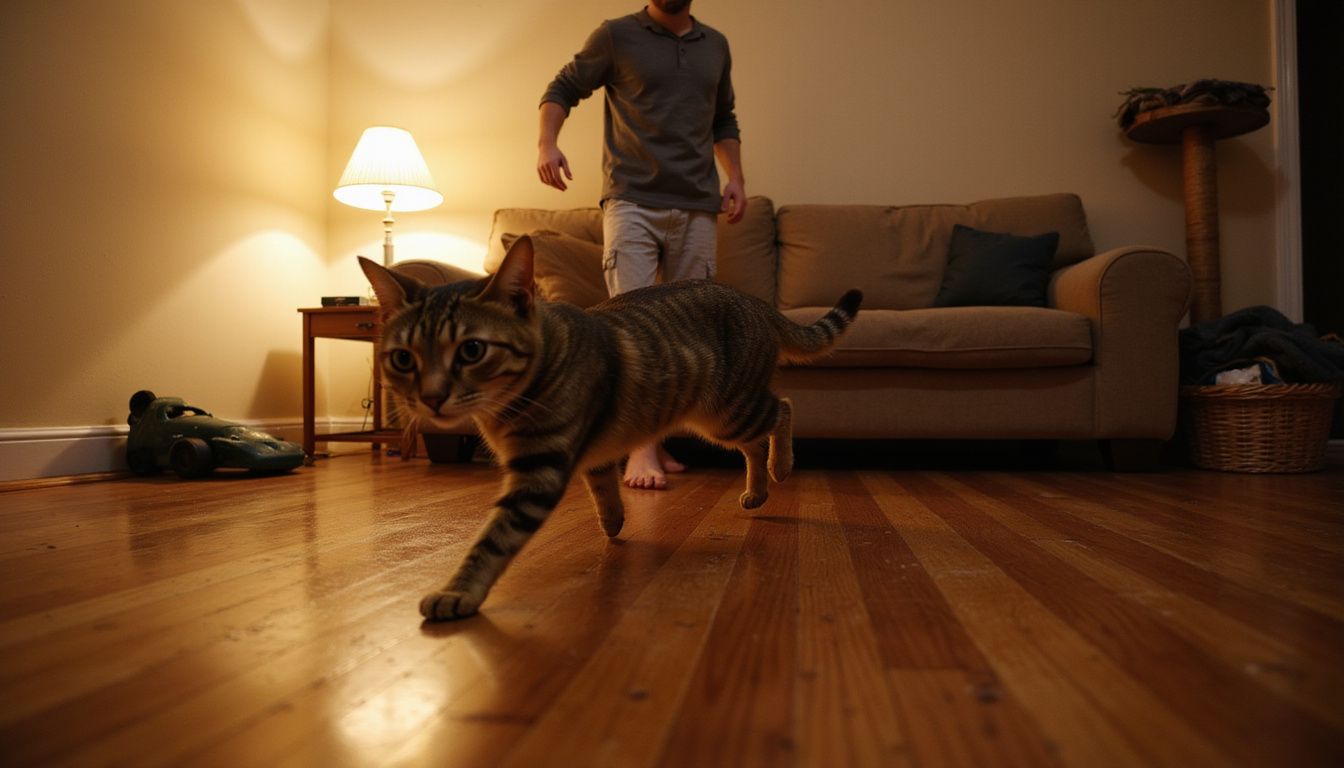
Your cat sleeps between 13 and 14 hours a day, storing energy like a battery charging on full blast. All those daytime naps pack your cat with pent-up energy that needs somewhere to go.
Kittens and young cats feel this even more. Their shorter sleep cycles and higher energy levels create a perfect storm for nighttime chaos.
Cats also get a sudden burst of energy right after using the litter box. That adrenaline rush sends them sprinting through the house at full speed, and it’s completely normal cat behavior rooted in their hunting instincts.
Think of it like a coiled spring under pressure. Eventually, it snaps and flies everywhere.
Your cat’s body works the same way. Nighttime hyperactivity gets more likely when your cat has napped too much or missed out on daytime exercise and enrichment.
Without proper daytime activity, whether that’s a cat tree, interactive toys, or time to socialize, that stored energy has nowhere else to go except into midnight zoomies. Adjusting your cat’s feeding schedule and daily care routine can help stop these episodes before they start.
Can attention-seeking behavior trigger midnight hyperactivity?
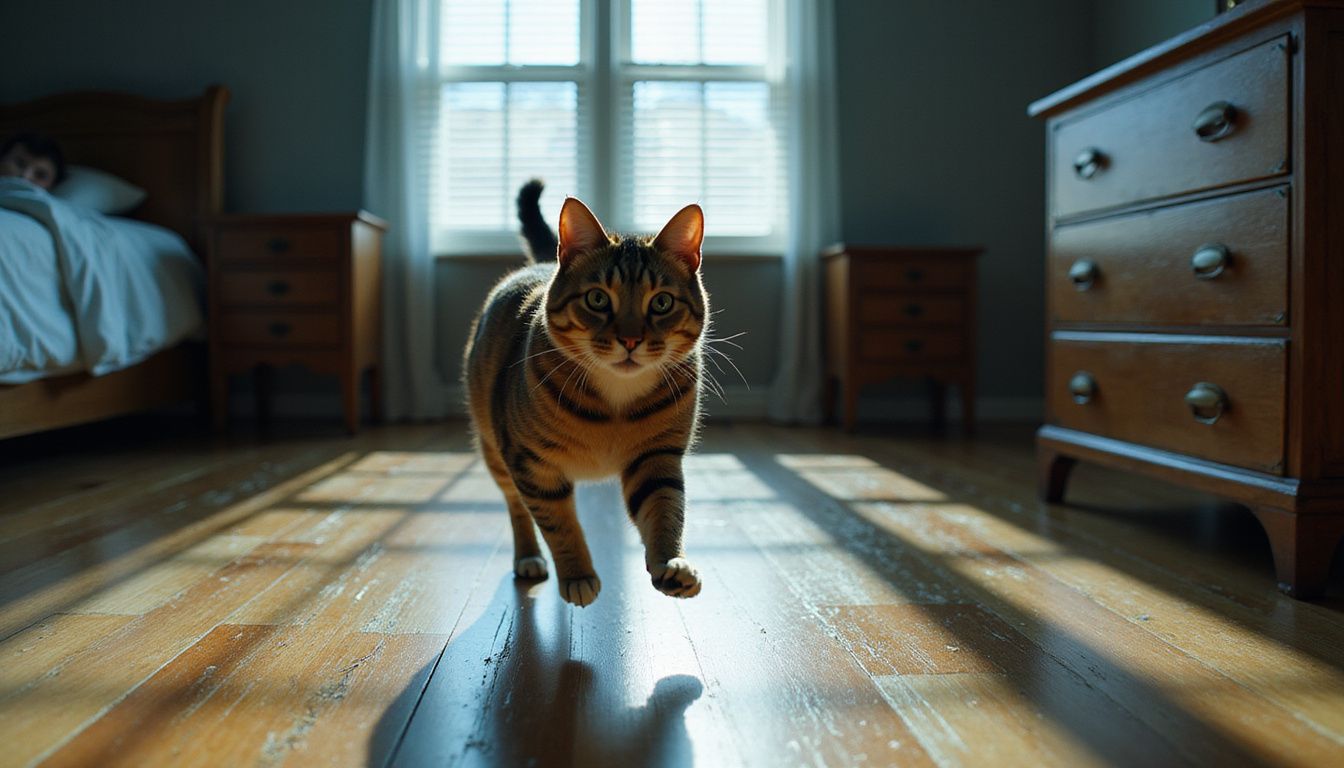
Beyond stored-up energy, another big trigger behind midnight zoomies is attention-seeking behavior. Cats learn fast, and if meowing or scratching at doors gets a reaction, they’ll keep doing it.
Loud nighttime meowing and door scratching are common signs your cat wants interaction. Once your cat figures out that waking you up leads to food, playtime, or a scratch behind the ears, that habit sticks around.
Inconsistent responses from cat owners actually make this worse. Feed your cat when it cries at 3 a.m., and it learns that nighttime noise works.
According to animal behavior experts interviewed by Business Insider, owners often accidentally reinforce this behavior by chasing the zooming cat or offering a late-night treat just to calm things down.
Cats left alone for long stretches during the day may look for interaction at night instead, turning your bedroom into their personal playground. In multi-cat households, things can get even trickier, since more cats mean more chances for attention-seeking behavior to pop up after dark.
Running through the house, pawing at your face, or jumping on the bed all signal your cat wants engagement. Understanding this pattern early matters a lot, especially if you’re still considering adoption and want to start off on the right foot.
How does hunger or irregular feeding affect nighttime activity?
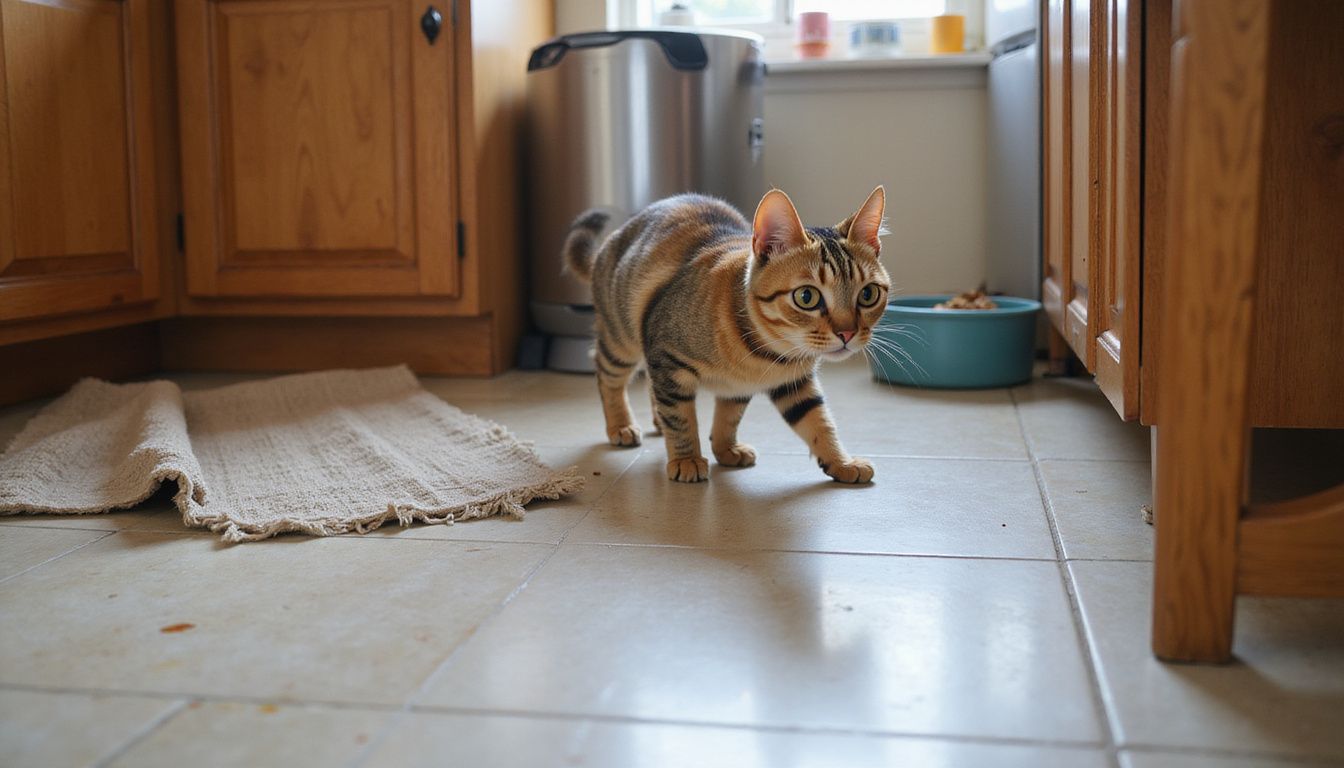
Your cat’s feeding schedule shapes their nighttime behavior more than you’d think. Cats naturally prefer several small meals a day, so irregular feeding times can trigger restlessness once the sun goes down.
If your cat links your presence with food, they’ll follow you around after waking up or paw at your face demanding breakfast. Meowing near food areas and extra kitchen activity at night are clear signs of hunger-driven hyperactivity.
A larger meal before bedtime helps cut down on nighttime activity in a big way.
A well-fed cat is a calm cat, and a calm cat lets you sleep through the night.
Why automatic feeders work so well
- They break the link between your waking up and food appearing, so early morning demands fade.
- They keep meal times consistent, even when your schedule isn’t.
- They deliver smaller, more frequent portions that match your cat’s natural eating pattern.
Cat behavior resources like Felinetips also point to automatic feeders as one of the simplest fixes for hunger-driven zoomies. Your cat settles faster when its stomach feels satisfied, and steady meal timing paired with an automatic feeder builds a genuinely peaceful night for both of you. This one adjustment alone can prevent the midnight zoomies before they even start.
What Are Common Signs of Nighttime Hyperactivity in Cats?
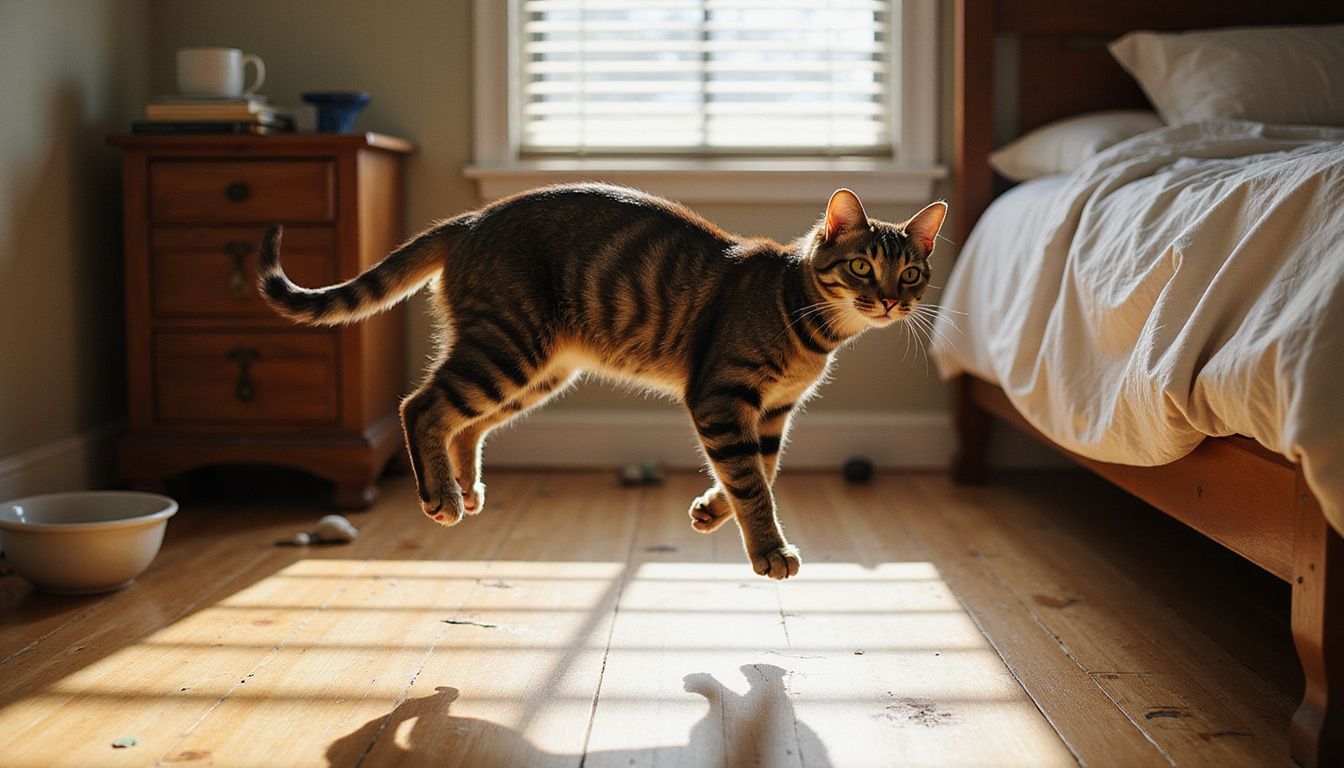
Your cat’s nighttime antics might look wild, but they tell a clear story. Learning to spot these signs helps you understand your cat’s behavior and step in before sleep deprivation takes over.
- Racing through the house at top speed, jumping on furniture, and bouncing off walls signals classic zoomies. Your cat is burning off stored energy from daytime naps in sudden bursts.
- Loud meowing outside your bedroom door, especially late at night, shows your cat wants interaction. This vocalization often peaks right when you’re trying to sleep.
- Scratching doors or furniture at night points to a cat that needs stimulation or wants to play. Pent-up energy drives this kind of destructive behavior once boredom sets in.
- Attacking your feet under the blankets happens because movement triggers hunting instincts. Your cat sees movement and pounces, treating your toes like prey.
- Chasing invisible objects or playing rough at night shows leftover energy looking for an outlet, mirroring natural hunting patterns.
- Waking you by jumping on the bed or pawing your face is attention-seeking in action. Your cat learned that these moves get a response.
- More activity near food areas paired with meowing points to hunger or an irregular feeding schedule that doesn’t match your cat’s natural rhythm.
How Can You Manage Your Cat’s Midnight Zoomies?
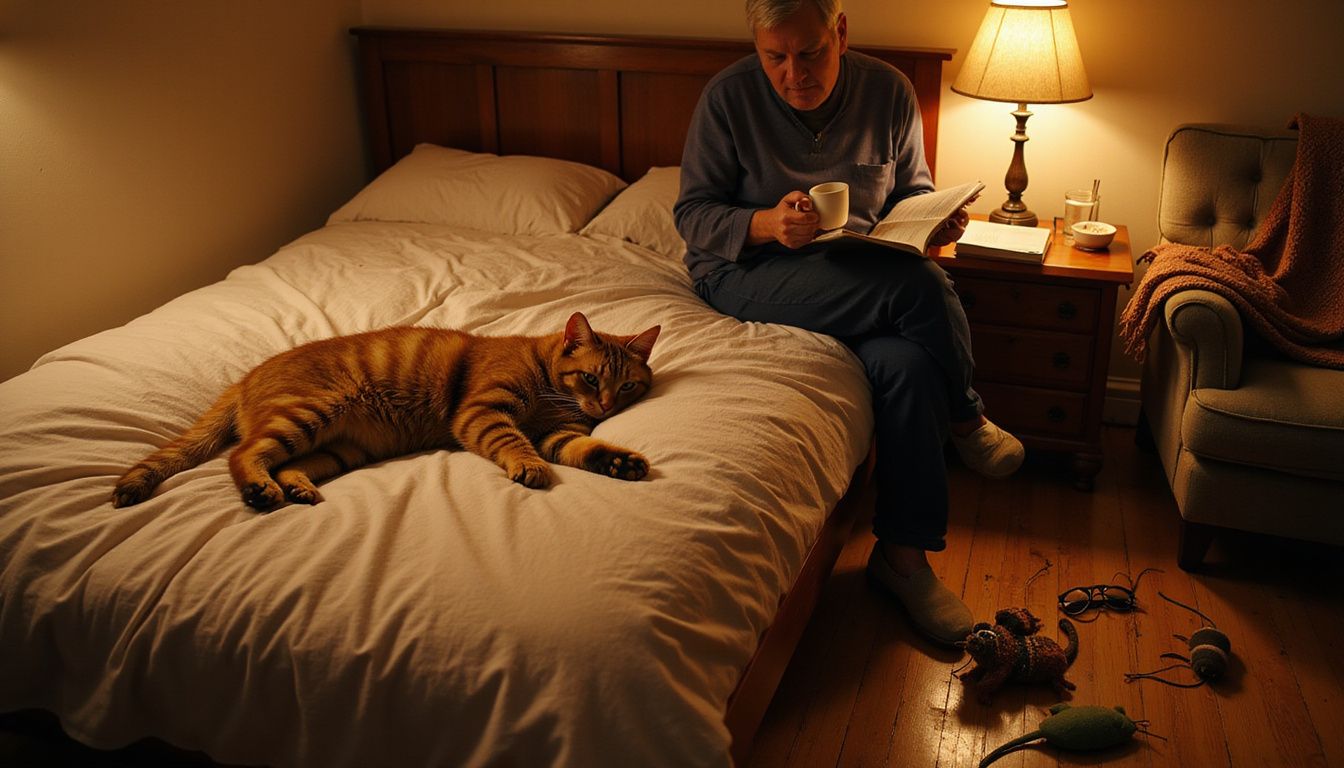
You can turn wild midnight zoomies into peaceful nights with a few simple changes to your cat’s daily routine and environment. Your cat’s nighttime energy has real solutions, and you can start using them tonight.
How does interactive play before bedtime help reduce zoomies?
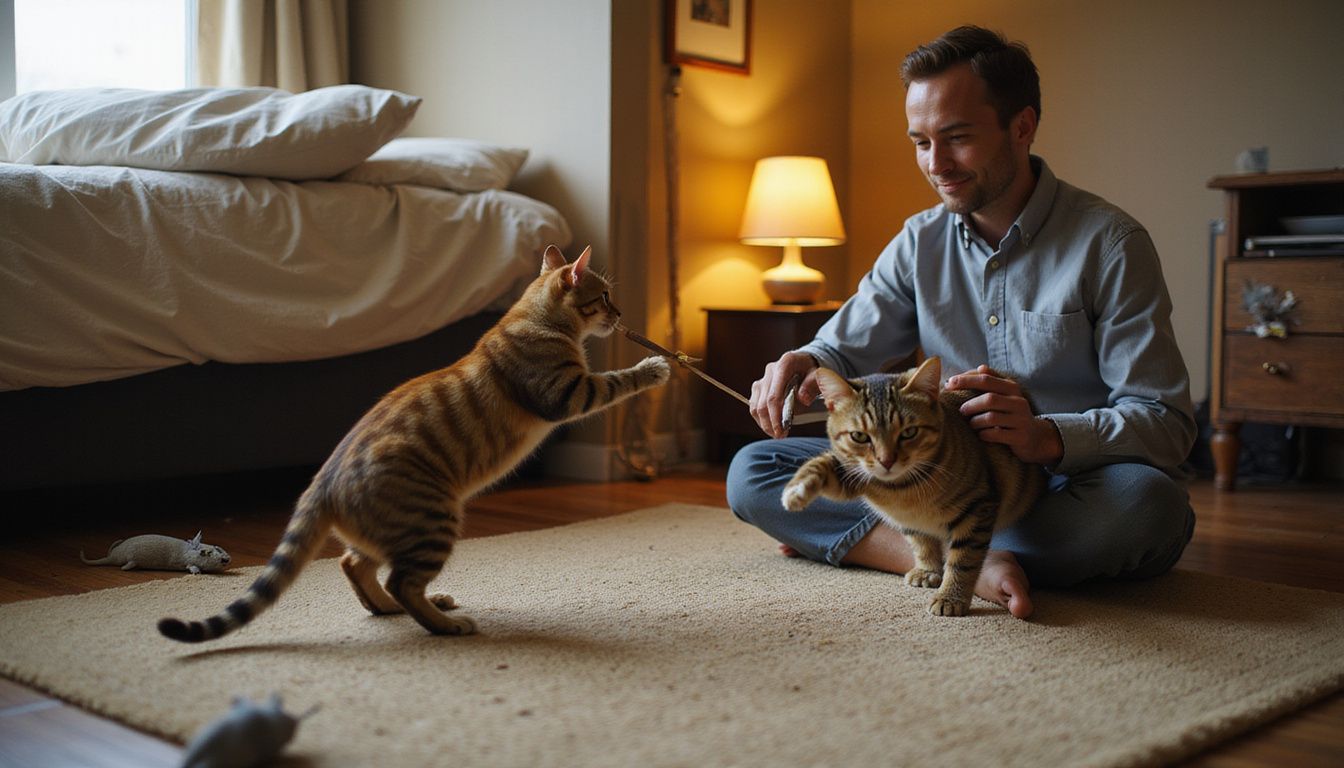
Interactive play right before bed works like a switch for your cat’s midnight zoomies. Spending 15 to 20 minutes with wand toys that mimic prey movement tires out your cat’s hunting instincts.
Here’s the part most owners miss. Because feline biology is built for sprinting rather than marathon running, veterinary experts at International Cat Care recommend breaking that time into short, high-energy bursts of 5 to 10 minutes rather than one long session. So if your cat suddenly walks away after ten minutes, that’s not failure. That’s actually a win.
These short sessions trigger the exact cat behavior patterns your feline friend craves, satisfying hunting urges that would otherwise explode into nighttime hyperactivity. Wand toys work especially well since cats respond more to erratic, prey-like movement than to static toys.
The real power comes from following a natural hunting cycle: hunt, catch, eat, sleep. This sequence mirrors what happens in the wild and tells your cat’s brain it’s time to wind down. Ball tracks and soft kicker toys give your cat an independent outlet once the main play session ends.
One cat owner tested this exact routine with an indoor adult mixed-breed cat and tracked results over two weeks:
| Metric | Week 1 | Week 2 |
|---|---|---|
| Nights with running episodes | 9 nights | 2 nights |
| Average 2 a.m. vocalizations | 4 calls per night | 0.7 calls per night |
After two weeks of short, focused play right before dinner, the late-night sprints nearly disappeared. Both cat and owner slept through the night far more often. Tired cats sleep better, not because they run out of energy, but because they’ve burned it off in a way that actually satisfies them.
Why should you adjust feeding schedules to prevent nighttime hunger?

Your cat’s midnight zoomies often come from an empty stomach, not just restless energy. Fixing your feeding schedule tackles the problem at its source.
- Feed your cat a larger meal right before your own bedtime, so they feel full and sleepy through the night.
- Split food into smaller portions spread across the day to cut down on hunger-driven early morning activity.
- Stick to the same feeding times daily. Inconsistent schedules make cats meow and pace near food areas at night.
- Use automatic feeders to break the connection between your waking up and food appearing, which cuts down on early morning demands.
- Try puzzle feeders overnight. They stretch out feeding time and give your cat mental stimulation while you sleep.
- Wait a bit before feeding breakfast right after you wake up. Feeding immediately just reinforces the early morning wake-up call.
Understanding your cat’s hunger patterns gives you real control over nighttime crying and hallway sprints. Next up: the toys and activities that burn off extra energy before dark even falls.
What enrichment activities and toys are best for nighttime energy?
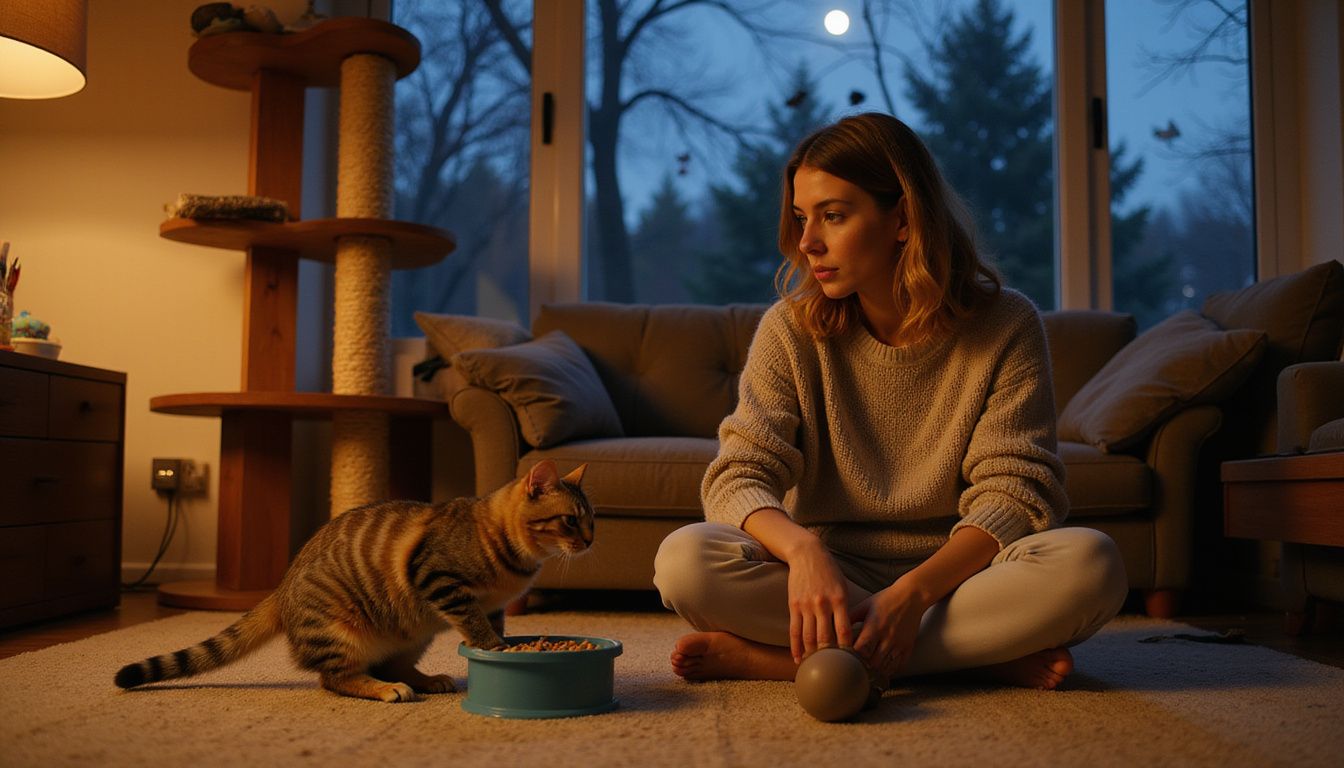
Keeping your cat entertained at night stops those wild zoomies from wrecking your sleep. Guidelines published by the American Association of Feline Practitioners (AAFP) actually call out food puzzles and vertical resting spaces by name, recommending both as ways to satisfy predatory instincts and reduce stress. That means the toys below aren’t just fun extras. They’re backed by the top feline veterinary body in the US.
- Puzzle feeders run $15 to $50 and make your cat work for food, tiring out both body and mind.
- Cat trees, priced from $50 to $300, give your cat vertical space to climb and watch the room from above.
- Scratching posts cost just $10 to $40 and give your cat a place to release stress and tension.
- Window perches offer visual stimulation from outside activity, which naturally calms hyperactive behavior in the evening.
- Treat hunts encourage natural searching. Hide small portions of food around the house to trigger hunting instincts before bedtime.
- Rotating toys every seven days keeps things fresh and stops boredom from creeping back in.
Here’s what a typical starter kit looks like for a new cat owner:
| Item | Cost |
|---|---|
| Puzzle feeder | $25 |
| Mid-range cat tree | $120 |
| Scratching post | $25 |
| Two rotating wand toys | $12 |
| Window perch | $35 |
| Starting investment total | Around $217 |
Plan on roughly $30 a year after that for replacements and toy rotation. One household found that spending around $200 upfront gave them enough options to redirect their cat’s energy at night without constant hands-on intervention. If nighttime hyperactivity keeps up despite all this enrichment, it’s worth a call to your veterinarian.
How can a consistent evening routine calm nighttime hyperactivity?
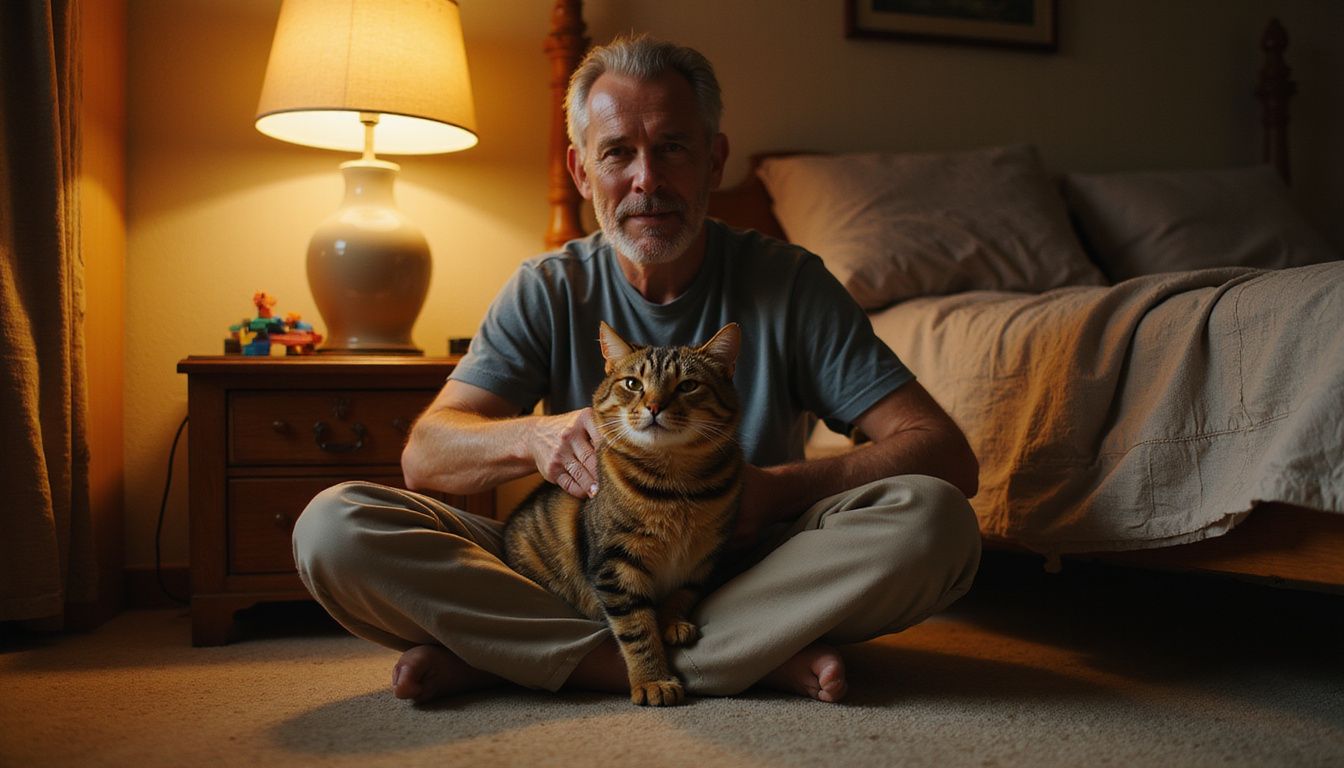
You’ve already seen how puzzle feeders and enrichment toys burn off daytime energy, but nighttime zoomies still need a structured plan. A steady evening routine works like a reset button for your cat’s internal clock.
- Start active play 15 to 20 minutes before bedtime, using toys that mimic hunting movements to burn off stored daytime energy.
- Feed your cat a final meal right after play ends. This triggers the natural hunt-eat-sleep cycle wild cats follow.
- Keep feeding times fixed every day. This helps regulate your cat’s internal clock and prevents hunger-driven midnight activity.
- Skip stimulating play in your bedroom. This keeps zoomies contained to other rooms in the house.
- Add 10 minutes of calm petting after the last meal, helping your cat shift from excitement into a relaxed state.
- Leave out scratching posts and quiet toys overnight so your cat can self-soothe without disturbing you.
- Stick with the routine for several days or weeks. Behavior change takes repetition, and every cat adjusts on its own timeline.
Small tweaks help too, like dimming the lights or playing soft background sound before bed. Even minor changes like these can noticeably cut down on nighttime disturbances.
When Should You Consult a Veterinarian About Nighttime Hyperactivity?

Your cat’s sudden shift in nighttime behavior deserves real attention. If your cat stops sleeping normally, loses weight, or starts crying more at night, call your veterinarian right away.
According to the Cornell Feline Health Center, roughly 10% of senior cats develop hyperthyroidism, which shows up as restlessness, excessive hunger, and nighttime crying. That’s not a rare edge case. It’s common enough that any older cat with sudden nighttime changes deserves a checkup.
Common medical culprits behind sudden nighttime changes
- Hyperthyroidism, affecting about 10% of senior cats, causing restlessness and excess hunger.
- Cognitive dysfunction syndrome, which can trigger confusion, wandering, and nighttime crying in older cats.
- Arthritis, which makes it hard for older cats to settle comfortably at night.
- Hypertension, which can show up as agitation and disorientation after dark.
- Anxiety or stress, which can spark repetitive pacing and vocal behavior.
A sudden change in litter box habits, new aggression, or signs of discomfort also calls for a vet visit. Your vet can rule out medical problems and map out the right treatment plan for your cat’s specific needs.
Medical issues hide behind plenty of behavioral changes, so don’t brush off what looks like simple zoomies. Even cats on a solid natural cat food diet still need regular health checks, especially if nighttime activity ramps up out of nowhere. Catching a problem early keeps your cat healthier and your nights calmer.
Conclusion
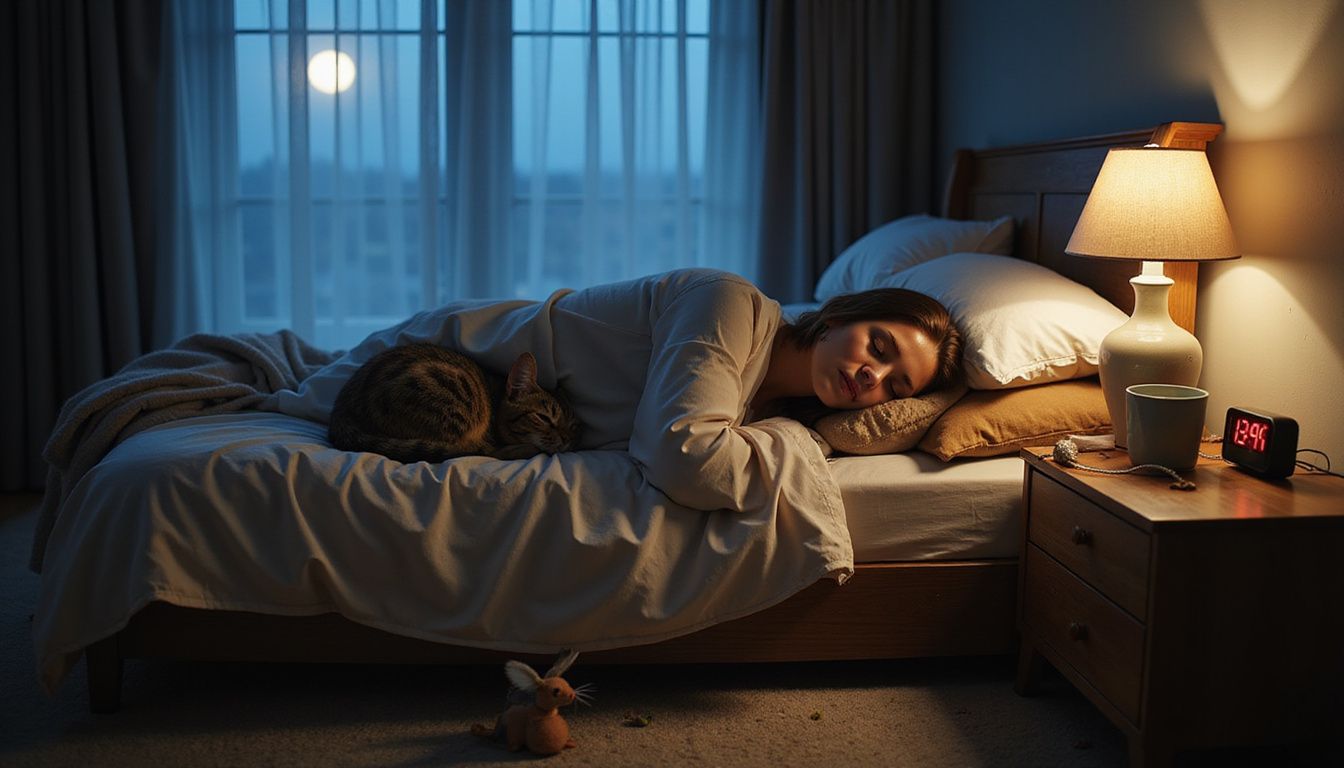
Managing cat zoomies comes down to understanding what drives your cat’s nighttime energy, then taking simple steps to redirect it.
Play sessions before bed, a steady feeding schedule, and the right enrichment activities work together to satisfy hunting instincts and tire out your feline friend.
These strategies are simple to start, and most owners see real change within days or weeks. A consistent evening routine that mirrors a natural hunting cycle resets your cat’s internal clock, leading to calmer nights for everyone.
Medical issues like hyperthyroidism or arthritis can also trigger sudden nighttime changes, so it’s always worth ruling out health problems with your vet first.
Start tonight, and those chaotic 3 a.m. sprints can turn into peaceful rest. With a little patience, even the most energetic cat can learn to sleep through the night.
FAQs
1. What are cat zoomies, anyway?
Cat zoomies, officially called Frenetic Random Activity Periods (or FRAPs), are those wild bursts of energy where your cat suddenly sprints across the house like a furry rocket. It’s completely normal and just means your cat has pent-up energy that needs an outlet.
2. Why do cats get the zoomies at night?
Cats are crepuscular, meaning they’re naturally wired to be most active at dawn and dusk. Your cat’s internal hunting clock kicks in at night, even when your brain is begging for sleep.
3. Can diet affect nighttime hyperactivity?
Yes, it can. Foods high in carbohydrates can spike your cat’s energy, so natural cat food with quality protein and fewer fillers may help keep things balanced. Check out pages like naturalcatfood on Instagram or Facebook for feeding tips.
4. How can I calm my cat down before bed?
A 10 to 15 minute play session about an hour before bedtime can tire out your cat and satisfy those hunting instincts. Follow accounts like smylo_in across Meta products for more tricks on managing nighttime cat chaos.