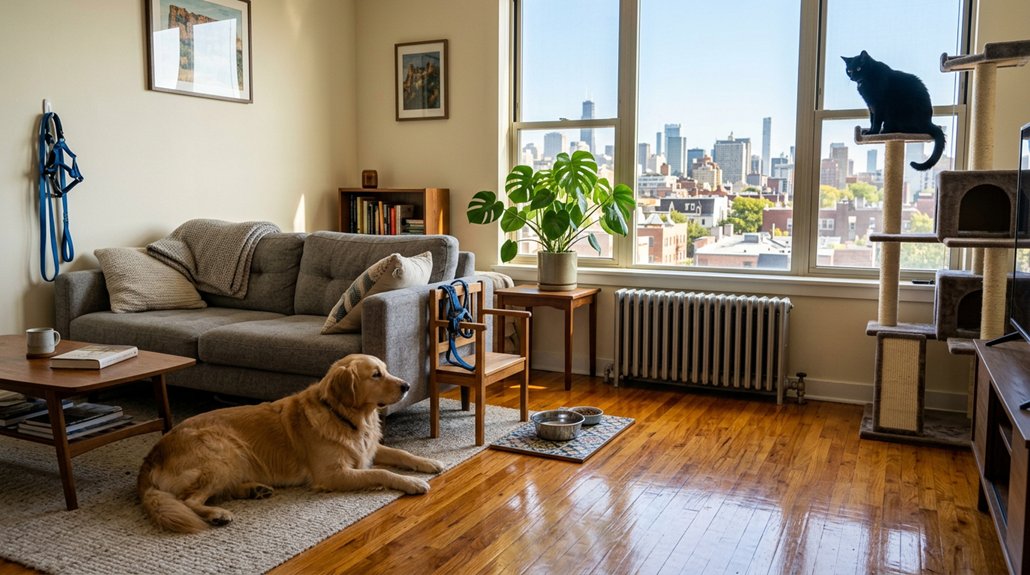
Living with a dog in an apartment involves creating a stress-free and safe environment. Introduce your dog to the new surroundings gradually and maintain consistent routines. Set up a cozy, pet-friendly space utilizing vertical organization. Manage noise by exposing your dog progressively to apartment sounds and reward quiet behavior. Guarantee adequate physical and mental exercise with indoor activities and socialization. Monitoring environmental factors and understanding triggers can enhance your dog’s adjustment, fostering a peaceful coexistence. Discover effective strategies ahead.
Key Takeaways
- Introduce your dog to the new apartment before moving to reduce stress and anxiety.
- Create a cozy resting area with familiar items for a designated safe space.
- Establish a consistent routine for feeding, walking, and exercising your dog.
- Use noise management strategies to help your dog adjust to apartment sounds.
- Regularly socialize your dog at parks and events to enhance social skills.
Transitioning to Apartment Living With Your Dog
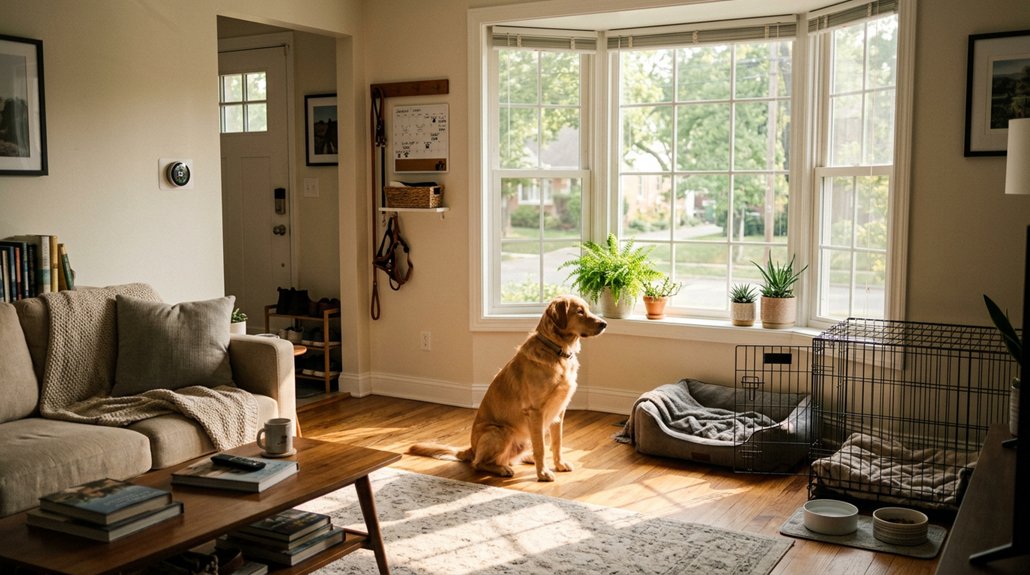
When moving your dog to apartment living, it’s essential to guarantee a smooth adaptation to prevent stress-induced behaviors. Begin the dog acclimation process before the actual move by introducing them to the new apartment. Allow them to explore and familiarize themselves with the new environment, which helps reduce anxiety. Consistency is vital, so maintain their feeding and walking routines during the shift. Create a designated safe space with familiar items such as their bed and toys to assure they feel secure. For moving day preparations, consider your dog’s safety. Keep them in a separate room to manage stress and avoid accidents. Alternatively, consult a friend or family member to look after your dog during the busyness of the move.
Setting Up a Pet-Friendly Space in Your Apartment
Creating a pet-friendly space in your apartment starts with setting up a cozy resting area using a comfortable bed and guaranteeing easy access to food and water bowls. Organize essential pet supplies efficiently by utilizing vertical space, such as wall-mounted shelves, which can help optimize the limited area available. Regularly maintaining cleanliness in this zone is crucial to prevent odors and affirm your dog’s environment remains healthy and welcoming.
Cozy Resting Area Design
Designing a cozy resting area for your dog in an apartment setting can greatly enhance their well-being, even in a limited space. Establishing a restful zone with comfort elements is essential for your pet’s health. Choose a bed that suits your dog’s size and provides joint support. Opt for easy-to-clean materials to maintain hygiene.
Place their resting zone in a low-traffic area to minimize stress.
| Comfort Elements | Purpose |
|---|---|
| Cozy Bed | Joint support and comfort |
| Food & Water Bowls | Routine maintenance |
| Favorite Toys | Mental stimulation and engagement |
| Multi-functional Furniture | Organization and space-saving |
| Window Perch | Viewing and relaxation |
Vertical space, such as shelves or window perches, supports enrichment and observation of surroundings.
Essential Pet Supplies Organization
Organizing your dog’s essential supplies in an apartment setting is crucial for maintaining both functionality and comfort. Designate a specific pet zone that incorporates beds, food and water bowls, toys, and treats. Utilize vertical pet supply storage options like shelves or storage ottomans to keep items off the floor, reducing clutter and creating a more efficient space. Label containers for easy access to dog toys, grooming tools, and feeding supplies, facilitating organized feeding routines. Strategically use hidden spaces such as multi-functional furniture or under-bed storage for leashes and waste bags, keeping them neatly stored yet accessible. Regular cleaning of the designated pet area will manage odors and maintain a hygienic environment, essential for animal health in apartment living.
Effective Exercise Strategies for Small Living Spaces
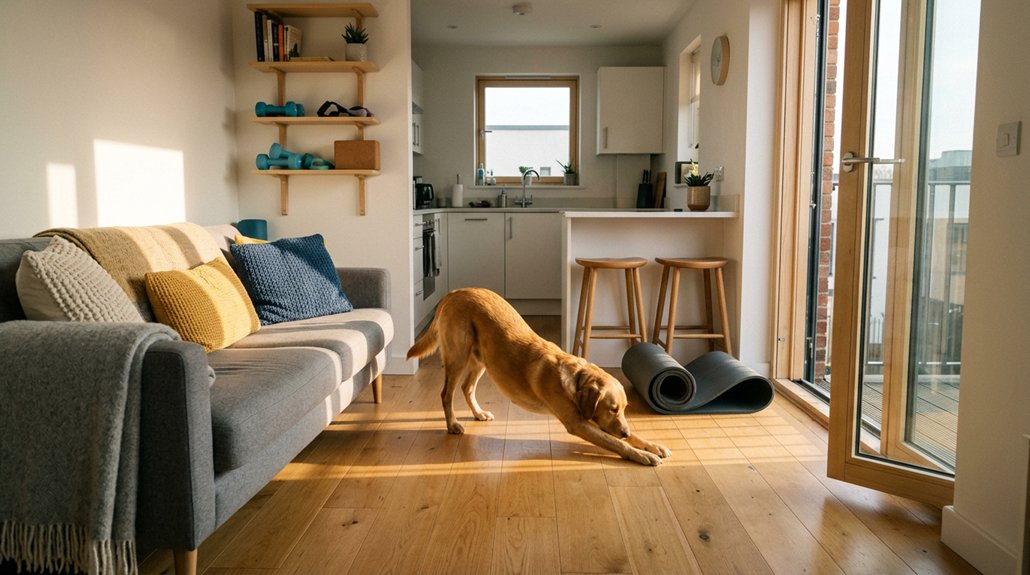
To effectively manage your dog’s exercise needs in a small living space, consider creating creative indoor workouts like engaging them with interactive feeding tools to stimulate both mind and body. Maximize outdoor opportunities by utilizing nearby parks and trails, which provide ample space for physical activity and mental stimulation. Establishing a consistent routine will not only meet your dog’s physical needs but also fortify your bond.
Creative Indoor Workouts
Although living in an apartment presents unique challenges for dog owners, it’s essential to prioritize both physical and mental exercise for your furry companion. Use treat toys to engage your dog’s brain, blending mental stimulation with fun. Establish agility courses using furniture for a safe yet challenging setup. Integrating tug games provides high-energy excitement without risk to furniture. Brain games like hide-and-seek keep their minds sharp while promoting movement.
| Activity | Tools Needed | Benefits |
|---|---|---|
| Treat Toys | Treat-dispensing toys | Mental engagement, physical activity |
| Agility Courses | Furniture, boxes, cones | Physical challenge, spatial awareness |
| Tug Games | Soft toys | Muscle development, interactive play |
| Brain Games | Toys, space | Cognitive stimulation, active engagement |
Rotate these exercises to maintain interest and health.
Maximize Outdoor Opportunities
Even if limited living space can pose challenges, maximizing outdoor opportunities is essential for maintaining your dog’s physical and mental well-being. Prioritize daily outdoor adventures to guarantee your dog thrives despite apartment living. Here’s how:
- Daily walks: Aim for 30 minutes in local parks or trails for active exercise.
- Dog parks: Visit off-leash areas for socialization and mental stimulation.
- Agility classes: Join sessions that offer physical and mental engagement.
- Leash training: Use walks as a chance to enhance control and obedience.
- Professional dog walker: Consider hiring one for mid-day outings if you’re frequently away.
These strategies, paired with regular exercise, enable your dog to remain healthy and stress-free, enhancing your pet’s quality of life.
Help Your Dog Adapt to New Noises
Living in an apartment with a dog can present unique challenges, especially when it comes to adjusting to new and often unfamiliar noises; consequently, it’s important to employ strategies to help your dog adapt effectively. Try noise desensitization techniques by gradually exposing your dog to recorded sounds of doorbells or sirens. Implement soundproofing tips, like using white noise machines, to create a soothing background ambiance.
| Strategy | Benefit |
|---|---|
| Noise Desensitization | Reduces anxiety towards specific sounds |
| Soundproofing with White Noise | Masks unfamiliar sounds, providing calm |
| Positive Reinforcement | Encourages calm behavior with treats |
Furthermore, establish a cozy retreat where your dog can escape noise. Pair exposure with treats to create positive associations. Maintain consistent routines with play and relaxation exercises for increased security.
Building a Canine Social Life in the City
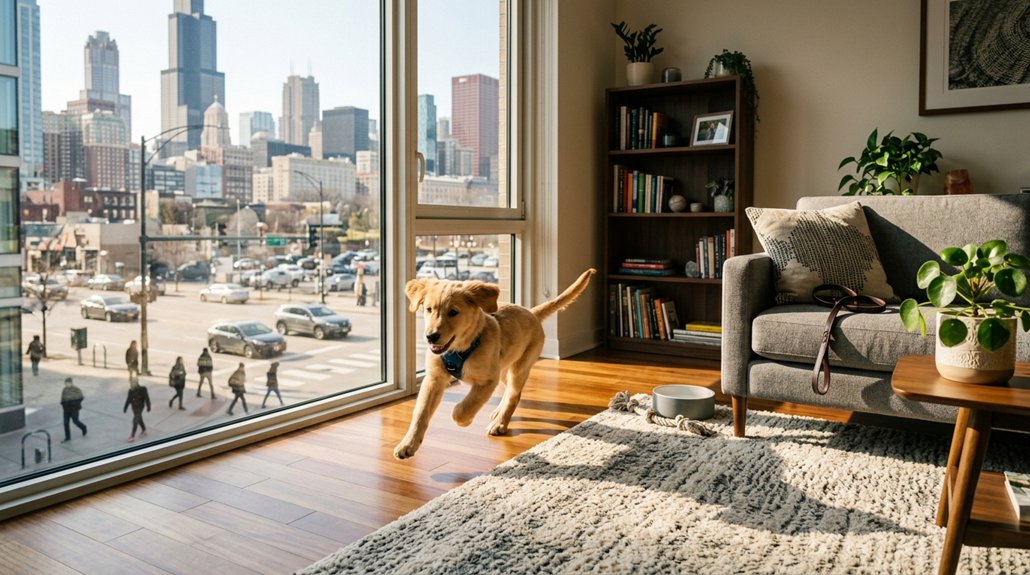
After ensuring your dog is comfortable with the unique sounds of apartment living, enhancing its social life in the city presents the next step in fostering well-being. Fostering a robust canine social life involves strategic socialization and community interaction. By regularly visiting local dog parks, you not only adhere to proper dog park etiquette but also engage with the pet owner community. These are essential components for your dog’s health.
- Attend organized dog-friendly events like Yappy Hours.
- Walk in busy communal areas to reduce anxiety.
- Form a network of pet owners in your apartment complex.
- Incorporate playdates with neighborhood dogs.
- Support your dog’s confidence in urban environments.
Each of these activities strengthens your dog’s social skills, ensuring a healthier and happier pet.
Quiet Living: Managing Your Dog’s Barking
While living in an apartment presents unique acoustic challenges for dogs, addressing excessive barking is vital for harmony. Consider the use of sound therapy, such as sound machines or calming music, to reduce your dog’s anxiety by masking potential barking triggers. Implement weather stripping or heavy curtains to dampen external sounds, creating a quieter space. Desensitize your dog by gradually exposing them to common apartment noises. This systematic approach can diminish reactivity and excessive barking over time. Additionally, reinforcing quiet behavior with rewarding training techniques plays an important role in managing barking. Create visual barriers, like baby gates, to limit your dog’s view of potential triggers outside doors or windows. Properly addressing these factors promotes a tranquil apartment living environment.
Frequently Asked Questions
Is It Hard to Live in an Apartment With a Dog?
Coincidentally, it’s not too hard if you’re aware of challenges. Focus on apartment training, creating dog-friendly spaces, and proper exercise management. With a structured approach, harmonious coexistence in an apartment with your dog is achievable.
What Is the 3-3-3 Rule With Dogs?
The 3-3-3 rule outlines a dog’s acclimatization timeline in a new home: three days of emotional adjustment stress, three weeks of exploring options and settling, and three months to fully adapt to the adjusting environment.
Can a Dog Be Left Alone for 24 Hours?
No, you shouldn’t leave a dog alone for 24 hours. It can lead to dog separation anxiety, especially in apartment dog breeds. Find reliable care, like a dog walker, to avoid stress and guarantee their wellbeing.
What Is the 90 10 Rule for Dogs?
The 90/10 rule suggests that 90% of your dog’s time should be calm, enhancing their health. Implement daily exercise and training techniques in the remaining 10% to prevent behavior issues, ensuring holistic animal wellness.
Conclusion
Living with your dog in an apartment may seem like starting an odyssey, but with thoughtful preparation, it’s entirely achievable. Create a cozy, pet-friendly environment, like the one Dorothy would’ve cherished in Kansas. Exercise routines, noise acclimation, and fostering social interaction enhance your dog’s urban experience. Remember, a well-managed bark leads to harmonious living. As Virgil might suggest, patience and consistency are your guides in this journey. Your city apartment can truly become your dog’s palace.