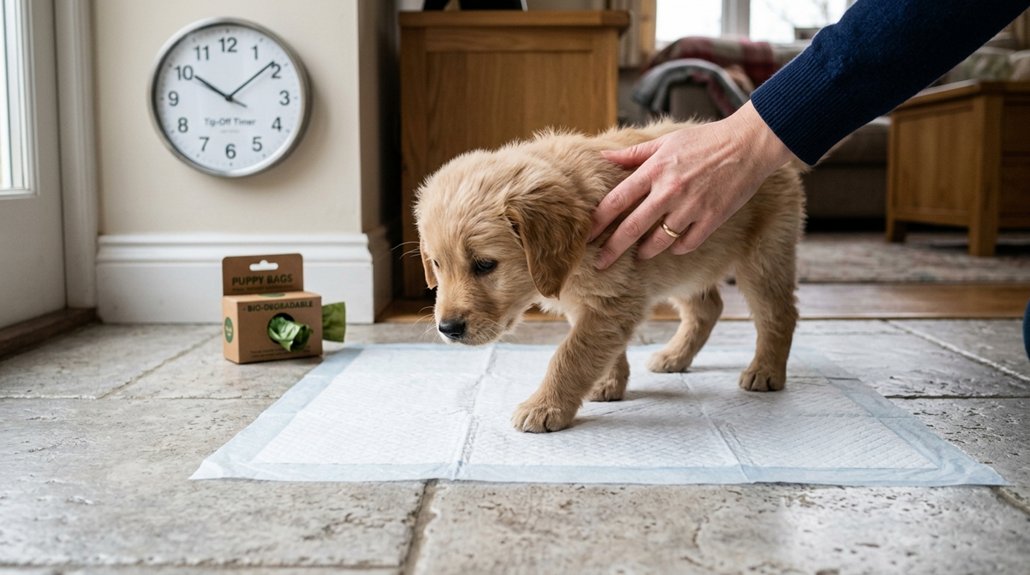
Avoid puppy potty training mistakes by maintaining a consistent schedule and recognizing your puppy’s natural signals. Don’t expect overnight perfection; patience is key. Use positive reinforcement instead of scolding to encourage good behavior. Involve the whole family to guarantee clear commands and routines. Keep the crate welcoming and clean for effective training. Avoid placing puppy pads near food or sleeping areas to prevent confusion. Implement these strategies for a well-trained puppy and discover further insights ahead.
Key Takeaways
- Avoid inconsistent potty schedules; establish a regular routine aligned with the puppy’s natural patterns.
- Recognize and respond to early potty signals like circling and whining promptly to prevent accidents.
- Stay calm during accidents and use positive reinforcement instead of scolding to encourage learning.
- Ensure all family members use unified commands and maintain consistency to foster training progress.
- Properly clean accidents with enzymatic cleaners to remove scents and prevent recurrence.
Creating a Consistent Potty Schedule
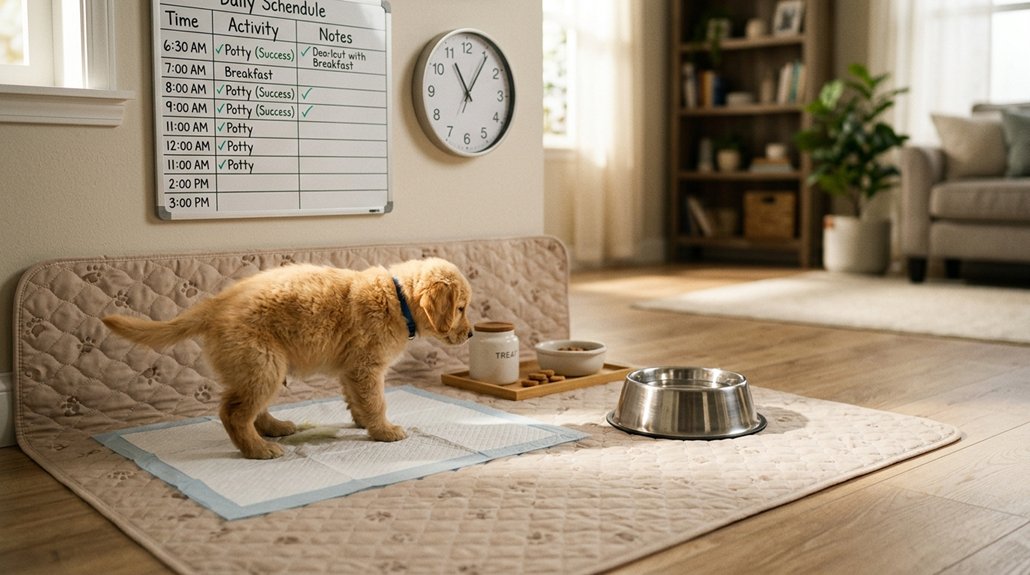
Establishing a consistent potty schedule is key to successful puppy training because it leverages their natural patterns and needs. You’ll need to take your puppy outside every few hours—especially after waking, eating, and playing—to positively reinforce proper behavior. Incorporate potty rewards to create a strong association with desirable actions. Remember, environment factors play a significant role; always choose a calm, designated spot outdoors to minimize distractions and help your puppy focus.
Consistency aids learning by creating predictable routines, guiding your puppy to understand expectations swiftly. Puppies under four months require frequent breaks, adhering to the rule of one hour per month of age. Stay patient and observant to establish solid habits, reducing future indoor accidents and ensuring a smoothly potty-trained pup.
Understanding Optimal Potty Break Timing
Understanding ideal potty break timing is essential for successfully training your puppy and preventing accidents in your home. You’ll need to be attentive to their age-specific bladder capacity and establish a consistent potty break schedule, particularly after waking, eating, and playtime. By recognizing your pet’s signals, such as whining or circling, you can effectively respond and guide them to the appropriate potty area, fostering both their development and your mutual satisfaction.
Consistent Potty Break Schedule
Creating a consistent potty break schedule is essential for successful puppy training, especially for those under four months old. Frequent trips outdoors, recommended every hour, are a key potty training tip to prevent accidents and reinforce good habits. Major times for breaks include after waking up, meals, and playtime, capitalizing on moments when puppies are most likely to need to eliminate. While consistency is vital, scheduling flexibility is equally important. A flexible routine accommodates your puppy’s growing needs and makes learning easier. It’s about finding a balance that suits both your schedule and your puppy’s development. This approach helps your pup associate specific times with outdoor trips, paving the way for effective training and a well-adjusted pet ready to enjoy life inside your home.
Age-Appropriate Holding Limits
Steering puppy potty training involves knowing how long your puppy can hold their bladder based on their age. A useful guideline is that puppies can manage an hour of bladder control for each month of age, plus an extra hour. For example, a three-month-old can generally hold it for about four hours. However, many puppies under four months still require potty breaks every hour due to limited bladder capacity. Consistency in these breaks is essential, as most puppies can’t hold it for more than 6-8 hours, even as they mature. Following activities like eating, playing, or waking up, prompt potty breaks are important. By aligning your schedule with their needs, you’ll help prevent accidents and foster success in training.
Recognizing Pet’s Signals
Successfully managing your puppy’s potty training hinges on recognizing their signals for when they need to go outside. Signal identification is vital in this process. By observing behaviors like circling, sniffing, whining, or scratching, you can respond promptly and prevent accidents. Here’s how to optimize:
- Close Monitoring Indoors: Keep a watchful eye on your puppy to catch those early signals, allowing for immediate signal response.
- Scheduled Breaks: Confirm frequent outdoor trips, especially after meals, waking, or playtime. Tailor breaks to their age—each month equates to an hour they can hold their bladder.
- Behavior Patterns: Consistently observe your puppy, which can help you recognize patterns, ultimately establishing a reliable schedule suited to their needs.
Responding Calmly to Potty Accidents
While dealing with potty accidents can be frustrating, maintaining a calm demeanor is essential for a puppy’s successful training. Embrace positive reinforcement rather than resorting to scolding, which can confuse your puppy and hinder progress. After an accident, manage the situation by taking the puppy outside promptly. This reinforces appropriate behavior by shifting the focus to the desired location.
| Mistake | Solution |
|---|---|
| Scolding the puppy | Use calm, positive reinforcement. |
| Leaving scent traces | Clean thoroughly with enzymatic cleaners. |
| Ignoring pre-potty signals | Learn and act on circling or whining. |
Accident management also involves cleaning with enzymatic cleaners to remove scents, preventing future accidents in the same spot. Observing circling or whining signals can reduce accidents, empowering you to act proactively and support your pup’s learning journey.
Harnessing the Power of Crate Training
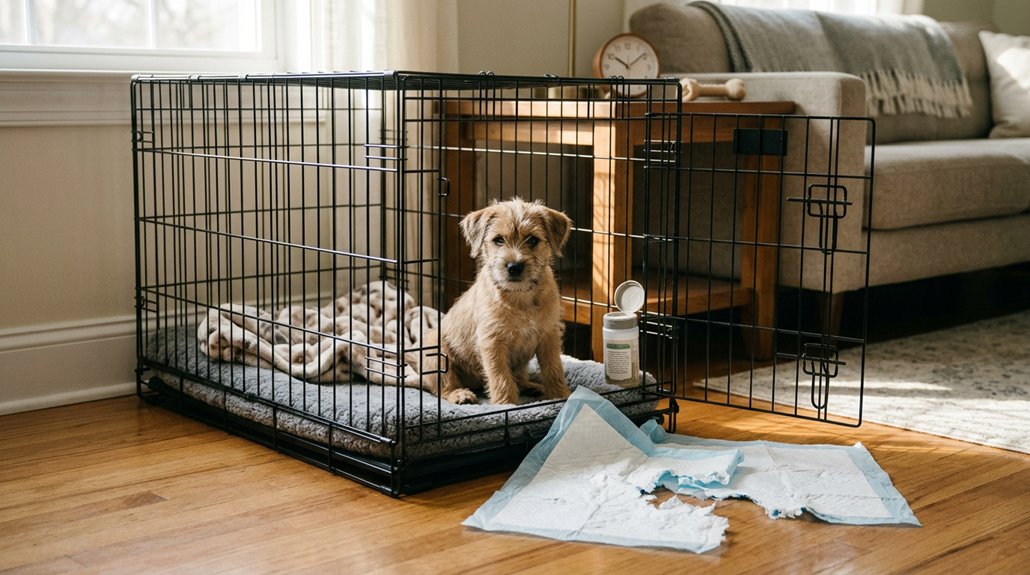
Harnessing the power of crate training can be a game-changer in establishing consistent potty habits for your puppy. By tapping into your puppy’s instinct to keep their sleeping area clean, you’re encouraging them to hold their bladder until it’s time for an outdoor potty break. Verify the crate is the right size and use positive reinforcement to help your puppy feel comfortable and secure, ultimately reducing their anxiety about confinement.
Benefits of Crate Training
Although it might initially seem restrictive, crate training is an invaluable method for instilling good potty habits in your puppy. By understanding instincts, you can harness your puppy’s natural tendency to avoid soiling their sleeping area. Here’s how crate training can help:
- Crate Comfort: It’s essential to create a comfortable environment inside the crate. A cozy space will naturally become a “den,” helping your puppy to feel safe and secure.
- Accident Reduction: Puppies instinctively avoid soiling their immediate areas, and a crate encourages this behavior, managing to systematically reduce accidents.
- Anxiety Mitigation: With consistent use, the crate provides a predictable environment, reducing anxiety and fostering structured potty breaks that reinforce positive habits.
Establishing Consistent Potty Habits
Building on the advantages of crate training, establishing consistent potty habits becomes integral to your puppy’s daily routine. Crate training leverages your puppy’s instinct to keep their sleeping area clean, encouraging positive potty behavior patterns. By using the crate, you can effortlessly schedule regular potty breaks after waking, reducing indoor accidents. This method not only teaches them that outside is the appropriate place for elimination but also aids in managing crate anxiety as they become accustomed to their confined space. It’s essential to gradually increase the time spent in the crate, which helps your puppy develop bladder control over the weeks. This approach allows you to monitor their signals closely, enhancing your ability to anticipate their need for a break.
Mastering Pet Accident Clean-Up
Cleaning up after a pet accident is the first step to guaranteeing your home stays fresh and your puppy learns proper habits. Employ effective odor neutralization techniques by selecting an enzymatic cleaner specifically designed for pet messes. Ordinary cleaners may leave odors, encouraging your puppy to revisit the area. Here’s a solid clean-up routine:
- Immediate Action: Blot liquids with paper towels promptly. Quick action minimizes odors and discourages reoccurrence.
- Proper Cleaner Application: Carefully follow the product’s instructions to guarantee complete odor elimination.
- Dry Thoroughly: Allow the area to dry fully, as residual moisture can lead to recurring smells.
Cover frequently soiled spots to prevent repeat accidents. Your attentive clean-up efforts are essential in reinforcing positive behavior and maintaining a fresh home.
Recognizing When It’s Time to Go
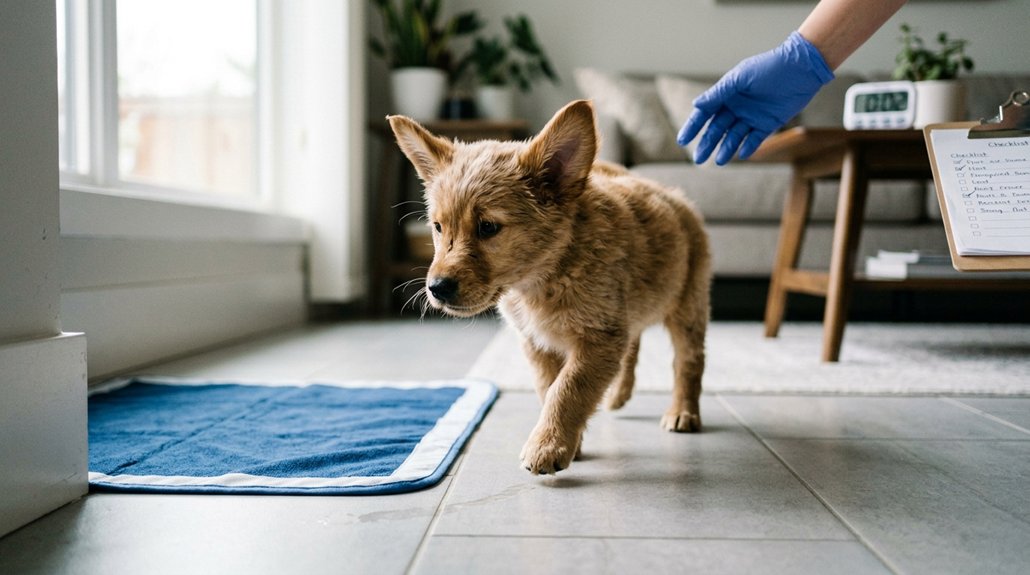
Recognizing when your puppy needs to go out is integral to successful potty training. Understanding puppy behavior and spotting early cues can prevent indoor accidents. Look for signs like circling, sniffing, whining, or scratching at the door. These behaviors typically mean your puppy’s ready for a potty break and need addressing immediately. Puppies generally require bathroom trips shortly after waking, eating, or energetic play sessions. Keep a close eye on these moments and maintain supervision to catch those subtle signals in time.
Getting the Whole Family on Board
While potty training your puppy, it’s crucial to get the whole family involved to guarantee a cohesive and efficient process. Family involvement guarantees that everyone is using unified commands, such as saying “Go potty,” so your puppy doesn’t get confused. Lack of consistency can hinder progress.
Here’s how to get everyone on board:
- Communicate: Hold family discussions to clarify expectations, making sure everyone understands the puppy’s needs and behavior signals.
- Coordinate: Develop a schedule that aligns with everyone’s routine, allowing for consistent potty breaks and preventing accidents.
- Share Responsibilities: Divide tasks, with each member recognizing signs like circling or whining, and taking the puppy outside as needed.
Selecting Optimal Locations for Puppy Pads
When choosing where to place your puppy pads, it’s essential to prioritize locations that are quiet, easily accessible, and free from distractions. Puppies, by nature, can be reluctant to use hidden or inconvenient spots. So, opt for pad placement that aligns with puppy preferences, encouraging consistent use. Avoid putting pads near food or sleeping areas, as this might confuse them, leading to inappropriate associations with elimination. Gradually shift pads to your desired location, reinforcing good habits while preventing accidents elsewhere. Also, selecting spots in view of high-traffic areas helps them feel safe and secure. Monitor your puppy’s behavior closely to understand their preferred potty area, and adjust pad placement accordingly for successful elimination experiences.
Why Patience Is Essential for Potty Training Success
The journey of potty training your puppy can be both rewarding and challenging, but it’s crucial to approach it with patience and perseverance. A solid training mindset and realistic expectations are critical. Here’s why patience matters:
- Timeframe: Potty training typically takes 4-8 weeks. Young puppies’ bladder control is limited—just one hour per month of age—meaning you’ll need to remain consistent and patient.
- Mistakes: Scolding your puppy during accidents creates fear and confusion, hindering progress. Instead, maintain a calm demeanor and use positive reinforcement to encourage success.
- Observation: Missing signs like whining or circling can lead to setbacks. Vigilant observation helps prevent accidents, fostering learning in a supportive atmosphere.
Stay resilient and nurturing, and your puppy will soon master the process.
Frequently Asked Questions
How Do I Potty Train a Puppy in an Apartment With No Yard?
You can potty train your puppy in an apartment by using indoor puppy potty solutions like puppy pads or indoor grass patches. Consistency, positive reinforcement, and patience are key. Establish a routine and always praise success.
Can Certain Breeds Be More Challenging to Potty Train?
Yes, certain breeds can present more training challenges due to specific breed tendencies. You may find it requires patience and consistency, but understanding your dog’s unique traits helps tailor effective toilet training techniques for better results.
What Should I Do if My Puppy Refuses to Go Outside?
If your puppy refuses to go outside, consider common causes like weather discomfort or anxiety. Offer encouragement and explore indoor alternatives temporarily, like puppy pads. Be patient, gradually reintroducing outdoor training, and seek professional advice if needed.
How Can I Potty Train a Puppy During the Cold Winter Months?
During winter training, use an indoor potty for your puppy. Gradually guide them to outdoor elimination by shortening the time spent indoors. Stay patient and consistent, offering praise for positive behavior to build confidence in cold conditions.
Are There Specific Tools or Gadgets That Aid in Potty Training?
Sure, imagine using potty training pads and indoor potty systems during a blizzard. These tools are reliable for bad weather, ensuring comfort for your puppy and satisfaction for you as it learns quicker in challenging conditions.
Conclusion
Potty training your puppy can feel overwhelming, but remember, consistency is key. Curiously, a study found that puppies take, on average, about 4-6 months to become fully house-trained. So, stay patient and positive—each pup learns at their own pace. Get everyone in your household involved, and don’t overlook the importance of choosing the right potty spots. By staying calm and dedicated, you’ll help your furry friend develop good habits and strengthen your bond.