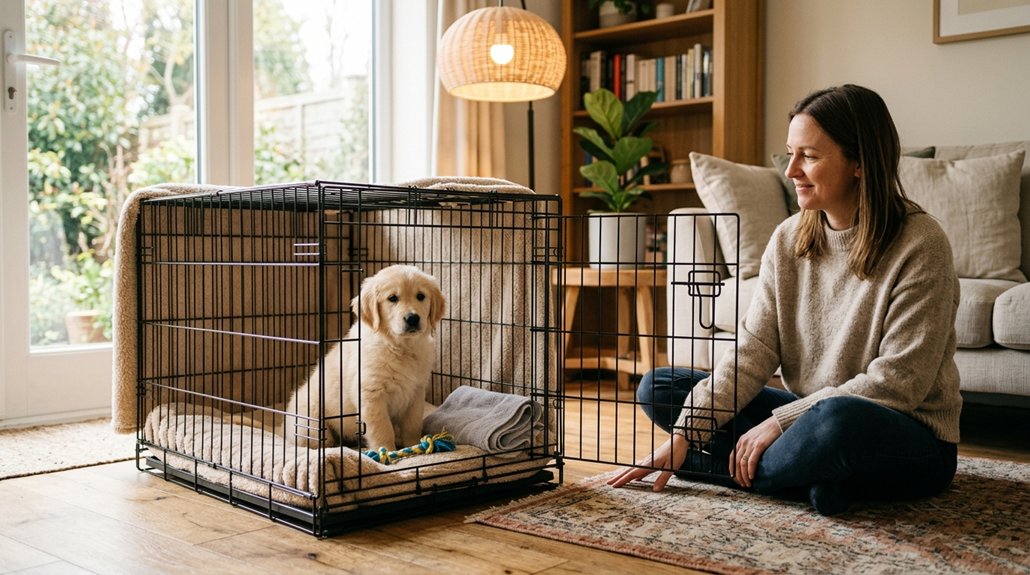
To crate train your puppy without stress, start by creating positive associations with the crate. Place it in a central location, and use treats and a cheerful tone to encourage your puppy to explore with the door open. Gradually lengthen supervised crate time, ensuring your puppy’s basic needs are met. Avoid using the crate as punishment; instead, make it a relaxation space. Pay attention to stress signals and adjust accordingly. Explore further to master stress-free crate training.
Key Takeaways
- Introduce the crate gradually using positive reinforcement to encourage voluntary entry.
- Ensure all basic needs are met before crate sessions to prevent distress.
- Incorporate interactive toys to make the crate a fun, relaxing space.
- Begin with short crate durations, slowly increasing as the puppy becomes more comfortable.
- Use praise and treats to reward calm behavior, reinforcing positive associations with the crate.
Effective Strategies for Crate Training Your Puppy
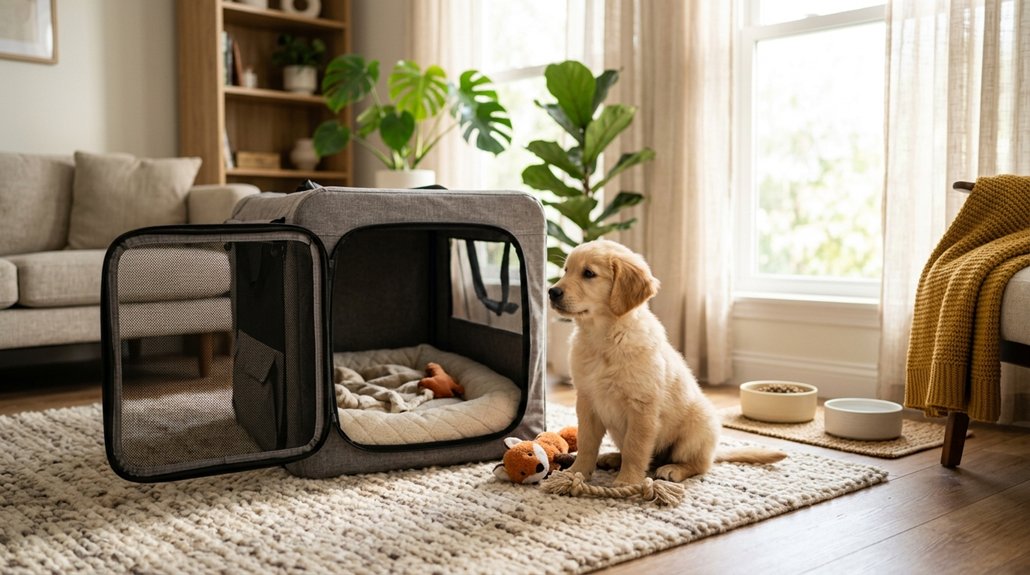
When beginning crate training your puppy, it’s imperative to approach the process with patience and consistency. Crating benefits are abundant, providing your puppy with a sense of security while aiding in housebreaking and reducing destructive behaviors. Establishing a training timeline is vital for successful results. Begin with short intervals, allowing your puppy to adjust gradually. Monitor your puppy’s comfort and adjust the duration of confinement accordingly. Supplementing time in the crate with interactive toys or food-stuffed Kongs can help minimize boredom and anxiety. Always guarantee your puppy associates the crate with positivity by offering treats for their interactions. This strategic approach will guide your pup towards embracing the crate as a trusted, safe haven, easing stress for both of you.
Introduce Your Puppy to the Crate
While starting on the journey of crate training your puppy, initiating the process during a weekend or any period when you can dedicate ample time to their comfort is essential. Position the crate in a bustling area of your home, like the living room, promoting a sense of inclusion and encouraging exploration. To establish crating comfort, offer treats to entice your puppy inside without closing the door initially. This step helps your furry friend develop a positive association with the crate. Use a cheerful and reassuring tone to further enhance positive reinforcement. Begin with short, supervised sessions with the door open, slowly increasing the duration as your puppy grows more at ease. With patience, you’re creating a safe haven for your puppy.
Best Practices and Common Pitfalls in Crate Training
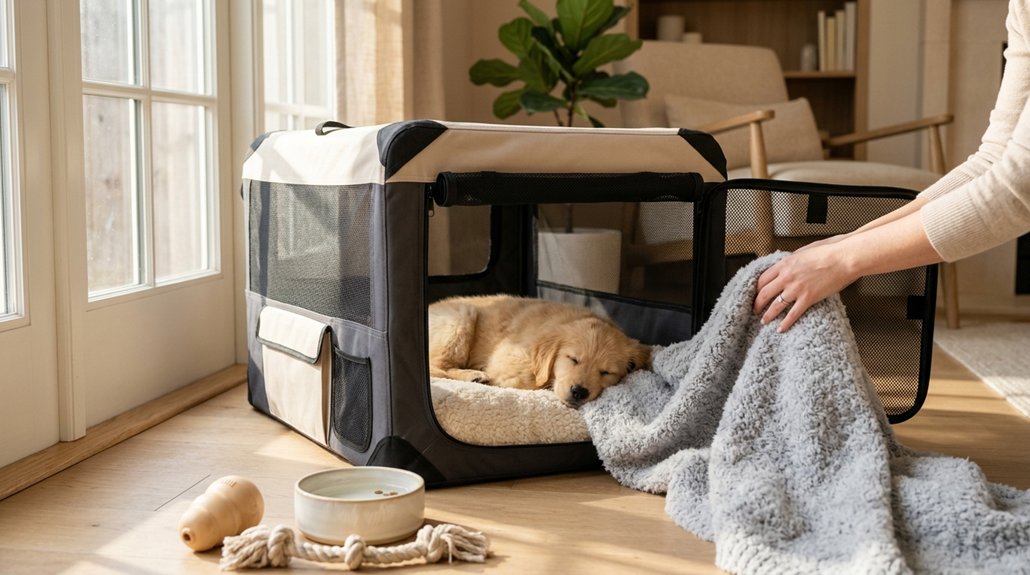
How can you effectively set the stage for successful crate training? Begin by introducing the crate in a gradual manner. Let your puppy explore it with the door open and use treats to create a positive environment. It’s vital not to force confinement, as that could lead to stress or anxiety. Make certain that basic needs like food, water, and potty breaks are met before crating, which promotes a calm atmosphere and enhances crating benefits. Focus on fostering puppy comfort by using the crate as a space of relaxation, not punishment. Start with short intervals, slowly increasing the time your puppy spends in the crate. Monitor behavior for any signs of stress, and adjust your approach to avoid overwhelming them.
Managing Puppy Whining During Crate Training
Though crate training can be incredibly beneficial, managing puppy whining during this process requires patience and understanding. First, address whining triggers by ensuring your puppy’s needs are met—proper feeding, hydration, bathroom trips, and engagement reduce discomfort. If whining seems distress-related, release your puppy to avoid negative associations and reinforce comfort. For non-distress, ignore the behavior to prevent attention-seeking tendencies, but stay alert for persistent whining that might need intervention. Gradually lengthen crate sessions with praise and treats to promote calm behavior and adjustment. Consider placing interactive toys or food-stuffed items in the crate to entertain and soothe anxiety. This approach fosters a positive and secure environment, diminishing whining and enhancing your puppy’s overall comfort during crate training.
Where to Find More Support for Crate Training
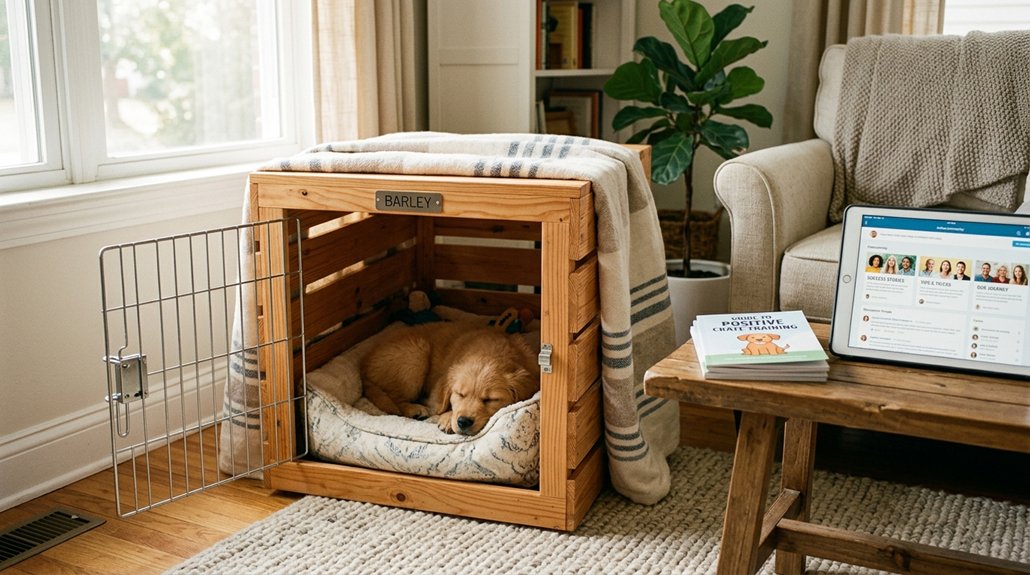
Crate training a puppy can sometimes feel overwhelming, but there are an array of resources available to guide you through this process. Start by reaching out to behavior helplines, which offer expert advice tailored to your dog’s unique needs. These helplines provide strategies to tackle crate training challenges effectively. Additionally, accessing a behavior resource library can arm you with practical tips for managing common issues, ensuring a stress-free experience. Consider joining online dog behavior groups, where you can connect with others who share insights into successful methods. Engaging in puppy socialization classes can enhance your techniques and foster better results. Furthermore, consulting with animal behavior professionals can provide personalized, expert guidance. You’re not alone—use these support resources to succeed.
Frequently Asked Questions
What to Do When a Puppy Cries in a Crate First Night?
When your puppy cries in their crate the first night, give them some time to self-soothe. Guarantee crate comfort with a familiar scent and use calming techniques like gentle music to encourage settling down without immediate intervention.
Why Does My Dog Freak Out in the Crate When I Leave?
Your dog’s crate anxiety likely stems from unresolved separation issues. Investigate whether they’re forming positive crate associations and guarantee all needs are met beforehand. Gradually increase crate time with rewards to help overcome their panic.
Do Puppy Blues Go Away?
Yes, puppy blues do go away. With puppy adjustment, you’ll eventually feel more comfortable. Gaining emotional support through socialization classes and online communities really helps. Over time, you’ll develop confidence and enjoy a fulfilling bond with your puppy.
How Stressful Is a New Puppy?
A new puppy’s adjustment can be stressful, but with proper stress management, you’ll help them adapt. Establishing routines, offering comforting surroundings, and maintaining patience are essential. You’ll both navigate the challenges and enjoy eventual companionship together.
Conclusion
Wrapping up your puppy’s crate training journey is like tying a bow on a thoughtful gift. Remember, every bark and whimper is just a part of the learning curve, not a sign of failure. Embrace patience and consistency—you’re crafting a safe haven, not a timeout corner. If bumps arise, reach out to fellow puppy parents or a trainer. You’re not alone; help’s always a paw away. With your dedication, your furry friend will feel at home in no time.