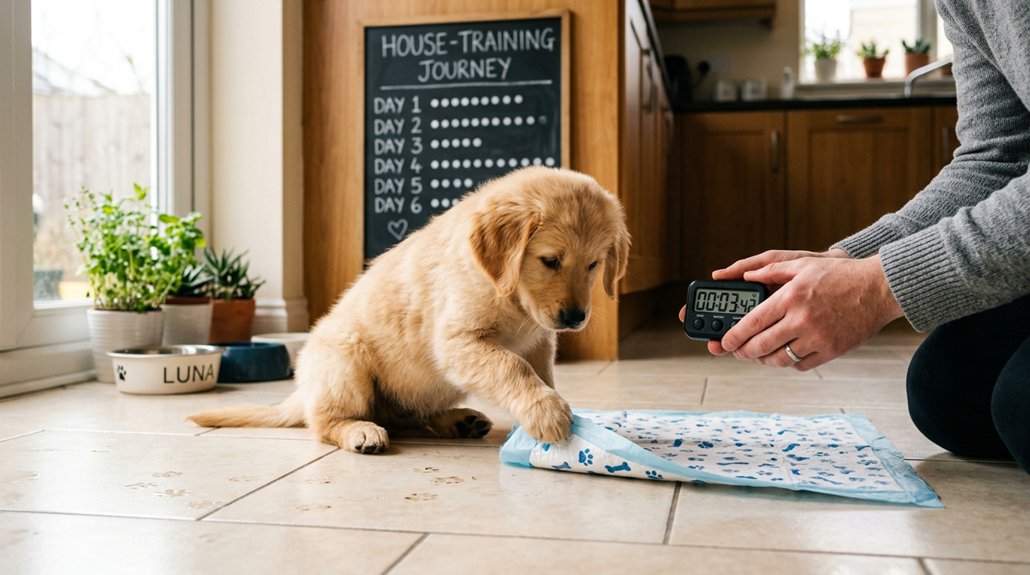
Potty training a puppy usually takes between 4 to 6 months, influenced by factors like breed size, age, and a consistent routine. You’ll notice that as your puppy grows, bladder control improves, with fewer accidents by 5 to 6 months. Establish a structured schedule with frequent outdoor breaks, and reinforce good behavior with rewards. Be prepared for setbacks, common in younger puppies, and maintain patience. There’s much more to discover about refining this essential skill.
Key Takeaways
- Potty training duration varies by breed size; small breeds take longer due to smaller bladders.
- Puppies generally show significant potty training progress by 5 to 6 months.
- Bladder control improves between 12 to 16 weeks, aiding in reduced accidents.
- Consistent schedules with frequent outdoor breaks are crucial for effective potty training.
- Setbacks are normal, but reinforcement and patience are key to regaining progress.
Understanding the Basics of Puppy Potty Training
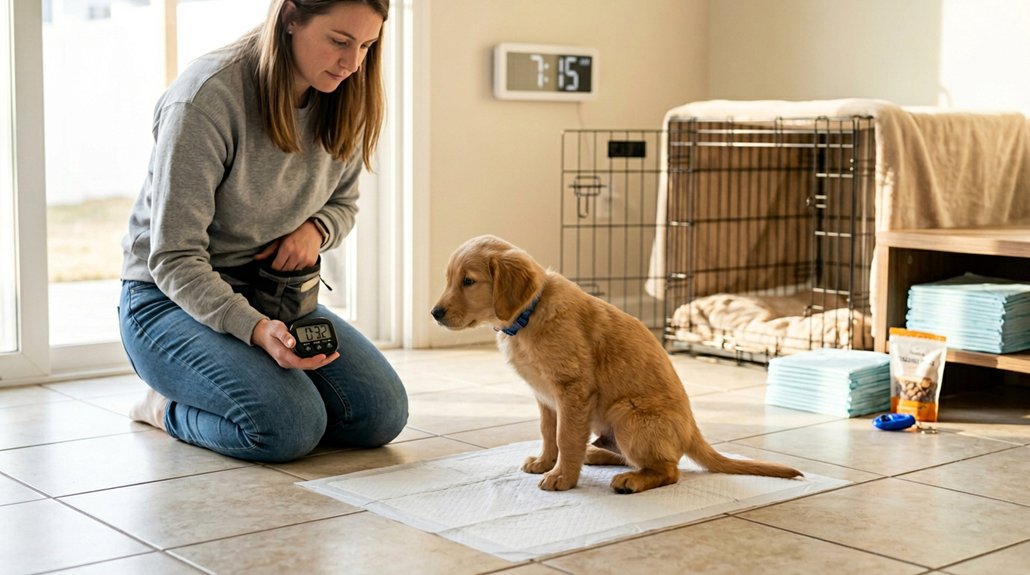
Remember, your puppy’s small bladder means frequent outdoor breaks are necessary, particularly for small breeds. Patience is essential, as accidents are common initially. By months 5 to 6, many puppies have fewer mishaps with consistent practice.
When Should You Start Potty Training?
Having grasped the fundamentals of puppy potty training, it’s essential to know when to initiate the process to achieve the best results. Starting between 12 to 16 weeks is ideal, as puppies show readiness signals by gaining bladder and bowel control. If you begin at 8 weeks, expect more accidents and extended training time. Early intervention shapes desired behaviors, but patience is key. Observe your puppy’s signals—restlessness, sniffing, or circling may indicate it’s time to go. Employing positive reinforcement techniques, such as treats and praise, encourages consistent habits. Remember, while full house training can take 4 to 6 months, every puppy is unique. Adapting your approach to suit their development will pave the way for success.
Factors That Affect Potty Training Duration
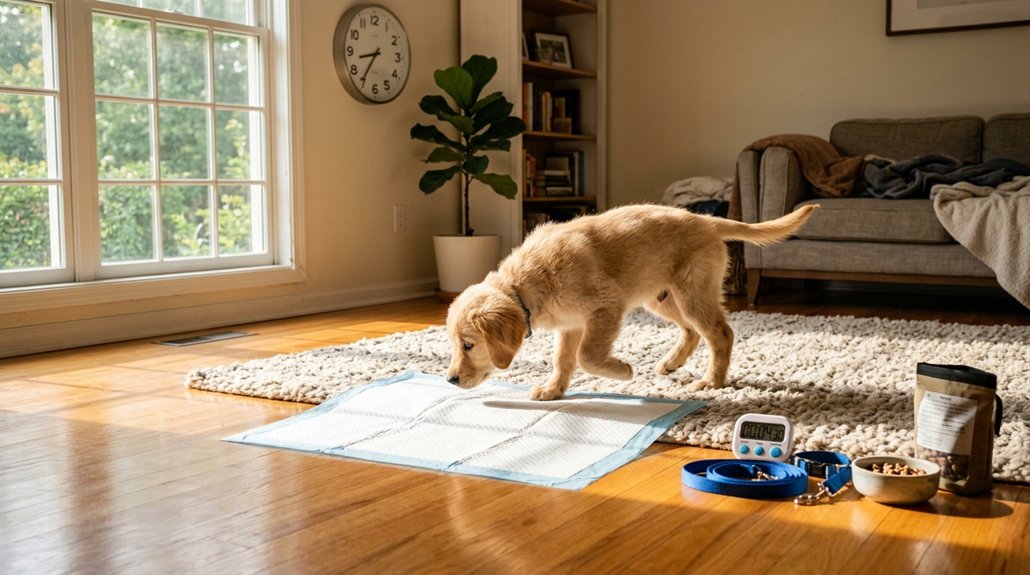
Although the duration of potty training varies, several key factors can influence how long it takes your puppy to become fully house-trained. Breed size greatly impacts the timeline—small breeds might need extra time due to their smaller bladders. Puppies start showing improved bladder control between 12 and 16 weeks, enhancing success as they mature. Environmental influences, such as previous living conditions, play a significant role—animals without prior exposure to structured environments might take longer. Training techniques are essential; employing consistent methods tailored to your puppy’s specific needs helps establish effective habits. Be aware of possible regression; reinforcing positive behavior is important for overcoming setbacks. Each factor, when managed properly, contributes to shaping a quicker, more efficient potty training process.
Building a Consistent Routine for Successful Potty Training
Establishing a consistent routine is essential to successful potty training as it forms the foundation for your puppy’s understanding of where and when to eliminate. Begin with a stringent schedule: take your puppy outside every 30 minutes. Consistency is imperative—use the same door and designated potty area to develop familiarity. Incorporate crates and puppy pads to sustain structured environments. Immediate positive reinforcement, such as praise or treats, plays an essential role in reward strategies—a core component of behavioral conditioning. Adhering to a reliable feeding and potty schedule enhances schedule importance, promoting regulated bathroom habits. This methodical approach encourages successful training outcomes.
| Routine Component | Frequency | Purpose |
|---|---|---|
| Outdoor Breaks | Every 30mins | Reinforce potty habits |
| Feeding Schedule | Set Timings | Regulate bathroom habits |
| Positive Reinforcement | Immediate | Uphold motivation |
| Designated Potty Area | Consistent use | Foster familiar environment |
| Tool Utilization | Continuous | Support controlled environment |
Age-Related Milestones in Potty Training
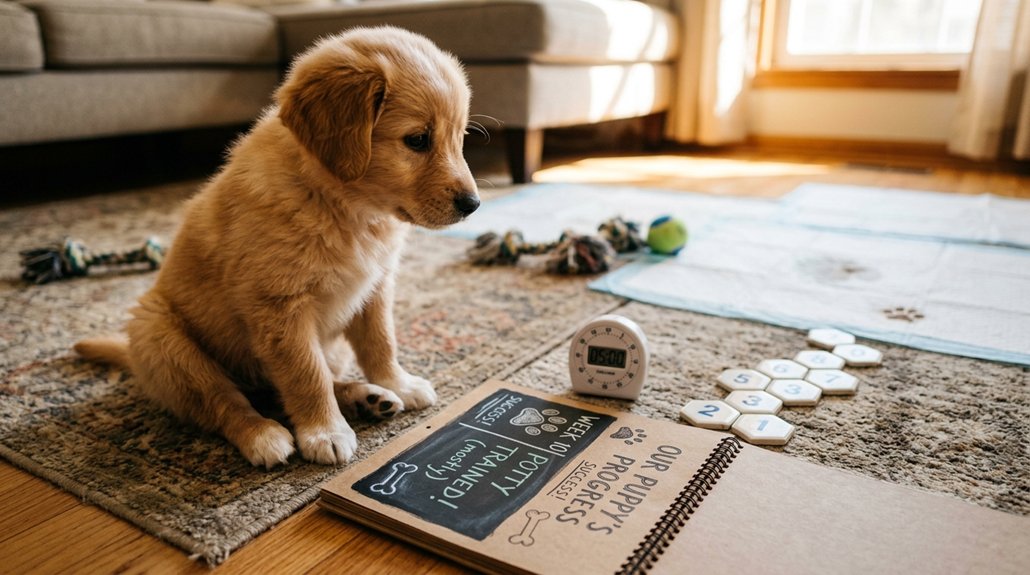
Understanding age-related milestones is critical as you commence your puppy’s potty training journey. Puppies often start their training around 8 weeks, yet they typically achieve full bladder control between 12 and 16 weeks, which calls for strategic, timely interventions. Small breeds require more patience due to inherent physiological differences, necessitating frequent breaks and careful monitoring to maintain consistent progress.
Early Training Timeline
When starting potty training your puppy, it’s essential to align your approach with their age and developmental milestones. Around 8 weeks, focus on understanding puppy behavior. Frequent accidents are common as they have minimal bladder control at this age. Use training rewards, such as treats and praise, to positively reinforce outdoor elimination, setting a foundation for success. By 12 to 16 weeks, your puppy will have improved control over elimination, offering more opportunities to reinforce good habits.
At 3 to 4 months, watch for signs your puppy might need to relieve themselves, such as sniffing or circling. Recognizing these signals will help avoid indoor mishaps. By 5 to 6 months, you’ll notice fewer accidents; persistence pays off as your puppy’s training progresses.
Bladder Control Development
As your puppy grows, their bladder control will naturally develop alongside them, marking gradual age-related milestones vital for successful potty training. Understanding your puppy’s anatomy is essential—bladder size impacts their ability to hold urine. Puppies generally begin to exhibit improved bladder control between 12 to 16 weeks, allowing them to hold it longer. Typically, a puppy can sustain bladder control for about one hour longer than their age in months; a 3-month-old puppy may endure approximately four hours. Be mindful that young puppies will have frequent accidents until achieving these developmental milestones. Though full mastery of bladder control may take 4 to 6 months, some might require up to a year for reliable control. Regularly track your progress to identify breakthroughs in development.
Small Breeds Considerations
For small breed puppies, the path to successful potty training can be more extended than for their larger counterparts, primarily due to their smaller bladder capacities and increased frequency of elimination. These small breed challenges require you to exercise training patience. Initially, expect to provide potty breaks every 30 to 60 minutes to accommodate their frequent needs. Starting training early, ideally at 8 weeks, is essential for fostering proper elimination habits. Around 12 to 16 weeks, you’ll notice improved bladder control, helping establish a consistent routine. Be prepared for more accidents in the early months due to limited bladder capacity. Full training might extend beyond six months, demanding your diligence and commitment to employing structured supervision and routine reinforcement.
Overcoming Common Potty Training Challenges
Handling indoor accidents requires immediate attention using enzymatic cleaners to neutralize odors and prevent repeated mistakes in the same area. When addressing marking behavior, it’s essential to understand the distinction between marking and regular potty needs, for this behavior may be driven by hormonal influences or territorial instincts. Implementing a structured monitoring plan, possibly through a potty habit diary, can assist in discerning these behaviors and tailoring your training approach accordingly.
Handling Indoor Accidents
Indoor accidents are an inevitable part of potty training a puppy, yet managing these mishaps effectively is essential to the training process. To maintain effective outdoor routines, employ positive reinforcement when your puppy successfully eliminates outside. If you catch your puppy mid-accident indoors, gently interrupt them and promptly take them outside. This encourages a strong association with elimination in appropriate areas. Never punish them for indoor accidents—it can cause fear and confusion, undermining training efforts.
Key strategies for mitigating indoor accidents:
- Thoroughly clean accidents with enzymatic cleaners to prevent odor attraction.
- Use a bell on the door to teach your puppy to signal their need for outdoor breaks.
- Consistency and patience in your approach will gradually encourage successful outdoor potty behavior.
Addressing Marking Behavior
When dealing with marking behavior during potty training, understanding the root causes can help you effectively address this common challenge. Marking behavior is often a form of territorial communication, where dogs urinate to mark territory or communicate social cues. Both male and female dogs can exhibit this behavior, influenced by hormones. Neutering or spaying can greatly lessen these tendencies. Consistent potty training routines are essential, as puppies may mark before they’re fully housetrained. Establish a designated outdoor area to differentiate between appropriate elimination and indoor marking. If indoor marking persists, consult a veterinarian, as it might indicate a medical issue like a urinary tract infection. Through methodical training and awareness of these factors, you can successfully manage marking behaviors.
Why Breed Size Matters in Potty Training
A critical factor in potty training success is the breed size of your puppy, which greatly influences their bladder capacity. Smaller breeds, due to their diminutive stature, generally require more frequent outdoor breaks compared to larger counterparts. This stems from breeding habits that favor compact size, affecting their ability to hold their pee effectively. To implement successful training techniques, recognize that smaller breeds might need breaks every 30 minutes to an hour initially. Potty training success hinges on understanding your puppy’s physiological needs.
- Age and Bladder Control: Expect your puppy to hold its pee one hour longer than its age in months.
- Accident Prone: Smaller breeds often take up to a year to achieve consistent control.
- Routine Establishment: Patience in regular potty breaks is key.
Handling Potty Training Setbacks Effectively
Understanding the physiological needs of your puppy is fundamental, but the process doesn’t always go as planned. Setbacks in potty training are common and often tied to factors like age, breed size, or stress. Patience and consistency are critical. Utilize potty training tools such as crates and puppy pads strategically. Confirm your crate is the right size; if accidents happen inside, adjust your strategy by offering more frequent outdoor breaks. This can prevent reinforcing undesirable elimination habits. Celebrate successes by coupling positive reinforcement—praise and treats—immediately after outdoor eliminations. Establish a structured potty schedule, supervising closely for behavior cues like whining or sniffing. This vigilance helps mitigate setbacks while reinforcing your pup’s learning curve toward consistent potty habits.
Measuring Success in Potty Training Progress
Several key indicators can help you measure the success of your puppy’s potty training progress and guarantee the training is on the right track. By consistently tracking potty habits through meticulous potty training journals, you’ll identify patterns and improvements over time. Small breeds may require more patience due to their bladder size, but by months three to four, you should observe your puppy holding their pee for longer periods. Incorporating a reward system keeps motivation high and encourages repeated good behavior. Expect significant reduction in accidents by the fifth month, a clear signal your efforts are paying off.
Track progress with a potty training journal to see patterns and encourage success through rewards.
- Track daily habits: Regular entries in your potty training journal.
- Observe behavior: Increased intervals between potty breaks.
- Implement rewards: Use treats to reinforce positive actions.
Frequently Asked Questions
How Long Do Puppies Take to Be Potty Trained?
Puppy training timelines vary, typically taking about six months. Factors influencing training include breed size, consistency, and reinforcement. Small breeds often take longer due to bladder size. Consistent schedules and positive reinforcement are essential for effective training.
What Is the Hardest Dog to Potty Train?
Determining the most difficult dog to potty train depends on size, stubbornness, and past struggles. For difficult dog breeds, especially small ones, apply training techniques with consistent commands, ensuring environmental influences and socialization practices align to encourage proper bathroom behavior.
What Is the 7 7 7 Rule for Puppies?
The 7-7-7 rule indicates puppies can hold their bladder for one hour per month of age. Implementing this in your training techniques guarantees you’re adapting to their developmental stage, enhancing puppy behavior and minimizing accidents.
What Is the 10 10 10 Rule for Puppy Potty Training?
The 10-10-10 rule involves taking your puppy outside 10 minutes post-eating, drinking, or waking. This precise timing aids in understanding puppy behavior, enhancing your potty training efforts by regulating elimination habits effectively and preventing accidents.
Conclusion
You’ve got this! Mastering puppy potty training demands patience, consistency, and understanding of your dog’s unique needs. But how rewarding is it to witness those small victories along the journey? By adhering to structured routines, adapting to breed and age-specific requirements, and addressing setbacks with proactive strategies, you set the stage for success. Remember, your dedication and perseverance foster not just a well-trained puppy, but a lifelong bond rooted in trust and respect.