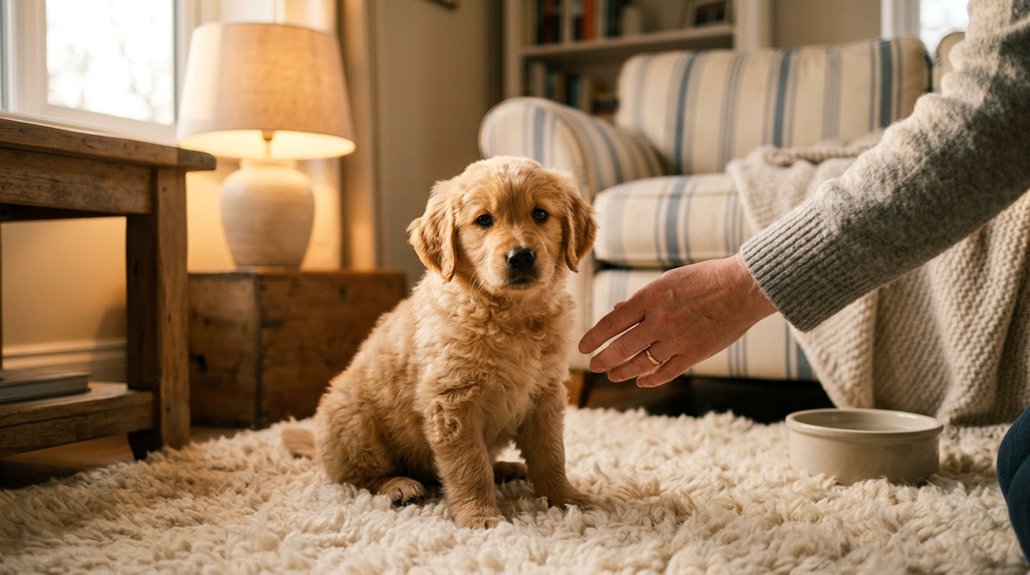
On your puppy’s first night, expect some anxiety, possibly leading to nighttime crying. Establish a consistent routine and cozy crate setup to provide comfort and security. Sleep nearby to ease separation anxiety and set alarms for nighttime potty breaks to prevent accidents. Use comfort items like a heartbeat toy or warm pack to soothe your puppy. Keep interactions calm to encourage a tranquil environment. Discover further techniques to smoothly handle the first week’s challenges.
Key Takeaways
- Establish a consistent nighttime routine to help the puppy feel secure and comfortable on its first night.
- Sleep in the same room as the puppy initially to reduce anxiety and ease its transition.
- Prepare for 1-2 nighttime potty breaks to maintain a routine and prevent accidents.
- Use comfort items, such as a heartbeat toy, to soothe and simulate companionship for the puppy.
- Address nighttime whining calmly and without excessive attention to encourage a quiet environment.
Prepare Your Home for the Puppy
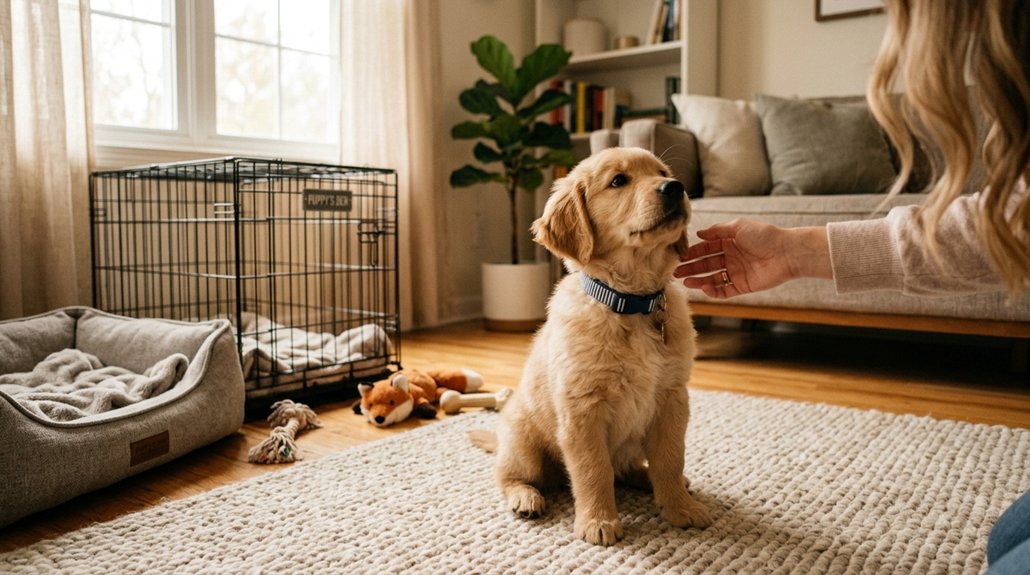
When bringing home a new puppy, it is important to guarantee the environment is safe and welcoming. Start by identifying and securing hazardous items like toxic plants and small objects, which pose choking risks. Exposed electrical cords are another danger; these items need safekeeping or covering to prevent curious mouths from hazardous exploration. For safe zones, designate areas free from harmful distractions, such as a gated room or a cozy crate, where the puppy feels secure and relaxed. It is vital to puppy-proof spaces with potential dangers like stairs, which can cause injuries. By thoughtfully creating a blend of secure environments and safe zones, you establish a solid foundation for your puppy’s change and overall well-being, easing them into their new home.
Introduce Your Puppy Calmly at Home
Bringing your puppy home should be an exercise in tranquility to guarantee a smooth changeover into its new environment. Begin by introducing your puppy to the designated outdoor potty area immediately. This sets a positive precedent for future habits. Keep puppy introductions to immediate family members first. This minimizes overwhelm and allows for gentle family interactions. Monitor these encounters closely, ensuring everyone keeps a calm demeanor. When meeting resident pets, choose a neutral space to ease potential territorial anxiety. Furnish the environment with familiar comfort items, like a blanket or toy from their previous home, to provide security. Limitations on noise and excitement are vital at this stage, fostering a serene atmosphere that promotes a stress-free acclimation.
Set Up a Crate as a Cozy Sleeping Space
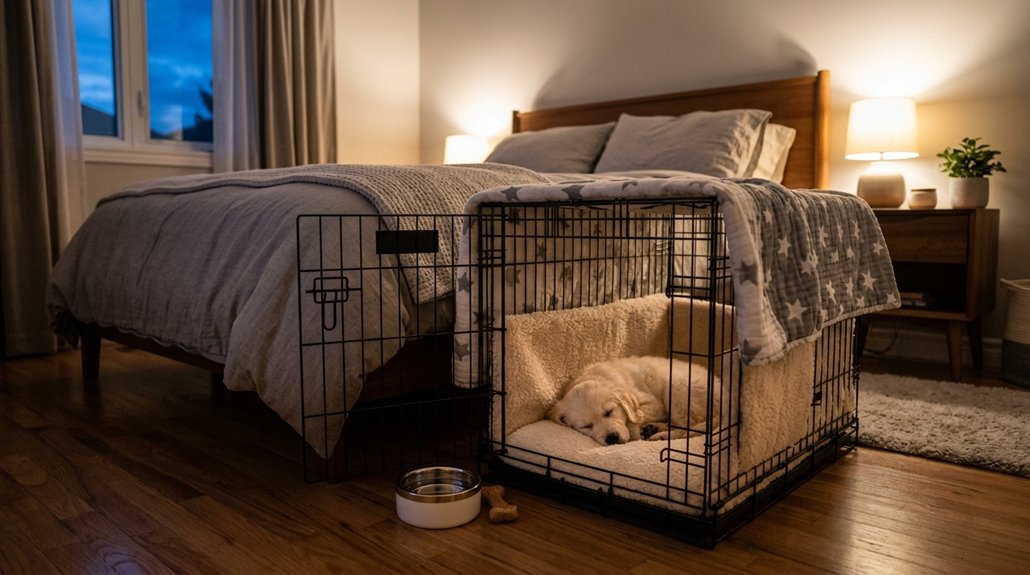
To guarantee your puppy associates their crate as a safe sleeping haven, set it up in a quiet area free from distractions. Crate placement is vital; choose a spot that minimizes noise and commotion, allowing your puppy to settle without external stressors. Bedding options are essential to enhance comfort; consider using a soft dog bed or layered blankets inside the crate. These elements create a welcoming, cozy environment conducive to restful sleep. Ascertain the crate is appropriately sized, accommodating your puppy’s ability to stand, turn, and lie down without making it overly spacious. Adding a familiar item, like a toy or blanket from the breeder, boosts a sense of security. Always avoid using the crate as punishment, fostering positive associations.
Appreciate the Value of Crate Training
Crate training is more than just a method—it’s an essential strategy rooted in canine psychology that mirrors the natural denning instincts of dogs. When implemented correctly, it provides significant crating benefits. Your puppy will feel secure in this controlled environment, reducing stress and easing their shift from the litter. Crating also supports house training by preventing unwanted behaviors and reinforcing good habits.
A gradual introduction using positive reinforcement, like treats and praise, is vital. This makes the crate a place associated with comfort and safety. Guarantee the crate is equipped with comfortable bedding and familiar items to help your puppy settle quickly. Over time, this practice establishes a routine and fosters a well-adjusted adult dog, promoting long-term behavioral benefits.
Plan a Smooth First Night Routine

Although it might seem intimidating at first, establishing a structured night routine is vital for your puppy’s adjustment process. Creating a consistent nighttime routine fosters predictability and security, aiding in your puppy’s sleep. Prepare a cozy sleeping space using a crate with soft bedding for comfort. For the initial nights, sleep in the same room to alleviate anxiety. Setting an alarm for nighttime potty breaks is important in maintaining a reliable routine and preventing accidents. Consider using comfort items, like a mother’s scent blanket or a heartbeat toy, to soothe your puppy.
| Task | Benefit |
|---|---|
| Consistent bedtime | Security and predictability |
| Cozy crate setup | Safe relaxation space |
| Room-sharing initially | Anxiety reduction |
| Comfort items usage | Easy adaptation from the litter |
Handle Common Nighttime Challenges
Creating a smooth night routine sets the stage for addressing any hiccups your puppy might face. First, you’ll likely encounter nighttime noises as your puppy adjusts to their new environment. Placing their crate near your bedroom can ease separation anxiety, while monitoring for any unsettling sounds. Use a warm pack or a heartbeat feature toy to simulate the comforting presence of their littermates. Next, preparing for potential nighttime potty breaks is essential. Aim for minimal interaction to avoid overstimulation.
Position your puppy’s crate nearby to comfort them through nighttime adjustments and minimize anxiety.
To further enhance their comfort, consider these strategies:
- Introduce soothing scents like lavender to promote relaxation.
- Utilize a cozy, covered crate to create a secure den-like space.
- Refrain from rewarding whining but reinforce silence with gentle praise.
A systematic approach guarantees a more peaceful night.
Ways to Comfort Your Puppy’s First Night Whimpering
To ease your puppy’s first night anxiety, focus on creating a cozy nest by placing their crate in your bedroom, which enhances their sense of security through your reassuring presence. Evidence suggests that using familiar scents or a heartbeat-simulating toy within the crate can notably reduce their stress levels. Remember, responding to whimpering during quiet intervals can encourage them to self-soothe while maintaining a balanced approach to comfort.
Create a Cozy Nest
When you bring your puppy home for the first night, it’s crucial to establish a cozy nest that promotes security and comfort. Begin by preparing the crate with soft puppy bedding and blankets to create a cozy atmosphere. Incorporate items that mimic familiar warmth to help soothe your puppy’s sense of loneliness.
- Warm pack or snuggle puppy: A snuggle puppy with a heartbeat feature can simulate the presence of littermates.
- Crate positioning: Place the crate nearby, ideally close to your bedroom, for initial ease of adjustment.
- Den-like setting: Drape a light blanket over the crate to mimic a den, helping to reduce anxiety.
Monitor your puppy’s comfort by adjusting the setting to guarantee they have a safe, soothing space tailored to their needs.
Offer Reassuring Presence
The initial nights with your new puppy can be challenging, as whimpering is a common behavior due to separation anxiety and adjustment to a new environment. To manage puppy anxiety effectively, employ evidence-based comfort techniques. Start by positioning yourself near your puppy’s crate; this reassuring physical presence can greatly ease their distress. Place your fingers gently against the crate to provide a sense of security. Utilize a calming voice during whimpering episodes, reinforcing the message that they are safe and valued. Covering the crate with a blanket aids in creating a secure, cozy environment. Additionally, introduce a comforting item, like a snuggle puppy with a heartbeat feature, which can mimic the soothing sensation of companionship and reduce feelings of loneliness.
Maintain Calm and Reassuring Night Behavior
Although the initial night with a puppy can be challenging, maintaining a calm and reassuring presence is essential. Your puppy is sensitive to your emotions, making your demeanor vital to their adjustment. Use a soothing voice to comfort them, helping to calm any anxiety they might feel due to separation from their litter. Creating a cozy sleeping environment with soft bedding and familiar scents offers additional security. Be prepared for some whining or crying and respond appropriately without giving excessive attention. This helps validate their feelings without reinforcing the behavior.
A calm presence is key to easing your puppy’s anxiety on their first night away from the litter.
- Create a cozy sleeping area: Use a crate with soft bedding and familiar scents.
- Minimize stimulation during potty breaks: Keep them brief and low-key.
- Provide nighttime comfort: Sleep in the same room initially.
What to Expect in Your Puppy’s First Week
In your puppy’s first week, expect to see some anxiety as they adjust to their new home, often leading to nighttime crying. Establishing consistent routines, especially at bedtime, is essential for providing the security they need to settle down. Anticipate needing to take them for 1-2 nighttime potty breaks to prevent accidents as they acclimate to their new environment.
Establishing Consistent Routines
When bringing a new puppy home, establishing consistent routines is essential for their development and well-being. A well-structured meal schedule supports their growth and assists in forming a solid potty routine. Puppies under 14-18 weeks thrive on three meals daily. Coordinating meals with potty breaks, typically right after eating or napping, minimizes accidents and aids in effective housetraining. Bedtime consistency fosters security: aim for 7-8 hours of sleep, reinforced by a calming pre-sleep ritual. Begin each day with morning calm rather than immediate excitement, supporting a balanced shift from sleep.
- Meal Schedule: Three meals for young pups, decreasing to two for older ones.
- Potty Routine: Directly after meals and naps.
- Bedtime Consistency & Morning Calm: Regular sleep hours and a gentle wake-up.
Navigating Initial Adjustments
As you settle into a routine with your new puppy, the initial week presents unique challenges and learning opportunities for both you and your pet. Expect episodes of puppy anxiety as they adjust to being away from their litter. Mitigate this by placing their crate in your bedroom and establishing a calming bedtime routine with familiar scents. Multiple nighttime potty breaks are typical, as young puppies need to relieve themselves every 4-6 hours. During this adjustment period, gradual exploration of their new environment reduces stress and prevents overwhelming situations. Offer consistent rewards for positive behaviors, such as settling in their crate, to reinforce associations of safety and comfort. These strategies foster a smoother alteration in your puppy’s first week.
Frequently Asked Questions
How Long Should the First Night Whimpering Last?
The first night’s whimpering due to puppy separation anxiety typically lasts a few hours, but it can vary. Use comforting techniques like a warm blanket or ticking clock, based on evidence showing these methods can ease anxiety and promote calmness.
Can I Let My Puppy Sleep in My Bed the First Night?
It’s not ideal to let your puppy sleep in your bed the first night. Doing so can reinforce dependency and exacerbate first night anxiety. Instead, establish proper puppy sleeping arrangements, promoting independence and comfort from the start.
Should I Leave a Night Light on for My Puppy?
Letting shadows dance in the moonlight, yes, leave a night light on. It fosters comfort, aiding the delicate balance of a puppy’s sleep routine. Evidence shows this soft glow can reduce anxiety, enhancing night light benefits.
Is It Normal for Puppies to Refuse Food the First Night?
Yes, it’s common for puppies to refuse food initially due to stress. Establish feeding routines to reassure them. Clinical insights suggest patience, offering familiar foods, and monitoring should ease your puppy’s adjustment into their new environment.
How Often Should I Take My Puppy Out for Bathroom Breaks?
Take your puppy out every two hours to establish a consistent bathroom schedule. Effective potty training tips include taking them out after meals, naps, and play sessions, which will reinforce their understanding of bathroom routines.
Conclusion
As you settle into the first night with your puppy, remember the value of establishing consistent routines early on. Crate training isn’t just anecdotal; studies confirm it promotes security and eases stress for both pet and owner. Address nighttime whimpering with calm reassurance, reinforcing positive behaviors over time. Evidence suggests puppies adapt quickly when they feel safe and guided. Your patience and understanding tonight will lay the foundation for a confident, well-adjusted pet.