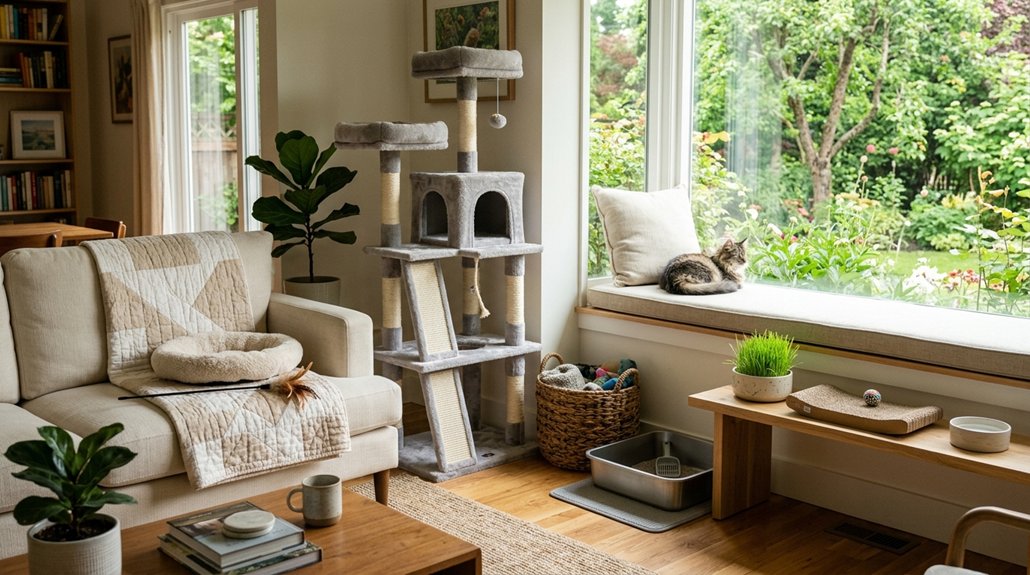
To set up your house for a new cat, choose a small, quiet room as a sanctuary, equipped with a litter box, water, bedding, and toys. Confirm windows are secure and remove hazards. Establish separate zones for food and water, and address stressors with routines and patience. Monitor body language and maintain safety by supervising introductions to other pets. Explore how to minimize stress and build trust for a harmonious change.
Key Takeaways
- Prepare a quiet sanctuary room with comfortable bedding, toys, and unscented litter to help the cat adjust.
- Provide separate areas for food and water to establish healthy eating habits.
- Inspect the home for hazards and secure electrical cords and potential danger zones.
- Use scent swapping and pheromone diffusers to ease introductions with other pets.
- Monitor cat body language and establish routines to reduce stress and build trust.
How to Set Up Your House for a New Cat
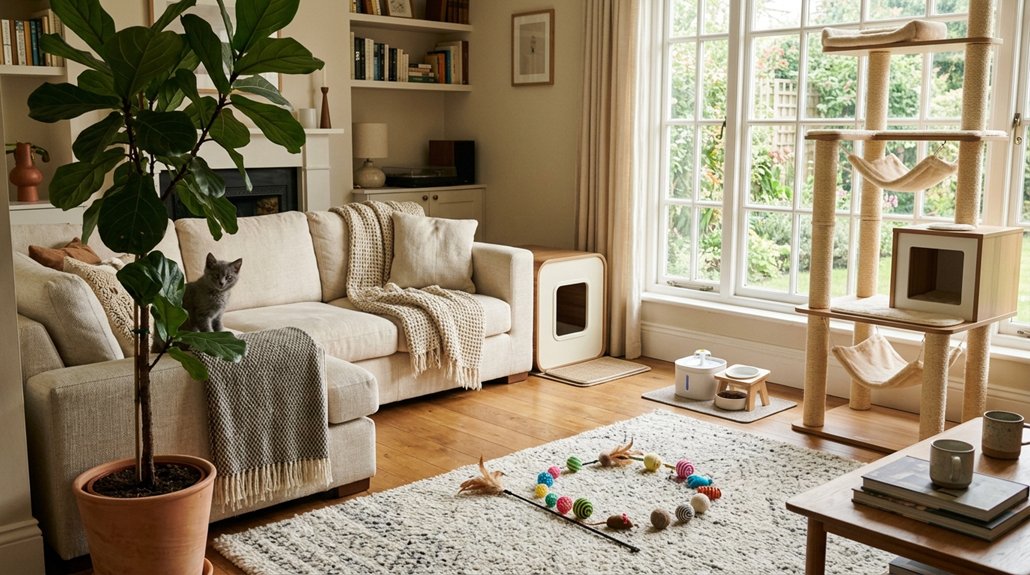
When setting up your house for a new cat, ensuring a smooth and stress-free change into the new environment is essential. Prioritize cat playtime by incorporating scratching posts and interactive toys in accessible areas. Follow adoption tips like securing your home’s windows and removing potential hazards to prevent accidents. A welcoming space with bedding and comfortable hiding spots is vital. For litter management, provide one box per cat plus an extra, and keep these in accessible, open locations. Separate zones for food and water promote healthy habits and wellbeing, reducing potential stress. Gradually introduce the cat to the household and keep other pets isolated initially to minimize conflicts. Careful preparation fosters a secure, happy environment for your new feline friend.
Choose the Right Room for a Sanctuary
When selecting a sanctuary room for your new cat, choose a small, quiet space like a guest bedroom or laundry room to help minimize stress. Make sure to furnish the room with key items, such as an unscented clumping litter box, clean water, cozy bedding, engaging toys, and several hiding spots. This controlled environment will aid the cat’s acclimation to its new home, providing the comfort and security it needs.
Select Quiet Environment
Selecting the ideal environment is essential in easing your new cat’s adjustment into your home. Start by creating quiet in a small, tranquil room like a guest bedroom or laundry room. Reducing noise and activity here minimizes stress and encourages your cat to explore at its own pace. Avoid high-traffic areas to prevent overwhelming your cat.
| Environment Factor | Importance |
|---|---|
| Room Size | Small, reduces stress |
| Noise Level | Low, promotes comfort |
| Activity Level | Low, assures predictability |
Isolating the cat in a designated sanctuary guarantees safety from other pets and fosters gradual acclimation. This also facilitates routine interactions where you spend time in the room, reinforcing familiarity and trust, as your cat initiates contact when ready.
Essential Furnishings Setup
Creating a sanctuary for your new cat begins with choosing an appropriate room, ideally a small and quiet space like a laundry room or guest bedroom. This minimizes stress for the cat during the adjustment period. Next, focus on the furniture arrangement—ensure the essential items are easily accessible. Place a litter box filled with unscented clumping litter in one corner. Adjacent to it, set up fresh water and a cozy bed to provide a comfortable resting area. Incorporate toys and multiple hiding spots for security and mental stimulation. Limiting stimuli helps the cat adapt gradually, keeping their well-being a priority. As confidence and comfort grow, the cat’s access to broader house areas can be incrementally expanded.
Essential Supplies for Your New Cat
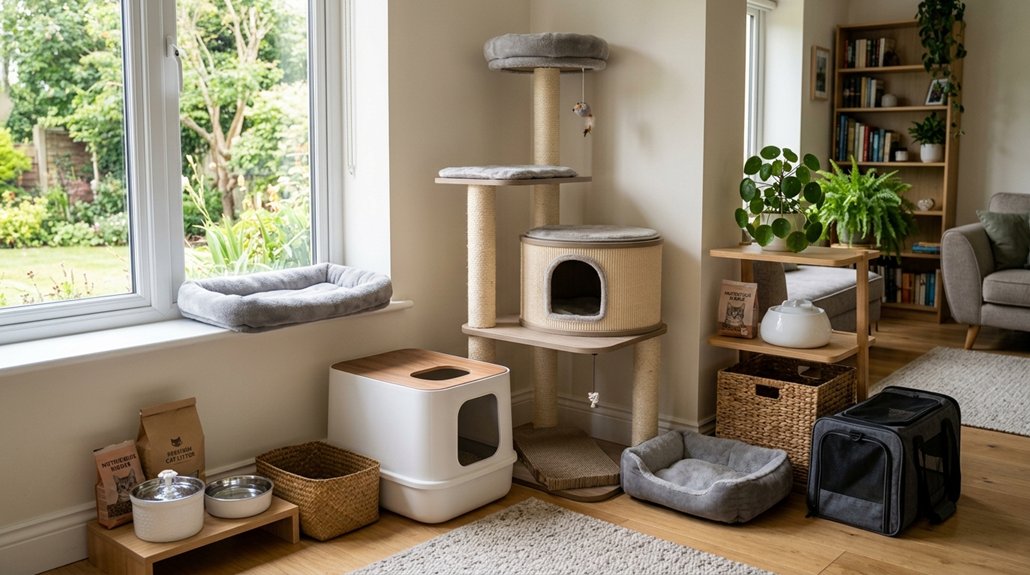
Bringing home a new cat requires an array of essential supplies to guarantee their comfort and well-being. Begin with food and water bowls, ensuring your nutrition considerations include high-quality, animal-based protein food. Shift gradually, mixing the current food with your chosen brand over a week. A comfortable cat bed and a litter box with unscented clumping litter are crucial for physical ease. Don’t forget a collar with an ID tag for safety, should they wander off. For enrichment activities, supply engaging toys and a scratching post to foster mental stimulation and physical health. Preparing a designated area with these essentials will help your cat acclimate to their new environment, ensuring they feel secure and at home.
Setting Up the Sanctuary Room for Comfort
When setting up a sanctuary room for your new cat, it’s important to choose a small, quiet area like a laundry room or guest bedroom that guarantees a calming environment. Make sure the space facilitates sanctuary comfort and acclimatization techniques. Follow these steps:
Choose a tranquil space, like a laundry room, ensuring comfort and a calming environment for your new cat.
- Furnish wisely: Include essentials like a litter box with unscented clumping litter, fresh water, cozy bedding, interactive toys, and secure hiding spots to boost your cat’s sense of security.
- Allow free exploration: Let the cat investigate at their own pace, which minimizes stress and aids in their acclimatization.
- Exclusivity matters: Initially keep other pets out of the sanctuary to prevent stress and potential illness, fostering a safe and secure atmosphere.
Engage in quiet, calming interactions to build trust and familiarity, vital for a successful adjustment.
Identifying and Minimizing Cat Stressors
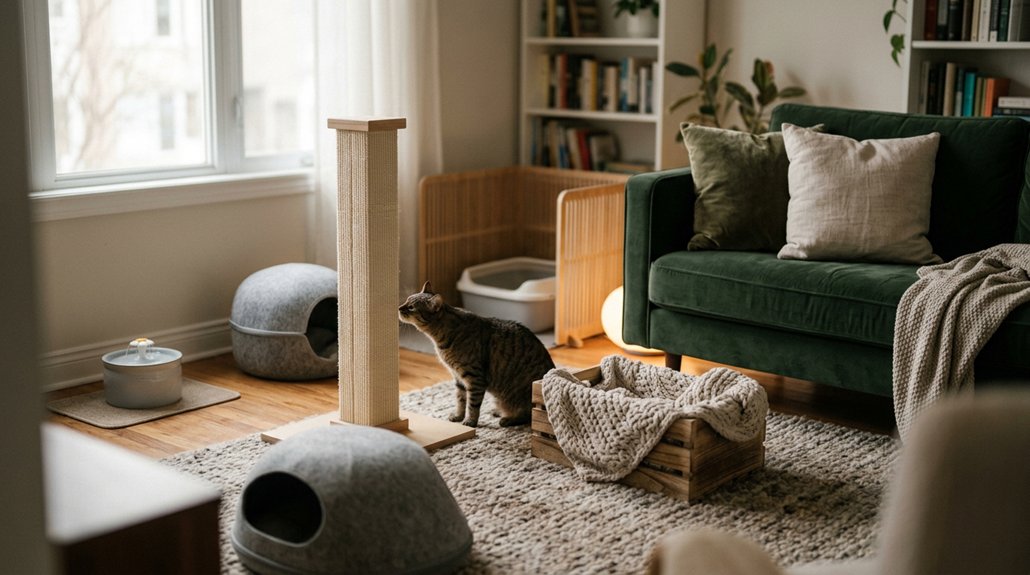
As you welcome a new cat into your home, it’s important to identify and mitigate potential stressors that could impact their well-being. Begin by inspecting your home for loud noises, unfamiliar scents, or high-traffic areas. These can easily overwhelm your feline and hinder anxiety reduction efforts. Minimize disruptions by creating a quiet sanctuary room where environmental enrichment is prioritized. Regular feeding times, play sessions, and scheduled quiet periods help establish a routine, fostering structure and predictability. This systematic approach lessens potential stress. Monitor household activities like loud music or sudden movements to prevent startling your cat. Additionally, provide hiding spots such as boxes or covered beds, enabling your cat to retreat and feel protected when stressed.
Recognize Cat Behavior and Build Trust
To build a foundation of trust with your new cat, recognize stress signals like flattened ears and twitching tails to address their comfort needs. Encourage positive interactions by maintaining gentle engagement through activities like playtime and feeding, which foster a sense of security and familiarity. Additionally, create comfortable spaces that cater to their innate need for safety, promoting exploration and reducing anxiety in their new environment.
Understanding Stress Signals
How do you recognize stress in a new cat? Monitoring cat body language is essential for stress management during this adjustment period. Common signs include hiding, decreased appetite, and increased vocalization. Learn to spot subtle cues signaling distress:
- Flattened Ears: Indicates discomfort; give your cat space to decompress.
- Twitching Tail: Recognizes heightened agitation and confusion; maintain a calm environment.
- Avoiding Eye Contact: Shy or fearful cats may find direct stares intimidating; approach at eye level to soothe tension.
Building trust takes time but is crucial for both you and your feline companion’s well-being. Recognizing when your cat feels overwhelmed allows you to manage stress effectively. Use patience to foster a sense of security and ease their adjustment.
Encouraging Positive Interaction
Although the shift phase may seem challenging, understanding and encouraging positive interaction with your new cat is paramount for building trust. Start by recognizing cat behavior; this includes signs of trust such as following you, rubbing against you, and sleeping nearby. To foster bonding activities, engage in gentle playtime rewards, using treats as incentives. Patience is key, so let your cat explore at their own pace, offering non-threatening environments to reduce stress. Always approach shy or fearful cats at eye level, avoiding direct eye contact to minimize intimidation. Recognizing stress signals like flattened ears or a twitching tail helps guarantee comfort and security. These strategies promote a smoother shift and establish a lasting bond in the new home environment.
Building Comfortable Spaces
Creating a comfortable space tailored to your new cat’s needs is essential for their well-being and adjustment. Cats thrive when they have cozy bedding and multiple hiding spots to retreat to. Recognizing behaviors like hiding signals a need for a calm environment.
- Provide cozy bedding: Make sure your cat’s bed is soft and located in a quiet area. It helps them feel secure while resting.
- Create hiding spots: Set up cardboard boxes or covered nooks. These offer choices and alleviate stress.
- Build trust through observation: Watch for signs of stress like reluctance to engage. Adjust your approach to foster trust.
Patience, gentle play, and respecting their pace lead to a happy, well-adjusted cat.
Keep Your Cat Safe at Home
Guaranteeing your new cat’s safety involves taking several critical steps to mitigate potential hazards in your home. Begin by employing cat proofing tips, focusing on hazard identification. Conduct a thorough inspection for sharp objects, toxic plants, and small items, all of which could pose choking risks. Secure electrical cords to baseboards, and lock away hazardous chemicals out of reach to prevent accidental ingestion or entanglement. Identify and block access to spaces like basements and attics where the cat might become trapped. Make certain all doors and windows are securely closed or latched. Create a cat-proofed area for initial acclimatization, free from dangers, and furnished with essentials such as food, water, and a litter box. Remove toxic human foods like chocolate, onion, and garlic.
Introducing Cats to Other Pets
When introducing a new cat to your existing pets, start by facilitating scent recognition to ease the shift. Scent swapping is key: exchange bedding or toys so pets become used to each other’s odors. Gradual introductions are essential for preventing stress and aggression. Here’s how:
- Scent Swapping: Allow pets to explore each other’s scent without direct contact. Rotate blankets or use pheromone diffusers to create comfort.
- Controlled Meetings: Supervise initial meetings closely. For dogs, use a leash and reinforce calm behavior to prevent excitement or stress.
- Safe Space Setup: Design a secure haven for the new cat, where it can retreat if overwhelmed. Guarantee it includes essentials like a litter box and toys.
Frequently Asked Questions
What Is the 3-3-3 Rule for Cats?
The 3-3-3 rule outlines the cat adjustment timeline, indicating initial exploration during the first three days, growing comfort and altered feline behavior signs over three weeks, and complete adaptation and personality display within three months. Be patient throughout.
What Color Cat Is Least Desired?
Believe it or not, black cats are often the least desired due to the overwhelming black cat stigma. Despite the calico preferences, these stunning felines face unjust biases, battling cultural myths that overshadow their true, delightful personalities.
What Is “I Love You” in Cat Language?
“I love you” in cat language is expressed through feline vocalizations like soft meows and trills, and cat body language such as slow blinking, purring, kneading, and grooming. These behaviors communicate trust, affection, and contentment with you.
What Is the One Meat to Never Feed a Cat?
Never feed your cat pork. Cat food safety and feline nutrition are essential, and pork is high in fat and may contain parasites. Always consult a vet before introducing new proteins to your cat’s diet.
Conclusion
In setting up your home for your new feline friend, meticulous attention is key. Consider the sanctuary room as the beating heart: it nurtures comfort while buffering stressors. Equip it with essential supplies, fostering security. Like the gentle weaving of fabric, your understanding of cat behavior builds trust. Prioritize safety and orchestrate careful introductions to other pets. By implementing these strategies, you’ll create a harmonious and secure environment, ensuring your cat’s seamless integration into your home.