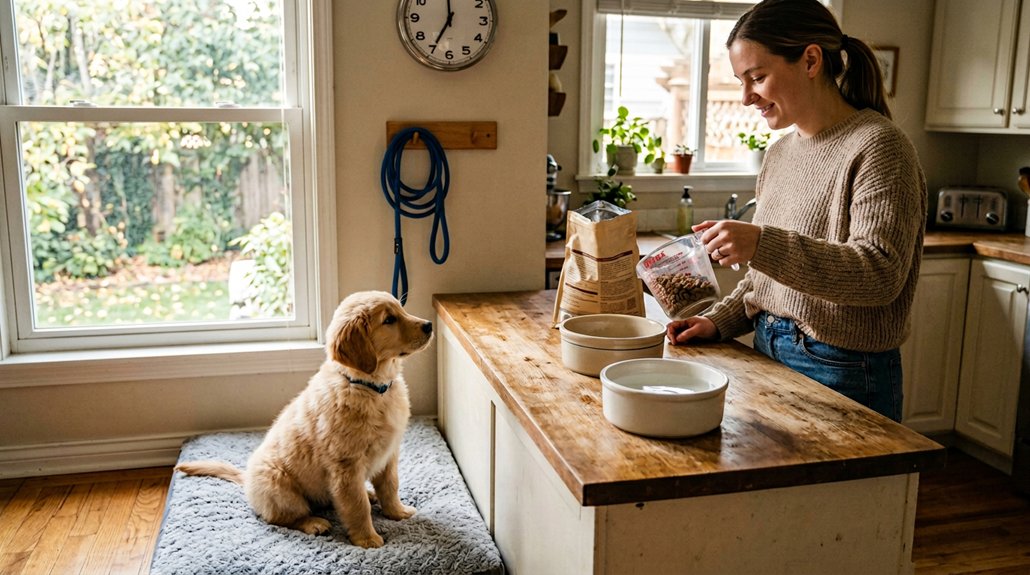
Creating a routine is essential for new dog owners as it fosters trust and stability. Regular feeding, exercise, and socialization establish security, reduce anxiety, and enhance the owner-dog bond. Consistent schedules support positive behavior and help your dog adjust to new environments. Adapting routines to a dog’s life stage and personality guarantees their well-being. Discover how a balanced approach to routine not only benefits your dog but strengthens your relationship too.
Key Takeaways
- Establishing routines reduces anxiety, providing a secure environment for dogs to adapt quickly and comfortably.
- Consistent feeding and exercise routines prevent behavioral issues by addressing hunger and energy needs efficiently.
- Scheduled potty breaks assist in house training, minimizing in-home accidents and stress.
- Routine adaptability accommodates life changes, ensuring stability for both the dog and owner.
- Tailored routines enhance the dog-owner bond by addressing individual personality traits and needs effectively.
Establishing Trust With Routines
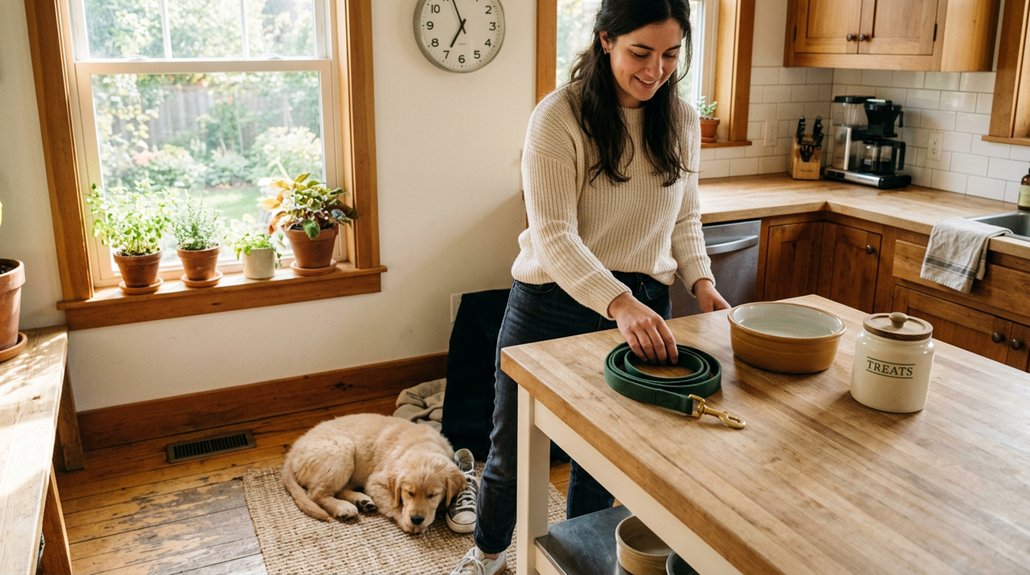
Establishing trust through routines is a foundational element for new dog owners aiming to build a harmonious relationship with their pet. By implementing routine reinforcement in activities such as feeding, potty breaks, and playtime, you demonstrate reliability and predictability. These trust building techniques provide your dog with a sense of security, reducing anxiety and solidifying the bond between you both. When your pet learns that certain behaviors are consistent, they adjust better, feeling comfortable and less confused in their environment. Clear expectations within these routines create a structured framework, fostering a trusting relationship. Additionally, engaging in regular activities like training sessions or walks enhances positive shared experiences, deepening your emotional connection and reinforcing the trust your dog places in you.
Daily Needs: Organizing Your Dog’s Routine
Creating a structured routine for your new dog isn’t just beneficial—it’s essential. By integrating key components like feeding, potty breaks, exercise, and socialization into your dog’s daily schedule, you guarantee their physical health and mental stability, reducing behavior issues. As life changes occur, be adaptable, fine-tuning this routine to maintain balance and meet your dog’s evolving needs.
Essential Routine Components
Immerse yourself in the world of dog ownership by recognizing the fundamental components that form your new pet’s daily routine. Prioritizing mealtime consistency not only aids good digestion but also mitigates hunger-induced behavioral issues. Establishing this pattern supports your dog’s natural biological rhythms. Potty training benefits immensely from scheduled breaks, especially post-mealtime, play, and waking, reducing in-home accidents.
Consider these essentials to shape a well-rounded routine:
- Mealtime Consistency: Set regular feeding times to stabilize digestion and behavior.
- Potty Training: Implement consistent potty breaks for reinforcement.
- Daily Exercise: Include walks or play to boost physical health.
- Mental Stimulation: Engage with interactive toys or training to prevent boredom.
Structured bonding enhances both security and connection, pivotal for your dog’s emotional well-being.
Balancing Needs and Activities
A well-balanced routine is essential for new dog owners aiming to provide a structured and nurturing environment. It involves harmonizing daily needs like feeding, bathroom breaks, exercise variety, and mental stimulation. Regular feeding times support digestion and curb anxiety, while consistent potty breaks reinforce training and reduce accidents. A variety of exercises guarantees physical health, and engaging mental stimulation helps prevent boredom and enhances cognitive abilities. Schedule bonding activities, such as training and play, to strengthen your relationship with your dog. Balancing activities with rest is pivotal; allow time for relaxation to support overall health. Observational evidence suggests that a structured routine reinforces positive behaviors, enhancing the dog’s adjustment and fostering a stable, harmonious home life.
Adapting to Life Changes
One of the key elements in helping a new dog adapt to life changes is establishing a daily routine. This structure mitigates adjustment challenges by creating a predictable environment, fostering emotional adjustments, and establishing security. Regular feeding and potty schedules deter behavioral anomalies as your dog settles into their new home.
Incorporate essential elements into your routine:
- Feeding times: Consistency reduces stress and promotes healthy digestion.
- Exercise sessions: Physical activity dissipates energy and supports mental well-being.
- Playtime: Engages your dog’s mind and reinforces positive interaction.
- Flexible structures: Allow adaptability for unforeseen changes without sacrificing stability.
Consistency across household members prevents confusion, enabling a seamless adjustment. This careful organization supports your dog’s emotional and physical health, making life changes smoother for both of you.
Forming Bonds: Routine-Based Relationships
While establishing a consistent routine might initially seem like a logistical challenge, it greatly enhances the bonding process between new dog owners and their pets. Engaging in bonding activities such as feeding, walks, and playtime within a structured engagement creates shared experiences that foster trust and understanding. These regular interactions offer dogs a sense of security, encouraging comfort and willingness to connect deeply. Training sessions embedded in daily routines not only improve communication but also reinforce cooperation, enriching your relationship through positive reinforcement. Predictable schedules enable you to anticipate your dog’s needs, leading to better care and harmonized living. Consistent routines allow for emotional connections to flourish through shared activities, nurturing a bond characterized by mutual devotion and loyalty.
Evolving Routines for Puppies, Adults, and Seniors
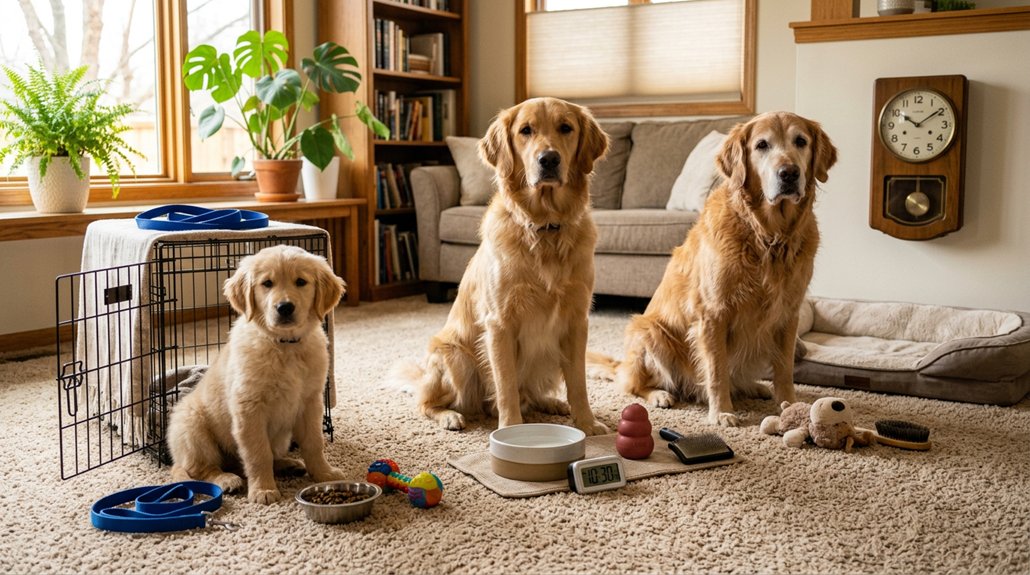
Incorporating consistent routines is critical in guiding your puppy through the adjustment phase, particularly by establishing predictable patterns around meals and potty breaks. As your dog grows, you’ll witness the importance of adapting these routines, embedding flexibility to support them through changes and life challenges. With senior dogs, maintaining structured yet adaptable routines helps manage health complexities, ensuring their well-being and mental sharpness remains intact.
Puppy Routine Essentials
Creating a well-structured routine is something all new dog owners should prioritize to foster a harmonious environment for their puppies. Implementing effective socialization strategies and training techniques early on guarantees your puppy adapts smoothly to their new home. Consistent routines for sleeping, eating, and bonding play pivotal roles in their development.
Observationally, puppies thrive when schedules are predictable and secure. Consider these essentials to enhance your puppy’s routine:
- Regular Potty Breaks: Timing these after meals and play helps reinforce potty training habits.
- Structured Mealtimes: Consistency supports healthy digestion and weight management.
- Dedicated Socialization Periods: Introducing new environments and people increases confidence.
- Training Sessions: Short, focused lessons reinforce obedience and attention.
Embrace flexibility to adapt as your puppy’s needs evolve, guaranteeing their emotional and physical well-being.
Adapting Senior Routines
As dogs evolve into their senior years, a well-structured routine becomes essential in maintaining their quality of life. Establishing consistency reduces anxiety and confusion during age-related changes, making them feel secure. Regular activities such as scheduled playtime and training sessions play a vital role in promoting senior wellness. They help keep your dog mentally engaged, delaying cognitive decline. As mobility decreases and bladder control wanes, frequent potty breaks become necessary, preventing accidents and discomfort. Adjust their exercise routine to accommodate any health conditions, ensuring it meets their evolving physical needs. Continuous reinforcement of learned behaviors through routine preserves their skills and fosters a stable environment. These adjustments safeguard cognitive engagement and physical health, enhancing their overall well-being.
Balancing Structure With Flexibility
While establishing a routine is essential for new dog owners, striking the right balance between structure and flexibility is equally important. Consistency benefits your dog by providing them with a predictable environment, reducing anxiety and promoting a sense of security. However, incorporating routine variations guarantees you can adapt to changes like fluctuating work hours or family dynamics without stress.
Consistency and flexibility in routines create security and adaptability for both new dog owners and their pets.
- Adaptability: Modify your schedule as needed while maintaining core routines like meal and potty times.
- Responsiveness: Attend to your dog’s unique needs, ensuring they feel secure and valued.
- Calm Environment: Balancing structure with flexibility fosters calmness and confidence for you and your dog.
- Reduced Anxiety: A flexible routine helps minimize stress responses from sudden changes.
This balanced approach enhances well-being, benefiting both you and your pet.
Implementing a Routine: Adapting to Your Dog’s Personality
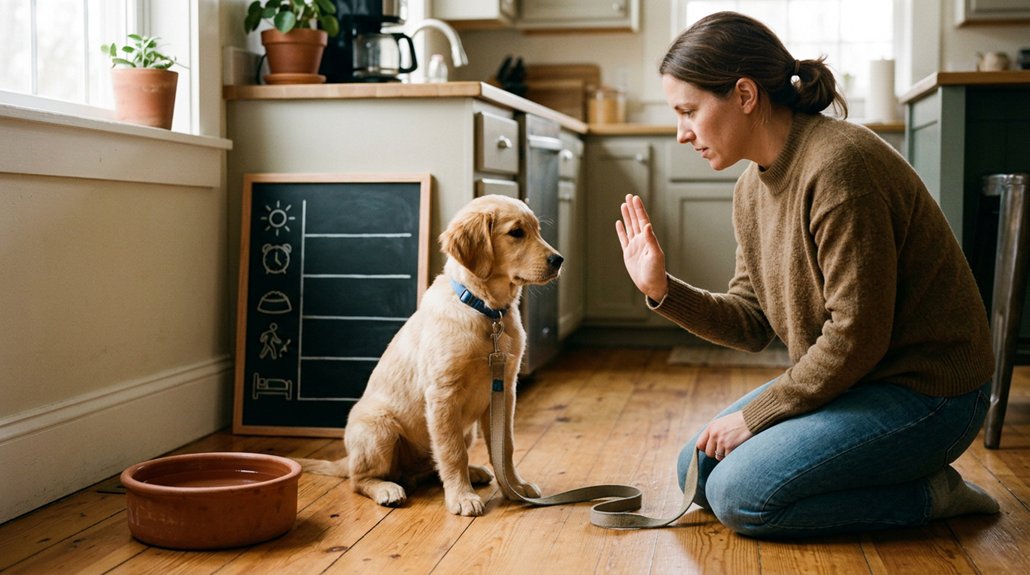
Understanding the individual nuances of your dog’s personality is key to implementing a routine that’s both effective and comforting. Observing energy levels and social interactions reveals essential personality insights. High-energy dogs need ample energy outlets through regular exercise and enrichment activities, while calmer companions benefit from rest-focused routines. Tailoring routines to your dog’s needs aids anxiety management and behavioral adjustments, minimizing stress.
For social dogs, scheduled social interactions like playdates enhance confidence. Conversely, anxious dogs require comfort measures, with gradual exposure to new experiences fostering stability. Flexibility in your routine is vital, adapting to your dog’s exercise needs and unique preferences. This science-based approach not only eases the adjustment period but also strengthens the bond with your furry friend.
Frequently Asked Questions
What Is the 3-3-3 Rule for Dogs?
The 3-3-3 rule describes a dog’s adjustment period when entering a new home. You’ll notice shifts in dog behavior over three days, weeks, and months that affect their socialization skills, emotional well-being, training expectations, and stress management.
Why Is a Dog Routine Important?
A dog’s routine is essential for maintaining training benefits, promoting behavioral consistency, and fostering emotional stability. You’ll see health advantages manifest as your dog’s well-being improves, making life with your pet more harmonious and stress-free.
How Do Dogs Say They’re Sorry?
Dogs convey they’re sorry through canine communication by using submissive body language, like tucking their tails or avoiding eye contact. Observing these gestures helps you understand their remorseful expressions and deepen the bond with your pet.
What Is the 7 7 7 Rule for Dogs?
Imagine your puppy’s eyes, filled with curiosity and cautious joy. The 7-7-7 Rule helps guide their adjustment by fostering calm, consistent routines. This promotes healthy canine behaviors, easing their stress and nurturing long-term emotional stability.
Conclusion
In the grand tapestry of life, like clockwork mechanisms, routines become the threads weaving trust and stability between you and your canine companion. As you navigate daily rhythms, from the sunrise rituals to twilight repose, remember that even Shakespeare knew the power of consistent affinities. It’s in these rituals that you find the balance between structure and flexibility, adapting to your dog’s unique symphony. Embrace this evolving dance, and you’ll find a lifelong bond enriched by routine’s gentle cadence.