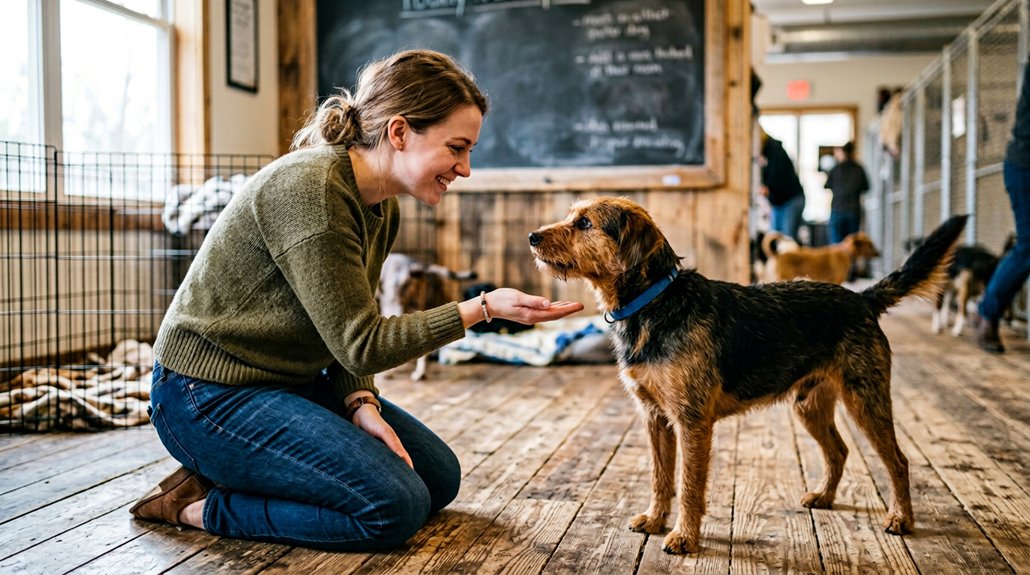
Adopting a dog entails evaluating if your home and lifestyle are compatible with pet ownership. Acknowledge the benefits of adoption over purchasing. Select a dog breed that matches your activity level and living space. Research shelters to find a reputable one, complete the necessary paperwork, and prepare your home for the new arrival. Guarantee a smooth changeover with proper introductions and consistent care. There’s much more to guarantee a successful adoption process.
Key Takeaways
- Conduct a thorough evaluation of your home and lifestyle to ensure compatibility with dog ownership.
- Research and select a breed that matches your activity level, space availability, and time commitment.
- Choose a reputable shelter or rescue group and visit them to evaluate their practices and animal welfare standards.
- Complete all necessary adoption paperwork accurately and discuss your expectations with an adoption counselor.
- Prepare your living space by dog-proofing it and gathering essential supplies to ease the dog’s transition.
Evaluate Your Preparedness for Pet Ownership
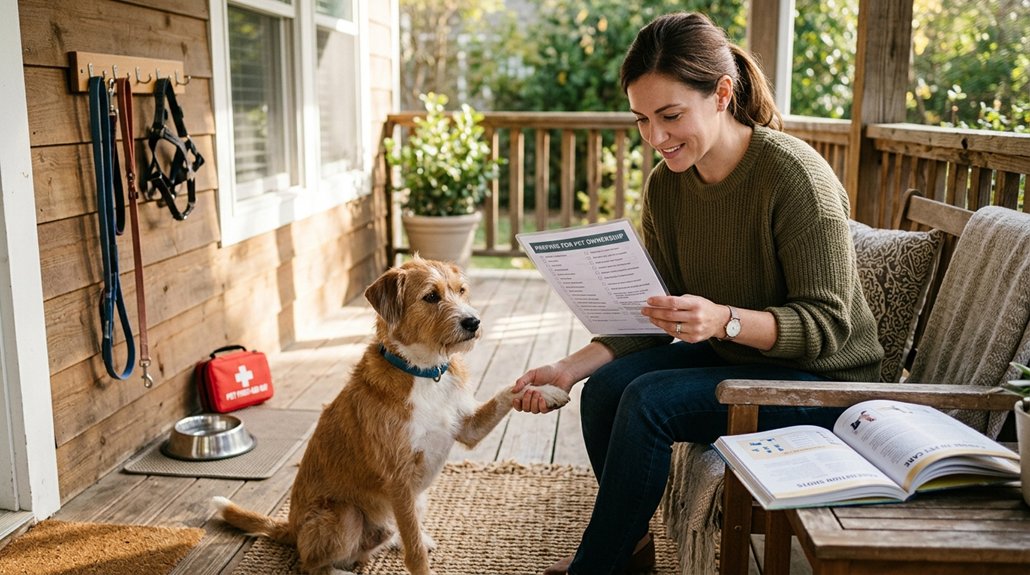
Before bringing a dog into your home, it’s crucial to evaluate your preparedness for pet ownership. Conduct a responsibility assessment to verify that your living situation aligns with a dog’s needs. This requires scrutinizing your lifestyle compatibility, factoring in home size, work hours, and the exercise demands specific to the breed. Assess family readiness by engaging all household members to confirm they’re prepared for the long-term obligations, from daily feeding to medical care, lasting 10 to 20 years. Consider personal expectations and any allergies or preferences that may influence breed selection. A clinically informed approach will guarantee a safe environment and a fulfilling relationship with your future pet, setting a foundation for successful integration into your home.
Learn the Benefits and Importance of Adoption
Adoption isn’t merely a humane choice; it’s a profound commitment to save lives and alleviate the widespread issue of animal overpopulation. Each decision to adopt directly impacts animal welfare by creating space for at-risk animals in shelters. Importantly, adopting a rescue dog not only saves lives but also contributes to population control, a vital element in animal welfare advocacy led by organizations like the ASPCA.
| Aspect | Benefits |
|---|---|
| Life-saving | Saves lives of rescue dogs |
| Cost-effective | Lower fees than purchasing |
| Health Measures | Vetted, vaccinated, spayed/neutered |
| Resource Allocation | Frees up shelter space |
Additionally, many shelter dogs come pre-vetted, offering you a healthier pet. The adoption benefits are evident in both cost and contributing to a systemic solution promoting animal welfare.
Choose a Lifestyle-Compatible Dog Breed
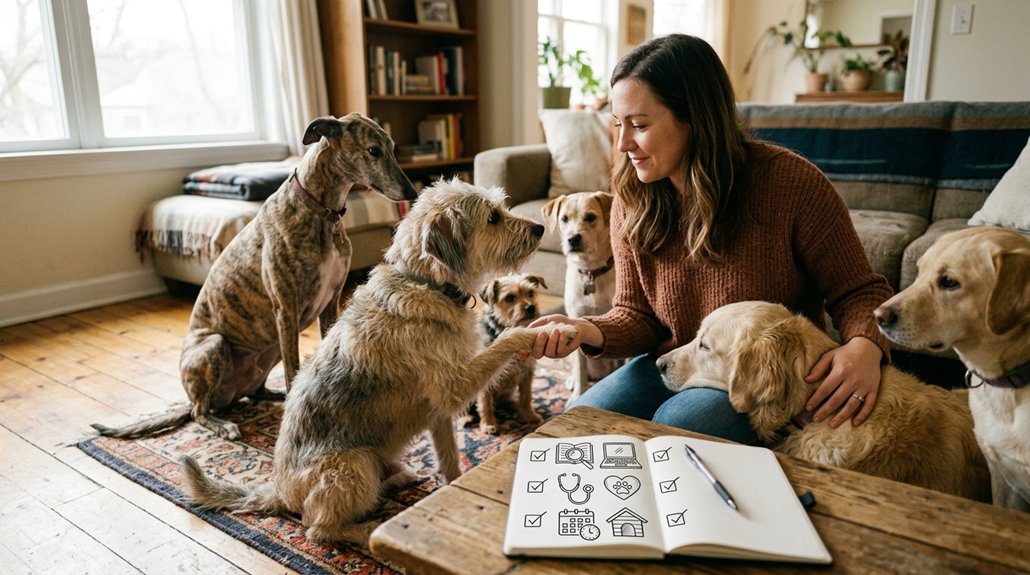
When choosing a dog breed, it’s essential to evaluate the compatibility between your activity levels and the dog’s exercise requirements, as mismatched energy can lead to behavioral issues. Consider the spatial needs of the breed; for instance, larger breeds often require more room and outdoor access, while smaller breeds might adapt more readily to apartment living. By integrating research from breed-specific studies and shelter evaluations, you’ll be better equipped to guarantee a harmonious and long-term relationship with your canine companion.
Match Activity Levels
Determining your own activity level is essential when selecting a dog breed, as it guarantees the energy needs of your future pet align with your lifestyle. Assess your exercise preferences rigorously. High-energy breeds like Border Collies and Labrador Retrievers excel in environments where vigorous activity is frequent, necessitating substantial daily physical engagement. Conversely, breeds with lower breed energy profiles, such as Bulldogs or Shih Tzus, can flourish in less dynamic settings. Evidence suggests that aligning your activity level with a dog’s natural energy can prevent behavioral issues and promote harmony. Critically evaluate your daily routines and commitments. Consider the time you can allocate for training and socialization, as failure to meet these breed-specific requirements could lead to mutual frustration.
Consider Space Needs
After evaluating your exercise preferences, it’s equally important to assess your living space when selecting the right dog breed. Consider your home’s yard requirements for active breeds like Border Collies; their high energy levels necessitate ample outdoor space for exercise. Unlike Bulldogs or Dachshunds, which thrive in constrained environments, high-energy breeds require room to run and play to maintain ideal health. For those in apartments or small homes, selecting breeds that adapt to limited spaces is essential. Regular walks can fulfill their exercise needs. Additionally, invest in dog-friendly furniture to prevent household damage and create a comfortable environment. Utilize shelter assessments to identify breeds aligning with your spatial limitations, ensuring the adoption journey is both successful and mutually rewarding.
Locate a Trustworthy Shelter or Rescue Group
The initial step in adopting a dog involves finding a reliable shelter or rescue group—a decision that requires informed choices to safeguard animal welfare and successful pet ownership. Start by researching local animal shelters through online resources or databases such as the ASPCA’s national directory. Visiting multiple shelters will allow you to evaluate their conditions, treatment practices, and transparency about animal histories. Prioritize shelters offering extensive vetting services, including vaccinations, spay/neuter procedures, and microchipping, which are essential for the animal’s health. Check the shelter’s reputation by reading reviews and testimonials from previous adopters, as satisfied adoptions often indicate a solid process. In addition, seek organizations that provide support and resources for new pet owners to guarantee a smooth shift into pet ownership.
Interact With Dogs at the Shelter
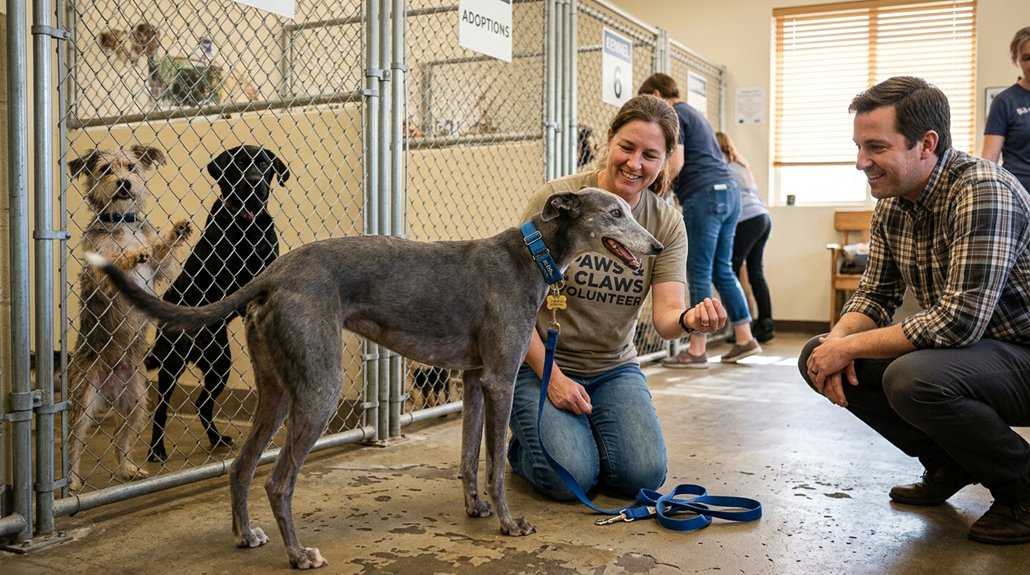
Visiting the shelter to interact with prospective dogs is an essential part of determining compatibility. Engaging in a thorough dog personality assessment allows you to gauge a canine’s temperament and see if they’d fit your lifestyle. Shelter staff interactions are instrumental; they help interpret canine behaviors and offer insights grounded in their first-hand experiences. Supervised visits guarantee both safety and adherence to shelter protocols, particularly if minors, 17 and younger, are present. Consider these tips:
- Take detailed notes on behaviors and interactions.
- Observe how dogs respond to human presence.
- Be patient as dogs may take time to acclimate.
- Seek staff input for behavior history and insights.
- Evaluate which dogs you feel most connected to.
These steps maximize the efficacy of your visit.
Complete Rescue Adoption Paperwork
When completing rescue adoption paperwork, you’ll typically start with an adoption survey to accurately assess your living situation and previous pet ownership experience. Be prepared for a nominal application fee, which generally supports the shelter’s operational costs related to animal care. After submission, an adoption counselor will likely arrange a meeting to discuss behavioral tendencies and healthcare specifics of potential matches, ensuring you’re prepared for the commitment ahead.
Key Documents Needed
Adopting a dog requires meticulous attention to documentation, ensuring a successful shift for both the adopter and the pet. Before the joyous homecoming, you’ll need to meet certain identification requirements to authenticate your identity and address.
Essential documents include:
- Identification: A valid driver’s license to verify your identity and residence.
- Homeownership proof: Documentation such as a mortgage statement or a landlord’s approval letter, particularly vital if you’re renting.
- Adoption application: Complete all forms with precise information about your pet care history.
- Adoption consultation results: Summary of medical or behavioral discussions regarding your new pet.
- Completion certificates: If previous pet training or ownership classes were taken.
Ensuring these key documents are readily available will streamline the adoption process considerably.
Application Fee Details
After gathering the necessary documents, the focus shifts to the specifics of completing the rescue adoption paperwork, which includes an application fee. This fee structure is essential as it supports the shelter’s operations, ensuring continued care for at-risk animals. It’s typically lower than purchasing a dog commercially and often encompasses services like spaying or neutering, vaccinations, and initial vet examinations, therefore providing significant value.
Accurate completion of the application is imperative to prevent processing delays. The precise details directly influence the shelter staff’s evaluation, underscoring your readiness for the commitment to pet ownership. Should financial constraints arise, inquire about adoption financial assistance programs that might reduce initial costs. Accept that this application signifies a long-term dedication to your prospective canine companion.
Survey and Interviews
How can you guarantee a successful dog adoption process? It all begins with the survey and interviews segment. Completing the adoption paperwork accurately provides critical survey insights into your lifestyle and compatibility with potential pets.
During this stage, you’ll often engage with an adoption counselor utilizing interview techniques designed to extract essential details about your previous pet ownership and daily routines. This dialogue assists in aligning shelter recommendations with your preferences. Essential elements of this process include:
- Disclosing thorough personal information
- Elaborating on past experiences with pets
- Detailing daily living conditions and routines
- Engaging in discussions about specific dog’s needs
- Addressing adoption fees covering necessary animal care
Approach this step with honesty to facilitate a seamless change for both you and your new canine companion.
Prepare Your Living Space for a New Arrival
Welcoming a new dog into your home is an exciting venture, but how do you guarantee your living space is ready for their arrival? First, establish a dog-friendly space that includes a comfortable bed, food, and water bowls. Ascertain your pet has a retreat area to feel secure. Implement safety protocols to protect them from accidents. Dog-proof your home by removing hazardous items and securing toxic plants. Use crates and gates initially for safe confinement and adjustment. Accommodate specific needs of the breed or size, ascertaining ample room for exercise and play. Stock essential supplies—high-quality dog food, treats, collar, leash, identification tags, grooming tools, and toys—prior to arrival. These preparations promote a secure, nurturing environment fostering a successful integration.
Foster a Smooth Transition for Your Rescue Dog
While bringing a rescue dog into your home is a rewarding experience, ensuring their seamless adjustment involves careful planning and execution. Creating a dog-friendly environment and utilizing evidence-based strategies will help foster a smooth shift.
- Designate a safe space: Equip a tranquil area with essentials like a comfortable bed and bowls.
- Implement scent swapping: Familiarize your dog with existing pets via scent without physical contact.
- Initiate controlled introductions: Gradually introduce family members and pets with emotional stability in mind.
- Establish a stable routine: Regular feeding, exercise, and potty breaks to promote security.
- Apply positive reinforcement: Strengthen trust through rewards, enhancing the adjustment period.
Adopting these practices will notably aid in harmoniously integrating your rescue dog into their new family milieu.
Frequently Asked Questions
What Is the 3-3-3 Rule When You Adopt a Dog?
The 3-3-3 rule describes an adjustment period during which adopted dogs exhibit behavioral signs: initial stress in three days, adaptation beginning in three weeks, and full acclimation by three months. Patience fosters a stable, trusting relationship.
What Is the Most Important Consideration When Adopting a Dog?
Did you know 75% of adopters report better experiences when evaluating dog breed compatibility with their lifestyle? Prioritize a lifestyle evaluation to guarantee the dog’s size, energy, and temperament meet your environment and daily routine needs.
What Are the 7 Stages of Adoption?
When considering the 7 stages of adoption, you’ll typically encounter: self-assessment, breed selection, researching shelters, application process, foster care visits, thorough meet-and-greet, and finally, formalization, ensuring a controlled integration and lifelong commitment.
What Is the First Thing to Do When Adopting a Dog?
Begin with pre-adoption research focused on breed compatibility. Evaluate your lifestyle, living situation, and any breed-specific behaviors or medical considerations. This evidence-based approach guarantees you select a dog that fits your unique circumstances and needs.
Conclusion
Adopting a dog might seem straightforward, but it’s akin to preparing for a space mission. You’ll evaluate your “pet ownership readiness” with the precision of a surgeon, scour shelters like a detective, and scrutinize canine compatibility as if it’s rocket science. Ironically, your new furry friend couldn’t care less about your expert calculations. They just want love. So, while your preparation’s downright clinical, remember, the real science is in the heartwarming bond you’ll develop.