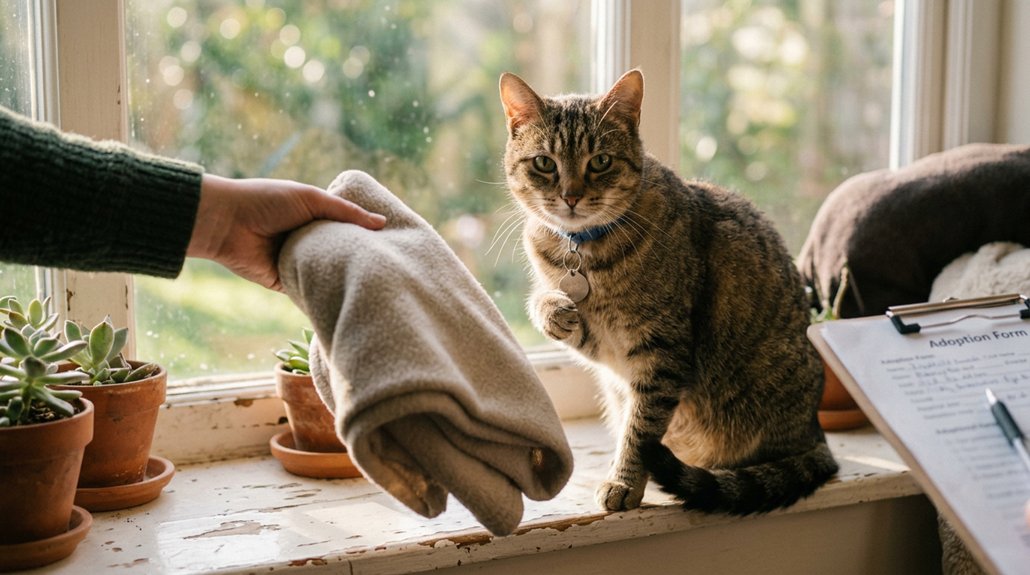
When adopting a cat, assess your long-term readiness for this commitment, considering lifestyle, financial capacity, and space. Conduct a compatibility check with existing pets and prepare your home with essential supplies like litter boxes and food. Fill out the application with complete, precise details and await confirmation. Gradually introduce the cat to your household, guaranteeing a stress-free adjustment. Regular veterinary care is vital. Discover each step’s specifics to secure a successful adoption journey.
Key Takeaways
- Evaluate lifestyle and long-term commitment to ensure readiness for cat adoption responsibilities.
- Complete the adoption application accurately, confirming understanding of the shelter’s policies.
- Prepare the home with essential supplies and a designated acclimation space for the new cat.
- Choose a cat that matches your living environment and energy levels, consulting adoption counselors for guidance.
- Gradually introduce the cat to its surroundings and monitor its socialization and dietary needs.
Is Cat Adoption Right for You?
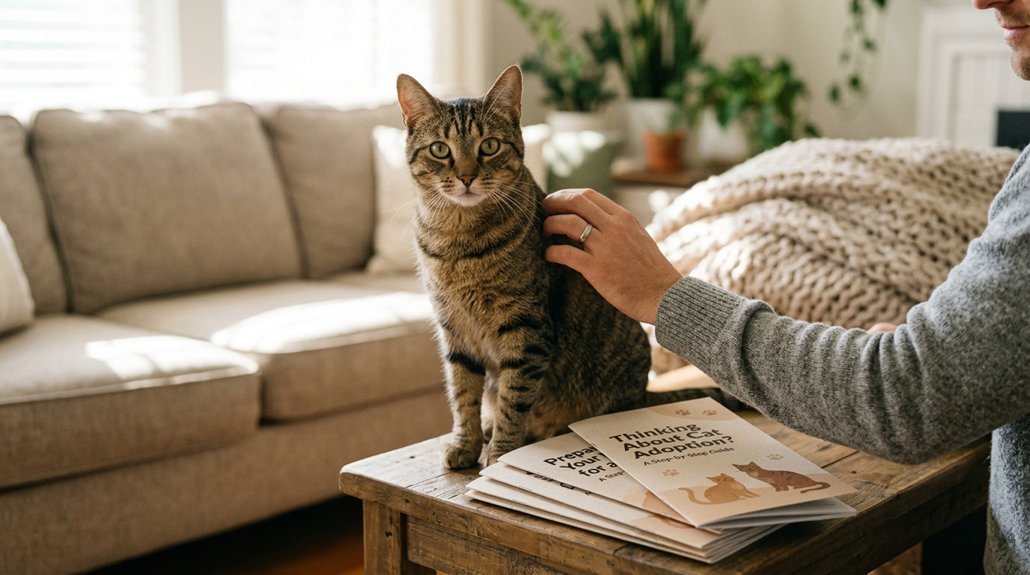
Isn’t it essential to evaluate whether cat adoption suits your lifestyle and responsibilities? Cat ownership is a long-term commitment, given that cats can live 12 years or more. This requires you to consistently provide care throughout their lives. Conduct a lifestyle evaluation to gauge potential changes, such as work schedules or evolving family dynamics, ensuring you can offer the required attention. Moreover, evaluate pet dynamics at home; the compatibility of existing pets with a new feline friend is vital. This involves examining their temperament and interactions for a harmonious environment. In addition, consider the financial responsibilities you’ll assume, from food to veterinary care and supplies. Assess your living space to confirm it’s equipped for litter boxes, scratching posts, and safe hiding spots.
Essential Preparations for Bringing a Cat Home
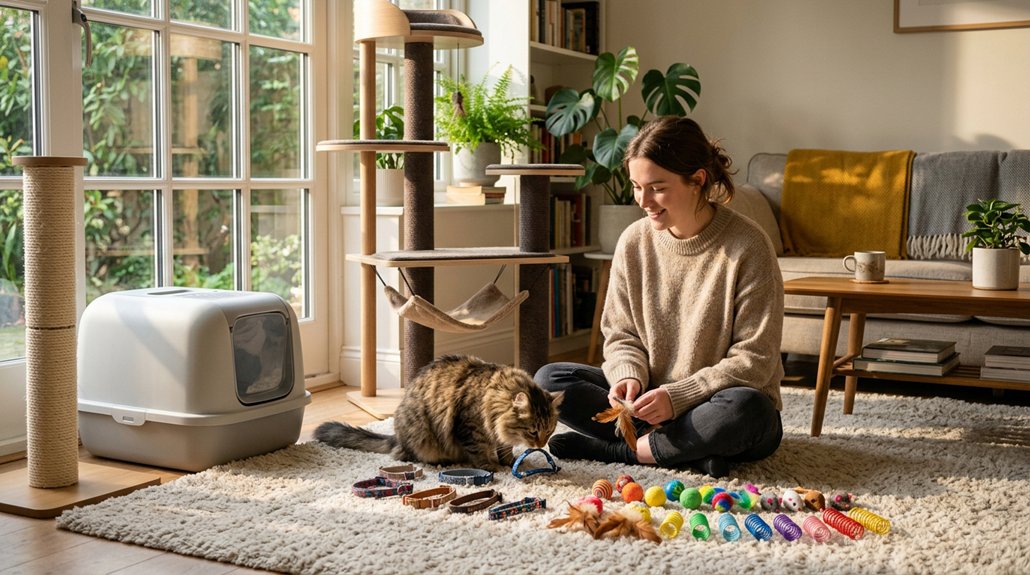
When you’re preparing to bring a new cat into your home, it’s vital to gather all the necessary supplies in advance. Make sure you have cat supplies like a spacious litter box, Fresh Step™ litter, food and water dishes, quality cat food, and engaging toys. Prioritize space preparation by designating a quiet, comfortable area where your cat can acclimate. Include hiding spots, cozy bedding, and easy access to food, water, and a litter box. Cat-proof your home by removing poisonous plants and securing loose electrical cords to guarantee safety. It’s important to schedule a veterinary visit within the first few weeks to check your cat’s health. Engage all household members in preparations to facilitate a smooth changeover for your new feline friend.
Choosing the Perfect Cat for Your Lifestyle
When choosing the perfect cat for your lifestyle, start by evaluating your living environment to guarantee it meets the needs of a feline companion. Next, match your energy levels with a cat’s activity requirements, remembering that some breeds are more lively than others. Finally, assess temperament needs, considering whether a playful kitten or a more independent adult cat suits your household best.
Assess Living Environment
Choosing the perfect cat for your lifestyle starts by evaluating your living environment thoroughly. Assess the space requirements; your home should offer ample room for your future feline to roam and play, with designated spots for sleeping and eating. Consider any cat proofing essentials necessary to guarantee a safe environment, like securing loose wires or removing toxic plants. Verify if your living situation permits pet ownership, particularly if renting, and check for any restrictions. It’s critical to prepare a quiet, safe space equipped with essentials such as a litter box and cozy hiding spots. This preparation supports the adjustment process, satisfying your new cat’s need for security and comfort. Ensure you have time daily for interactive play to meet their needs.
Match Activity Levels
Selecting a cat that complements your activity level is essential for creating a harmonious home environment. A cat’s energy plays a vital role in this decision. For active households, consider younger cats or breeds renowned for their playful interactions. They thrive in environments with ample stimulation and companionship. Conversely, quieter homes might benefit from adopting older or more laid-back cats. Long-haired, round-shaped breeds often exude calmer demeanors, fitting perfectly into a peaceful setting. Some families even opt for adopting two cats to guarantee mutual engagement, exercise, and mental stimulation. Adoption counselors are valuable resources, evaluating cat energy and behavior to confirm a suitable match. Their expertise helps tailor choices to your lifestyle, promoting long-term satisfaction for both you and your feline companion.
Evaluate Temperament Needs
How do you guarantee your new feline friend suits your lifestyle perfectly? Conducting a temperament evaluation is essential in this process. Evaluate your own lifestyle first: do you want a playful kitten or a more independent older cat? Engage in behavior observation during shelter visits. Cats exhibiting calmness amidst new stimuli typically adapt better. If you own pets, evaluating the new cat’s temperament compatibility with existing animals is critical. Understand activity levels and social tendencies to assure a harmonious integration. Engage with adoption counselors who specialize in matching cat personalities with your family dynamic, pinpointing breeds like easygoing long-haired varieties. Social interaction is key, so consider adopting two cats for mutual companionship, promoting better mental and physical health.
How to Fill Out the Adoption Application

Before beginning the adoption application process, it is crucial to thoroughly understand the requirements and commitments involved in bringing a cat into your home. Start by accessing the adoption page on the shelter’s website and selecting “Apply Now” to initiate the process. One of the most critical application tips is to carefully read the entire process description. Fill out each section of the online application completely, ensuring you provide accurate information about your household, lifestyle, and preferences for the cat. Your submission checklist should include confirming your understanding of the shelter’s policies by checking the appropriate box. Once submitted, patiently await confirmation from the shelter about your application status and any subsequent steps.
Ensuring Compatibility During Shelter Visits
During shelter visits, it’s essential to evaluate a cat’s compatibility with your lifestyle and household dynamics. Observing cat personality and shelter behavior reveals whether a feline aligns with your family. Watch how the cat interacts with you and family members; comfort levels here might hint at household integration. Discussing the cat’s history with shelter staff provides insights into temperament and known behaviors, allowing better assessment of compatibility with existing pets. Consider the cat’s age as younger cats usually need more training, while older ones have established personalities. Also, note the environment they prefer; it can suggest post-adoption lifestyle needs.
| Factor | Observation | Insight |
|---|---|---|
| Interaction | Comfort with you and family | Indicates compatibility |
| History | Discuss with shelter staff | Reveals temperament and known behaviors |
| Age | Younger vs. older needs | Assesses training and personality |
Adapting Your Home for a New Cat
Welcoming a new cat into your home requires careful preparation to guarantee a smooth adjustment for your furry friend. Start by establishing a quiet space, ideally a single room equipped with essentials like a bed, food/water, and a litter box, ensuring furniture arrangement facilitates easy access. Cat-proof your abode by securing windows, stashing cords, and removing toxic plants. The litter box should be located in a private area away from food and water to encourage regular use. Incorporate noise reduction measures to create a serene environment, minimizing overwhelming sounds. Provide hiding spots, such as boxes or cat trees, to offer solace when stress arises. This curated setup promotes safety and encourages quick adaptation in your cat, easing their adjustment into the family.
Introducing Your Cat to Family and Pets
To guarantee a smooth introduction of your new cat to family members and existing pets, start with gradual socialization by using scent exchanges with items like blankets or toys. Initially keep your new cat in a separate room equipped with essentials, allowing it to acclimate before expanding its territory. It’s vital to monitor body language and behavior closely during these interactions to secure a stress-free and safe environment for all animals involved.
Gradual Socialization Tips
Introducing a new cat to your family and existing pets involves careful and gradual socialization to guarantee a smooth changeover. Begin by employing effective socialization strategies: confine your cat to a single room with all essentials, allowing them to become familiar with their surroundings. Utilize interaction techniques by permitting family members to slowly interact, fostering comfort in the new environment. When ready, introduce existing pets using scent awareness; let them sniff each other through a closed door before supervised meetings. Keeping the atmosphere calm, limit visitors initially. Employ treats and positive reinforcement during interactions to nurture trust. Vigilantly monitor for stress or aggression, ready to separate if needed, thereby empowering your cat to adapt at their own pace.
Safe Interaction Guidelines
Many factors contribute to guaranteeing safe interactions when introducing your cat to family members and other pets. It’s important to observe cat behavior and stress signals closely to facilitate a smooth integration. Here’s how you can accomplish this effectively:
- Gradual Introduction: Allow family members to approach the new cat slowly. This reduces stress for the cat by letting it acclimate at its own pace.
- Controlled Pet Meetings: Initial meetings with other pets should be short and supervised. Gradually increase interaction time as they show comfort and ease with each other.
- Scent Swapping: Exchange items like bedding or toys between the new cat and existing pets. This familiarizes them with each other’s scent, easing the adjustment and enhancing comfort.
Monitoring and adjusting interactions guarantees a harmonious household.
Helping Your Cat Adjust to Its New Home
Why is it important to carefully manage your cat’s adjustment to a new home? A well-managed adjustment reduces stress and encourages positive cat behavior. Start by confining your cat to one room, offering essentials like food, water, and a litter box. This strategy, rooted in anxiety management, helps your cat feel secure in their environment. Provide hiding spots, such as boxes or cat trees, to offer retreat options when they feel overwhelmed. Socialization, vital for kittens, involves gradually introducing them to household members and pets. Monitor for stress indicators like decreased appetite or hiding. Encourage engagement using play and treats. Remember, patience is key; let your cat adjust at its own pace for a smoother adjustment.
Feeding Guidelines for Adopted Cats
When you bring your adopted cat home, it’s essential to manage their dietary change by initially offering the same food the shelter used, gradually introducing their preferred diet over the week. Pay attention to meal frequency based on your cat’s age, as younger cats typically require more frequent feedings than adults. Make sure your cat stays hydrated by providing fresh water daily, and consider using food-dispensing toys for nutritional enrichment as they settle into their new environment.
Dietary Transition Techniques
Although bringing a new cat home can be an exciting time, managing their adjustment to a new diet requires careful attention to prevent stress and digestive problems. To ease this change, consider the following feeding strategies:
- Initial Stability: Start by feeding your cat the same diet they had at the shelter for the first week. This minimizes stress and allows your cat to acclimate to their new environment.
- Gradual Diet Adjustments: Shift to your preferred cat food over seven days. Begin with a mixture of 25% new food, increasing gradually to 100%.
- Close Monitoring: Keep a keen eye on your cat’s appetite. Reduced eating can indicate stress, so be ready to adjust and reassure your feline friend accordingly.
These steps guarantee a smoother dietary change.
Meal Frequency Options
Selecting the appropriate meal frequency for your newly adopted cat is vital to ensuring their health and adjustment to a new home. Meal timing should be carefully considered, as kittens need frequent meals—every 4-6 hours due to their high energy needs. Adult cats, on the other hand, can be fed once or twice daily, or given free choice. Free choice feeding allows cats to eat at their pace, but it’s important to monitor portion control to prevent obesity. Start with the same food from the shelter and gradually change over a week.
| Age Group | Meal Timing Frequency | Considerations |
|---|---|---|
| Kittens | Every 4-6 Hours | Rapid growth requirements |
| Adult Cats | Once-Twice Daily | Portion control needed |
| Free Choice | Variable | Monitor weight regularly |
Consider utilizing food-dispensing toys post-adoption for enrichment.
Hydration and Nutrition Priorities
Understanding your adopted cat’s nutritional and hydration needs is crucial, as they greatly influence the cat’s health and well-being. Paying close attention to eating habits can aid in stress management during the change. Here’s how to guarantee ideal hydration and nutrition:
- Observe Eating Habits: Stress from a new environment may alter feeding behavior. Use the same food from the shelter initially, then slowly mix in new food over a week.
- Hydration Essentials: Always keep fresh water accessible. A cat water fountain might encourage more frequent drinking, supporting hydration.
- Tailored Feeding Schedule: Kittens and adults have different nutritional needs. Consult your veterinarian to determine the best feeding schedule and portion sizes based on your cat’s age, breed, and health requirements.
Routine Vet Visits and Health Checks
Guaranteeing ideal health for your feline companion involves routine vet visits, typically recommended at least annually for adult cats, and more frequently for kittens and senior cats. These visits facilitate preventive care and health monitoring, essential for detecting issues before they escalate. During annual wellness exams, your veterinarian will perform vital services like vaccinations, dental cleanings, and screenings for diseases such as feline leukemia and feline immunodeficiency virus. Regular health checks are critical, as many ailments in cats can remain hidden until advanced stages. Keep meticulous records of medical history, including vaccinations and treatments, to guarantee effective and continuous care. Anticipate costs ranging from $50 to $200, budgeting accordingly to prevent costly complications in the future.
Frequently Asked Questions
What Is the 3 3 3 Rule for Adopting a Cat?
The 3 3 3 Rule guides you through your cat’s adjustment period, emphasizing initial adjustment in three days, growing comfort over three weeks, and full acclimation by three months. This timeline nurtures a stress-free adjustment phase for them.
What Is “I Love You” in Cat Language?
Imagine cat communication as an intricate dance. “I love you” in feline behavior involves slow blinks, head bumps, purring symphonies, and soft kneading. These gestures reveal a cat’s affection, marking you as trusted and cherished in their world.
What Is the First Thing You Should Do When You Adopt a Cat?
When you adopt a cat, first prepare a quiet, secure space with a litter box, food, and water. Refer to an initial checklist and preparation tips to guarantee a smooth changeover, reducing stress for the new addition.
What Are the 7 Core Issues in Adoption?
Adopting a pet involves steering responsible ownership, where you gracefully manage behavioral adjustments, anticipate health considerations, fulfill socialization needs, prepare environmental setup, commit long-term, and understand financial implications with clinical precision for harmonious pet integration.
Conclusion
Embracing a feline companion isn’t just a delightful choice—it’s a long-term commitment that enriches your life’s tapestry. As you navigate through adoption complexities, remember the subtler nuances of creating a harmonious environment. From selecting the right feline to guaranteeing they mesh well with your household, each step fortifies the bond you’ll cherish. So, prepare thoroughly, trust your instincts, and assure those routine health check-ups. Your new whiskered friend will thank you with years of companionship.