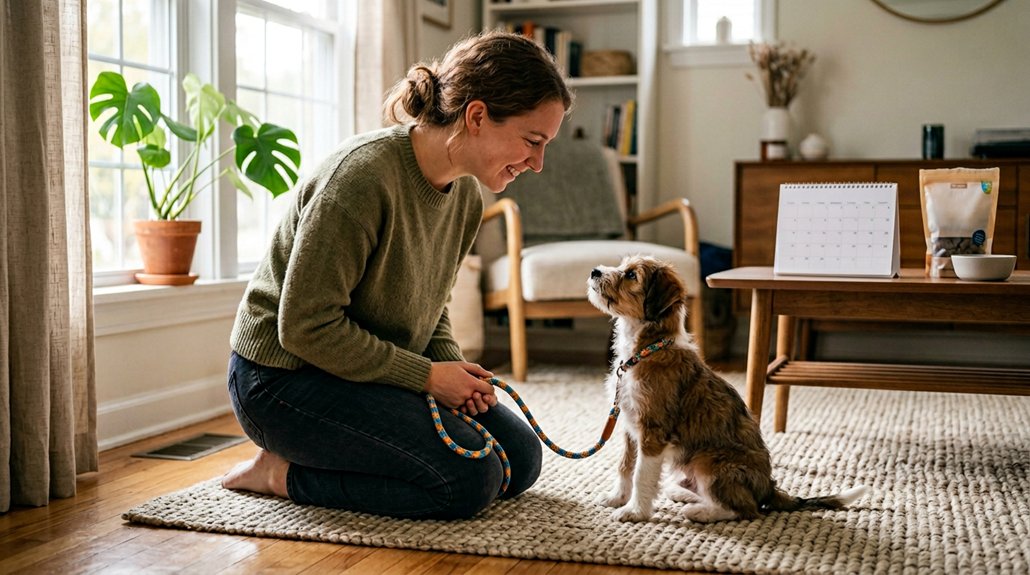
To stay consistent with your new dog, tailor nutrition and socialization to their specific needs, and establish regular feeding and exercise routines. Monitor their behavior for stress or contentment, and be flexible in adjusting routines as they grow. Use short training sessions to teach basic commands, ensuring you incorporate mental stimulation to prevent behavioral issues. Establish strong communication with vets or trainers for additional guidance. In exploring further, discover how minor adjustments make a significant difference.
Key Takeaways
- Establish a regular feeding and walking schedule to provide stability and predictability for your dog.
- Monitor your dog’s body language and reactions to adjust routines as needed for optimal well-being.
- Dedicate 5-10 minutes daily for training and bonding activities to reinforce positive behaviors.
- Engage your dog in suitable exercise and mental stimulation based on their age and energy level.
- Regularly communicate with professionals to address concerns and maintain balanced routines.
Understand Your Dog’s Needs and Habits
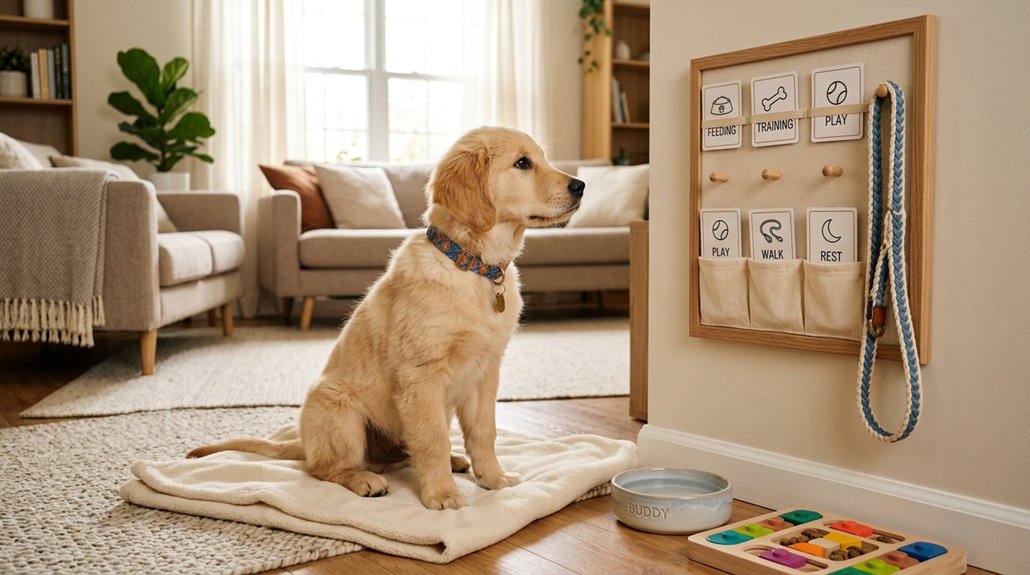
How can you guarantee you’re meeting your dog’s needs effectively? Understanding your dog’s needs and habits requires observation and a commitment to recognizing their body language and emotional cues. Dogs communicate mainly through these signals, helping you interpret their emotional state and adjust care accordingly. Make sure you’re providing a balanced diet suitable for their age, size, and breed, as nutrition is foundational to their well-being. Notice their tail wagging or ears perked up? These are positive indicators, while a tucked tail or avoiding eye contact might suggest discomfort or anxiety. Socialization plays a pivotal role in developing their behavior, making certain they’re exposed positively to various environments. By being attentive to these aspects, you’ll support their health and strengthen your bond.
Create a Routine for Feeding, Walks, and Exercise
Creating a consistent routine is essential for your dog’s well-being, as it guarantees they receive reliable care and attention daily. Establish a feeding schedule with predictable times—at least twice a day for adult dogs and 3-4 times for puppies under six months. This consistency aids digestion and behavioral stability. Schedule daily walks and exercise types tailored to your dog’s energy levels. High-energy breeds may require up to two hours of activity, combining walks, play, and training to prevent boredom and behavioral issues. Gradually introduce exercise variations and prioritize mental stimulation for young or developing puppies through interactive games. Incorporating specific times for feeding, bathroom breaks, and play guarantees their physical health and emotional equilibrium thrive on predictability.
Schedule Daily Bonding and Social Activities
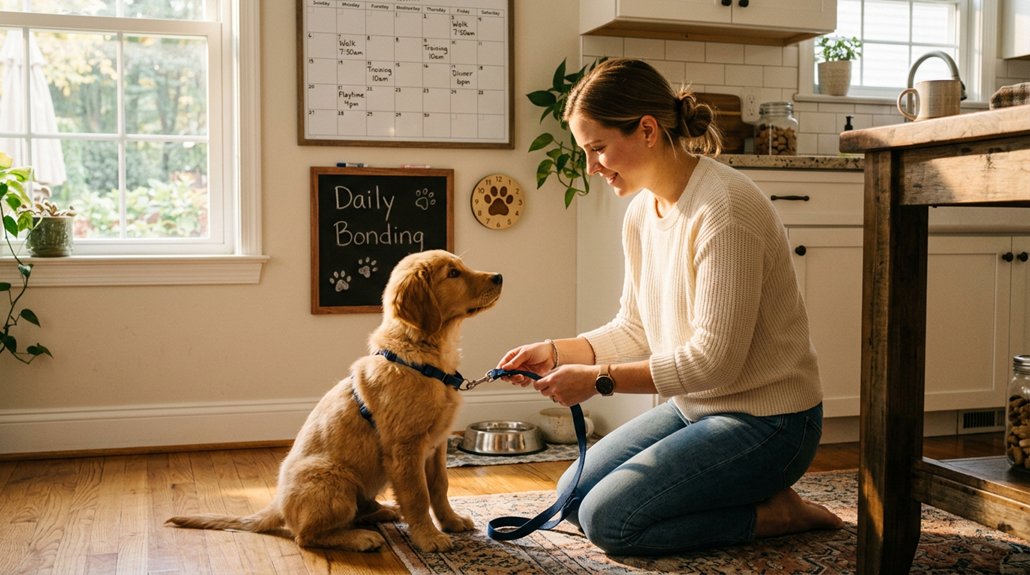
Many overlook the importance of daily bonding and social activities for their dogs’ mental and emotional well-being. Integrating bonding games into your routine enhances your dog’s happiness and strengthens your relationship. Simple activities like playtime or short training sessions help reinforce commands, ensuring better behavior and responsiveness over time. It’s essential to allocate 5-10 minutes daily for training and play.
Social outings, such as visiting dog parks or enrolling your dog in daycare, are equally important. These interactions provide critical socialization, where your dog learns to interact positively with other pets and people. A consistent schedule of bonding and social activities not only mitigates boredom-induced behaviors but also establishes familiarity and security in their environment, promoting overall well-being.
Develop a Simple Training Plan
When starting on a new training journey with your dog, it is crucial to develop a structured yet simple plan tailored to their needs and learning style. Begin by focusing on two to three basic commands like “sit,” “stay,” and “come” to establish a foundation for future training. Use consistent cues and training rewards to reinforce these commands; consistency in tone and gestures encourages better understanding. Schedule 5-10 minute training sessions several times daily to retain your dog’s attention and aid learning. Integrate training moments into everyday activities, such as asking for a “sit” before meals. Tracking progress and setting milestones guarantees that you and your dog stay motivated throughout the training process. This focused plan empowers long-term success.
Check In and Adjust as Needed

Regularly evaluating and adjusting your routines is essential to meeting your dog’s evolving needs. Monitor signs of stress, anxiety, or changes in energy levels, modifying training methods and daily schedules accordingly. Engage with your vet or a certified trainer to stay informed on best practices tailored to your dog’s current stage of life.
Evaluate Routines Regularly
Checking in and adjusting your dog’s routine can greatly enhance their well-being and stability. Regularly assess for behavioral changes that may indicate the need for routine adaptations. Monthly evaluations of feeding, walking, and training schedules guarantee these align with your dog’s energy levels and environmental factors. Note their responses to identify what works best based on individual preferences. Consistency is key, but being open to change reduces anxiety and promotes adaptability.
Engaging a veterinarian or professional trainer provides valuable insights for effective adjustments, guaranteeing routines support your dog’s physical and emotional health. This proactive approach fosters an environment where your dog thrives, maintaining a stable yet flexible lifestyle tailored to their evolving needs. Remember, routine evaluation is integral for exceptional health and happiness.
Adapt to Dog’s Needs
Adapting to your dog’s evolving needs requires a keen eye for behavioral and health changes, which can necessitate modifications in their daily care. Regular assessments of behavioral signs and energy levels can inform necessary adjustments. For instance, increased energy might warrant longer walks, while diminished activity can signal health concerns. Guaranteeing effective socialization also involves monitoring body language to reduce stress.
Maintain open dialogue with your veterinarian to align health strategies with observed changes. Adjustments could include:
- Modifying feeding times or quantities based on energy levels.
- Changing training methods or environments for better learning effectiveness.
- Tweaking exercise regimens to match energy output.
Ongoing observation and flexibility in response to your dog’s cues guarantee their well-being and your consistency as an owner.
Leverage Support for Routine Consistency
When you’re endeavoring to maintain consistency for your new dog, leveraging support systems can be immensely beneficial. Dog daycare services provide structured socialization and play, reinforcing routines when you’re unavailable. Engaging with community resources, like local dog owner networks or online groups, offers valuable shared experiences and practical tips for maintaining an effective routine. A clear daily schedule, incorporating feeding, walks, and playtime, guarantees all household members support the routine, reducing confusion. Regularly consulting a pet trainer or veterinarian brings expert advice for routine consistency, vital for your dog’s adjustment. Incorporating training sessions daily reinforces good behaviors, making the routine predictable and stable. Utilizing these strategies builds a supportive framework, fundamental for fostering consistency and well-being in your dog.
Explore Suitable Exercise Types for Your Dog
Understanding your dog’s breed and age is vital when tailoring exercise routines. High-energy breeds, such as Border Collies, benefit from vigorous activities like agility training, while lower-energy breeds may thrive with regular, leisurely walks. Additionally, considering your dog’s age is essential; puppies might require shorter, more frequent sessions to prevent exhaustion, whereas adult dogs can typically handle longer activities.
Tailor Activities to Breed
Considering your dog’s breed-specific needs when planning activities can enhance their overall well-being and longevity. Matching their energy level with breed specific activities is key. High-energy breeds like Border Collies thrive on agility training and daily runs, while Bulldogs, with lower energy, benefit more from leisurely walks and gentle play. Large breeds such as Great Danes require joint-friendly exercises to prevent health issues like hip dysplasia.
Mental stimulation is critical too, especially for intelligent breeds. Australian Shepherds flourish with puzzle toys and scent work, keeping them entertained and reducing boredom-related behaviors.
Remember, exercise routines should be customized for your dog’s breed:
- High-energy dogs need frequent, intense activities.
- Low-energy breeds require shorter, relaxed outings.
- Brachycephalic dogs need gentle, controlled exercise.
Consider Dog’s Age
While tailoring activities to cater to your dog’s breed is important, it’s equally necessary to contemplate their age to guarantee ideal health and happiness. Puppies thrive on puppy playtime with short, gentle exercises focused on socialization and basic training. Their developing joints need protection, so avoid extended sessions. Adult dogs require exercise tailored to their breed’s energy levels, ranging from 30 minutes of moderate activity to over two hours if necessary. Mental stimulation, like puzzle toys, is also vital across all ages to prevent behavioral issues. For your furry senior, consider senior strolls or gentle play to maintain their health without overexerting them. Low-impact activities make sure they stay happy and engaged, even with less energy.
Frequently Asked Questions
What Is the 7 7 7 Rule for Dogs?
The 7-7-7 Rule for dogs: Seven days for basic adjustment, seven weeks for understanding routines, and seven months for trust. Your commitment to training techniques and behavior reinforcement is key in this evidence-based timeline for dog adjustment.
What Is the 3-3-3 Rule for Dogs?
The 3-3-3 rule outlines a dog’s adjustment phases: three days of stress, three weeks of settling, and three months of full integration. During this time, focus on leash training and puppy socialization for better adaptation.
What Is the 10 10 10 Rule for Dogs?
The 10 10 10 rule focuses on dog training through routine, behavioral cues, and exercise. Initially, establish consistent patterns, then integrate socialization tips. Reinforce through ongoing training, ensuring a well-rounded, adaptable companion.
What Is “I Love You” in Dog Language?
“I love you” in dog language is shown through relaxed body posture and eye contact, enthusiastic tail wagging, playful behavior, and specific bark meanings. These communication signs reveal their affection and desire to bond closely with you.
Conclusion
Embracing routine for your dog is like a well-tuned symphony, where each note represents their needs—predictable, yet nurturing. By mastering this rhythm of feeding, exercising, and bonding, you guarantee a harmonious life for both you and your pet. Remember, even seasoned symphonies sometimes adjust mid-performance; check in regularly and adapt as needed. Seek support and understand that this consistency forms the backbone of your pet’s happiness and health, orchestrating a life of flourishing companionship.