
Becoming a dog owner means you’ll commit to emotional bonding, time management, and financial planning. Are you prepared to integrate daily exercise, consistent socialization, and robust training routines into your life? Verify you’re capable of budgeting for feeding, grooming, and unexpected vet bills. Your home must be dog-proof, equipped with essentials like a cozy bed and safe spaces. Patience is key for training and building trust. Explore to confirm you’re truly ready for this rewarding journey.
Key Takeaways
- Assess your schedule to ensure flexibility for daily dog care, exercise, and socialization needs.
- Evaluate your financial readiness to cover routine and emergency veterinary expenses, as well as feeding and grooming costs.
- Prepare your home by dog-proofing and creating safe and comfortable spaces for your new pet.
- Commit to consistent training techniques and patience for positive behavioral outcomes.
- Establish a routine for feeding, exercise, and playtime to support your dog’s physical and emotional well-being.
Emotional Preparedness: Are You Ready to Welcome a Dog?

Are you fully aware of what it entails emotionally to welcome a dog into your life? Establishing an emotional connection with your dog is foundational. It’s an enduring investment that parallels their average lifespan of 10 to 16 years. You become their support system, providing daily affection, exercise, and playtime vital for their emotional well-being. Patience and resilience are key attributes you’ll need when maneuvering your dog’s adjustment phase, often marked by anxiety or behavioral hurdles. Socialization is another important element, as exposing them to varied environments guarantees they develop into a well-adjusted pet. Understanding these dynamics enriches the companionship, highlighting the mutual benefits while focusing on nurturing their emotional health. This preparation enhances your overall dog ownership experience.
Time Investment: How Ready Are You to Adjust Your Schedule?
When contemplating the essential decision to welcome a dog into your life, how prepared are you to allocate the time needed to care for them properly? Ensuring thorough care requires embracing the intricacies of daily routines and scheduling flexibility. Puppies especially mandate a considerable time investment in house training, obedience development, and socialization to combat separation anxiety. You must embed daily walking and interactive play sessions into your schedule to promote physical and mental well-being. Each dog needs at least one hour of outdoor activity for ideal health. Therefore, reevaluating your work and personal commitments is vital. You’ll need to adapt and rearrange obligations to prioritize your new furry companion, ensuring constant interaction and care throughout the day.
Financial Planning for Pet Ownership: What’s Involved?
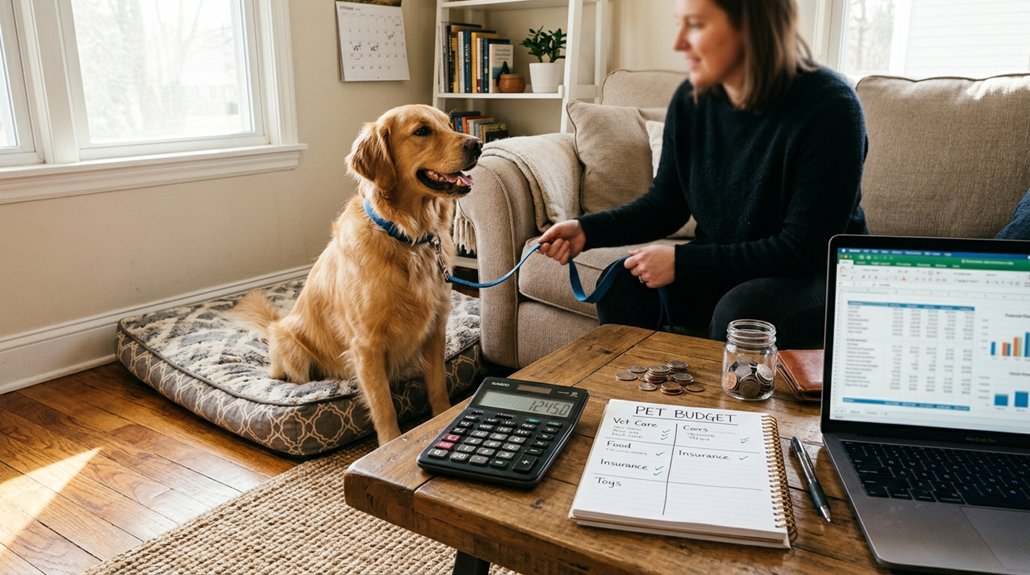
When planning for a dog, meticulous budgeting for key expenses like annual feeding, grooming, and regular vet check-ups is paramount. You must also be prepared to manage unexpected costs that can greatly impact your financial landscape, such as emergency veterinary bills or unplanned medical interventions. Evaluating pet insurance policies could be a strategic move to mitigate financial risk, ensuring you’re covered for unforeseen contingencies.
Budgeting Key Expenses
Taking on the responsibility of a dog means balancing a variety of financial obligations, many of which can quickly add up. With feeding costs averaging $400 to $700 annually, it’s important to plan for essentials. Grooming expenses and toy budget are two areas that demand attention. While grooming may vary based on breed, setting aside a toy budget of at least $50 upfront keeps your canine entertained. Additionally, dog walking and daycare services can range from $20 to $40 per day. Add these to regular veterinary check-ups, costing $200 to $400 annually, and you’re looking at substantial ongoing expenses. Let’s visualize:
| Expense Type | Estimated Cost |
|---|---|
| Feeding | $400 – $700 annually |
| Veterinary Check-ups | $200 – $400 annually |
| Essential Supplies | $100 – $200 upfront |
| Grooming | Variable based on breed |
| Dog Walking/Daycare | $20 – $40 per day |
Managing Unexpected Costs
Unexpected costs are an inevitable part of pet ownership, requiring diligent financial planning to mitigate their impact. When budgeting for a new dog, unexpected expenses can arise from sudden medical emergencies or changes in care routines. Veterinary treatments, easily reaching between $500 to $1,000, underscore the necessity of an emergency fund dedicated to pet care. Additionally, costs for daycare services or a dog walker, ranging from $15 to $50 daily, must be considered, especially if you’re employed full-time. Beyond initial acquisition costs, like adoption fees and essential supplies, the annual feeding expenses may range from $400 to $700 depending on your dog’s size. Proactive financial preparations guarantee you’re equipped to handle the unpredictable nature of owning a pet, safeguarding both peace of mind and your furry friend’s well-being.
Evaluating Insurance Options
Proactive financial management in pet ownership extends beyond budgeting for immediate expenses; evaluating insurance options is an instrumental aspect of safeguarding your investments. Pet insurance can range from $20 to $60 monthly, with the amount hinging on coverage levels and your dog’s specifics. You’ll need to make coverage comparisons among accident-only, extensive, and wellness plans to determine the best fit. Carefully dissect policy exclusions, as coverage can be greatly diminished for pre-existing conditions or specific breeds. Most insurers implement deductibles between $100 to $500 annually and offer reimbursement rates between 70% and 90%.
- Deductible Impact: Understand how your annual deductible influences overall expenditure.
- Coverage Array: Extensive plans vs. accident-only scopes.
- Exclusion Awareness: Potential pitfalls in policy clauses.
Planning Dog Ownership Costs: Expect and Prepare

Dog ownership involves various costs, both predictable and unforeseen, that potential owners should plan for meticulously. Start by considering food variety and nutrition considerations, with annual feeding costs ranging between $400 and $700, influenced by size and dietary preferences. Next, budget for training essentials and socialization opportunities, vital for a well-behaved pet, alongside routine veterinarian visits, which can average $200 to $400 annually. Additional grooming needs and dog-friendly activities play an important role, as professional grooming or services like dog walking could cost $15 to $50 per occasion. Don’t forget emergency preparedness; unexpected vet bills or training classes might require setting aside at least an extra $500 yearly. Thorough planning guarantees a thriving, happy canine companion.
Is Your Home Ready for a Dog Friend?
Having meticulously deliberated the financial considerations of dog ownership, it’s equally important to ascertain your living environment can accommodate your new canine companion. To create a harmonious space, begin by incorporating dog proofing essentials. This involves securing electrical cords, removing hazardous substances, and relocating breakables out of paw’s reach. Establishing safe spaces for your dog is essential. Make certain your home boasts a comfortable area for rest, coupled with sufficient room for play and exercise tailored to your dog’s breed and energy levels.
To seamlessly integrate your new pet, consider the following essentials:
- Stock up on dog-related supplies like food and water dishes, toys, a collar, leash, and a cozy bed.
- Implement a robust containment policy for outdoor areas.
- Develop a structured routine for feeding, walking, and grooming.
Living With Dogs: Managing Mess and Chaos
As you embrace the joys of canine companionship, it’s essential to anticipate the inherent mess and chaos a dog can introduce into your home. Establishing a meticulous cleaning routine is important; regular vacuuming and spot-cleaning will manage fur, muddy prints, and occasional accidents. Protect your furniture with dog-proof materials and use targeted training techniques to discourage destructive behaviors such as chewing and scratching. Consistency and patience, paired with positive reinforcement, are essential components of effective dog training. Meeting your dog’s exercise needs through daily play and walks curbs excess energy, reducing potential chaos. Implement safety guidelines for children: supervised interactions are fundamental to avoid mishaps. Being detail-oriented in these approaches guarantees harmonious coexistence and maintains the sanctity of your living environment.
How to Adapt Your Lifestyle for a Dog’s Needs?
To successfully integrate a dog into your lifestyle, it’s essential to thoroughly devote time to training, exercise, and socialization, especially during a puppy’s developmental phase. Adapt your schedule to meet their exercise requirements, ensuring energetic breeds get at least an hour of activity daily. Implement robust socialization strategies by exposing your pet to new environments and experiences, reducing behavioral issues later. Craft a consistent routine, incorporating feeding and play times to help your dog’s emotional stability.
- Daily Activities: Schedule regular walks and playtime.
- Disruptions: Prepare for household changes and potential messes.
- Long-Term Planning: Account for lifestyle changes like travel or career shifts.
Patience in Training: Building a Trusting Relationship
When starting dog training, patience serves as the cornerstone in building a trusting relationship between you and your pet. It requires consistent implementation of training techniques, such as positive reinforcement, to solidify understanding and create trust. Remember, dogs often need repeated exposure to commands for effective learning; persistence is key. If mistakes occur, remain calm to avoid complicating the trust-building process. A dog’s ability to respond correctly is nurtured over weeks or months, so don’t rush progress.
Incorporating consistent, rewarding interactions helps consolidate the bond you’re aiming to strengthen. Should behavioral issues arise, consulting a professional trainer can guarantee you maintain a supportive environment, ultimately benefiting both you and your dog. Patience isn’t just a virtue here—it’s an essential training tool for success.
Frequently Asked Questions
What Legal Responsibilities Come With Owning a Dog?
You’ll need to understand dog licensing requirements and adhere to leash laws specific to your area. Responsibilities also include ensuring your canine’s vaccinations are up-to-date and managing any liability for damages caused by your pet.
How Do I Choose the Right Veterinarian?
Finding the right veterinarian is like finding the right co-pilot for your journey. Look for thorough vet services and guarantee they accept pet insurance to keep your pup’s healthcare effective, efficient, and budget-friendly.
What Is the Adoption Process for Rescue Dogs?
The adoption process involves filling out an application, meeting kennel requirements, and paying adoption fees. Verify your home complies with the rescue’s conditions. Completing these steps responsibly allows bringing a rescue dog into your loving environment.
How Can I Find Reliable Pet Sitters or Boarding Facilities?
Finding reliable pet sitters or boarding options is like choosing the best school for your child. Start with reviews and recommendations, visit facilities, and ask about certification, emergency protocols, and daily care routines. Research guarantees quality care.
What Are the Common Health Issues in Dogs?
Dogs commonly face health issues like hip dysplasia and canine parvovirus. Guarantee regular dog vaccinations and balanced pet nutrition to mitigate risks. Remember, frequent vet check-ups are vital for identifying problems early and maintaining wellness.
Conclusion
Taking the plunge into dog ownership is not just about wagging tails and wet noses. You need to have your ducks in a row—from emotional readiness to financial foresight. Ensuring your home is properly equipped and scheduling adequate time for bonding and training are essential steps. Remember, a dog’s life is a tapestry of love, patience, and responsibility. By aligning your lifestyle with their needs, you’re not only welcoming a pet but gaining a loyal companion.