
Dogs often whine due to emotions like anxiety, excitement, or discomfort. Pay attention to context; it could signal stress from environmental changes or health issues. Recognize signs of distress, such as limping or sudden yelping, and consult a vet if needed. Training with commands and distractions can minimize whining. Professional help, including trainers or vets, may be required for persistent issues. Mastering these strategies will empower you to effectively manage your dog’s whining.
Key Takeaways
- Dogs whine to communicate emotions like anxiety, excitement, fear, or attention-seeking behavior, influenced by triggers and environmental changes.
- Identifying whining causes is crucial; fear, anxiety, or excitement can be addressed with comforting or distracting techniques.
- Health issues can cause whining; look for signs like limping and consult a vet promptly for potential physical distress.
- Training, including commands like “quiet,” and consistent reinforcement can help reduce whining behavior effectively.
- Professional help, including vet consultation and certified trainers, tailors strategies for stress-related whining and behavior modification.
Understanding What Causes Dog Whining
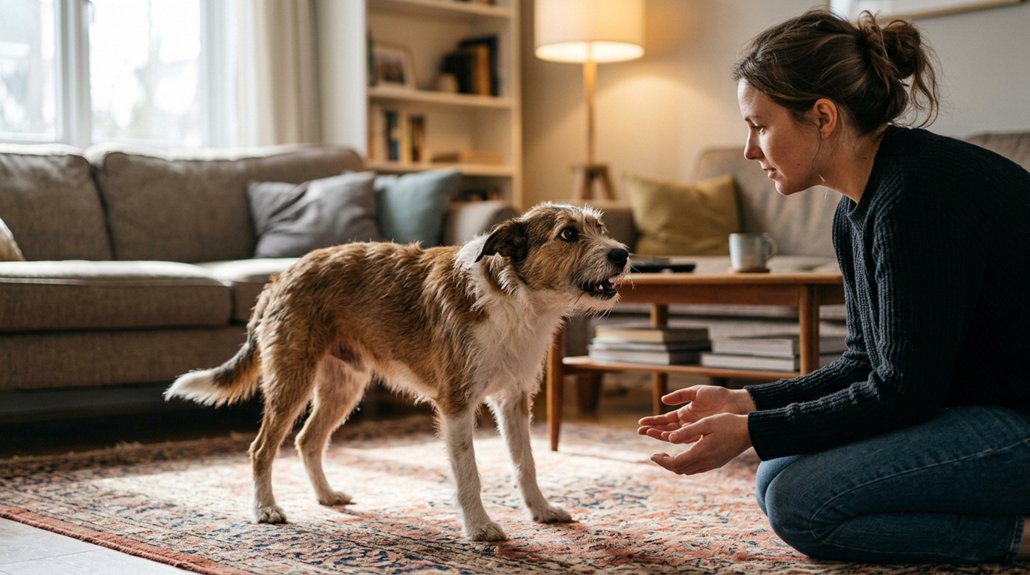
Whether you’re a long-time dog owner or new to canine companionship, understanding what causes dog whining is essential for effective animal care. Recognizing whining triggers is vital for interpreting your dog’s communication. Excitement during greetings can prompt whining as a signal of enthusiasm. Conversely, anxiety might provoke the same vocalization, particularly in stressful scenarios like separation from you or unfamiliar environments. Attention-seeking behavior also serves as a trigger; dogs often whine to solicit interaction or rewards. Physical discomfort is another factor, necessitating vigilant observation for accompanying signs of distress. Contextual cues play a pivotal role in interpreting whining, as specific circumstances—such as being crated or experiencing frustration—often dictate these vocal responses, helping you determine the underlying cause.
Common Emotional Triggers for Dog Whining
Understanding the common emotional triggers for dog whining is vital for any pet owner aiming to address and manage this behavior effectively. Dogs often express their emotions vocally, and identifying what prompts these sounds can help in responding appropriately. Here are four key emotional triggers:
- Anticipatory excitement: Your dog might whine in anticipation of a walk or when greeting you, enthusiastic for interaction.
- Anxiety triggers: Environmental stressors, like thunderstorms or being alone, can cause a dog to whine due to discomfort.
- Fearful situations: Unfamiliar sounds or settings may lead to whining as your dog seeks reassurance.
- Frustration signals: When access to desired objects or activities is blocked, dogs might whine, expressing irritation.
Observation of their context and behavior is vital.
Spotting Signs of Discomfort or Pain in Your Dog
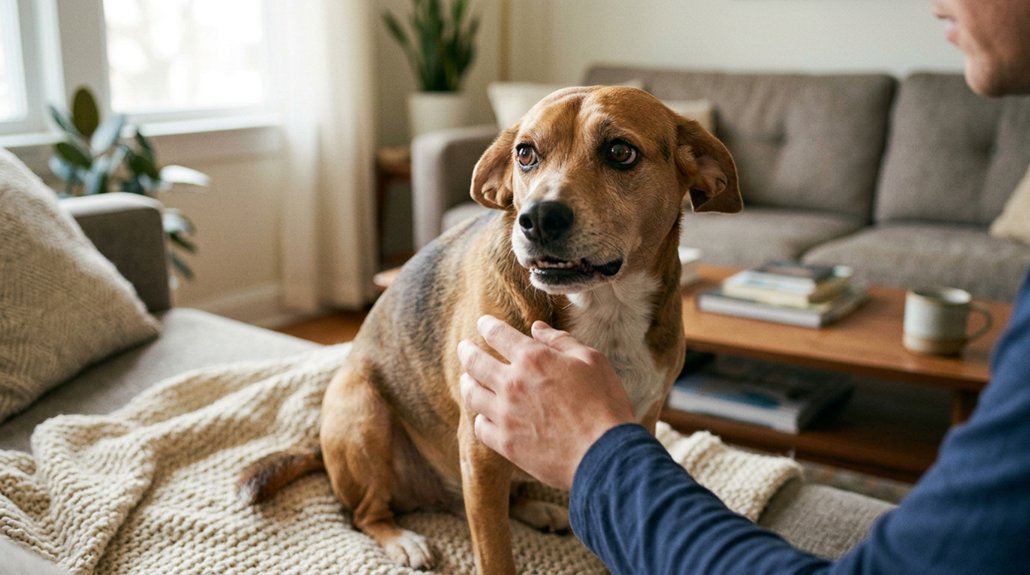
When your dog starts whining, it might be a signal of physical distress that demands your attention. You should carefully assess for signs such as limping, changes in posture, or behavioral shifts like reluctance to move, which can indicate discomfort or pain. Timely recognition of these symptoms paired with prompt veterinary consultation is essential for addressing potential health issues effectively.
Recognizing Physical Distress
Even though dogs can’t verbalize their pain like humans, their vocalizations, such as whining or whimpering, often reveal significant physical distress. Effective pain recognition involves observing discomfort cues that manifest with these sounds. Coupled with vocalizations, watch for limping, reluctance to move, or sensitivity upon touch. When your dog yelps sharply followed by sustained whining, it suggests immediate injury or intense discomfort. An increase in whining can signal underlying medical problems, requiring prompt veterinary consultation. Monitor for other symptoms accompanying whining, like:
- Excessive panting: Indicates stress or overheating.
- Pacing: Shows anxiety or discomfort.
- Hiding: Could point to fear or pain assertion.
- Sudden sensitivity: Discomfort when touched in specific areas.
Identifying these signs fosters effective care strategies.
Detecting Behavioral Changes
Beyond recognizing physical distress in dogs, detecting behavioral changes is equally essential for identifying discomfort or pain. Behavioral signals such as increased whining and restlessness often indicate underlying issues. You might notice emotional changes like reluctance to engage in usual activities, signaling that your dog may be experiencing discomfort. Pay attention to body language: a tucked tail, lowered posture, or avoidance of touch can provide clues about your dog’s distress. Sudden alterations in vocalizations, such as whining or yelping triggered by touch or movement, often suggest pain. Consistent monitoring of routines and normal behaviors allows you to spot significant deviations, ensuring timely interventions. Understanding these subtle signals helps you address your dog’s needs more effectively and maintain their well-being.
Training Methods to Reduce Whining Behavior
To address your dog’s whining, focus on teaching a “quiet” command reinforced with positive reinforcement. Implement incremental training techniques, whereby you gradually increase the duration of silence required before a reward is given, ensuring the behavior is reliably learned. Coupled with these approaches, maintaining consistency across all interactions will enhance the effectiveness of your training regimen.
Teaching Quiet Command
Teaching a dog the “quiet” command requires a systematic approach that begins with understanding the triggers of whining. Watch closely to pinpoint what makes your dog whine, then only reward them when silence prevails. A consistent verbal “quiet” command followed by rewards reinforces the link between silence and positive outcomes. Patience reinforcement is key, gradually prolonging quiet periods before rewarding your dog. Use effective distractions like toys or activities to redirect focus, providing more opportunities to reinforce quiet behavior. Practice in various settings to help your dog grasp these principles amidst potential distractions.
- Observe: Identify whining triggers.
- Command: Use “quiet” consistently.
- Reward: Treat silence promptly.
- Distract: Redirect focus with engaging tools.
Incremental Training Techniques
With the groundwork laid for the “quiet” command, focusing on incremental training techniques is your next step. Begin with gradual command training, increasing waiting time in small increments to help your dog adjust. This method enhances their ability to handle stress without being overwhelmed. Implement consistent incremental reinforcement by rewarding calm behavior and not responding to whining. This establishes a clear distinction between acceptable and unacceptable actions. Conduct training sessions in varied environments so your dog learns to generalize the “quiet” command amid distractions. Employ patience strategies, prioritizing silence before granting attention or desired objects. These techniques not only reduce excessive whining but also strengthen the bond with your dog through positive reinforcement, ensuring effective management of their behavior.
Responding to Attention-Seeking Whining
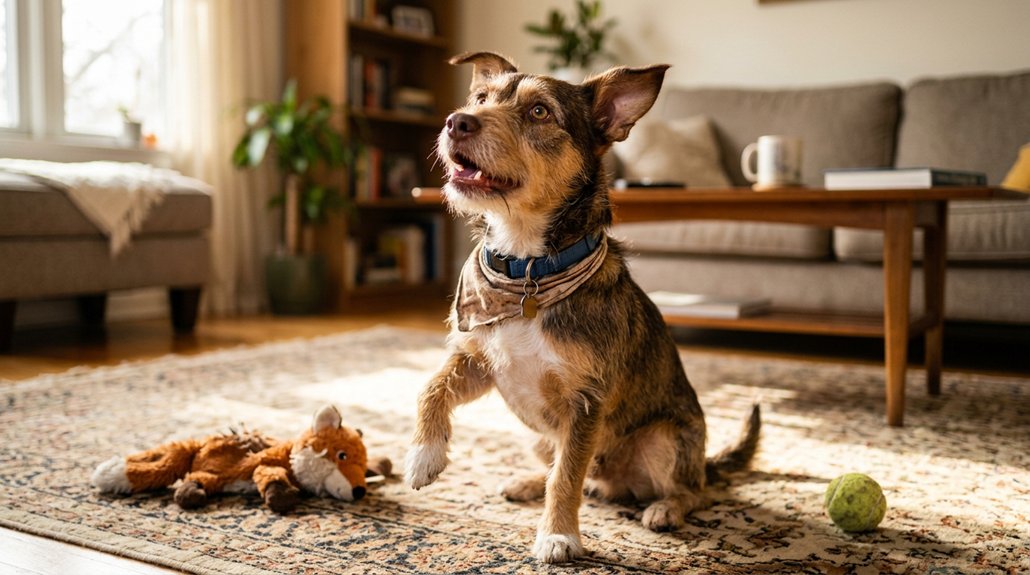
Although your dog’s whining for attention may seem innocuous, it can quickly become problematic if not addressed properly. Identifying whining triggers is essential for effective management. Implementing the right reinforcement strategies helps dismantle this behavior. Here’s a methodical approach:
- Ignore the Whining: Resist any urge to give eye contact or verbal reprimands. Reacting only strengthens the behavior.
- Reward Silence: Use positive reinforcement. Reward your dog when they’re calm and quiet.
- Consistent Engagement: Engage with your dog frequently during quiet moments, reinforcing that silence earns your attention.
- Seek Professional Guidance: If issues persist, consult a Certified Professional Dog Trainer (CPDT) for expert strategies.
Adopting these methods will help you curb whining effectively, ensuring a more peaceful and trusting relationship with your dog.
Reducing Stress-Induced Whining in Dogs
Create a serene and predictable environment to effectively address stress-induced whining in dogs. Implement stress management techniques by maintaining regular routines that foster a sense of security. Introduce calming techniques, such as the ADAPTIL Calm Home Diffuser, to promote relaxation and lower anxiety levels. Engage your dog with physical activities and mental stimulation like puzzle toys to mitigate excess energy. Utilize soft, calming music to soothe your dog’s nerves and establish a tranquil atmosphere, reducing whining tendencies. Incorporate training commands like “quiet” using positive reinforcement to influence your dog’s behavior during stressful situations. These targeted strategies can greatly lower stress-induced whining in dogs, enhancing their well-being and reinforcing their sense of stability at home.
Getting Professional Help for Excessive Whining
When a dog’s whining escalates beyond manageable levels or is coupled with troubling symptoms, it’s essential to consult a veterinarian to rule out any underlying medical conditions, such as pain or injury. If health issues are excluded, collaborating with a Certified Professional Dog Trainer (CPDT) can be invaluable. Through vet consultations and trainer collaboration, dogs’ behavioral issues, particularly those tied to anxiety, can be addressed effectively. Customized plans involving structured routines and positive reinforcement are vital in mitigating excessive whining.
Consult a vet to rule out medical issues and work with a trainer to address anxiety-related whining.
Consider these steps to improve your dog’s quality of life:
- Schedule vet consultations to guarantee the health of your dog.
- Engage in trainer collaboration for precise behavior modification.
- Create a tailored training plan with professional help.
- Maintain consistent communication with experts for ongoing adjustments.
Frequently Asked Questions
How to Respond to Dog Whining?
Identify whining triggers and assess the dog’s communication cues calmly. Avoid reinforcing whining; engage only when quiet. Use a “quiet” command, increase stimulation, and consult professionals if needed. Consistent training guarantees effective, authoritative response to dog whining.
What Is the 3-3-3 Rule for Dog Anxiety?
Coincidentally, the 3-3-3 rule aligns with understanding dog communication, easing anxiety triggers. It’s a guide: three days of stress, three weeks of adjustment, and three months of full adaptation, essential for new environments.
How Do Dogs Apologize?
Dogs apologize through submissive body language and vocalizations. Canine communication includes head lowering, tail tucking, and soft whimpers, seeking forgiveness. They might avoid eye contact, engage gently, or bring toys to reconnect positively.
How to Train a Dog to Be Silent?
Imagine harnessing the power of silence. To train a dog to be quiet, employ positive reinforcement when they’re calm. Command “quiet,” reward silence. Beware of noise distractions; redirect attention using interactive toys to encourage peaceful behavior.
Conclusion
Understanding why dogs whine and how to respond appropriately is essential for pet owners. Notably, over 60% of dog owners report whining as a primary communication method, highlighting its prevalence. By identifying emotional triggers, discomfort, or stress, you can address your dog’s needs more effectively. Implementing consistent training techniques and seeking professional help when necessary can greatly reduce whining. Ultimately, your proactive response not only addresses the behavior but also strengthens the bond with your pet.