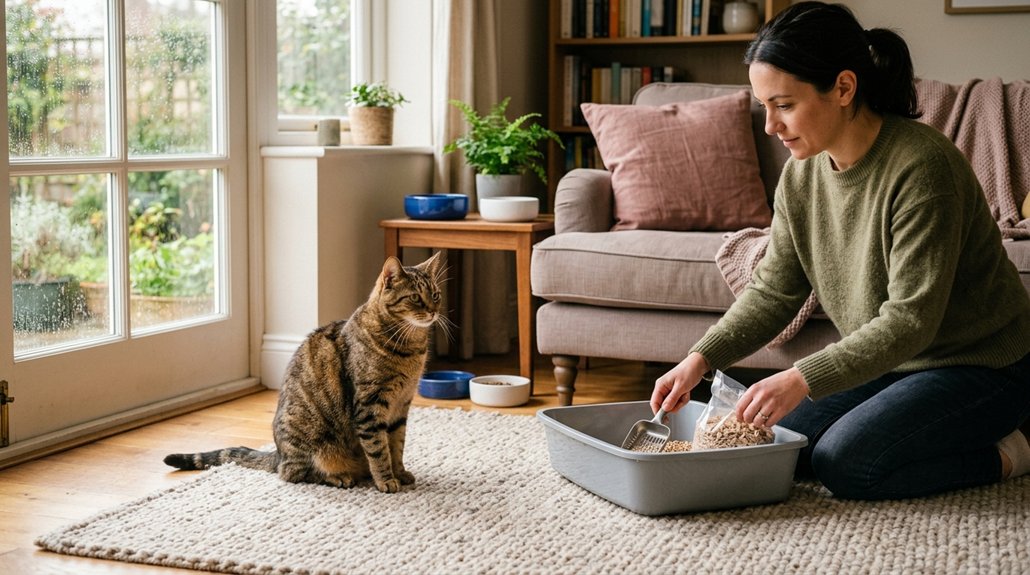
When your cat begins having accidents, it could indicate health issues like urinary infections or stress-related problems. Make certain there’s a clean litter box for each cat, plus an extra, in quiet, accessible locations. Prefer unscented, clumping litter and remove waste promptly. Use enzymatic cleaners for odor control, and maintain routine feeding and playtimes. Consulting a vet is vital if problems persist, guaranteeing thorough diagnosis and treatment. Exploring further will provide additional insights into effective solutions.
Key Takeaways
- Consult a veterinarian to rule out potential health issues like urinary tract infections or diabetes.
- Increase the number of litter boxes to reduce stress and improve accessibility.
- Experiment with different types of litter to find your cat’s preference.
- Use enzymatic cleaners on soiled areas to eliminate odors and prevent re-soiling.
- Assess and mitigate environmental stressors that may be triggering inappropriate elimination.
Spotting Health Problems Linked to Litter Box Avoidance
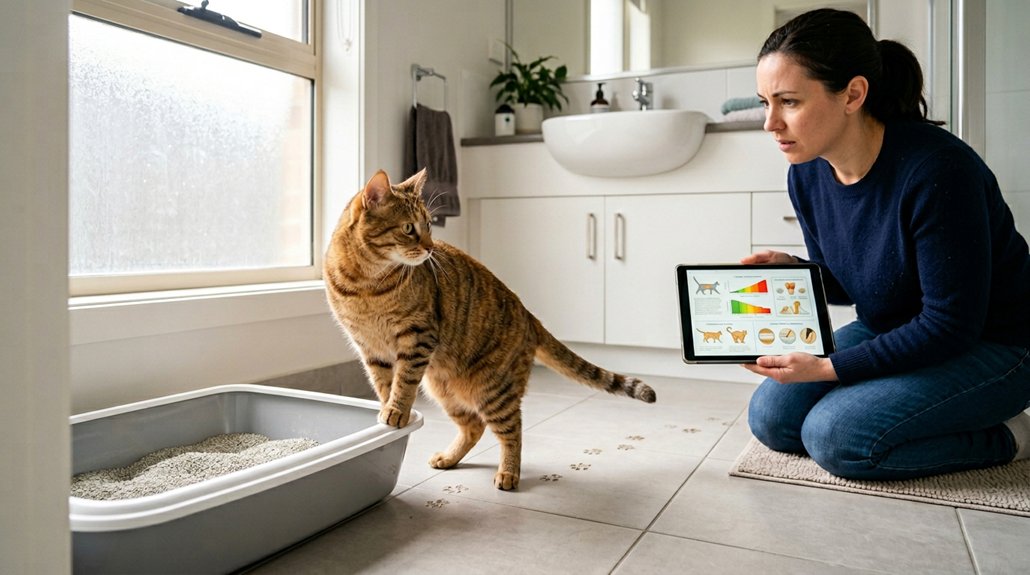
When your cat begins avoiding the litter box, it might be a sign of underlying health issues that require prompt veterinary attention. Such behavior can serve as a critical health indicator. Conditions like urinary tract infections, bladder crystals, or diabetes often present as litter box avoidance due to associated pain or discomfort. Cats instinctively shy away from activities that exacerbate their discomfort, resulting in accidents elsewhere.
Increased thirst and urination are additional health indicators, potentially pointing to kidney problems or diabetes. You should be aware that these conflicts within your cat’s health can become stress factors that exacerbate inappropriate elimination. It’s paramount to consult with a veterinarian for precise diagnosis and treatment. Informing them about these incidents greatly aids in uncovering underlying conditions.
Setting Up an Ideal Litter Box Arrangement
To set up the ideal litter box arrangement, you’ll need at least one litter box per cat, plus an extra to minimize stress and competition. Place these in quiet, easily accessible areas away from food, water, and busy spots to encourage use and guarantee your pet’s comfort. Additionally, experimenting with different types of litter, preferably unscented clumping clay, will help determine what suits your cat’s preferences.
Optimal Litter Box Number
Determining the ideal number of litter boxes is essential for maintaining a harmonious environment in your home. Following the general guideline of one box per cat plus one additional guarantees you meet individual preferences and assure accessibility. This arrangement reduces stress and promotes better toilet habits. Consider offering diverse litter box options, such as both covered and uncovered varieties, to cater to your cat’s specific needs, enhancing their comfort and minimizing accidents. Regularly assess and maintain your litter boxes to uphold additional hygiene, which involves frequent cleaning schedules. By prioritizing cleanliness and variety, you can prevent behavioral issues associated with inappropriate elimination. Keep the boxes in mind when evaluating your household setup to address any ongoing concerns your cat might have.
Strategic Box Placement
While arranging your cat’s litter boxes, strategic placement is essential to fostering consistent usage and preventing accidents. Guarantee box accessibility by placing each litter box in a quiet, easily reachable spot away from food and water dishes. Ideal locations exclude high-traffic areas and sites prone to loud noises or other stressors. Litter box visibility is also key; avoid hiding them too discreetly, which might deter usage. Opt for a setup with one box per cat plus an extra to minimize conflicts and reduce anxiety. Regularly monitor your cat’s behavior, adjusting box positions as needed. Diverse box styles—open versus covered—should be considered to find what best suits your cat’s comfort and security requirements, promoting a hygienic and inviting space.
Preferred Litter Types
Selecting the right litter type is essential in establishing an ideal litter box environment for your cat. Most cats show a strong preference for unscented, clumping clay litter. Its fine texture typically aligns with cats’ litter texture preferences, and the clumping advantages simplify waste removal, maintaining a cleaner environment. Activated charcoal within the litter aids in effective odor control. As every cat has unique preferences, offering two boxes with varying litter types can help determine your cat’s choice. Monitor their behavior and response to different textures. Opt for open boxes with low sides to make access easier and more comfortable. Position the boxes thoughtfully—quiet, accessible locations away from food and water enhance usage consistency. Regular cleaning also sustains hygiene.
Stabilizing Your Cat’s Environment for Better Habits
To effectively stabilize your cat’s environment for better habits, start by ensuring multiple litter boxes are available—one per cat plus one extra—to minimize anxiety and mitigate territorial disputes. Position these boxes in quiet, private areas, ensuring they’re away from food and water dishes, contributing to environmental enrichment and further security. Implement routine stability with regular feeding, playtime, and naptime schedules, providing predictability that alleviates stress and reduces accidents. Continuously monitor the environment, adjusting the type and position of litter boxes according to your cat’s preferences, maintaining a clean, comfortable space. Be mindful of reducing loud noises and offering safe spaces, since these modifications help address environmental stressors that might lead to litter box avoidance.
Cleaning Tips to Eliminate Odor Effectively
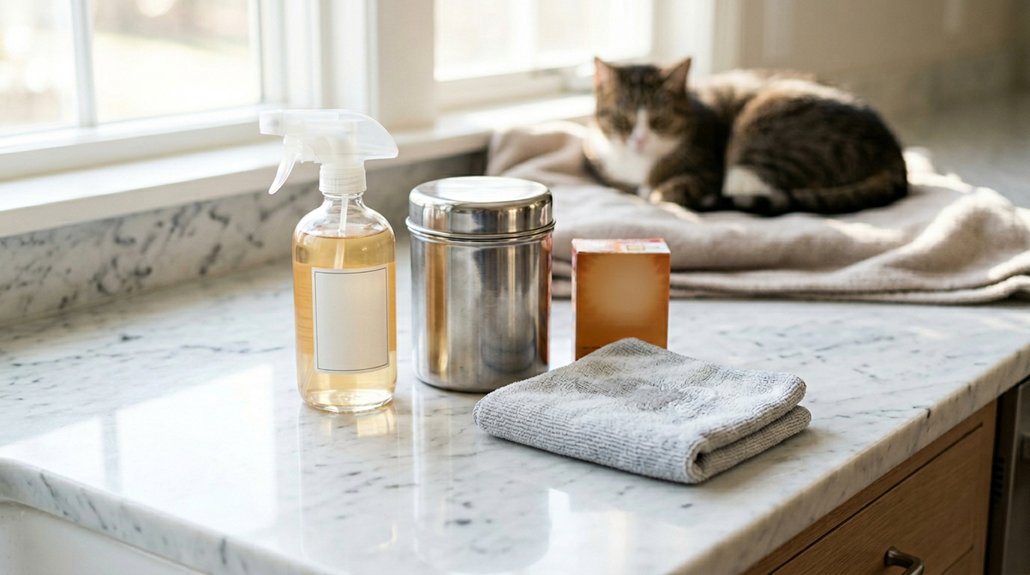
To effectively eliminate odor from your cat’s accidents, start by promptly removing as much urine as possible to prevent it from saturating the surface. Use enzymatic cleaners specifically formulated for pet accidents, as they break down urine compounds and guarantee odors are neutralized. Avoid harsh chemicals such as ammonia or bleach, as they might entice your cat to revisit the same spot.
Using Enzymatic Cleaners
Enzymatic cleaners serve as an essential tool in managing and eliminating cat urine odors effectively. When comparing cleaners, enzymatic options outperform traditional ones by breaking down urine proteins, fully eliminating odors rather than merely masking them. Traditional cleaners may leave residues that draw your cat back, increasing repeated incidents. Proper application methods are vital; follow the cleaner’s label instructions carefully, ensuring adequate contact and dwell time to guarantee full odor neutralization.
Incorporate enzymatic cleaners routinely, especially after accidents, to uphold a clean environment conducive to proper litter box habits. Steer clear of bleach or ammonia-based products, as their strong scents can inadvertently promote territory marking. Regular enzymatic cleaning not only addresses current issues but also forms a preventive strategy against future accidents.
Avoiding Harsh Chemicals
While it may be tempting to reach for strong cleaning agents like bleach to tackle cat accidents, these harsh chemicals can actually exacerbate the problem by disturbing your cat’s sense of smell. Cats can have chemical sensitivities that lead to further elimination issues, so opting for natural alternatives is ideal. Enzyme-based cleaners, specifically formulated for pet accidents, effectively break down urine and eliminate odors. They work better than traditional cleaning products, which often fail to remove lingering smells. Immediately removing as much urine as possible is essential, as saturation can worsen odors. Consider gentle solutions like baking soda or herbs to absorb scents safely. Utilizing non-toxic cleaners guarantees your cat’s olfactory environment remains balanced, preventing repeat accidents due to odor confusion.
Proper Cleaning Techniques
In addressing your cat’s accidents effectively, consider employing proper cleaning techniques to eliminate odor at its source. Begin by establishing a consistent cleaning frequency to maintain odor prevention. Follow these tips:
- Use Enzyme-Based Cleaners: Select products specifically designed for pet accidents. They effectively break down urine and remove odors rather than masking them.
- Act Quickly: Immediately remove excess urine to minimize surface saturation. This enhances your chances of successful odor elimination.
- Avoid Harsh Chemicals: Steer clear of bleach and ammonia, which can disturb your cat’s sensitive sense of smell and inadvertently encourage repeat incidents.
- Utilize a Wet Vac: After cleaning carpets, use a wet vac to extract remaining moisture and odor, ensuring thorough carpet care.
Employ these methods for effective odor management.
Correcting Behavioral Issues With Litter Box Use
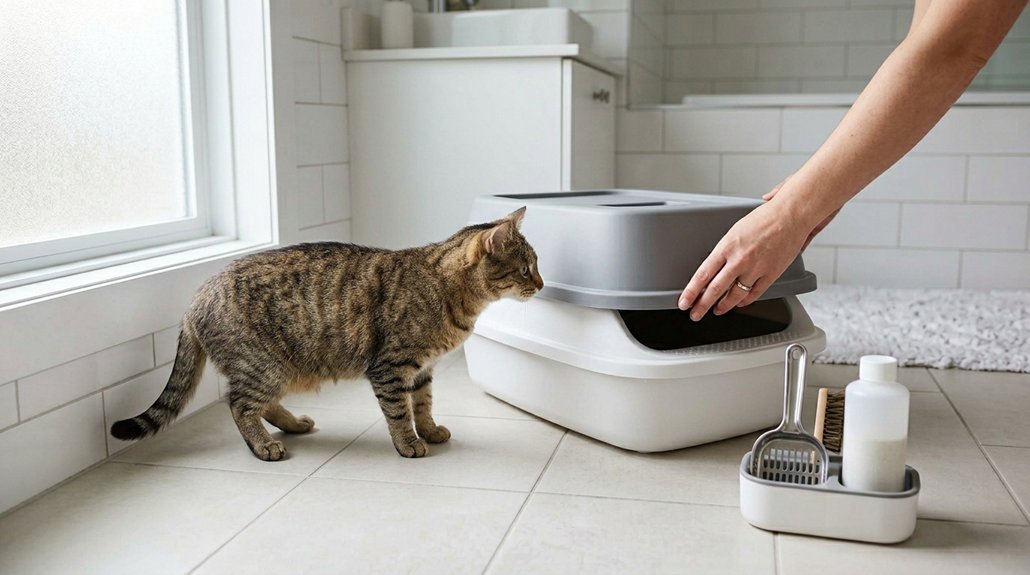
Addressing behavioral issues with litter box use requires a strategic approach to guarantee your cat feels secure and comfortable. Begin by employing litter box retraining techniques. This involves confining your cat to a smaller, quieter area furnished with a litter box. Reward their successful use with treats or affection to encourage behavioral reinforcement. Make certain previously soiled areas are thoroughly treated with enzyme-based odor neutralizers to remove lingering scents.
Block access to these spots with barriers or alter textures to deter your cat from returning. Establish predictable routines for feeding, playtime, and litter box use to reduce anxiety. Assess the environment for any recent changes that might cause stress. If stressors are identified, aim to mitigate them to improve your cat’s comfort and compliance.
Recognizing When Expert Help Is Needed
If your cat starts having accidents outside the litter box, it’s vital to contemplate seeking expert help to address potential underlying issues. A timely veterinary consultation can rule out medical concerns like urinary tract infections. Additionally, a behavioral assessment or intervention is essential if improper elimination persists after implementing ideal litter box habits. Here’s when to seek professional advice:
- Persistent Issues: When litter box problems continue despite clean, accessible boxes.
- Signs of Stress: Noticing stress or anxiety-related behavior requires expert guidance for potential medication.
- Multiple Cats: Competition for resources necessitates professional insight to prevent litter box avoidance.
- Health Changes: Monitoring changes in drinking habits or weight loss is fundamental for early problem detection.
Prioritizing expert involvement guarantees your feline’s wellbeing.
Frequently Asked Questions
Why Is My Cat Having Accidents All of a Sudden?
Your cat’s sudden accidents could result from stress factors, health issues, or changes in environmental conditions. Evaluate recent environmental changes, assess litter preferences, and consult a vet to rule out potential health issues causing these behaviors.
What Is the 3-3-3 Rule for Cats?
The 3-3-3 Rule predicts three adjustment phases in cat behavior: initial stress for three days, exploration and routine-forming during three weeks, and complete settlement in three months. Understanding these phases informs litter preferences and environmental support.
What Is “I Love You” in Cat Language?
Cats express “I love you” through various feline communication cues like slow blinking, purring, kneading, following you, and head rubbing. Understanding these cat behaviors enhances your bond, recognizing their unique ways of showing affection and trust.
What Smell Do Cats Hate to Stop Peeing?
Cats can’t stand citrus scents and vinegar solutions, much like kryptonite to superheroes. Their powerful noses recoil at these odors, which may prevent them from marking territories. Make certain they’re safe, though, to avoid unintended stress or harm.
Conclusion
When your cat uses the litter box properly, it’s a sign of a healthy, content companion. Conversely, accidents can signal underlying health or environmental issues. By creating an ideal litter environment, stabilizing your cat’s surroundings, and tackling odors, you foster positive habits. Addressing behavioral quirks is essential, but knowing when to seek expert advice can make all the difference. The path from confusion to clarity involves keen observation, informed adjustments, and timely intervention, ensuring a harmonious home for you and your cat.