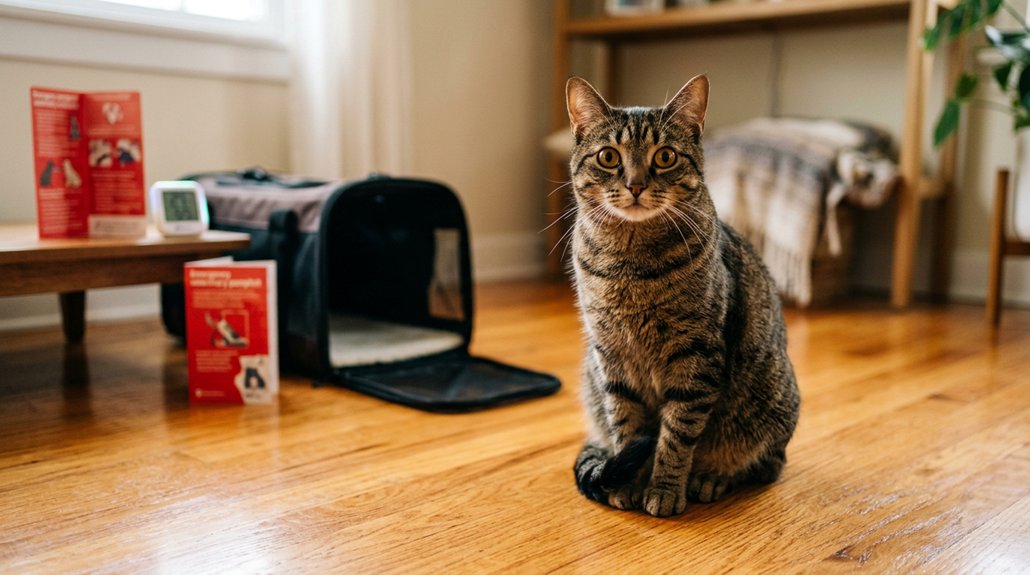
If your cat shows signs like persistent vomiting, difficulty breathing, or urinary straining, it’s critical to get them to an emergency vet. These symptoms could indicate severe health issues such as dehydration, respiratory distress, or a blocked urethra. Be vigilant about neurological symptoms like seizures or sudden behavioral changes. Quick decisions can save your cat’s life and prevent complications. Explore further to understand how to efficiently prepare for emergency vet visits and spot other potential red flags.
Key Takeaways
- Take your cat to an emergency vet if it exhibits persistent vomiting or diarrhea, indicating potential severe dehydration or underlying health issues.
- Seek emergency veterinary care for respiratory distress signs such as open-mouth breathing or blue-tinged gums, indicative of oxygen deprivation.
- Immediate veterinary intervention is necessary for seizures lasting over five minutes or multiple seizures occurring in quick succession.
- Urinary straining, especially in male cats, requires urgent vet attention to prevent life-threatening urethral blockage complications.
- Emergency vet visits are crucial following trauma if your cat shows signs of severe injury or unusual behavior, like difficulty moving or excessive vocalization.
Spotting Life-Threatening Emergencies in Cats
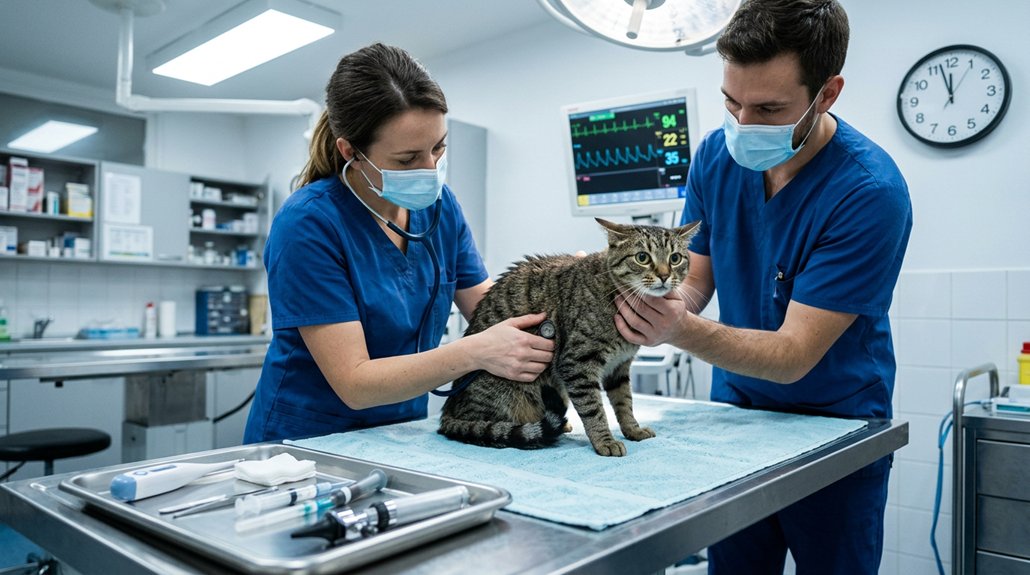
When it comes to spotting life-threatening emergencies in cats, understanding their subtle signs can make all the difference in ensuring swift intervention. Observing cat emergency signs such as persistent vomiting is essential, as it may lead to dehydration or hint at more severe health issues. If your cat can’t keep food or water down, don’t hesitate to take urgent vet actions. Similarly, straining to urinate, especially in male cats, may signify a dangerous urinary blockage necessitating immediate evaluation. Neurological signs, like prolonged seizures, demand emergency care to avert further risks. Additionally, sudden behavioral changes—extreme lethargy, collapsing, or unresponsiveness—should prompt quick contact with an emergency vet, as they may conceal grave medical conditions demanding prompt attention.
Breathing Difficulties: Immediate Attention Required
When you notice your cat exhibiting signs such as an elongated neck posture or open-mouth breathing, it’s a red flag that requires immediate action. Conditions like blue-tinged gums indicate oxygen deprivation, and waiting is not an option if you want to prevent serious harm. Contacting an emergency vet right away is crucial for evaluating the underlying causes, whether it’s an allergic reaction, asthma, or another obstruction, to guarantee your cat gets the essential care they need.
Recognizing Breathing Distress
Recognizing when your cat is in respiratory distress is crucial, as cats often hide their discomfort until it’s severe. Pay close attention to any changes in breathing patterns; elongated neck posture, splayed elbows, and open-mouth breathing suggest critical lung conditions. Blue-tinged gums signal a lack of adequate oxygen, demanding urgent veterinary intervention. Watch for increased chest movement or rapid breathing—these signs indicate your cat’s struggle to breathe and shouldn’t be ignored. Even if your cat appears quiet, acute respiratory issues may be present, obscuring their distress. Always view these symptoms as emergencies. Immediate action can be lifesaving by ensuring your cat receives prompt medical care if they’re showing signs of difficulty breathing. Your quick response matters.
Emergency Interventions Needed
Your ability to identify breathing distress early can make all the difference, but knowing what immediate interventions are necessary when your cat’s breathing becomes labored is equally important. Breathing difficulties such as elongated neck posture, splayed elbows, or open-mouth breathing signal urgent issues. These signs, especially paired with blue-tinged gums, demand prompt action—vital emergency protocols can avert respiratory failure. Quick feline first aid means promptly heading to an emergency vet, as cats often hide severe symptoms. The vet may provide oxygen therapy, perform chest X-rays, and uncover underlying problems. Recognize subtle behavioral changes; they may indicate more than they reveal. Immediate evaluation is critical. Delays increase the risk of your cat’s condition rapidly worsening. Always prioritize their breathing concerns.
Respond to Persistent Vomiting and Diarrhea
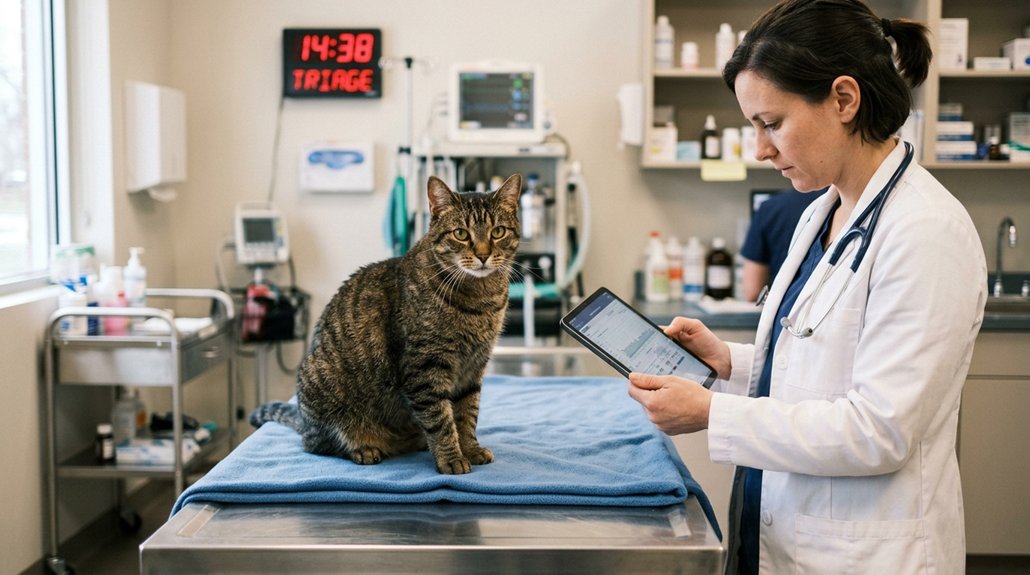
When your cat experiences persistent vomiting or diarrhea, it’s important to act quickly to prevent severe dehydration, which can escalate rapidly. If your cat can’t keep food or water down and exhibits behavior changes such as lethargy, consulting a veterinarian immediately is vital to address potential critical conditions. Monitoring these signs closely and responding swiftly can make a significant difference in your cat’s health outcome.
Signs of Severe Dehydration
Dehydration is a serious consequence of persistent vomiting and diarrhea in cats, often escalating rapidly to a critical state. Conducting a dehydration assessment is essential. Look for key signs like dry gums, sunken eyes, and reduced skin elasticity; gently pinch the skin on your cat’s back to test this. A cat unable to keep food or water down and showing decreased urination requires immediate veterinary consultation. To avoid worsening conditions, don’t delay hydration interventions. Always monitor your cat’s water intake and urination habits, as early detection can make a significant difference. If severe dehydration signs are present, emergency veterinary care is necessary to stabilize their condition and prevent complications that might arise from untreated dehydration.
Importance of Immediate Attention
While signs of severe dehydration signal urgent concerns, addressing persistent vomiting and diarrhea with immediate veterinary attention can be equally vital. You can’t ignore a cat’s frequent vomiting or continuous diarrhea. A timely vomiting assessment helps determine if your cat’s gastrointestinal issues stem from serious diarrhea causes, like gut blockages or infections. Rapid loss of fluids can dehydrate your cat, leading to dry gums and lethargy.
If your cat vomits multiple times per hour or diarrhea persists without relief, prompt intervention becomes essential. Unable to retain food or water, your feline friend faces the risk of life-threatening complications. Consult an emergency vet promptly for an expert evaluation, ensuring the best chance of recovery with beginning the necessary treatment quickly.
Monitoring Behavior Changes
Sometimes, subtle shifts in your cat’s behavior can be a silent plea for help. Monitoring patterns of persistent vomiting or diarrhea is essential, as they can indicate severe underlying health issues. Behavioral changes, such as lethargy and inability to retain food or water, signal vital dehydration requiring immediate veterinary attention. If your cat experiences multiple episodes of vomiting or diarrhea within an hour, it might suggest a gut blockage. Look for signs of extra distress, like rapid breathing or excessive drooling, which necessitate swift emergency care. Quick intervention is important since these symptoms often mask serious conditions. Observing these patterns compassionately enables you to act promptly, ensuring your cat’s health and well-being aren’t compromised.
Assessing Trauma: Recognizing Internal and External Injuries
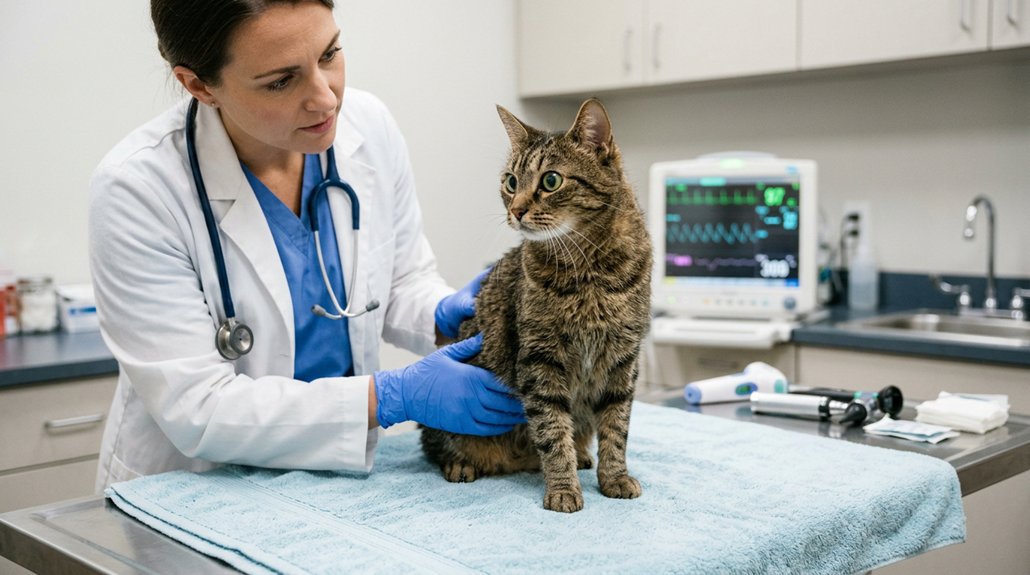
When evaluating a cat’s trauma, it might not immediately be clear whether injuries are limited to what you can see. A thorough trauma assessment is critical because external injuries, like bite wounds, might mask serious internal injuries. Accidents or falls can cause internal bleeding or organ damage not readily visible. Watch for signs such as excessive vocalization, difficulty in movement, or severe vomiting and diarrhea, as these can indicate internal issues necessitating urgent vet attention. If your cat shows an inability to stand, seizures, or drastic behavioral changes, seek immediate veterinary care. Your quick response to these symptoms not only safeguards your cat’s well-being but can also mitigate potential long-term complications from hidden internal traumas.
Seek Help for Urinary Straining Issues
If you notice your cat straining to urinate, it’s vital to recognize this as an urgent symptom that requires immediate veterinary consultation. Male cats are particularly at risk for a blocked urethra, a condition that can lead to severe complications like kidney damage. Don’t wait for regular vet hours; prompt emergency care is essential to prevent life-threatening consequences.
Recognizing Urgent Symptoms
How do you know when to rush your feline friend to an emergency vet? Recognizing urgent symptoms requires careful observation. Male cats straining to urinate might showcase urinary obstruction signs, such as visiting the litter box frequently without producing urine, vocalizing during attempts, or appearing unusually lethargic. Consult your emergency symptoms checklist if such behaviors arise. This situation could signal a blocked urethra, risking serious complications like bladder rupture or kidney damage within 24-48 hours. Even minimal urine output accompanied by distress is concerning. As a compassionate cat owner, prioritize swift action. Contacting a vet for immediate advice guarantees your furry companion gets timely, potentially life-saving care. Trust your instincts and err on the side of caution when urinary straining issues occur.
Immediate Veterinary Consultation
Urgent urinary symptoms in cats are alarming and require more than just keen observation; they demand immediate veterinary attention. Blockage signs, such as straining to urinate or frequent litter box visits with little to no output, are critical red flags. These symptoms can indicate a blocked urethra, particularly in male cats, and pose severe risks to urinary health. Waiting can lead to bladder rupture or kidney damage, so act quickly.
Here’s a quick guide:
| Symptom | Risk | Action Needed |
|---|---|---|
| Straining to urinate | Blocked urethra | Seek immediate care |
| Frequent litter visits | Discomfort, pain | Emergency vet visit |
| No urine output | Life-threatening | Urgent intervention |
Don’t delay; even small amounts of urine warrant prompt veterinary consultation.
Potential Health Complications
When a cat is straining to urinate, it can be a sign of potentially serious health complications that require immediate attention. Developing cat health awareness is vital, since such signs might indicate urinary blockage symptoms in male cats, which can be life-threatening if untreated. Be vigilant for frequent litter box visits accompanied by vocalization, as these may signify distress. A blocked urethra means minimal or no urine output and demands urgent action to prevent serious issues like bladder rupture or kidney damage. Lethargy or reluctance to move often follows, suggesting a worsening condition. It’s important to seek emergency veterinary assistance when these symptoms appear to safeguard your cat’s health and avert severe complications.
Respond to Seizures and Other Neurological Signs
Experiencing a seizure in your cat can be a frightening event, and it’s vital to understand when it requires immediate action. Seizure management becomes a priority when seizures last beyond five minutes or happen multiple times in a short span. These situations categorize as critical emergencies, demanding swift veterinary intervention. Neurological assessments are important, as symptoms like sudden coordination changes or unresponsiveness signal serious issues needing urgent care. While a single seizure might not be an immediate emergency if recovery is quick, consulting a veterinarian helps rule out underlying causes. If your cat is disoriented or has difficulty walking, these could indicate nervous system conditions. Quick action for any neurological signs directly impacts recovery prospects favorably.
Act Fast for Bleeding Concerns
Witnessing neurological distress in your feline friend is unquestionably alarming. However, severe bleeding is just as urgent. Cat wounds that lead to significant blood loss necessitate immediate veterinary attention. Take rapid action if you notice your cat losing blood. Even what seems like a small amount, comparable to a coffee cup, could signal a dire situation. Swift intervention can prevent life-threatening complications such as shock or organ failure. Signs like rapid breathing, lethargy, or visible bleeding mean you should act without delay. Contact a veterinarian and prepare to transport your cat quickly. Your prompt response can make all the difference for their survival, ensuring their swift recovery and continued companionship in your life.
Take Action on Toxic Exposure Immediately
Recognizing and responding swiftly to a potential toxic exposure in your cat is pivotal for their health. Immediate action is critical because certain substances can cause severe complications. Consider the following to guarantee the best care:
- Identify Toxins: Common items like lilies and acetaminophen pose considerable risks. Even small ingestions can be deadly.
- Watch for Symptoms: Symptoms such as lethargy, vomiting, or seizures indicate serious trouble. Don’t hesitate to seek help.
- Contact Professionals: Have a list of emergency contacts, including your vet and an animal poison control hotline, handy for rapid response.
Monitoring your cat’s behavior and environment can help catch problems early. Quick action improves outcomes considerably, so always act swiftly in potential poisoning scenarios.
Identifying Behavioral Red Flags: When to Call the Vet
After addressing toxic exposures, it’s also important to be vigilant about behavioral changes in your cat that might signal something’s wrong. Keep an eye on behavioral indicators like straining to urinate; in male cats, this could mean a urethral blockage, an urgent sign requiring immediate vet care. Sudden behavioral changes, such as extreme lethargy or unresponsiveness, can suggest severe underlying issues needing prompt attention. Continuous vomiting paired with dehydration is another urgent red flag. Blood in the urine or stool should lead to immediate consultation with a vet due to potential severe health conditions. Finally, neurological signs like seizures or sudden coordination problems are clear urgent signs that necessitate swift action to protect your cat’s health.
How to Prepare Efficiently for Emergency Vet Visits
When preparing for an emergency vet visit, having an organized approach can greatly reduce stress and guarantee your cat receives the best care possible. Start by compiling a symptom journal—a detailed log of your cat’s symptoms and any recent behavioral alterations. This helps the veterinarian quickly assess the situation’s urgency. Next, gather your cat’s medical history, including vaccine records and past health issues, to give the vet extensive insights into potential complications.
Here’s how to prepare efficiently:
- Secure your cat in a sturdy carrier to affirm safety during transport.
- Note any medications administered, preventing harmful interactions.
- Stay calm and focused, fostering clear communication with the veterinary staff, which is essential for fast, effective treatment.
Frequently Asked Questions
What Is the 3-3-3 Rule for Cats?
The 3-3-3 rule guides you through your cat’s adjustment period, emphasizing feline stress and cat behavior. Expect initial anxiety and hiding, followed by gradual comfort and socialization, culminating in full adaptation and routine establishment after three months.
When Should You Take Your Cat to an Emergency Vet?
When should you rush to a vet? If your cat shows urgent symptoms like breathing trouble or neurological changes, it’s time. Don’t wait—those symptoms need an emergency vet visit to guarantee your cat’s safety and well-being.
What Are Subtle Signs of Cat Distress?
You’ll notice subtle signs of cat distress through changes in feline behavior and cat body language. Look for decreased activity, altered grooming, appetite shifts, litter box issues, or vocalization changes. These signal your cat’s feeling discomfort or distress.
How Do I Know if My Cat Needs to Go to the ER?
You’ll know your cat needs to go to the ER by observing cat behavior changes, like sudden weakness or disorientation. Monitor health indicators such as breathing, urination issues, severe vomiting, or trauma. Prompt care is essential.
Conclusion
In the heart of responsibility lies the urgency to act when your feline friend faces dire situations. Remember, every second counts—it could mean the difference between comfort and distress, survival and tragedy. Trust your instincts; if something seems amiss, seek help without delay. Preparation is your ally; knowing the signs and having a plan empowers you to be your cat’s guardian in their time of need. Compassionate vigilance guarantees they’re always in safe hands.